Getting a film up is never easy. It takes an army, even at the independent end. With Australia’s movie scene small enough as it is, any hand-up to get a production over the line can be transformative. Which is why the Adelaide Film Festival Investment Fund has had such an impact.
A true champion of locally produced stories, the fund has boosted over 150 projects since it was established in 2003, including international hits like Danny and Michael Philippou’s world-conquering Talk to Me, Warwick Thornton’s Samson and Delilah, Sweet Country and Wolfram, plus Justin Kurzel’s Snowtown.
Ahead of this year’s Adelaide Film Festival, which runs from 14 to 25 October, we asked a handful of AFFIF recipients about what the support has meant for them.
Adelaide Film Festival funding – quick links
Bojana Novakovic, The Forbidden Aunt
Born in Serbia and raised in Sydney, Love Me star Novakovic relocated to Hollywood to pursue her career. After having her heart broken, she embarked on a near-decade-long quest to dig deeper into her fraught family history.
Centred on the resilient story of her magnificent but estranged Aunt Gordana, The Forbidden Aunt was meant to be a documentary short.
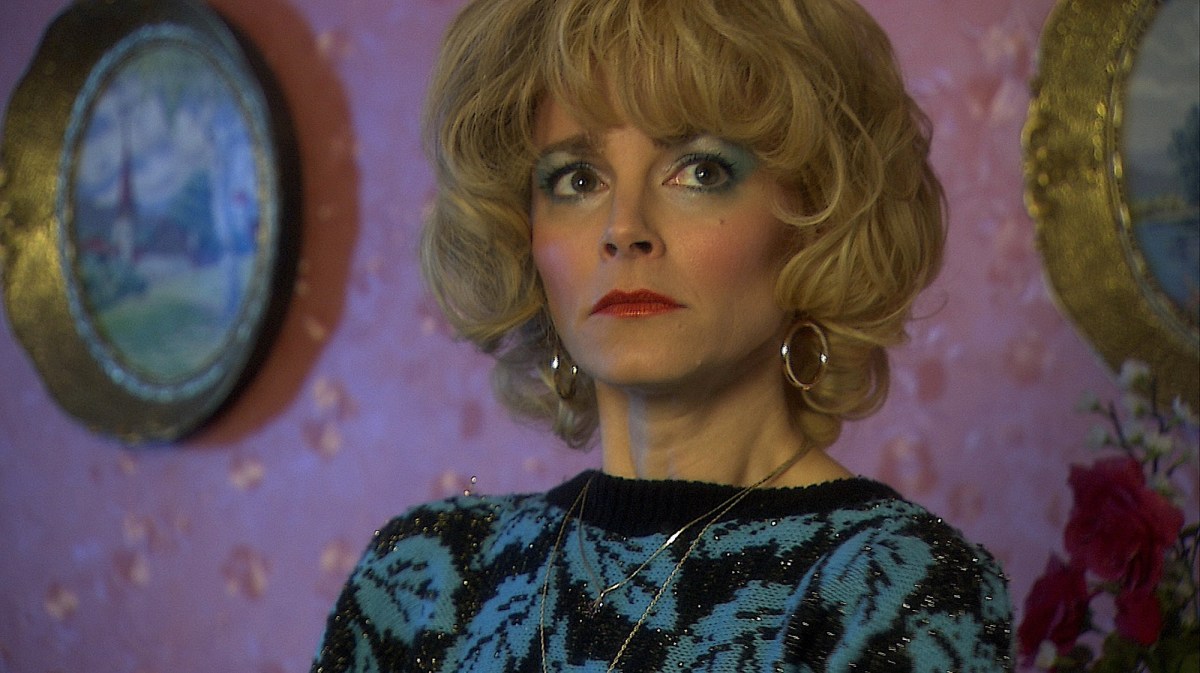
‘Gordana has this amazing personality, She had been drinking, stopped and was now looking after old people, so the idea was it would be a 10-minute character piece where she tells her own redemptive story,’ Novakovic says. ‘And then I come to Serbia, and it becomes like the Turkish soap opera my aunt loves.’
What happened when the women of her family opened on camera was clearly much bigger in scope, with Novakovic’s producer, Milan Stojanovic, reassuring her that this intimate family portrait was relevant to the global pushback on male violence towards women and the intergenerational impacts of trauma.
‘It’s a universal issue,’ Novakovic says. ‘In Serbia, one woman loses her life at the hands of her partner every two weeks. In Australia, it’s one woman every week.’
As confronting as those statistics are, and the radiating effects of patriarchal violence, Gordana and the indomitable women in Novakovic’s family have knack for witheringly witty asides. The filmmaker’s form-blurring adoption of those Turkish soaps also ensures The Forbidden Aunt is as amusing as it is ultimately empowering. ‘It’s a film full of light and humour,’ the director says.
The Serbian Film Commission bestowed some funds on the project 10 years ago, with Novakovic determined to take her time in getting this right. Having maxed the credit card to get it over the line, she fell short of post-production funds. Then AFFIF stepped in. ‘Their support meant everything,’ Novakovic says. ‘We couldn’t have done it without them.’
Buying time, including for Novakovic to personally master the art of subtitling – which is as much about spacing as it is translation – the AFFIF funds allowed Novakovic to finish colour grading, sound design and clear archival footage in time for it to debut at the Sarajevo Film Festival before heading down to Adelaide.
The Forbidden Aunt sparks a vital conversation that Sarajevo audiences responded to with open arms. ‘I could not leave the cinema because people wanted to speak to me about their families,’ Novakovic says. ‘Film festivals are one of the remaining cultural bastions of discussion.’
The film now heads to AFF, with The Forbidden Aunt screening at the film festival on 18 October.
Dario Russo, The Fox
Danger 5 co-creator Dario Russo’s debut directorial feature The Fox premiered at AFF last year before embarking on the festival circuit, including SXSW in the US. It returns to Adelaide for an encore this year.
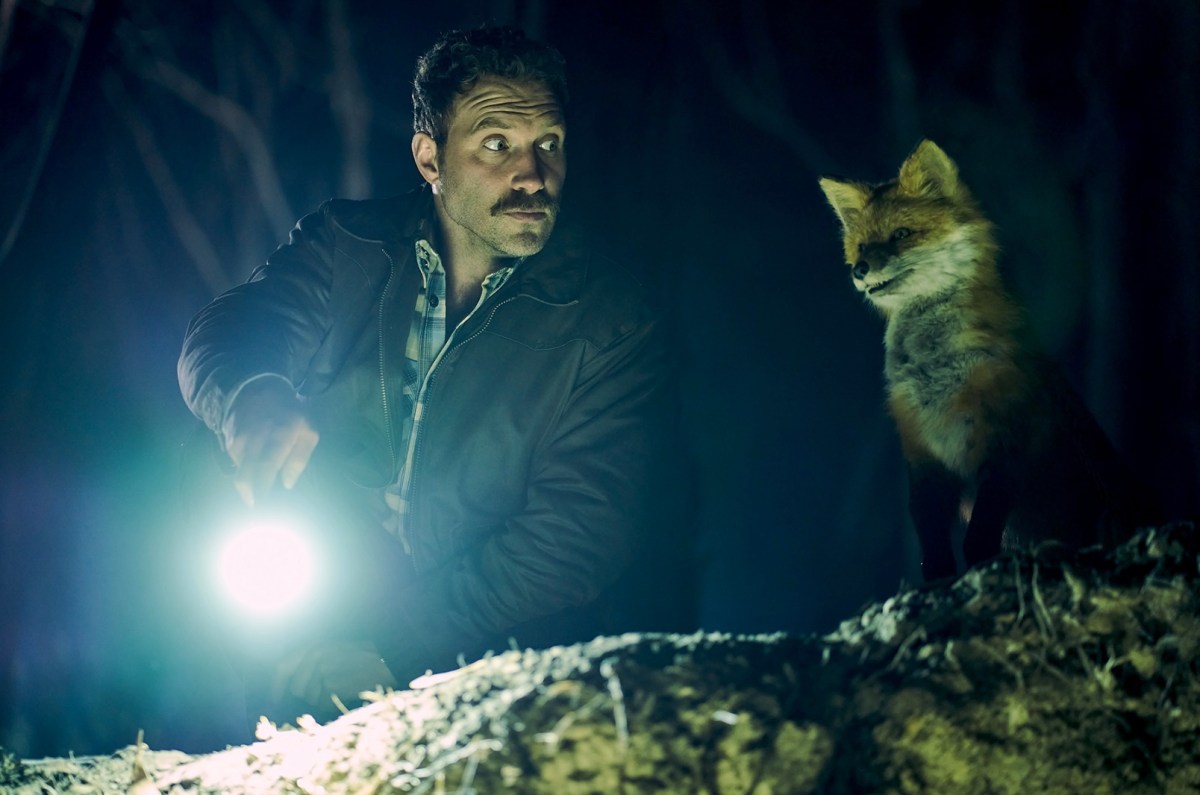
Even with big-name stars attached – Jai Courtney, Emily Browning, Heather Mitchell and Miranda Otto front of camera, with the vocal talents of Oliva Colman and the late Sam Neill as the titular fox and a magpie – it is still an unusual ask. A dark fable with animatronic animals, it also touches on partner violence.
‘Financing any independent film is a struggle, but when you’re trying to do something that doesn’t have any direct comparisons, it’s always going to be a bit of a battle,’ Russo says.
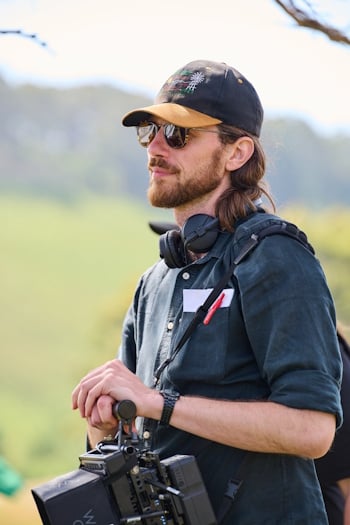
Not that the challenge put him off. ‘It’s a fickle system, so my philosophy has always been “Just be weird and go for it.”’
Russo worked on the screenplay for years before Talk to Me producers Causeway Films came on board. ‘I felt like it was a bit of a long shot,’ he recalls. ‘But I was lucky that they saw something in it.’
The South Australian Film Corporation and Screen Australia swung in, as did the AFFIF. ‘Without our government and festival funding bodies, we wouldn’t really have an industry,’ Russo says.
Russo feels he owes his audience in return. ‘It’s the responsibility of Australian filmmakers to tell Australian stories in a way that will make people want to go and see them,’ he says. ‘People are investing their time, the ticket price, parking, maybe a babysitter’s part of the equation, dinner, the whole experience. You’ve got quite a contract with them at that point that you’re going to give them a good time.’
It’s important to do so in our voice. ‘I want to show Australian culture and our vernacular in an authentic way, using genre elements and comedy as powerful tools of entertainment that get people excited about going to movies in the first place.’
Genre-forward festivals like Adelaide have an important role to play in helping generate that buzz.
‘Festival audiences are fantastic,’ Russo says. ‘They’re a really good example of how excited people can get about going out to the cinema, and it’s very encouraging being in packed-out rooms where everybody is laughing.’
The Fox screens at AFF on 15 October.
Sophie Hyde, Jimpa
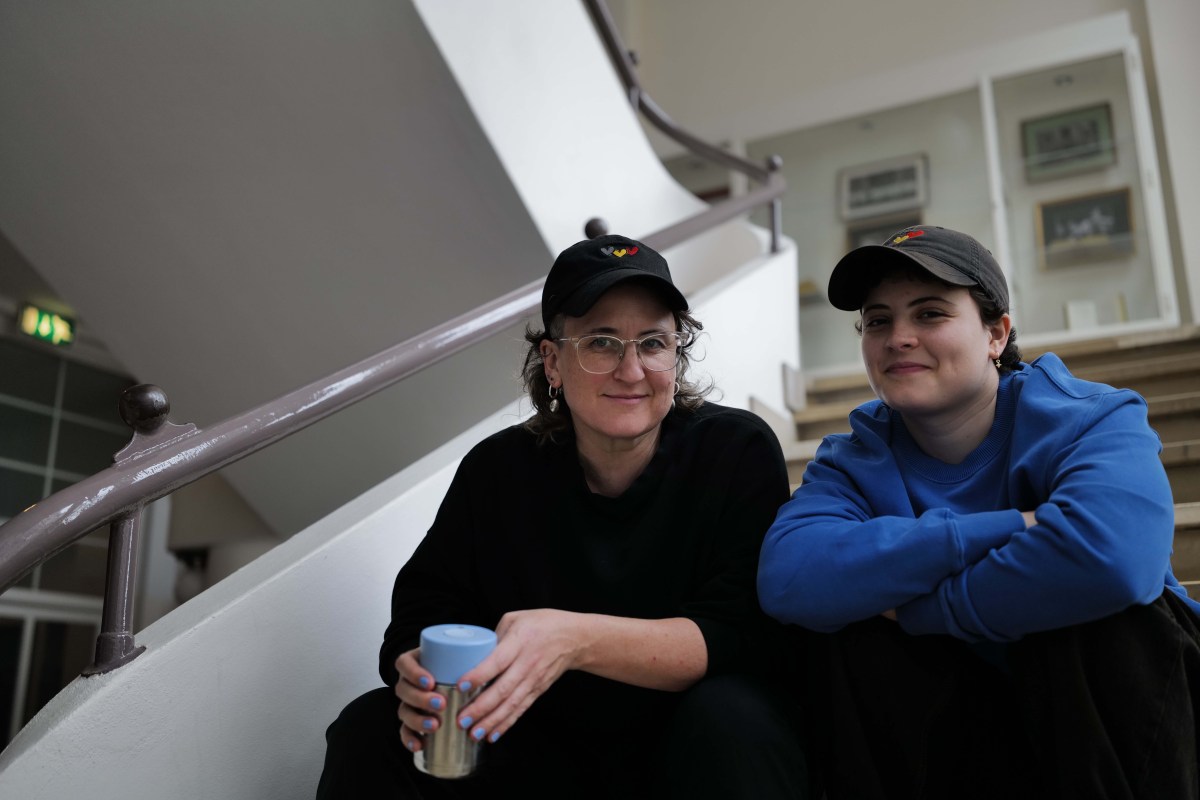
AFF patron and Good Luck to You, Leo Grande director Sophie Hyde has enjoyed AFFIF support on several of her features.
They include Life in Movement, the beautiful but devastating documentary about the tragic loss of dancer-turned choreographer Tanja Liedtke, just before she took up the artistic directorship of Sydney Dance Company in 2007, the remarkable transition story 52 Tuesdays and her latest, real life-mining dramatic feature Jimpa.
AFFIF’s support began with Hyde’s short dance film triptych Necessary Games, made in collaboration with Restless Dance Theatre, the celebrated company that works alongside young dancers with and without a disability.
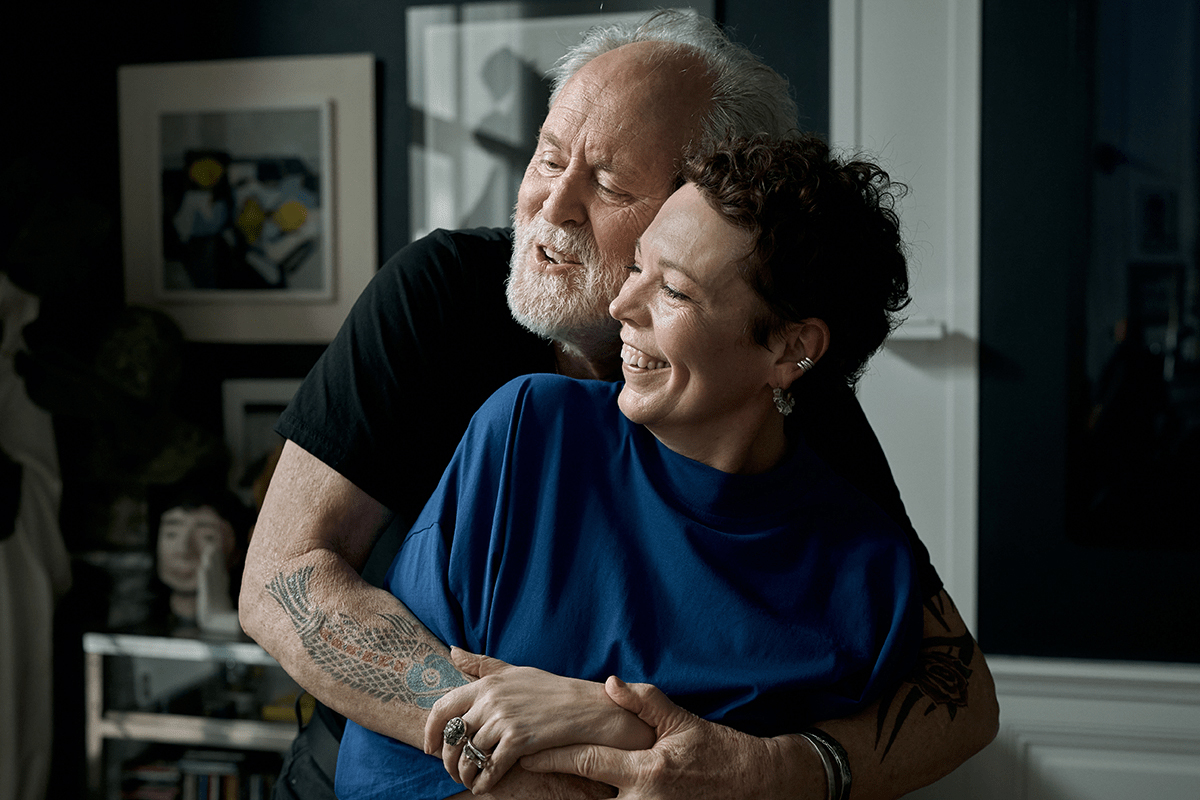
‘Under [AFF Founding Director] Katrina Sedgwick, AFFIF helped us make our experimental dance short when other bodies were mostly asking for narrative,’ Hyde recalls. ‘That was key for me in developing how I wanted to work.’
The AFFIF leg-up continued under Amanda Duthie, through Life in Movement and 52 Tuesdays. ‘She supported that work and me so beautifully,’ Hyde says. Mat Kesting boosted Hyde’s TV miniseries F*%#Ing Adelaide and the features Animals and Jimpa.
‘The flexibility that AFF has in launching a film so that it works for South Australia, but also being mindful of what’s great for it internationally, has always been such a crucial element,’ Hyde says. ‘I really respect that, and I think it’s paid off for them too.’
Leela Varghese, Lesbian Space Princess
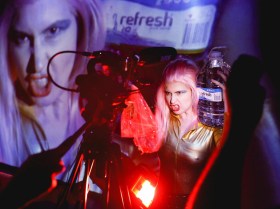
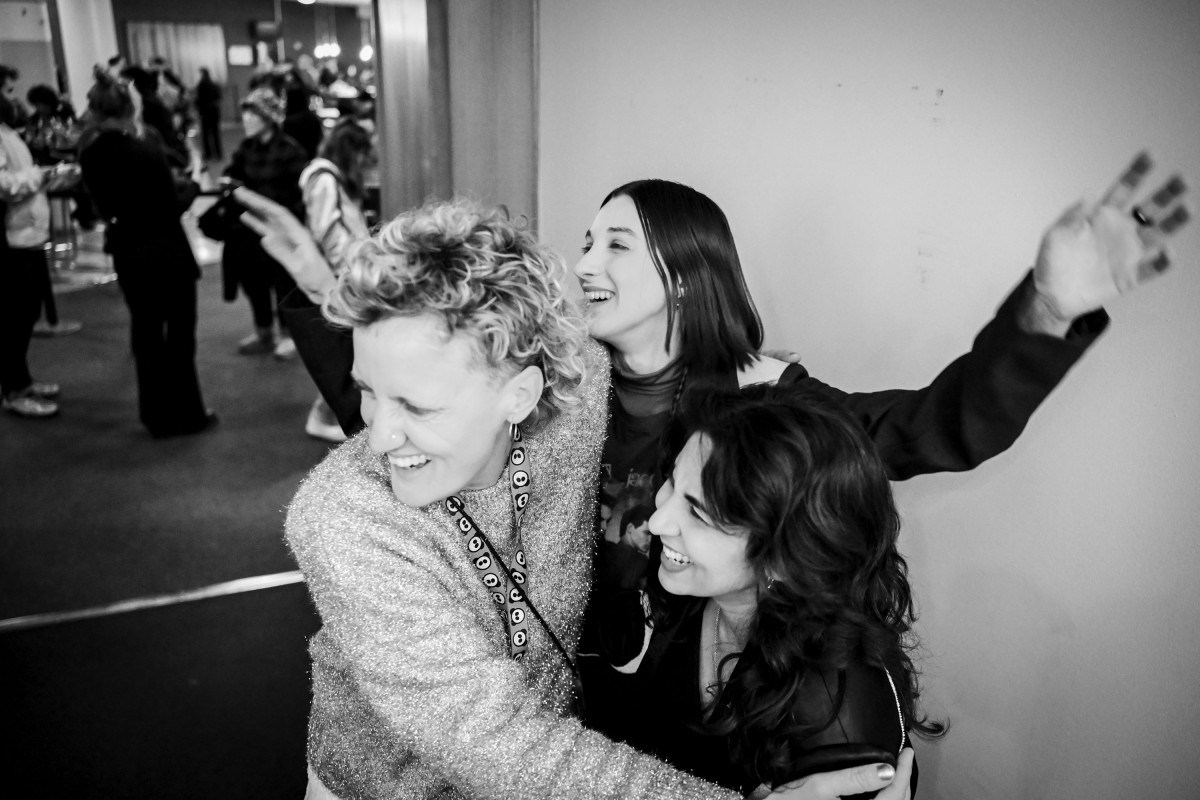
Leela Varghese and her co-director Emma Hough Hobbs received another branch of Adelaide Film Festival funding, Film Lab: New Voices, specifically targeted at low-budget features from emerging filmmakers. It supported their anarchically awesome Lesbian Space Princess, the first animated feature to come out of South Australia.
‘Any first feature is hard in their own way,’ Varghese says. ‘But, in our case, with it being animated, adult and queer, it was difficult from a sales [and] distribution perspective because there wasn’t a lot to compare it to.’
And yet, Varghese and Hough’s commitment to telling their story their way excited actors. The film’s vocal stars include The Pitt and The Airport Chaplain lead Shabana Azeez, Deadloch’s Madeleine Sami, the Aunty Donna boys, drag icons Kween Kong and Reuben Kaye, plus The Correspondent’s Richard Roxburgh.
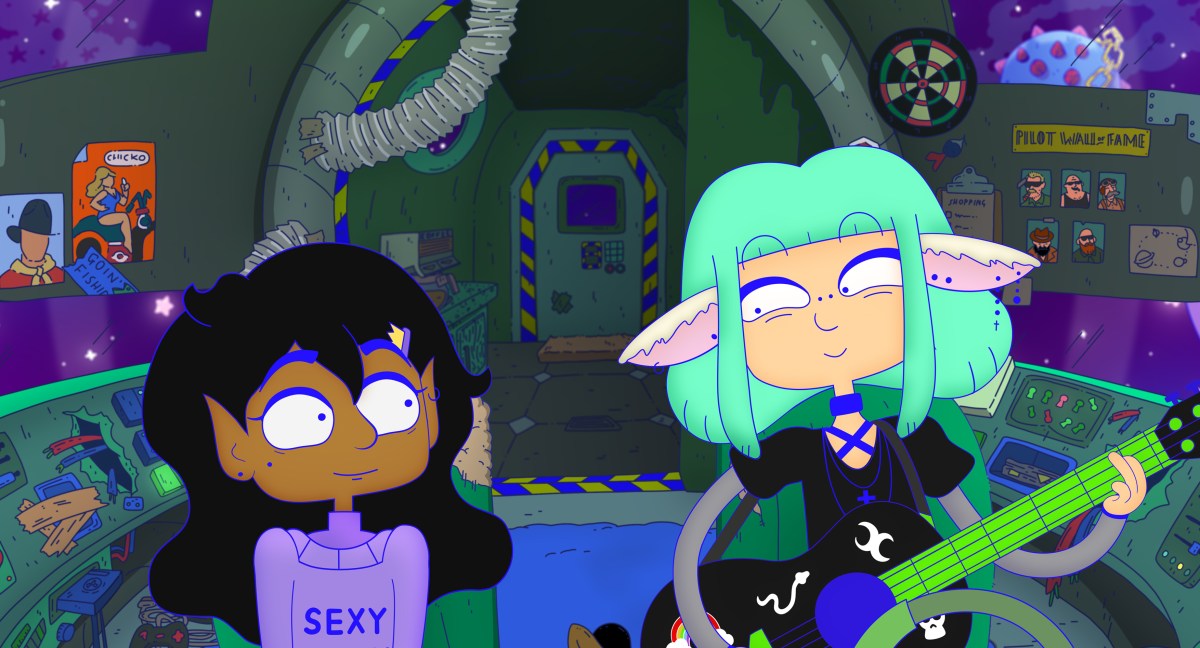
AFFIF’s seed money sky-rocketed Lesbian Space Princess’ stratospheric journey. Launching in Adelaide in 2024 and touching down at Berlinale, it went on to win the big five festival’s coveted LGBTQIA+ Teddy Award. But people pleasing doesn’t have to mean aiming for the lowest common denominator.
‘Not all art should appeal to the masses,’ Varghese insists. ‘In a time where so much of what gets made is driven by online popularity, commerciality and broad appeal, festivals are so important, because they might be the only way some voices get a chance to find their audience and kickstart their career.’
ScreenHub: The Australian filmmakers at the biggest overseas festivals
The support from AFFIF and all the many hands who chipped in physically or financially help make the tough times worth it. ‘When any organisation supports your film, it means so much, not just on a practical level, but also because it helps you believe in what you’re doing,’ Varghese says.
It’s still a tough road ahead. ‘You have to really want it, be persistent and passionate,’ she adds.
It’s worth when your film plays to cinemas packed full of excitable people. ‘That’s what making any film should always be about,’ Varghese says. ‘Wanting to share and connect with audiences, however big or small. Whether your film means something to lots of people or just a few, that’s a beautiful thing.’