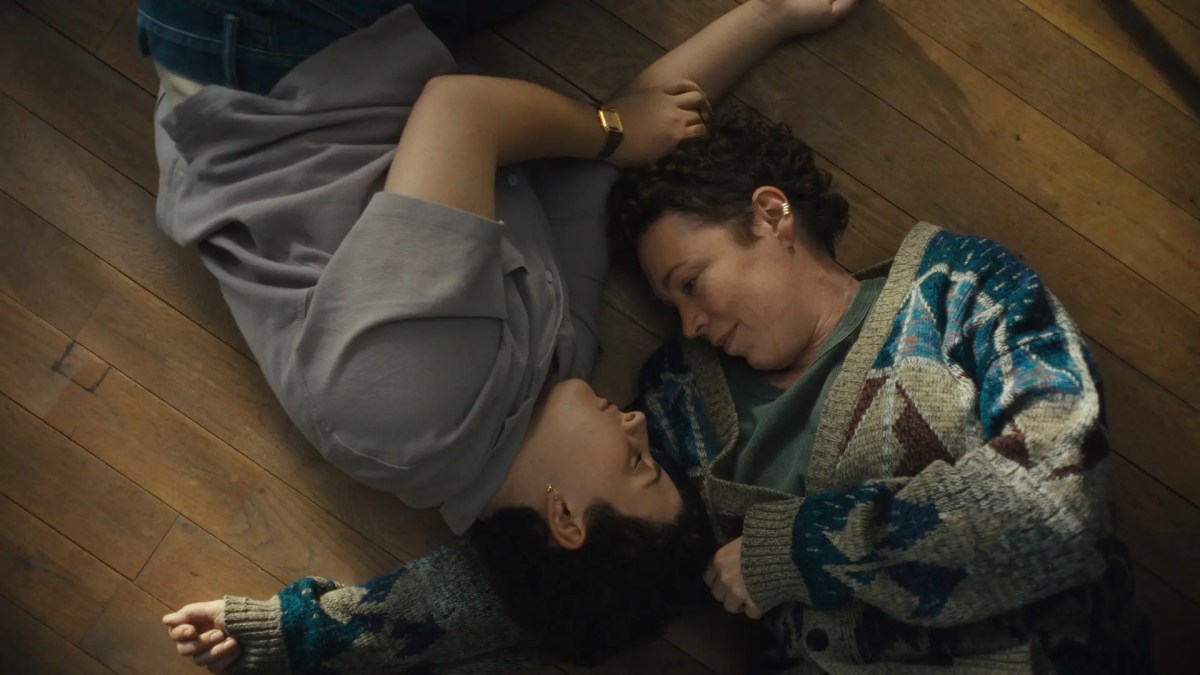
Is conflict integral to cinema? Not according to Hannah, an Adelaide filmmaker, who is not quite Jimpa director Sophie Hyde, but is certainly a misty mirror-universe reflection. Depicted by the magnificent Olivia Colman – an actor so agile she can carry us forward through thought alone – she embraces love and understanding over miscommunication.
Hannah is auditioning actors to play a version of her father Jim (John Lithgow), a firebrand gay activist based in Amsterdam, along with her salt-of-the-earth, sassy mother, Katherine (Deborah Kennedy). The two separated when Hannah and her sister Emily (Kate Box) were kids but in Hannah’s recollection, it was an amicable arrangement that honoured Jim’s queerness and need for freedom.
Hannah is deeply frustrated when her potential actors – Tilda Cobham-Harvey (52 Tuesdays) and Cody Fern (Foundation), who both appear as themselves via Zoom calls – can’t grasp that she isn’t looking for wounded, slighted or egotistic depictions. She’s also incredibly nervous about telling her father that her next film will very mine the honourable complexities of their family, much to Katherine’s eye-rolling amusement.
There’s more to this story than even Hannah knows, though isn’t that always so?
Jimpa – quick links
We are family
Kinks in Hannah’s accepted history gradually work their way out when she and her mutually non-monogamous husband Harry (Daniel Henshall) take their non-binary teenager Frances (Hyde’s actual kid, Aud Mason-Hyde) on a trip to reconnect with Jim.
Frances is 16 and tentatively emerging into their own open-hearted exploration of sexuality. In a curveball, they want to stay in Amsterdam, tracing a similar journey of discovery to the one their grandfather took. While Hannah might reject conflict, encouraging her teen to make up their own mind in all things, she is anxious that Jim isn’t necessarily the guiding light Frances will likely need.
Co-written by Hyde and Matthew Cormack, Jimpa is a meta-textually sumptuous reckoning with Hyde’s upbringing, which freely and fictiously rewrites that narrative. Hyde’s late father, to whom the film is dedicated, didn’t live in Amsterdam, a detail she revealed at a rapturously received hometown screening at the opening night gala of the 2025 Adelaide Film Festival.
Read: Adelaide Film Festival 2025 to open with queer family story Jimpa
Cinematographer Matthew Chuang’s sepia-hued glimpses of the past glimmer like dappled light dancing fleetingly over the limpid present. With its lilting rhythm, Jimpa is an abundantly luminous film unafraid of speaking its feelings.
Colman, not particularly Australian-sounding despite playing an Adelaide filmmaker, nevertheless anchors the film believably. Indebted to very queer ways of being, Jimpa demonstrates a family structure less often found. The film is unapologetically open and sincere in its exploration of identity and alternative approaches to navigating life’s tumultuous eddies, with occasionally confronting honesty.
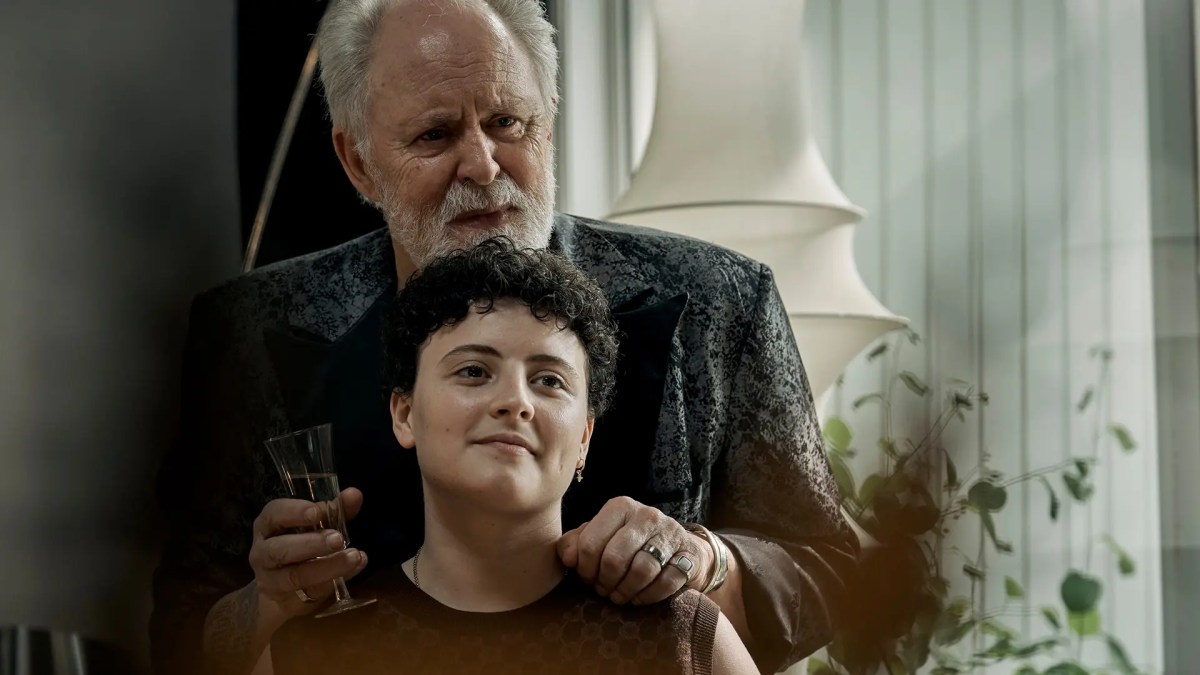
Mason-Hyde, sharing a non-binary sensibility with their character, is revelatory in the role of Frances, able to cherish their grandfather’s impish ways and fervent views on queerness that can be challenging to many younger LGBTQIA+ people. He does not believe in bisexuality, for example, and badgers Frances to express their sexuality in boxable ways that do not appeal to them.
Lithgow brilliantly balances this acerbic brittleness with deep-felt adoration for his ‘grandthing,’ even if their views are sometimes unaligned.
When Frances falls hard for Isa (Zoë Love Smith), Jimpa electrifies like the first halting touch of skin on skin. Time fissures to the disco sizzle of The Communards crashing into Baz Luhrmann’s Romeo + Juliet soundtrack. That Mason-Hyde is also a gifted singer only enriches this playfulness.
Jimpa: open minds and hearts
Yes, there’s stuff wound up tight inside Hannah. She just chooses to process it in ways that aren’t unnecessarily explosive or self-centred. And therein lies the beauty of Hyde’s alternate family portrait.
Even as Hannah becomes a little unmoored by certain revelations, there’s never any sense that she is slipping, simply realigning in ways that are rewarding to observe. Leaning on a beautifully understated relationship with Jim’s adoring assistant Richard (a glinting Eamon Farren), their unexpected connection layers subtler-still queer textures into her arrangement with Harry.
Henshall, who plays Harry in a much smaller role, brings a seemingly effortless gentleness to this. His more overt discomfort with leaving Frances in Jim’s care is at odds with his often-menacing screen roles.
When Emily barges into the plot, the brilliant Box exaggerates her brassy Australianness with fizzing fabulousness.
If you are willing to wander with this mostly quiet and introspective film, there’s magic to be found, set off by composer Nick Ward’s effervescent score. Deft editing by Hyde’s partner, Bryan Mason, stitches the new and old with ease, particularly Bryn Chapman Parish’s moustachioed younger version of Jim,
Jimpa is an invitation to disagree better, bond stronger and love freer. If your heart is open, there’s much reward to be found in Hyde’s supple care by the time the film winds its way to a gorgeous duet between Mason-Hyde and Brendan Maclean over the closing credits. For this reviewer who has lost his father, it was a soothing balm that left me weeping with happy sadness.
Jimpa is in Australian cinemas from 19 February 2026.
Discover more screen, games & arts news and reviews on ScreenHub and ArtsHub. Sign up for our free ArtsHub and ScreenHub newsletters.
Actors:
Olivia Colman, John Lithgow, Aud Mason-Hyde
Director:
Sophie Hyde
Format: Movie
Country: Australia
Release: 15 October 2025