Name a movie, almost any movie, and it has likely been boiled down to one of two common elevator pitches. The 2026 horror smash Backrooms is The Shining meets Severance, for instance. The SpongeBob SquarePants Movie was The Odyssey but set in the underwater world of a chaotic cartoon character.
Allen, the first feature film co-directed by Bluey executive producer Daley Pearson, follows suit perfectly. Think: ET the Extra-Terrestrial meets Close Encounters of the Third Kind meets Alf, for starters. ‘Meets Alf – that’s good. I love that,’ chuckles Pearson.
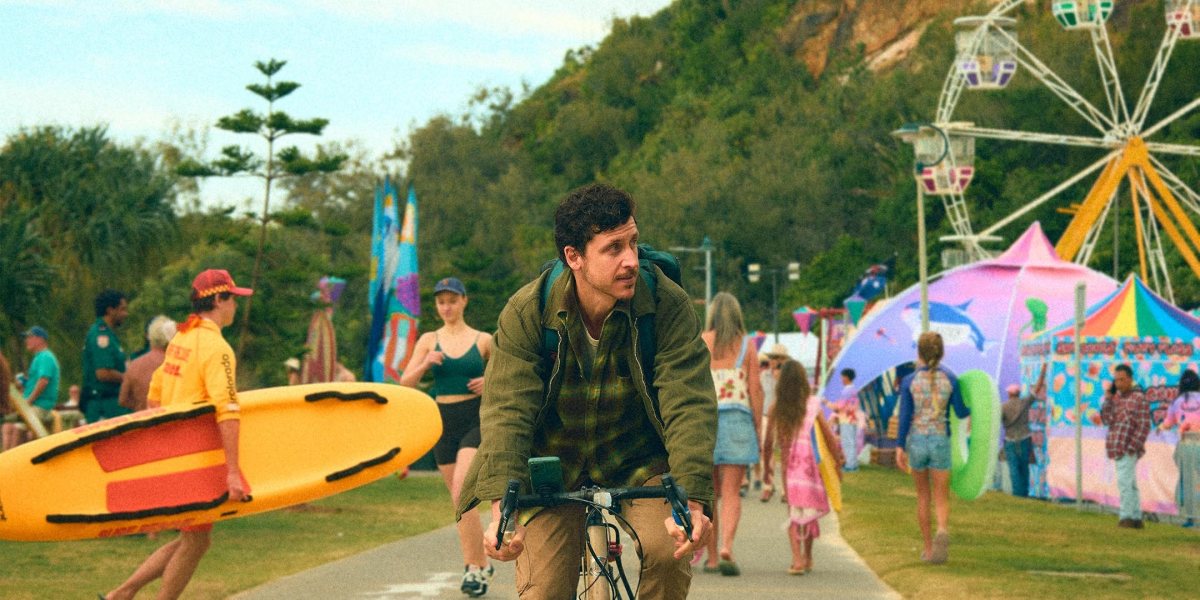
Think: every movie about a kid with a wondrous friend or a child on a magical adventure, but set in Pearson’s hometown of Coolum on the Sunshine Coast.
His initial idea for the movie – which pre-dates co-founding Ludo Studio, the award-winning production company behind Bluey – used a similar template: what if you met the equivalent of ET, spent the rest of your life desperate for them to return, then realised they might have more in common with another big sci-fi movie? (We won’t spoil the specifics, but it’s an inspired choice.)
‘That still makes me laugh,’ says Pearson.
Daley Pearson on Allen – quick links
Friendship interrupted
Streaming via Netflix from 12 November, Allen also has another question at its heart: what happens after one of those kids – an Aussie version of ET’s Elliot, perhaps – grows up?
‘These films tell you you’re special and you’re different … and you’ve got a wonderful life,’ says Pearson. But what if that isn’t exactly accurate, or the end of the story?
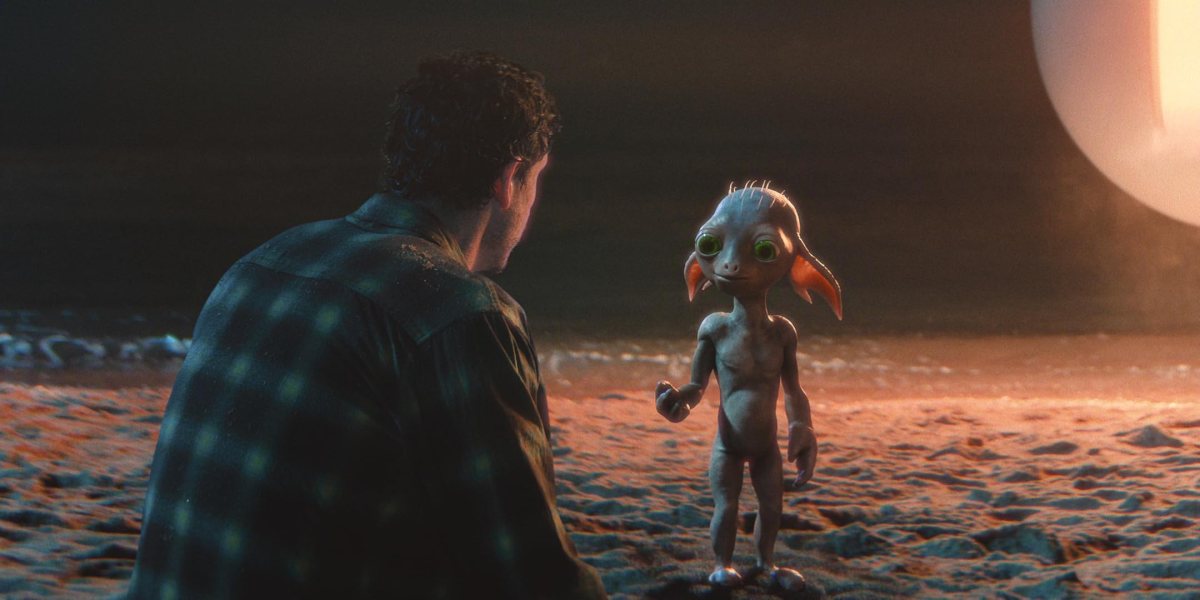
When 10-year-old Petey (Edward A O’Sullivan, The Family Next Door) meets a green-hued alien, he gains an instant BFF. Across the month that the pair spend joyously palling around, he also cements his sense of self. ‘The only thing special about me is you,’ Petey tells Allen as they while away their 90s days playing with Teenage Mutant Ninja Turtles toys and the Nightmare VHS game over Cheezels, and filming their exploits on a home video camera.
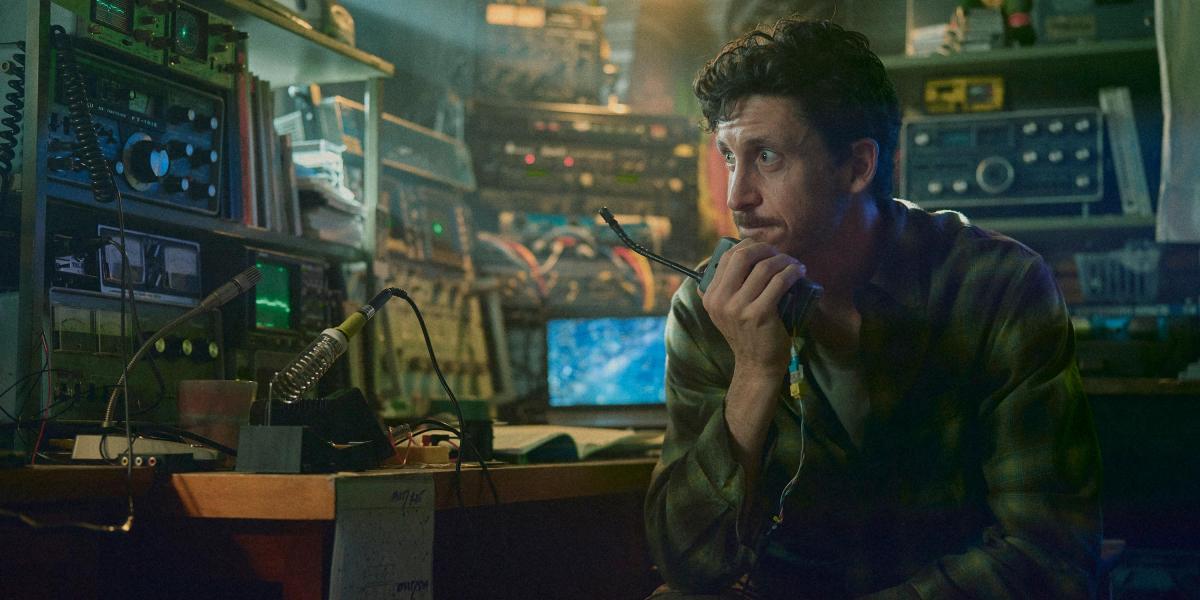
Then, as suddenly as he arrived, Allen is called home. Decades pass, but the adult Petey (Offspring’s TJ Power) yearns to be reunited with his otherworldly friend. ‘I’m right where you left me,’ he pleads into the radio he uses to try to contact his absent companion. When his loved ones stress that he needs to move on, Petey refuses. ‘The best thing that ever happened to me has already happened,’ he laments.
Petey is right to hold out hope, giving Allen another pithy premise similar to 2018 Mary Poppins Returns: what if a lucky child with an extraordinary pal had the chance to spend time with them as an adult?
As a kid, Pearson was as close to being Petey as anyone could get. ‘That’s not even trying to be romantic. My dad got exactly that camera,’ he says.
When the film dwells in Petey’s youthful bedroom, filled with Jenga, Super Mario Bros caps and Movie World T-shirts, it’s stepping back into Pearson’s past as well. He was the child wanting to keep ‘playing with my Ninja Turtles toys, listening to the soundtrack and trying to time it to exactly that part of the movie where that bit of the soundtrack was happening,’ he says, even as his friends – human, not alien – were gravitating towards other interests.
‘I think I was always wanting to Peter Pan it a little bit more than others,’ Pearson reflects. The fact that he lost his older brother when he was 13 provides one reason why, and is clear inspiration for the movie.
Allen’s Petey faces farewelling his alien bestie to space instead, but the underlying emotion remains the same: not wanting to let go of someone you love, or of everything that makes you feel like you did when they were lighting up your life.
Watch the trailer
More than just a blast from the past
Allen is full of nostalgic sights, whether or not you once collected Tazos or ate Bubble O’ Bills. Pearson’s interest here is in exploring nostalgia and, specifically, that desire to reclaim earlier, happier times – a feeling that isn’t only the remit of grieving brothers and kids forced to say goodbye to an alien.
With his co-writer Sophie Miller (Thou Shalt Not Steal, which Ludo produced) and co-director Jeffrey Walker (Ali’s Wedding, The Portable Door), Pearson isn’t sending up his pop culture influences.
While the nods to films like ET and Close Encounters are intentional, they’re also just starting points. ‘I wanted it to be very funny, and really funny and giddy and a bit ridiculous,’ he says of his hopes for Allen. ‘But I … [wanted] a bit more poetry to it than just a spoof or just a rip-off.’
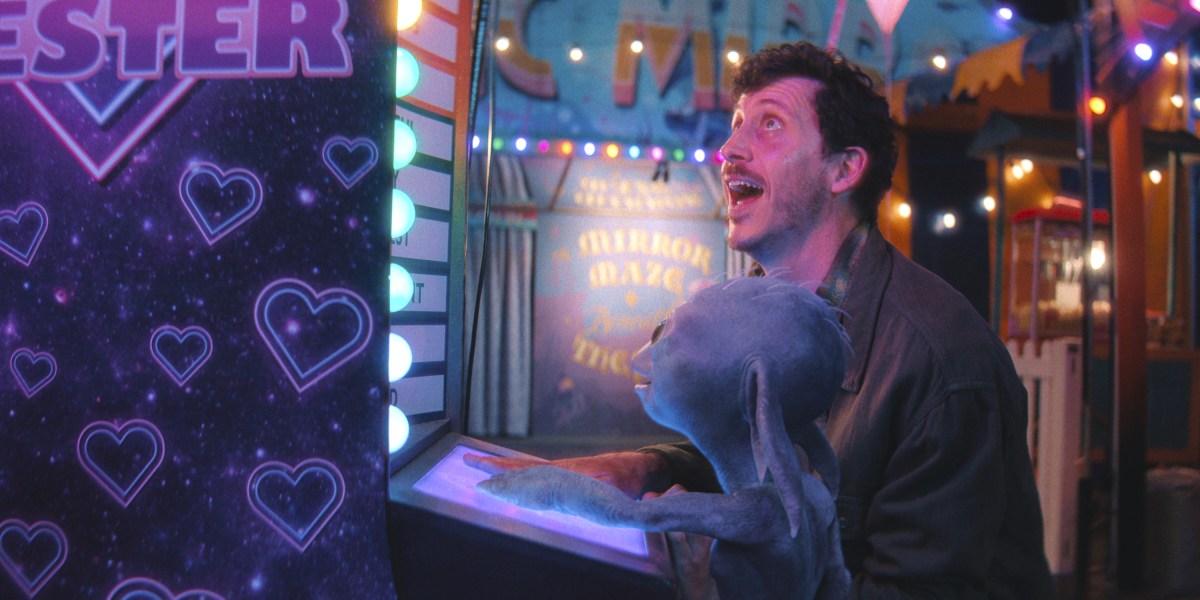
It’s a delicate task: indulging nostalgia to the point of making audiences feel nostalgic themselves while remaining clear-eyed about the impact that arrested development can have. For Pearson, there was something exciting about making a film about being unable to let go of something, using precisely those things that are difficult to let go of.
‘Whether we did it successfully is up to other people, but that’s also the thing that made me really want to do it,’ Pearson says. ‘We didn’t love the idea of saying, “Oh, being Peter Pan is bad. You’ve got to grow up”,’ he says. Equally, he didn’t want to show clinging onto the past through rose-tinted glasses.
To his mind, there are a lot of films that say either ‘time to grow up and be an adult’ or ‘you’ve got to hang on to that childhood spirit and screw the world, because they don’t understand what it’s like to be innocent and beautiful’.
‘We didn’t want to say one or the other,’ Pearson says. ‘That was something we were very conscious of, and we definitely didn’t want to say “screw you” to all this stuff that actually made our childhood beautiful and incredible.’
Whether or not it made his own childhood beautiful, Pearson knew that referencing the Australian-created Nightmare, even briefly, would be a hit. ‘I was like, this is going to be a real heroin for the 90s soul,’ he jokes.
He sees growing up at the end of the 20th century as a kind of gift because ‘other generations maybe weren’t sold to as much’ by popular culture. For him, many of these objects have become anchors.
‘Now those things that I loved, they’re a direct portal back to family that might not be here,’ Pearson says. ‘And not even “not here anymore”, just that version of them doesn’t exist anymore, your family’s not like it used to be.’
He adds, ‘At the same time, I think if you hang on to that stuff, you’ll sink to the bottom of the ocean. It’s a bit of a poppy field from Wizard of Oz.’
From Queensland to the world
Back when he was a kid, growing up in Queensland in the 90s, Pearson certainly wasn’t dreaming of writing and directing a feature like Allen. ‘I didn’t even know what that was,’ he says about filmmaking.
He got lucky, he says, to be exposed to art – his mum was a nurse and his dad ‘a chemist at Coke [who] then became a publican’ – but never thought that a creative career was possible.
He did have some awareness of how films were made – he knew when ‘Inspector Gadget 2 with French Stewart [was] filming on the William Jolly Bridge, and that was huge,’ he says – but it took time to figure out how to take that next step.
At school, when Pearson said that he wanted to be a filmmaker, he was told, ‘well, at Channel 7, they do the news, so you could go do that.’ In his university years, when he was studying at Griffith Film School, his first day came with a warning that 90% of the class would never get a job in film.
Fast-forward to now and Ludo Studio, which he founded with Allen executive producer Charlie Aspinwall, is one of the Sunshine State’s huge success stories. Bluey, created by fellow Queenslander Joe Brumm, is a global hit and the most-streamed show in the US two years running. A film about its loveable family of blue heelers will release in cinemas in 2027.
To get this far, ‘it means I must have really loved it,’ Pearson says. ‘And the people around me who I make stuff with, who I’ve been making stuff with forever, they must have really loved it too. We must be real converts. We must be real martyrs in that sense, in that the only reason we’re doing it is because we love it.’
‘And maybe there’s something good about that, the people we’re making stuff with now, when you meet them you know, well, if you’re doing this in Queensland or Brisbane, you must love it as much as I do.’
Making homegrown stories at home
Allen was initially set up as a Netflix series. ‘We weren’t long from production,’ he says, when the scale – an alien brought to life with a combination of puppetry and CGI – saw it ‘put on very lovely, polite pause’.
Pearson took the hiatus to mean that Allen was ‘never going to happen’. ‘It was just a big, ambitious idea that seemed just a bit too big and ambitious,’ he says. ‘But ‘then we had these heroes at Netflix who really supported the project, and they must have been such advocators for it behind the scenes.’
It helped, he says, that ‘we took the pause quite well, which maybe showed Netflix we were alright to work with. We had been killing ourselves and working on it forever, and we were broken-hearted, but I think we understood. It is what it is. You’re lucky enough to be here, let alone make it.’
Allen was then reborn as a feature, ‘which was where we always wanted to be from the beginning,’ he says. ‘We thought we were making it as a series … because we saw a feature as Mount Everest.’
Miller came onboard, first as a script editor and then co-writer. ‘She’s got very different qualities than I do, and we seem to complement each other,’ Pearson says.
It was still an ambitious project, so Walker was enlisted as co-director. Enter Brisbane’s Formation FX and Alt.vfx as well, ensuring that Ludo’s passion for sharing its home with the world shone through. ‘It didn’t feel like this film could have been made without the people who made it in Brisbane,’ says Pearson, ‘because I think we always wanted to make stuff there.’
It was the same with Bluey and everything else he’s made. ‘If it’s set there, we wanted to make it there,’ he says. Pearson’s 2012 TV series The Strange Calls is also shot in Coolum.
‘If we could put a little dome around Brisbane, that would be a dream, just to make it with our friends there, from composers to VFX to editors,’ he says.
‘We just wanted to make [Allen] with the people we had there, and it just so happened these people were great at exactly what we needed them to do.’
Adding to Australia’s pop culture legacy
Pearson’s resume is coloured by rich affection, whether that’s his nostalgia for the past, or for the place he calls home, or the people he lives and works alongside.
As Darryl Jacobson, his best-known acting credit, Pearson gave the Marvel Cinematic Universe its most memorable housemate, sharing a flat with Chris Hemsworth’s Thor.
And while the grief-fuelled horror sensation Talk to Me made Danny and Michael Philippou Australia’s next big names in filmmaking, it was Pearson who came up with the concept behind the smash-hit movie.
Despite his involvement in popular shows and films – from Bluey to Talk to Me, MCU digital shorts like Team Thor and Team Darryl, plus feature Thor: Love and Thunder – Pearson hasn’t really thought about his own role in creating pop culture hits that people will feel nostalgic about in future.
‘I still feel like I’m so naive,’ he says. ‘I still feel like I’m not going to get a job tomorrow.’ In the screen industry, there are always ‘so many reasons for things not to happen that when anything happens, it feels like a miracle.’
Even amid all of Ludo’s achievements, ‘you really are just thinking of the next project, and hoping that someone will make it with you,’ he admits.
‘You always feel so lucky,’ he says, when a project comes together. But then the questions start to mount up. “Is this terrible? Is this even good? What are people going to think of this? Should I have done it this way? Should I have done it that way?”
‘That paranoia starts to sneak in,’ Pearson says. ‘“Oh man, what have I done to nostalgia? Is this really how I want to represent Nightmare?”’