Continuing the story spun in Sweet Country, Kaytetye filmmaker Warwick Thornton’s Wolfram picks at the weeping sore of this land’s sorry unfinished business once more.
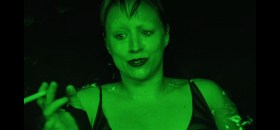
Haunted mother Pansy, played with quiet grace by the inimitable Deborah Mailman, saws her frayed hair with a rusty blade. Aching for her missing children, she clutches her youngest to her breast while she beads these braids with seeds that she’s carefully burned through their heart.
She hangs her handmade sacrifices on desert shrubs as a wayfinder, much like Ariadne’s thread through the labyrinth. They are pieces of her, signals that she is still there, still searching and refusing to abandon hope of reuniting with her family.
Wolfram – quick links
Bad company

Wolfram, which premiered at the closing night gala of the Adelaide Film Festival, is set in 1932 under the spectre of the Stolen Generation. Pansy refuses to flee from the Central Desert despite everything she has cruelly lost. New partner Zang (Jason Chong), a mining prospector from China, agrees to give finding her children one more shot.
All the while, Max (Hazel Jackson) and Kid (Eli Hart) linger far below the scorching sun, way down deep in the dark of tungsten mines, where they have been set to back-breaking work by the barking Billy (Matt Nable). Worrying at the rockface, dynamite in hand, there’s naught but a rope-slung bucket between them and an abyss promising broken limbs.
Elsewhere, Sweet Country carry-over Mick (Thomas M Wright), a drunken man in a perpetual state of exasperated profanity, grumbles around his dusty cattle station, where the bulk of the work is done by his Aboriginal son Philomac.
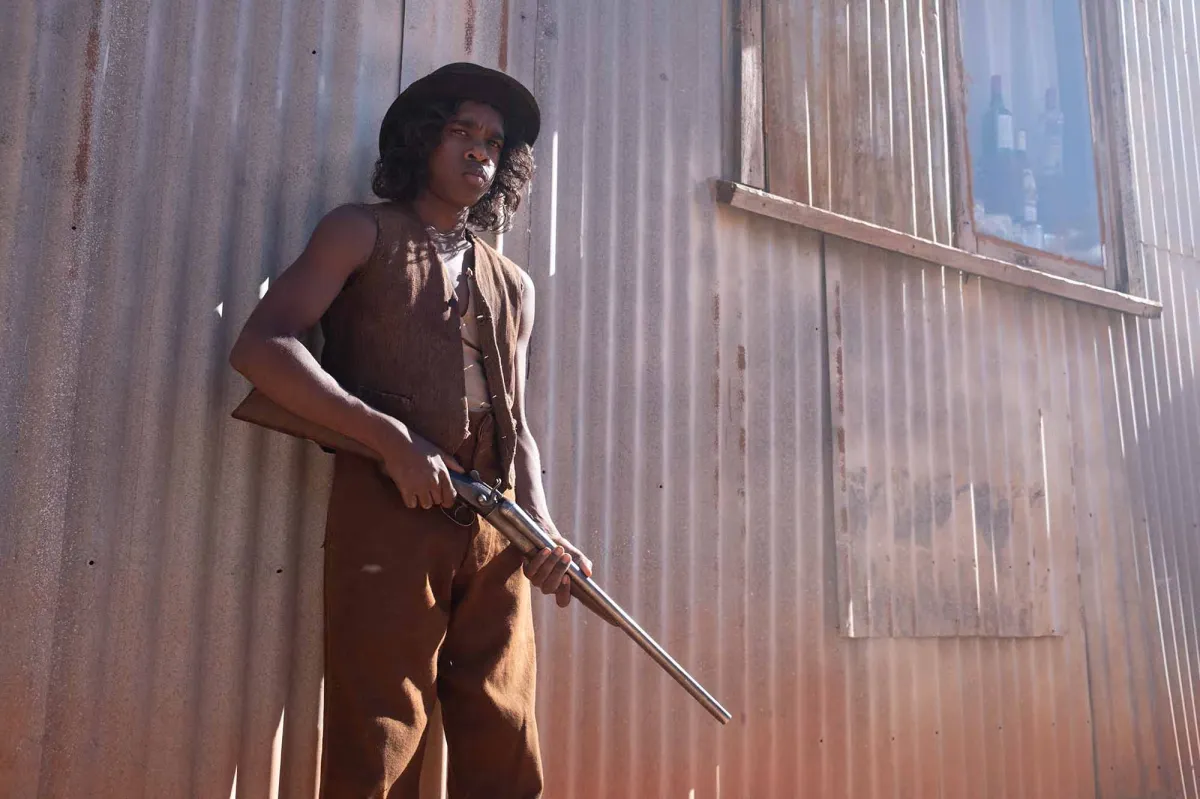
Sweet As star Pedrea Jackson takes over the role of Philomac from Sweet Country’s Trevon Doolan. Now an 18-year-old man who longs for connection to Country and kin, he is treated for all the world like a slave by Mick, rather than family. When an old ‘friend’ Casey (Erroll Shand) rides into town with fellow crim Frank (Talk to Me’s Joe Bird), they all but take over the joint, shotguns in hand.
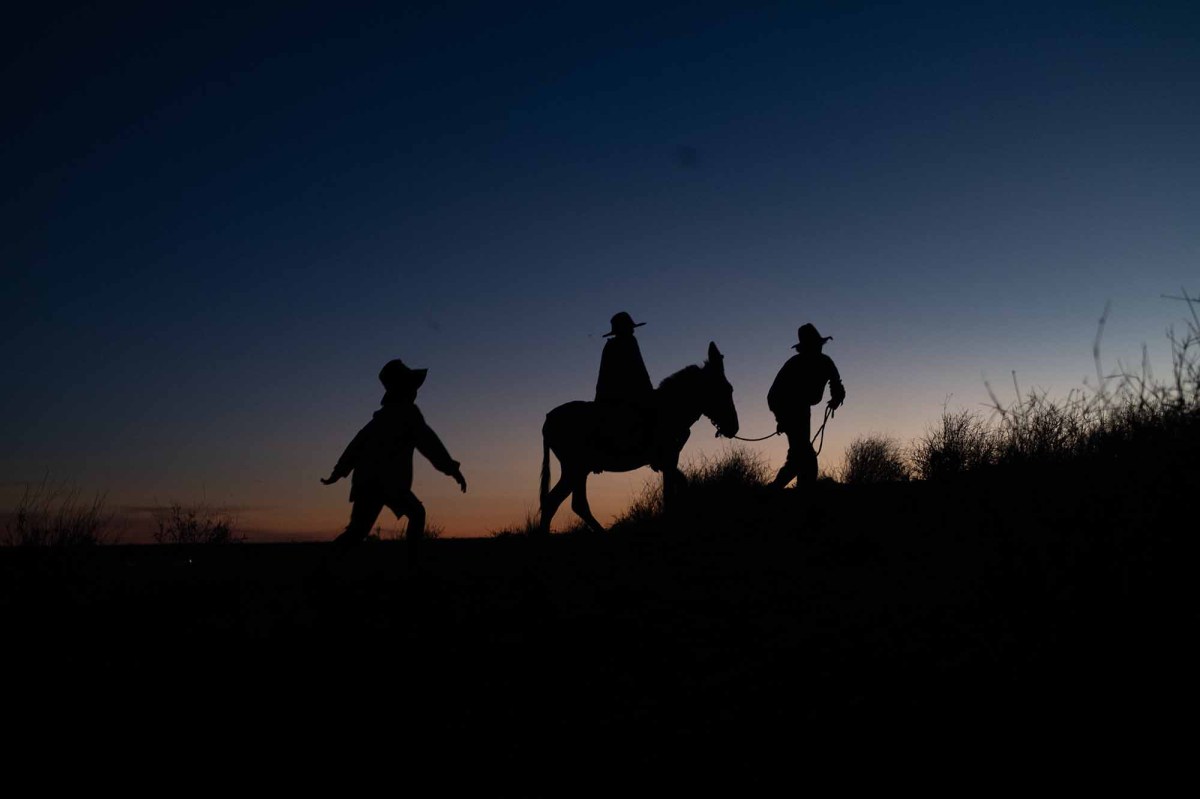
In the face of the pair’s snarlingly racist violence, Philomac takes it as a sign to scarper. He comes across first Max and then Kid. They flee together on a donkey, all longing for a better life, but Mick, Casey and Frank aren’t about to let go of free labour and set off on a hunt to claim what they insist is theirs to take: black bodies to be used and abused for their wicked ways.
Lighting the way
One of this land’s mightiest filmmakers, Thornton has been exploring the consequences of blood-soaked colonial violence throughout his astonishing career.
The world has taken notice. Samson and Delilah, depicting two young First Nations lovers, won the Caméra d’Or award at the Cannes Film Festival for best debut feature. Sweet Country won the Venice Special Jury Prize for exposing the same wound through a revisionist Western framework, while the magnificent vampire show Firebite did so by plunging its fangs into straight-up horror.
The New Boy starred Cate Blanchett and Aswan Reid (who also has a brief cameo in Wolfram) and explored the insidious ways the church has underpinned invasion. In this latest magnetic feature, Thornton and co-writers Steven McGregor and David Tranter spin something new again.
Shot by Thornton, his own regular cinematographer, almost every shot of Wolfram glimmers like gold. It’s a beautiful film, illuminated by hope, resilience and the refusal to lay down and die, no matter what brutality is meted out by those who cannot see humanity in the colour of another’s skin.
Hazel Jackson and Eli Hart are delightful company. There are signs of light, too, in the face of Pedrea Jackson, a promising emerging star who Thornton’s camera adores. Mailman also shines bright in her portrayal of Pansy, a mother who will not surrender no matter how far down she is dragged, even if the role could have been fleshed out further.
Wolfram’s shifting sands
Yes, there’s horror here, with a a gruesomely smouldering corpse and ashen bones, but there’s plenty of humour too. Wolfram is a reminder that the fight for Country was never abandoned.
When brigands Mick, Casey and Frank stray from the station, they are not necessarily the hunters. (It’s a credit to Wright that he can still call up sympathies for Philomac’s deadbeat dad when things turn gnarly.) Also welcome is Wolfram’s acknowledgment of this country’s Chinese heritage, explored so wonderfully through Jason Chong’s loyal Zang, and also the uncle-and-nephew duo of Shi (Ferdinand Hoang) and Jimmi (Aiden Du Chiem). The latter take Pansy’s kids under their wing, though not without the expectation of heading back down the mines.
The history of this place is fraught, constantly shifting like sand. Few filmmakers perceive these movements as clearly as Thornton, who once again has delivered a film for the ages.
Wolfram premiered at the Adelaide Film Festival with wider release still to be confirmed.
Discover more screen, games & arts news and reviews on ScreenHub and ArtsHub. Sign up for our free ArtsHub and ScreenHub newsletters.
Actors:
Deborah Mailman, Erroll Shand, Joe Bird
Director:
Warwick Thornton
Format: Movie
Country: Australia
Release: 26 October 2025