Does cinema have to be lengthy to demonstrate depth? These days, it feels like filmmakers insist on a minimum of three hours if they’re exploring historical, political or otherwise weighty dramatic subjects.
Thanks goodness, then, for Fatherland filmmaker Paweł Pawlikowski, disabusing us of the notion that movies about war must also go to war with your butt, bunched up for too long in uncomfortable cinema seats.
Each of the films in his lusciously chiaroscuro-shot historical trilogy clock in at under an hour and a half. The first was 2013’s Oscar-winning Ida. Set in 1962, it followed Agata Trzebuchowska’s novitiate, Anna, orphaned during the German occupation of Poland, as she traced her family’s history before joining the convent.
Pawlikowski chased that with 2018’s triumphant Cold War. Nominated for the Palme d’Or at the Cannes Film Festival, it reaches from the wreckage of world war two to the swinging 60s, following the tumultuous love of a singer (Joanna Kulig) and her musical director (Tomasz Kot) across the Iron Curtain.
Fatherland, in Australian cinemas this week, completes this sweeping evaluation of a world in turmoil in a similarly condensed yet precise fashion. While Ida and Cold War grappled with difficult history through fictional characters, Fatherland brings us closer to the truth, lightly fictionalising the travails of the real-life Mann family.
Fatherland film review – quick links
Family business
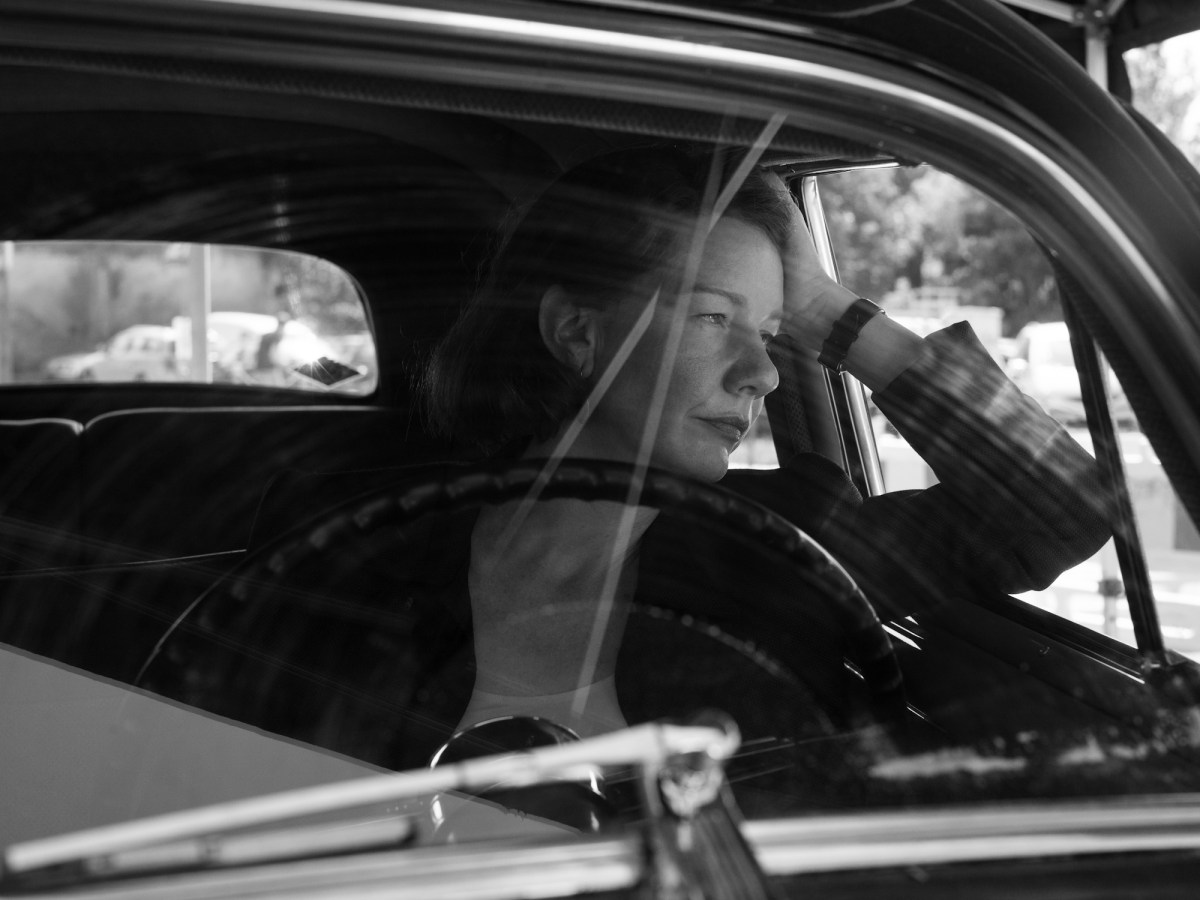
Also set in the immediate aftermath of world war two, Fatherland features the mighty Sandra Hüller as Erika Mann. A theatre star, noted writer and rally car driver, Erika denounced the rise of the Nazis. The role’s in stark contrast to Hüller’s turn in Jonathan Glazer’s The Zone of Interest, as the ice-cold Hedwig Höss who swaddled herself in the furs of Jewish women industrially slaughtered at her husband Rudolf’s command at Auschwitz.
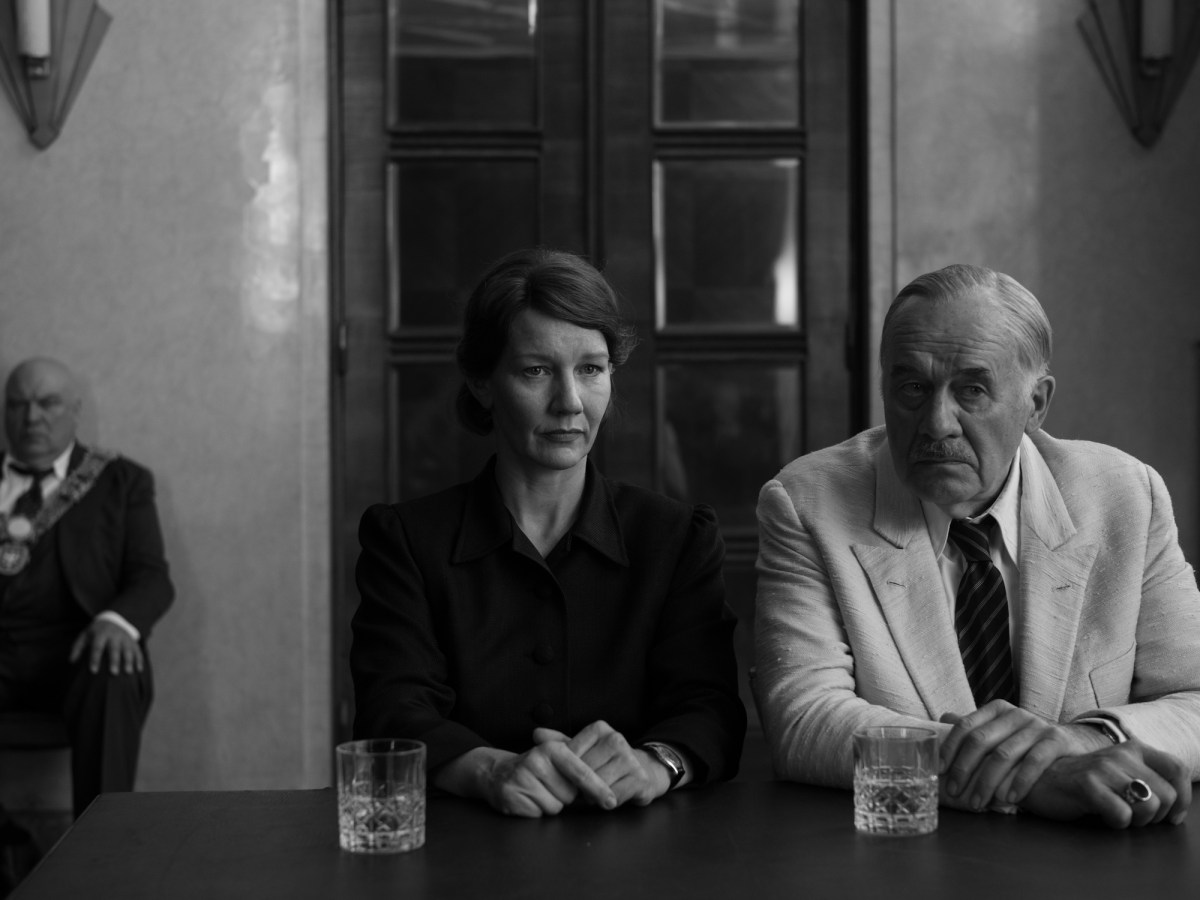
Erika is a polymath like her father, the revered German author Thomas Mann (Babylon Berlin’s Hanns Zischler), and lived a Bohemian lifestyle in Munich in the dying days of the Weimar Republic, alongside her beloved brother Klaus (Inglourious Basterds’ August Diehl), who authored the Nazi-banned novel Mephisto.
The rise of the Nazis drove them away. Erika fled to Switzerland – via a marriage of convenience with the poet and fellow queer WH Auden – before settling in the US with her parents after becoming a war correspondent with the BBC. Klaus wound up on the Côte d’Azur, via a short, frustrating stint working with the filmmaker Roberto Rossellini.
All of this is assumed knowledge, with Pawlikowski preferring to tease out the story, and the history, through character, bringing a canny knack for filling us in via titbits of exposition that flow naturally, like journalists asking questions at a press conference.
Fatherland presses Erika into service as her father’s chauffeur and companion as he travels back to a post-war Germany in ruins, the remains carved up by the Allies, to be awarded not one, but two Goethe Prizes for artistic endeavour: one in Weimar, and one in Frankfurt, on opposite sides of the East/West divide.
In truth, Thomas travelled with his wife Katia, heard briefly on the phone (voiced by Charlotte Schwab). But the switch to a father-daughter pairing in Fatherland, and the nudging of Klaus’ timeline as tragic news arrives near the film’s opening, brings an emotional clarity to the maelstrom surrounding the Manns’ contested homecoming.
Watch the trailer
Reds under the bed
The Goethe Prize double-dip pisses off a bunch of folks. Journalists are frothing, though Erika finds a supportive shoulder in former news colleague Betty Knox (Anna Madeley), with whom she has herstory.
The Manns face criticism for sitting out the war in relative comfort, as if leaving one’s entire life behind to face suspicion overseas has been a breeze. (During the reds-under-the-bed scare of a McCarthy era, it was not.) American politicians suspect Thomas’ trip is a Communist dalliance. After all, he’ll be met by both German-born Russian politician and cultural keeper Johannes R Becher (Devid Striesow) and propaganda-spinner Sergei Tiulpanov (Daniel Wagner).
But as Fatherland makes abundantly clear, he truly believed Germany’s shared cultural heritage could heal the riven nation’s catastrophically self-inflicted wounds – deep scars that the Manns share.
Diehl, a grand character actor, does delicate work, conveying Klaus’ wounded soul on a single telephone call with his sister, as an anonymous man unceremoniously leaves his hotel room without valediction. Again, brevity is no obstacle to substance.
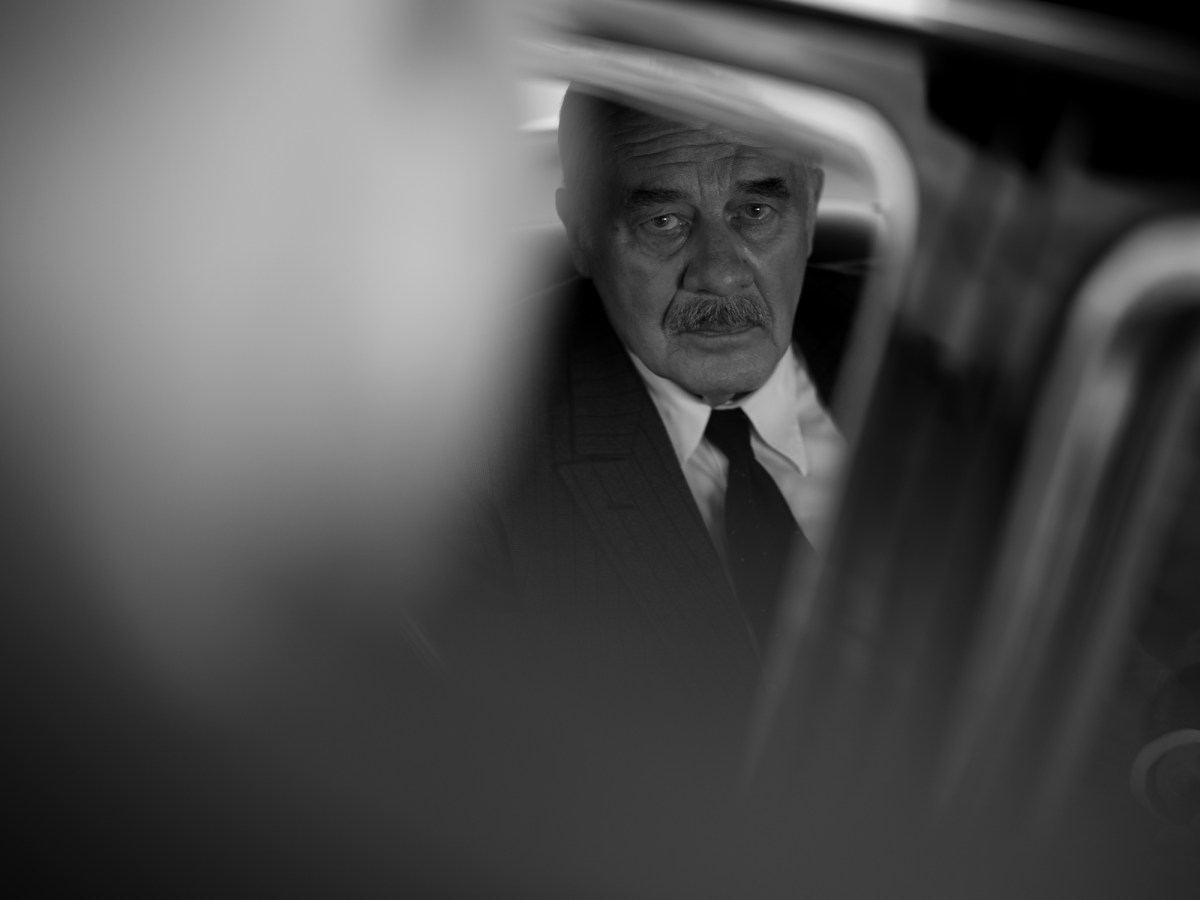
While Zischler’s business-first, no-matter-the-circumstance performance as Thomas might seem monstrous, or an overly familiar trope of stern fathers, this was true of so many men after the cataclysm of war, and a fair read on the awardee himself. (Seriously, the Manns are a soap opera unto themselves, if you want to read further – something Pawlikowski’s films actively encourage.)
The towering Hüller is magnificent as Erika, caught somewhere in the middle between her brother and father’s worldviews, a tight and terse trio. In a film that has Erika by Thomas’s side almost unfailingly, a stolen moment alone in her hotel room speaks volumes – as does her fury at Nazi-sympathising drunks through the window.
Few actors can bring us with them with so economical a performance, but Hüller has already proven herself here in films from Maren Ade’s Toni Erdmann to Justine Triet’s Anatomy of a Fall.
Nazi pop
While Fatherland is arguably the least of Pawlikowski’s trilogy, it’s only by a smidge, and his ‘lesser’ works are still much stronger than most.
Once more lensed by Oscar-winning Polish cinematographer Łukasz Żal, there’s a crystalline precision to his visual storytelling, also on show in Ida, Cold War, Hamnet, First Light and The Zone of Interest.
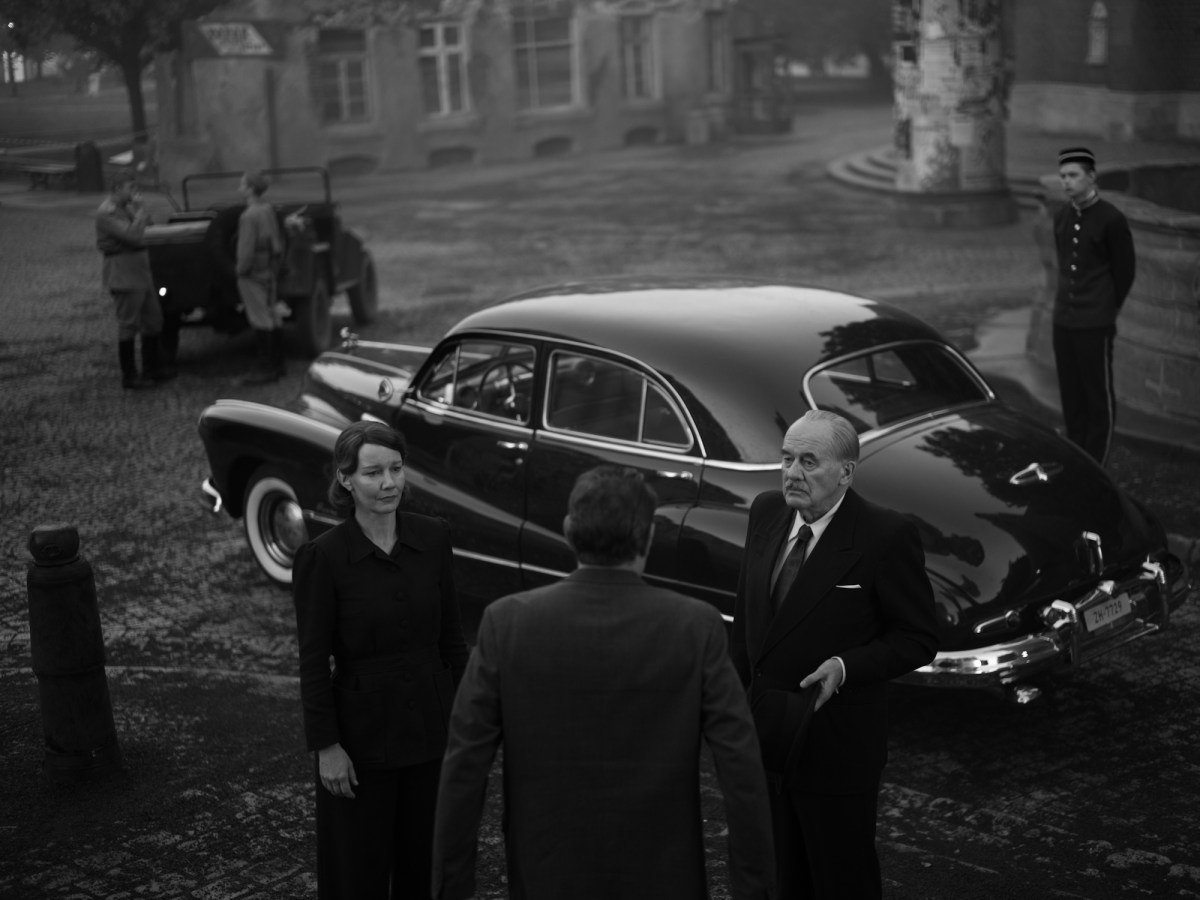
Żal captures history’s trace like breath on glass. Avante-garde composer Marcin Masecki, who arranged the jazz components of Cold War, delivers an astonishing score that can summon both the uplifting spirit of Bach and the malignant propaganda of Nazi pop (yup, it’s a thing).
Music and manoeuvring collide in Fatherland’s most magnificent scene, as Thomas tussles with Wolfgang and Wieland (Theo and Enno Trebs), the Nazi-sympathising grandsons of Hitler-coopted composer Richard Wagner, and Erika puts the similarly compromised actor, Gustaf Gründgens (Joachim Meyerhoff), in his place. This, as the Manns’ calm and collected CIA-provided security guy (David Menkin) watches over them, in more ways than one. Spot Kulig’s cameo!
A microcosm of everything going on here, the scene epitomises Pawlikowski’s intent and offers a PowerPoint presentation of post-war Europe without labouring the geopolitical forces. Such is his power, as a filmmaker, that by the time the Manns’ contested road trip comes to its conclusion in a bombed-out church, the hard-earned catharsis that washes over the end credits is monumental. Fatherland distils an earth-shattering epoch into 82 minutes. More (or rather, less) of this, please.
Fatherland is in Australian cinemas from 12 November.
Discover more screen, games & arts news and reviews on ScreenHub and ArtsHub. Sign up for our free ArtsHub and ScreenHub newsletters.
Actors:
Sandra Hüller, Hanns Zischler, August Diehl, Anna Madeley
Director:
Paweł Pawlikowski
Format: Movie
Country: Germany / Poland
Release: 12 November 2026