When artist, academic and filmmaker Kuba Dorabialski premieres his second feature, the beguiling Agata the Writer, in the Giornate degli Autori competition at the Sala Perla during the Venice Film Festival this week, he joins a remarkable group of Australians showcasing our stories on the international stage via what’s informally known as the Big Five: Sundance, Berlinale, Cannes, Venice and Toronto.
‘My 14-year-old film buff self was very happy and thrilled to hear we got into Venice,’ Dorabialski tells me. ‘I’m beside myself.’
Agata the Writer producer Alex White, who previously travelled to the city of canals alongside Babyteeth director Shannon Murphy, worded up Dorabialski on what to expect from the festival.
‘Even before we’d finished shooting, Alex would tantalise me, making it sound super glamorous,’ Dorabialski says. ‘And then we got the acceptance email, and it’s very validating, thinking that maybe on some level the film worked, because you can’t really see it clearly anymore when you’ve seen it so many times, through the editing process.’
Taking Australian films overseas – quick links
From Vencie to Adelaide with love
Born in Wroclaw, Poland, Dorabialski’s family moved to Australia when he was young. His latest film is an intriguing actors’ piece tackling difficult history and the question of who gets to tell what story in a refreshingly form-melding fashion, and it features Leviticus and The Killings at Parish Station star Mia Wasikowska as the titular character.
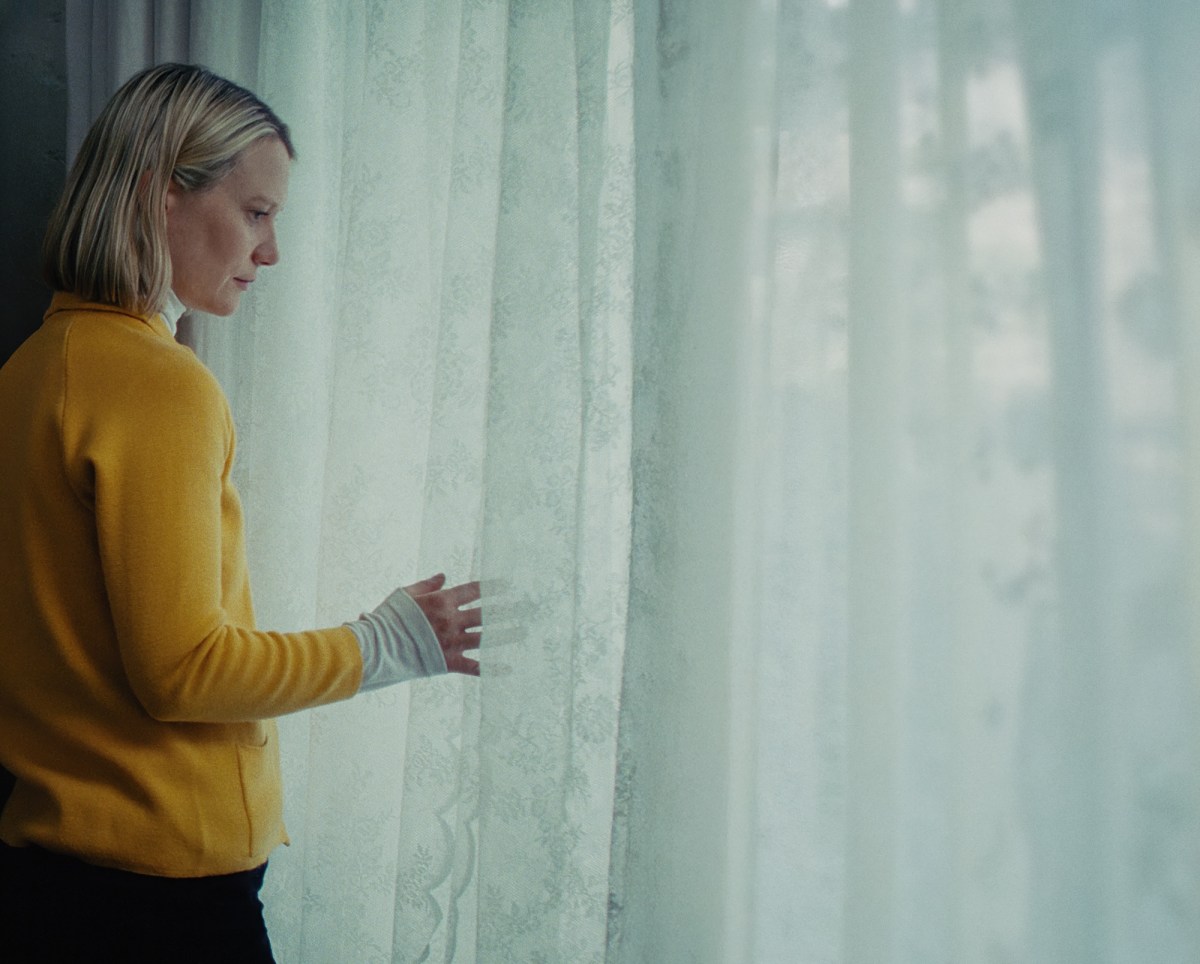
Agata is a Polish-Australian author who has travelled from Sydney to Sarajevo, the capital of the Republic of Bosnia and Herzegovina, in the hopes of writing a serious novel set during the four-year siege from 1992 to 1996.
But as Agata settles into her accommodation, bizarre, crude artworks begin to disappear mysteriously, and despite their shared Slavic roots, the author encounters understandably feisty pushback from locals who view her writing project as cultural appropriation that trivialises their trauma – an idea she then absorbs in naming her embryonic novel The Responsibilities.
‘Kuba said to me, a while ago, that when you meet another Slav in Australia, you’re like, “High five, we’re the same”. Wasikowska recalls. ‘But when you come here, to Sarajevo, it’s a completely different experience. There are more differences highlighted, rather than the similarities.’
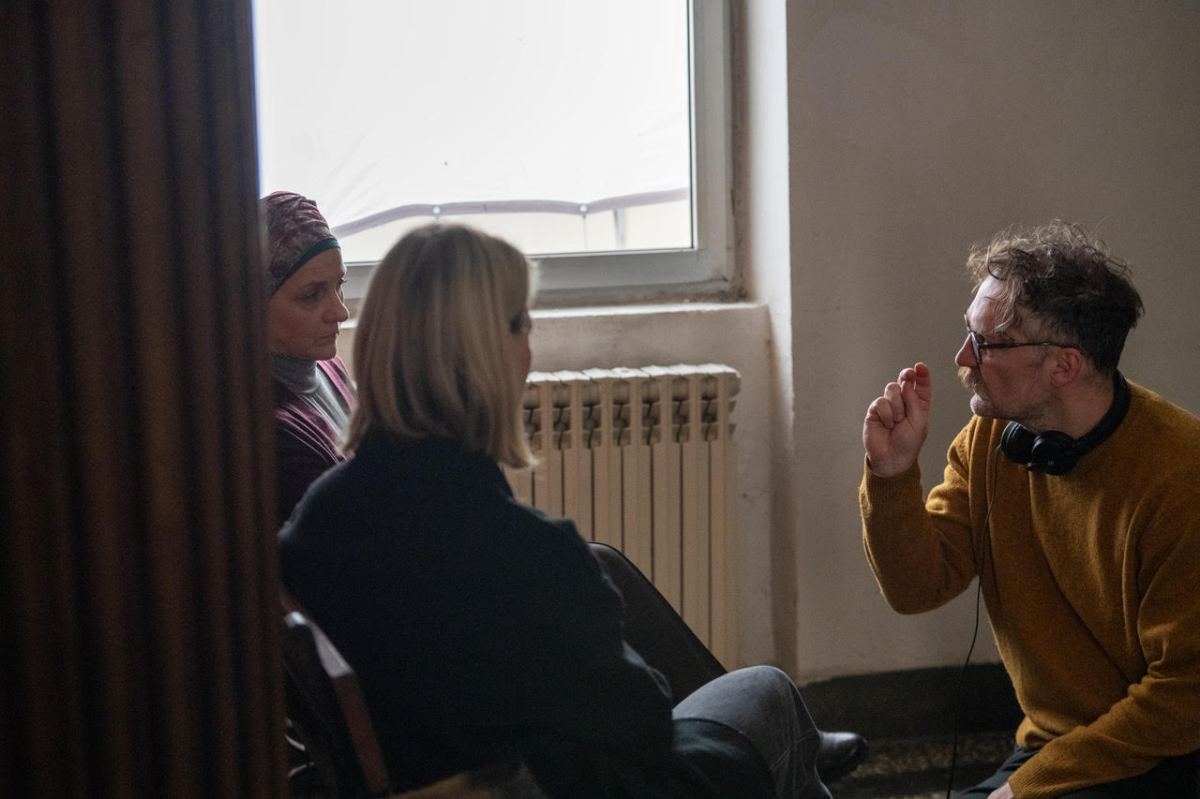
She sees taking on a role as complex as this one as an act of surrender in some ways. ‘I always feel like when you’re acting in a film for a writer/director, you’re generally playing a version of them,’ Wasikowska adds. ‘Which is true of the things I write or would like to write. They’re pretty much me, so I could see Kuba in it, in a way, from the beginning, and I was really happy to play a version of him.’
Dorabialski’s glad The Alice in Wonderland star stepped into this warped mirror image of himself. ‘Mia kept popping into my head as I was writing Agata,’ he recalls. ‘We both share a Polish background, but there were some surprises that cropped up as I got to know Mia a bit better.’
They can’t wait to show it to audiences in Venice, then bring the story home for its Australian premiere at the Adelaide Film Festival in October, as a recipient of the South Australian cinematic showcase’s investment fund support.
Wasikowska adds, ‘I’m actually so, so happy we could make this film, because it’s increasingly unusual to do something this different, a film working outside of typical structures that’s not at all formulaic. I wish there were more films like this, and that’s hugely thanks to Alex White, our wonderful producer. I’m excited for everyone to see it.’
As is Dorabialski. ‘We’re thrilled about having the international premiere in Venice and the Australian premiere in Adelaide,’ he says.
‘Adelaide Film Festival were one of our earliest supporters, both in helping fund the production and as a lovely, warm and enthusiastic team. South Australia is the home of weird and adventurous Australian cinema, so it feels especially lovely to open there.’
Hungry for the big five
Earlier this year, I caught up with Relic director Natalie Erika James at Berlinale to chat about her latest feature, the body horror Saccharine.
Shot in Melbourne, Saccharine stars Grey’s Anatomy and The Sex Lives of College Girls actor Midori Francis as Hana, a med student whose social media algorithm won’t quit pushing the body beautiful myth at her. ‘It’s really insidious,’ James says.
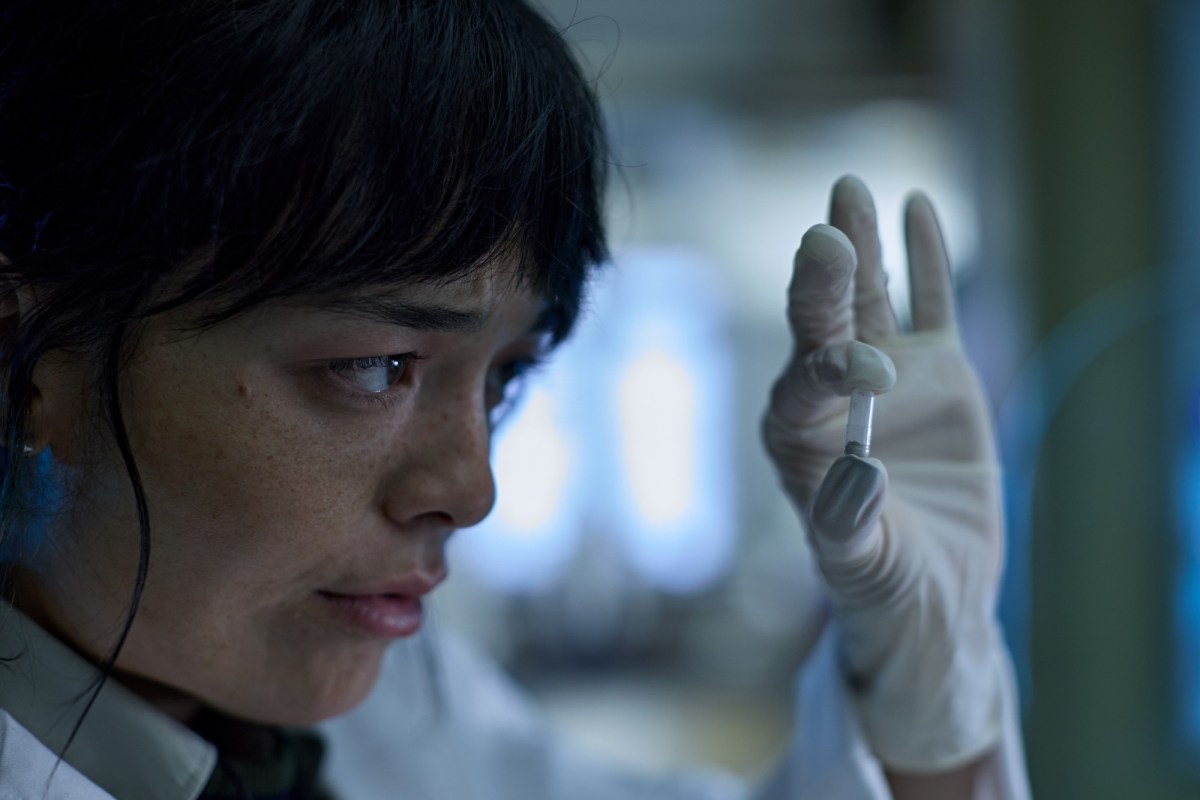
Becoming addicted to an Ozempic-adjacent weight-loss drug, Hana is startled to discover that it’s predominantly made of human ashes. Before long, she steals some to make her own knock-offs. But the unquiet dead she ‘borrowed’ those remains from comes back to haunt her.
Hana’s obsession takes hold despite the cheerleading support of her best mate Josie, played with heart by The Tourist lead Danielle Macdonald.
‘The entry point is through a character who has this internalised fatphobia,’ James says. ‘But Danielle’s character is the foil to that, because she is what Hana wants: someone who is comfortable with themselves, who has love and is really the grounding force.’
As with Relic, which cast Robyn Nevin, Emily Mortimer and Bella Heathcote as three generations of a family dealing with the horror that is dementia, James penned Saccharine’s screenplay as well as directing. It cuts deep.
‘My writing is like a reflection of the issues that I’m grappling with,’ she says. ‘And anytime you go into like the personal, you hope that it speaks to the universal, right? Horror is perfect for exploring the way that society encroaches on and oppresses women, because it’s all about anxiety [and] the fear that things are out of your control, which Saccharine has in common with Relic.’
Both films debuted at Sundance – particularly thrilling for James, given she was born in the US – with Saccharine then heading to the German capital, marking a double Big Five feature.
‘When you go to film school, you’re dreaming of the Big Five,’ James says. ‘So to have our world premiere in Sundance, then head to Berlinale, it really is a pinch-me moment.’
Killing it at TIFF
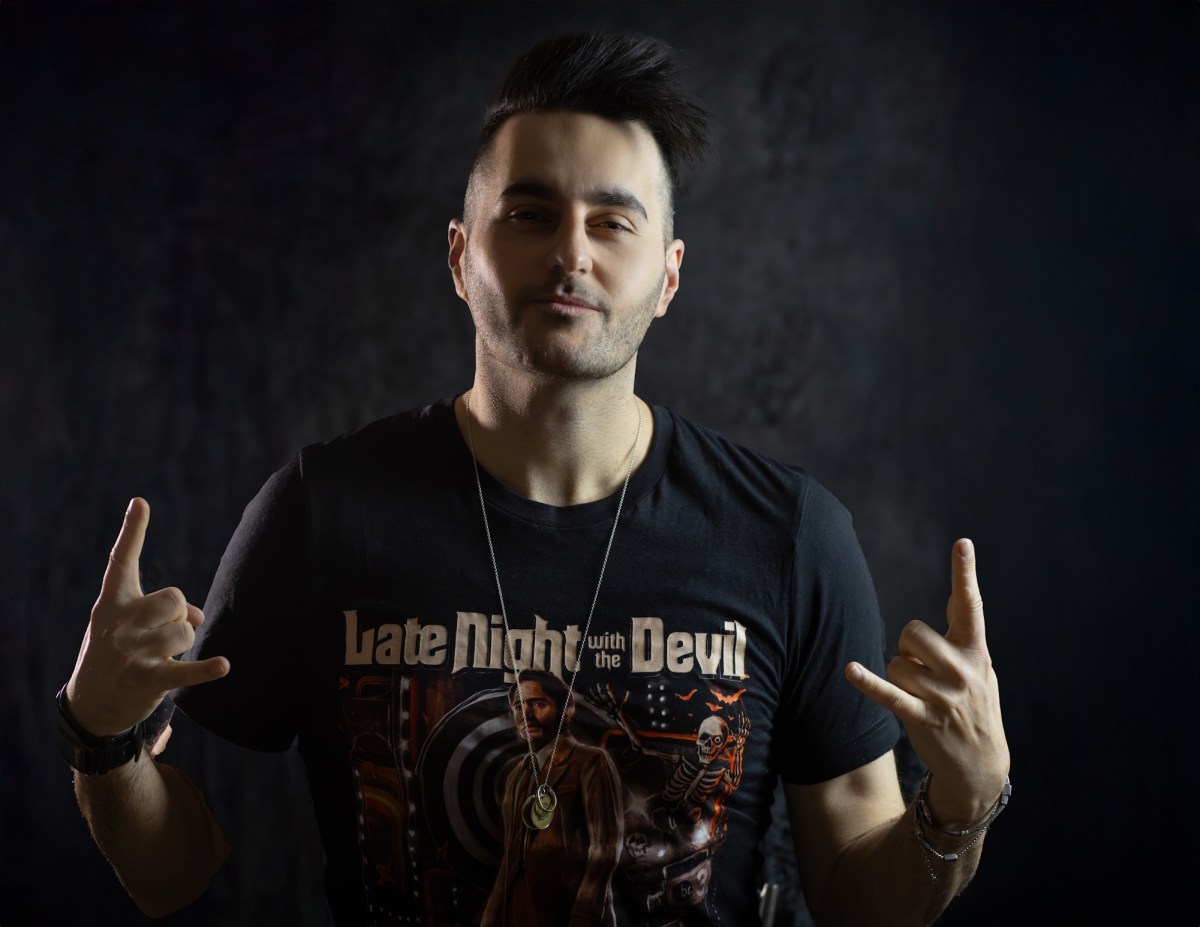
Shortly after Agata sails into Venice, Melbourne music video and horror film director Nick Kozakis (Godless: The Eastfield Exorcism) will touch down in Canada for the world premiere of his latest feature, Kick On.
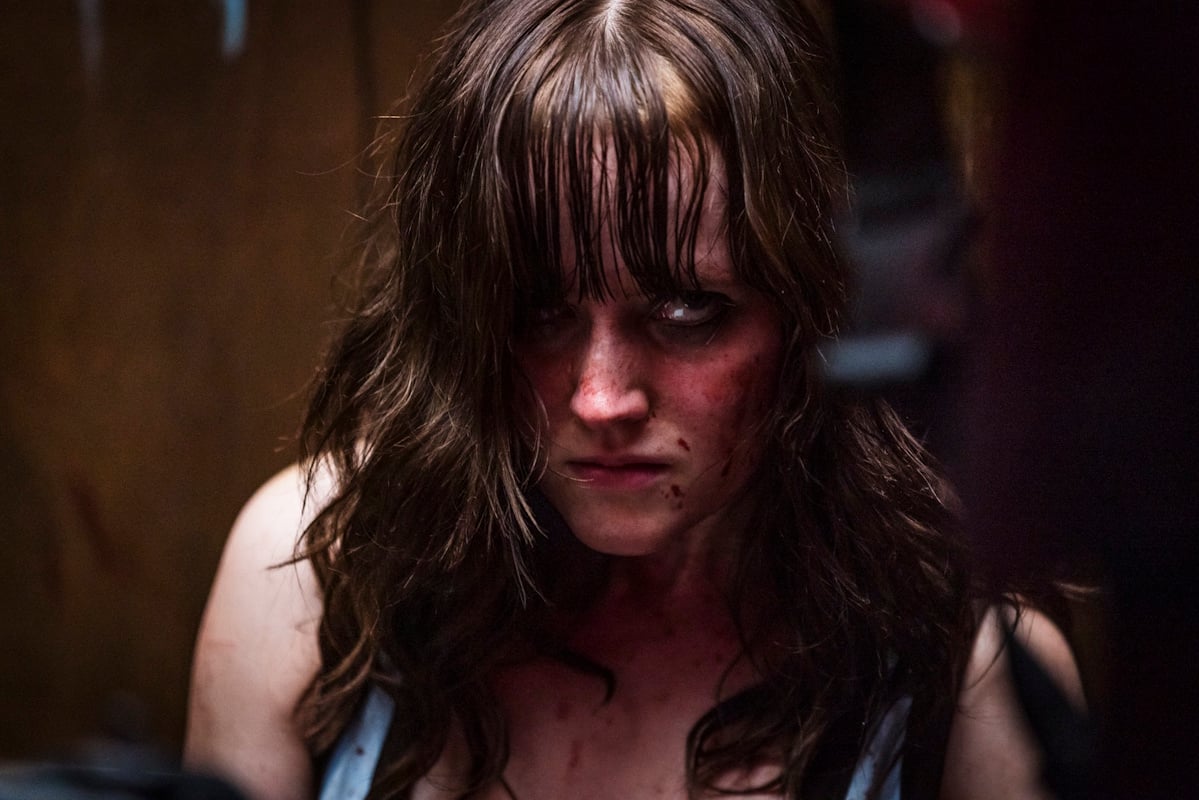
Supported by local distributor Umbrella, Kick On will debut in the Midnight Madness section of the Toronto International Film Festival, before crossing the border to play at genre-forward Fantastic Fest in Austin, Texas.
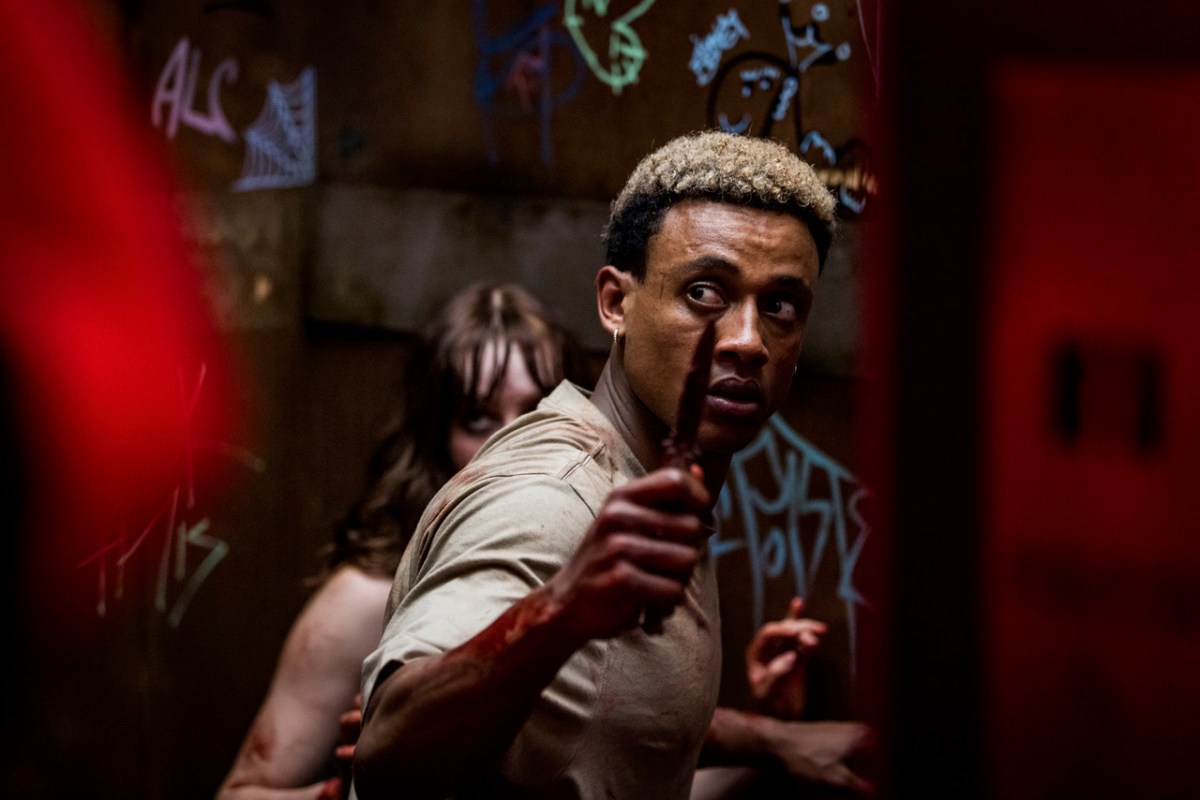
The Rings of Power lead Markella Kavenagh plays Eden, a Gen Z party girl who kicks on with her mates, played by Ras-Samuel, as friend-with-benefits Drew, plus brother and sister Lee and Zack (Kaitlyn Boyè and Nikita Chronis). They wind up back at the ritzy apartment of a drug dealer’s son after getting chucked out of a club for fighting.
‘They’ve got the drugs, they’ve got the booze and the music, so they decide to stick it out until something goes horribly wrong, and then chaos ensues,’ Kozakis teases.
He adds, ‘It was my first time dealing with a set build, so it was really cool to be able to spray the walls with blood and not have to worry about it.’
The action-horror was shot in a whirlwind without major funding support. ‘While that has its challenges, we also had no shackles,’ Kozakis says. ‘So when I found out we were getting into TIFF, I wanted to throw up. I was hot and cold at the same time. I didn’t know if they Faye Dunaway-ed it and called the wrong name out, it was so surreal.’
His love of the dark side of cinema was inevitable. ‘I’m an accident child, so my brothers are 18 years older than me,’ Kozakis says. ‘I was watching inappropriate shit like The Evil Dead, The Fly and The Exorcist as a six-year-old. They traumatised me so much that, instead of therapy, I decided to jump into horror instead to traumatise other people.’
Villain origin story
Like Talk to Me directors Danny and Michael Philippou, who sparked a bidding war at Sundance for their Adelaide-shot masterpiece, Kozakis got his start mucking around with a video camera. ‘Jackass was a massive inspiration,’ he recalls. ‘That’s how I caught the bug, just playing around with friends, doing stupid stunts, and I had so much fun.’
Like Dorabialski, Kozakis says a film already feels so strange by the time it’s being birthed. ‘You live and breathe a film for a year, and then it just becomes a series of cuts, so you don’t know what it is anymore,’ he says. ‘Is it intense? Is it engaging? Is it fun? You’re just so numb to it. So getting into a major festival like TIFF gives you that validation that, hey, maybe this is a really good film.’
For a genre filmmaker, kicking on to Fantastic Fest is a dream come true. ‘TIFF is obviously amazing and insane, and Fantastic Fest was on my bucket list, as was going to Sitges [Film Festival in Spain] with Godless,’ Kozakis says. ‘It’s really humbling to be recognised as the little guys from the arse end of the world, making it into these festivals.’
He hopes Kick On inspires more have-a-go heroes. ‘Look back at Indianna Bell and Josiah Allen’s You’ll Never Find Me, which got into Tribeca and Fantastic, and Matt Vesely’s Monolith being selected for SXSW,’ Kozakis says.
‘They were done on little-to-no budget. You can borrow a camera, or shoot on GoPros, like Jordan Daley’s Welcome Back to My Channel, which premiered at SXSW Sydney,’ he adds. ‘We’re breaking through without major support, and it’s amazing to see. I love that we’re the misfits of the film industry. It’s so punk rock.’