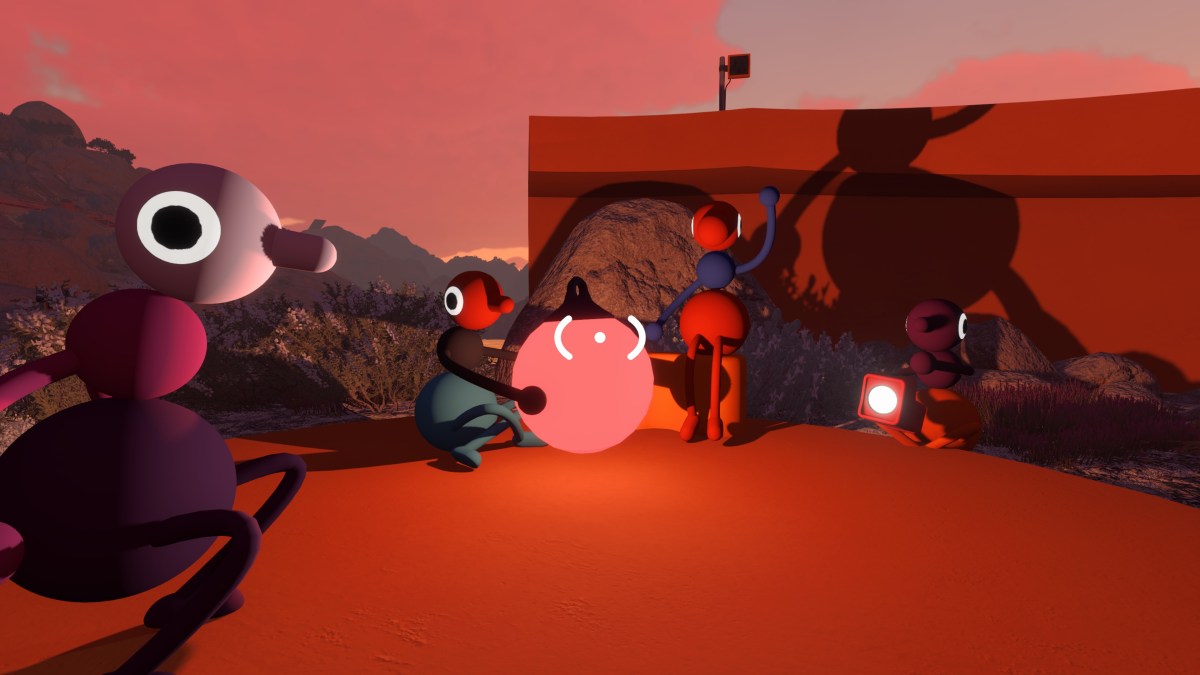
Big Walk is the best fun I’ve ever had gaming online with friends.
It’s not a typical activity for me. I usually prefer the quiet solitude of a single-player adventure or a cosier management game, where success or failure depends on my own skills and ingenuity. But between its idyllic world, complex but solvable puzzles, and its layers of multiplayer interactivity, Big Walk has my heart.
That it’s inspired by the Australian bush, featuring weathered terrain and familiar bird calls, is only the icing on a wonderful cake. This is a wildly ambitious, lovingly-created experience that allows you travel freely and with a great curiosity through open plains, forests, and across oceans.
Travelling through Big Walk with friends, the highs and lows of puzzle-solving and play are immensely rewarding.
Big Walk is all about joy and discovery – quick links
Finding your feet in Big Walk
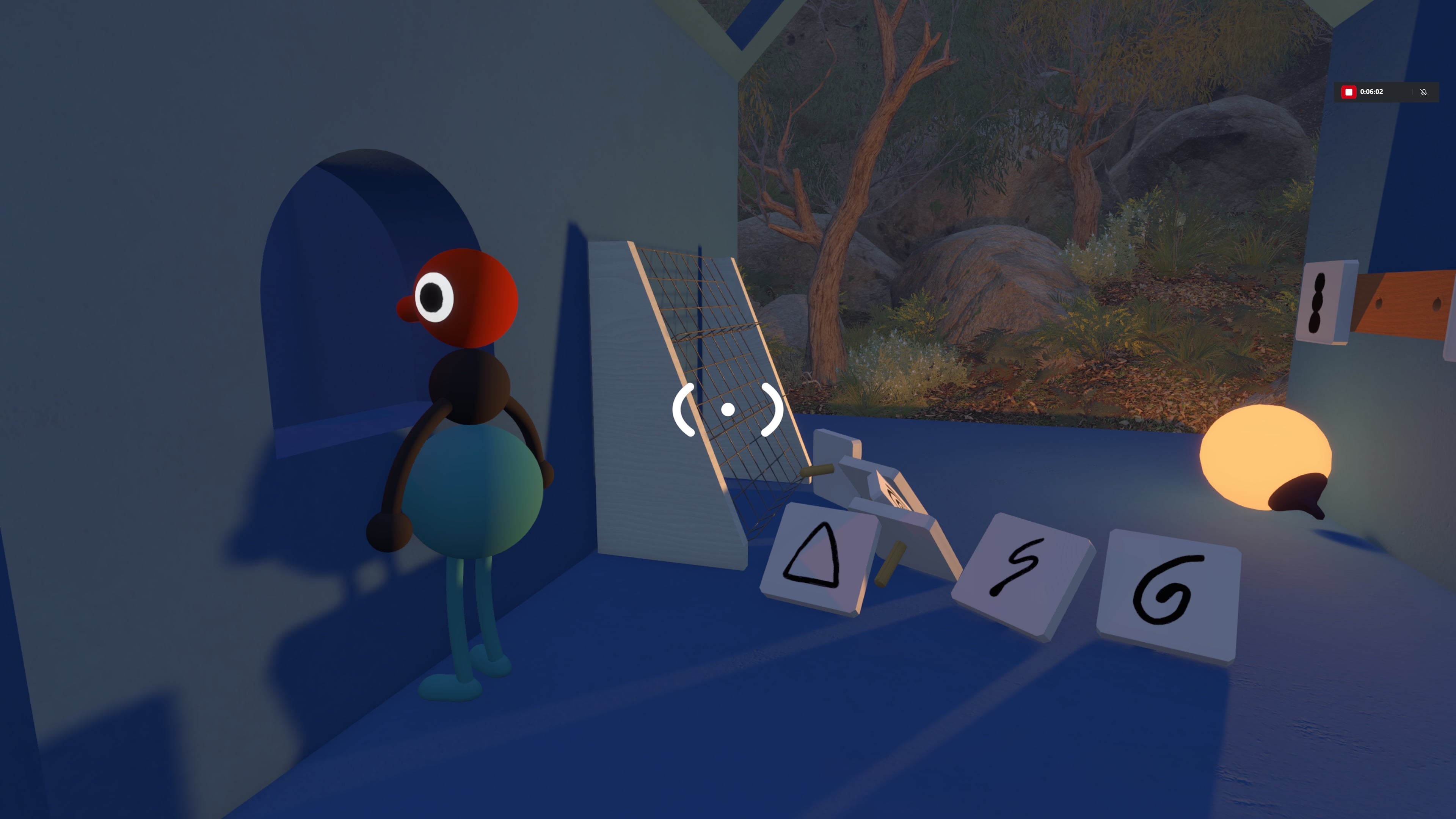
What works best about Big Walk is how it leaves players to find the pathway. While somewhat linear in nature – you venture through areas gated by the need for keys in the opening levels – there is no firm structure or direction to follow. You must figure out why you exist within this world, where you’re going and how to get there.
There is no narrative to follow here. No wink and nudge towards complex matters like lore or reason. You are simply a little being in a big world, and you must go on a very big walk with your friends.
You enter Big Walk in a tutorial area where you learn how to wave, poke, push, kick, and talk. As your session loads and your travelling companions pop in, you’ll be able to figure out talking sound distance (outside of a small bubble, your voice will be lost) and discover how your interactions work.
What’s so beautiful about Big Walk is how it embodies players in its virtual ‘third space.’ Players can raise their arms and signal to indicate their intent. When you talk over voice chat, your character’s nose-mouth shrinks and grows to indicate a mi-mi-mi-mi speech pattern and show you’re talking (which is particularly helpful when players go out of range and can’t be heard).
Being in first-person also adds to a sense of intimacy and connection. You’re playing a character, but you’re also existing in this world as yourself, embodying a version of you in this virtual space.
It adds to the sense that Big Walk is one big hangout space, allowing you to connect with friends you might not have seen for a while, and spend time chatting as you work through various puzzles in the wild.
Puzzling through a string of conundrums
Big Walk also allows you the grace to wander freely and without expectation, or to stride forth to tackle every puzzle you see. It’s all self-guided, which is what makes its gameplay feel so rewarding. Everything is at your leisure, with space in between major puzzles to sit by the ocean, explore mountain regions, or even annoy your friends by pushing them off cliffs and bridges.
Play is what you make of it.
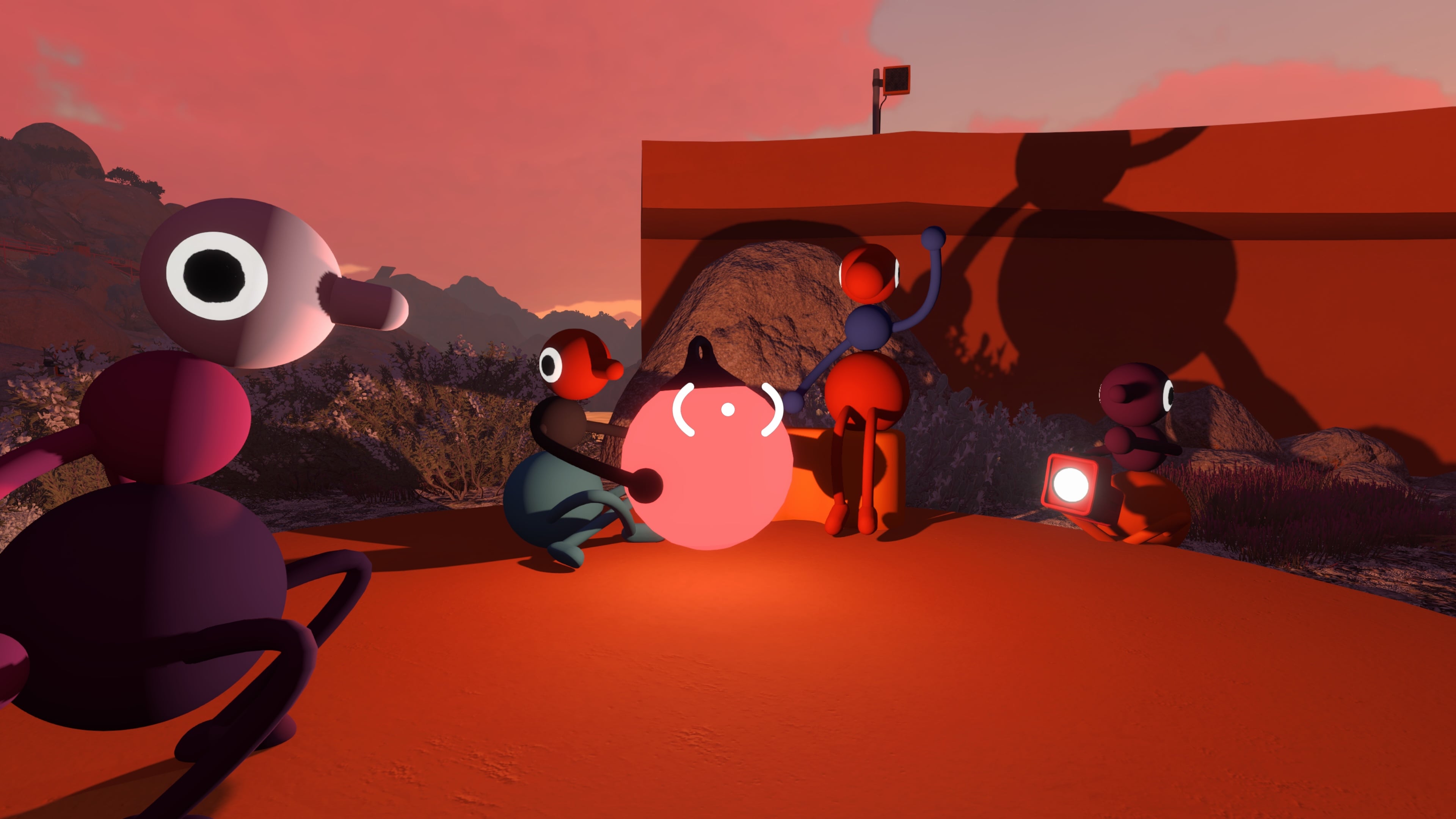
In my journey with Big Walk so far, I’ve ‘wasted’ countless lovely hours wandering around puzzles without a single thought about a solution, kicking my feet up by the ocean, having a ‘rave’ with my pals when music started without an obvious source (a puzzle we’ve still yet to tackle), and fighting bridge wars to throw my pals into ravines (it’s all in good fun).
But it’s not only the sandbox that’s satisfying. When yapping and wild experimentation leads to breakthrough thoughts about puzzles and ingeniously planned solutions, it’s an incredibly satisfying experience. Full hooting and hollering over voice chat sometimes, even when you’re in the quiet of your own home space.
Every puzzle in Big Walk feels solvable by working together, and that’s part of its magic. You can spend time any way you like, and sometimes loose space and time will give you the answers you’re looking for when you come across a new puzzle installation.
This freedom encourages warm, supportive communication and working together at your own pace. If you need to wander off to test some solution, you may have trouble finding your friends again but with tools like flares, glowing lights, laser pointers, walkie-talkies and megaphones, you can eventually find everyone, to share your latest discoveries.
In some parts of Big Walk, you will also need to separate into groups, with one part of your crew pressing a button or reading out a solution and another part plowing ahead to discover a hidden room, a new treasure, or something else entirely.
Figuring out who should leave and who should stay is a negotiation – but it’s also very funny when you turn around to talk to a player and they’ve already jumped off a cliff without really listening, and you can see their little eyes glowing far away in the distance (not mentioning any names …. Zac).
Comedy like this is inherent in the game, although it will likely depend on the closeness of your playing companions. There needs to be room for forgiveness, a light-hearted approach to puzzling, and a reasonable balance of a desire for a peaceful time, and a productive one.
Regardless of your intended approach, Big Walk will be quick to sweep your feet out from under you. You need to be ready to move with the flow, understand the vibe – and maybe the intelligence – of your crew, and to prepare accordingly for everything to go off the rails.
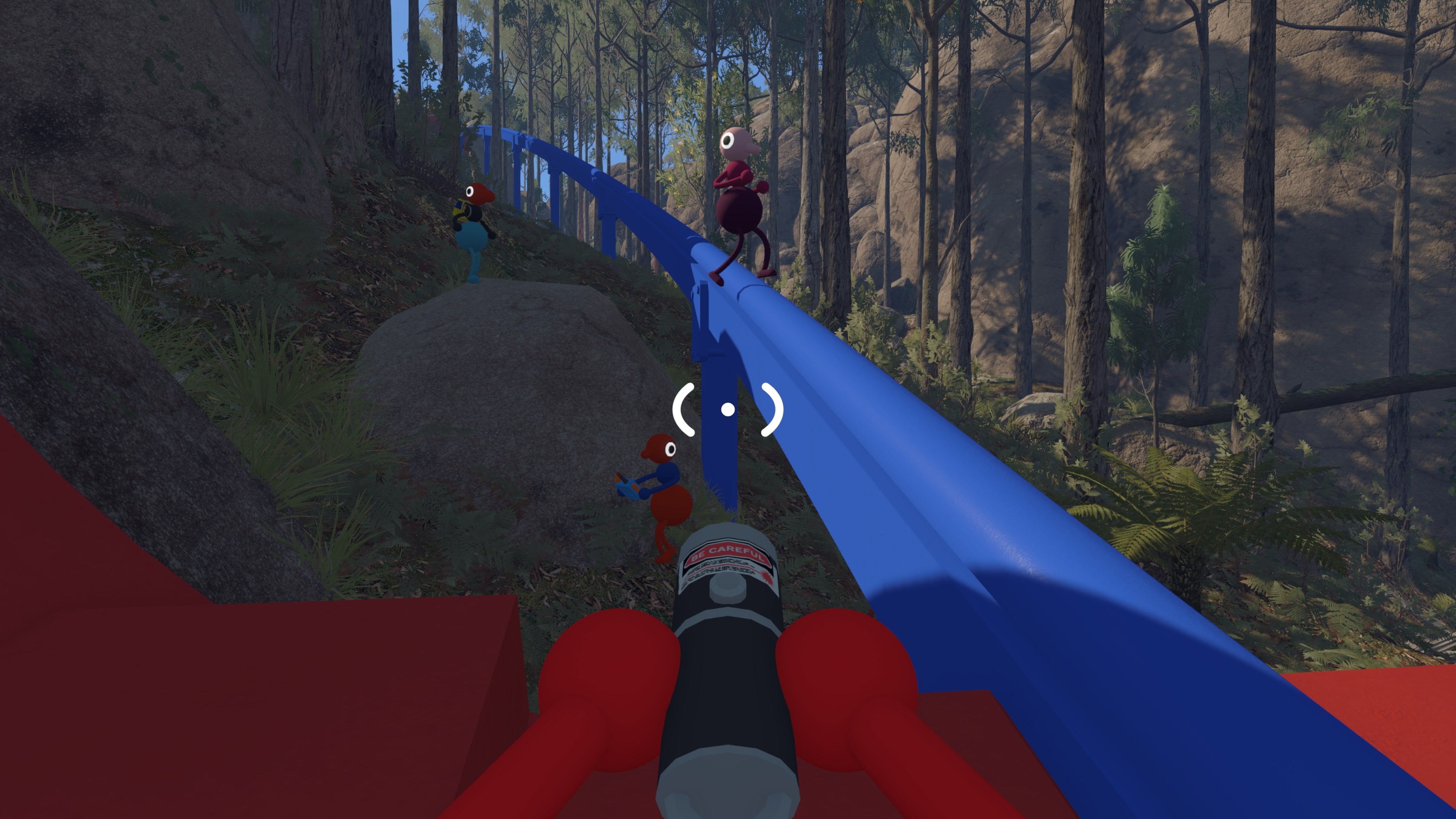
After all, why shouldn’t you spend time vibing to trance? Why shouldn’t you all attempt to jump on a rail designed for a train (likely to be unlocked in future) and make your way down a mysterious tunnel, to an area you’re likely not ‘supposed’ to be in yet? Why shouldn’t you accidentally throw a game-essential item into the ocean, necessitating a frantic rediscovery?
It’s all in good fun, and that’s exactly what Big Walk is designed for.
Following in the footsteps of developer House House’s previous endeavour, Untitled Goose Game, this game is an entirely different but equally lovely, ground-breaking and breath-taking experience. Whether you regularly play games with your friends or not, you should make ample time to wander its grassy, gorgeous plains.