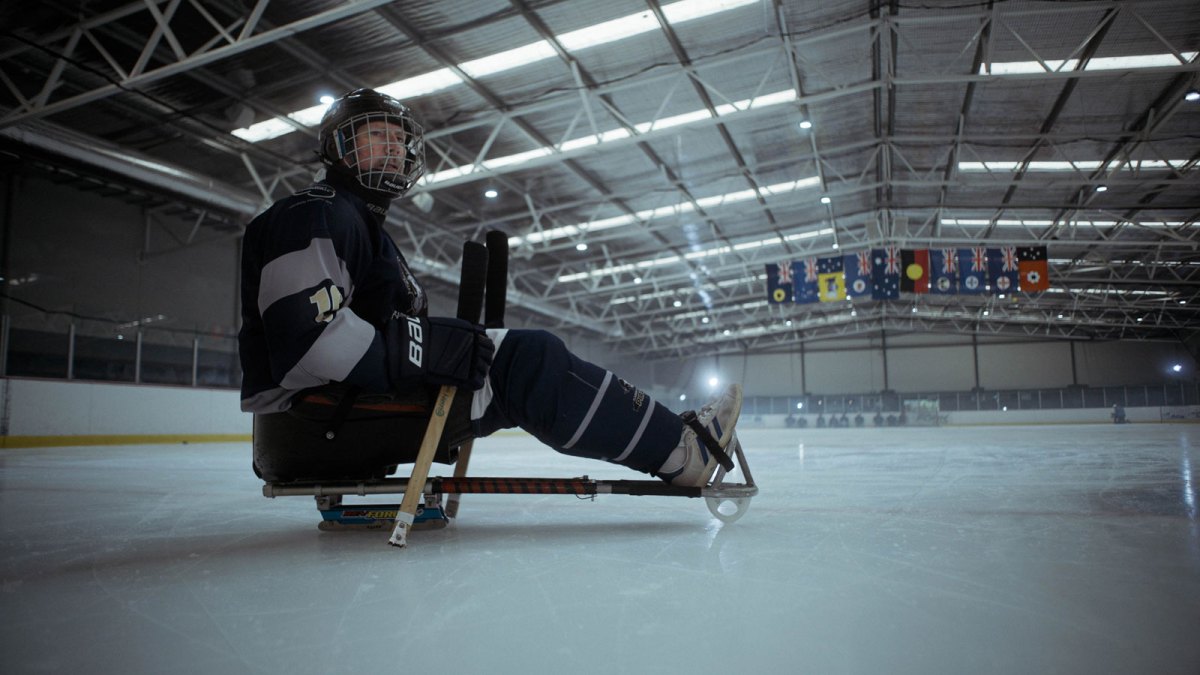
Hard as Puck, screening at Melbourne International Film Festival 2026 in August, is a sports documentary by director Isaac Elliott and producers Chanel Bowen and Noel Smyth about the underrepresented sport of para ice hockey – where players use one-blade sleds and spiked sticks to smash pucks through their goals.
For Elliott, developing the documentary was a chance to learn more about the sport through the lens of the Western Australian Garden Island Pirates team, and show how para athletes compete on a global stage and experience the rush of camaraderie that team sports can inspire.
‘There’s a real mix of people that play the sport,’ Elliott tells me. Some are ‘quite obvious sporting characters,’ he says, such as ‘people who’ve played sport their whole lives. Maybe they’ve had an accident and ended up disabled, and moved from [one sport to another.]’
The documentary, he says, is ‘all about the constant progression and growth that can come from sports, and having this focus – something that can give you a lot of positive vibes.’
Hard as Puck interview – quick links
Entering the world of para ice hockey
Elliott says that para ice hockey was not a sport on his radar prior to his involvement with Hard as Puck. What drew him to the project was how fascinating and freeing the sport was for para athletes, and the unique challenges faced by the Garden Island Pirates.
With the team based out of Perth and facing very little competition, they’ve experienced a significant fight for recognition and the chance to represent Australia in international competition.
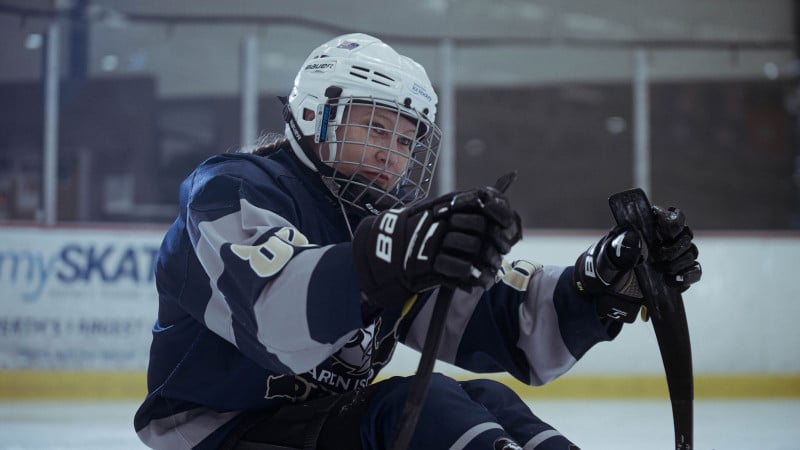
Hard as Puck charts the journey of three women and their coaches, journeying from amateur competition in Perth to the ice rinks of Slovakia, where they represent Australia in its first ever appearance for the Women’s World Para Ice Hockey Championships, competing against heavyweight teams like the United States and Norway.
‘It was more the personalities that drew me to the [project],’ Elliott says. ‘The sport is a conduit. I think the oddballness makes the community tighter.’
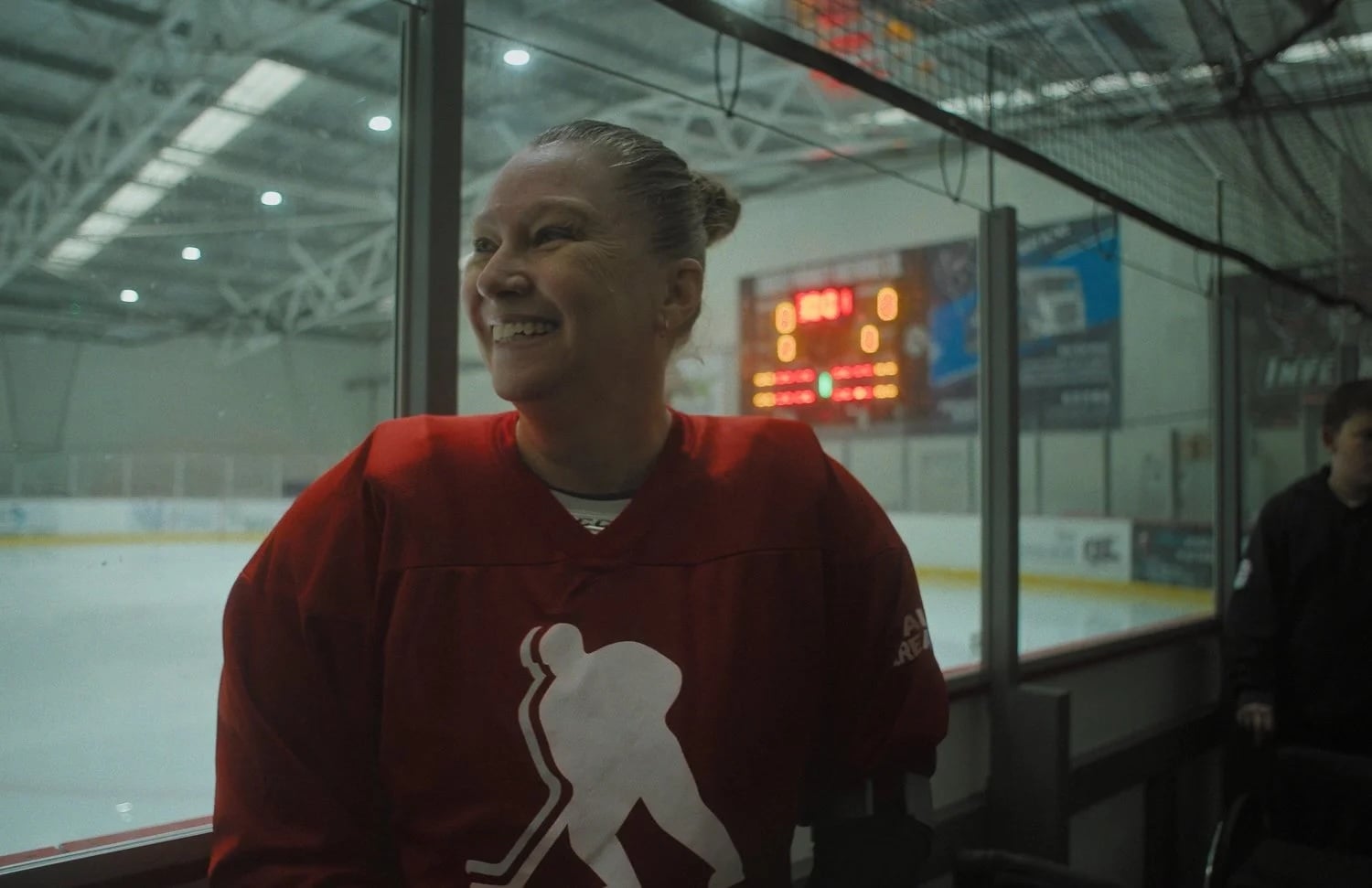
Rosa-Lee Principe, one of the key players in Hard as Puck, went from motorbike racing to para ice hockey, and the thread between the two is a love for ‘adrenaline’.
There’s also the story of Belinda Green, a woman in her 50s who never played sport until discovering para ice hockey.
‘I think what’s so special about her is she possibly didn’t know how good sport could be,’ Elliott says.
‘There’s so much [that goes into] running a small club. It takes so much more than just playing the sport. In [Hard as Puck] I did need to find their love for the sport, that kept them going amidst all the politics. Each of the [players] had a reason.’
As Elliott says, what seemed to gel the Garden Island Pirates together was growing together as players, and growing the profile of the sport.
‘There’s a real energy of growth.’
Focusing on the human stories
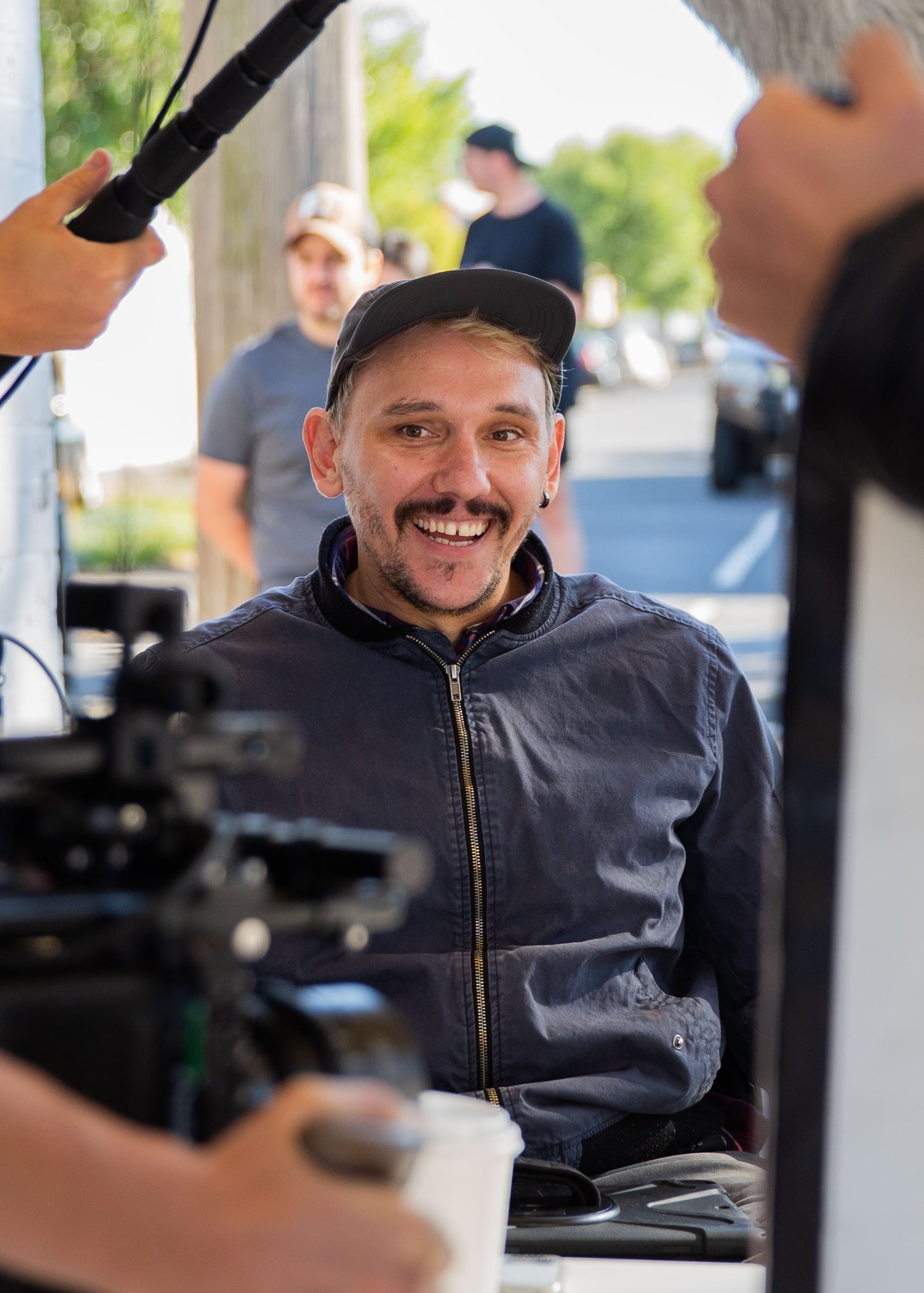
Elliott’s background in drama performance and production shaped his approach to Hard as Puck. As he explains, it’s a very character-driven documentary, with a focus on authentic emotion as well as hard-hitting action.
The biggest challenge, he says, was in allowing the documentary’s players to speak for themselves, and allowing the story to shine through in quieter moments.
‘A lot of improv is all about listening … and that aspect, I’ve really taken into documentary,’ Elliott says.
‘I think the improv and talking to actors really lends itself in the same way. You’re nurturing a character, whether it’s a character you know is created in a drama or whether it’s a real person. There’s a real synergy there.’
Where drama and documentary differs significantly is in the nature of control. ‘In the drama, you know what you’re working towards,’ he says. ‘In documentary, you kind of have to let it happen. You can’t control it too much. When we started filming this, we didn’t necessarily know where the story was going to go.’
Filming on the ice: ‘It got pretty intense’
Another significant challenge was filming the para ice hockey contests. As Elliott says, the sledges used to play para ice hockey are very low to the ground. Ice rinks are also typically clad with opaque coverings and smudgy glass to protect audiences. All of these elements make filming hockey scenes, and ensuring that audiences understand the speed and drama of the action, very difficult.
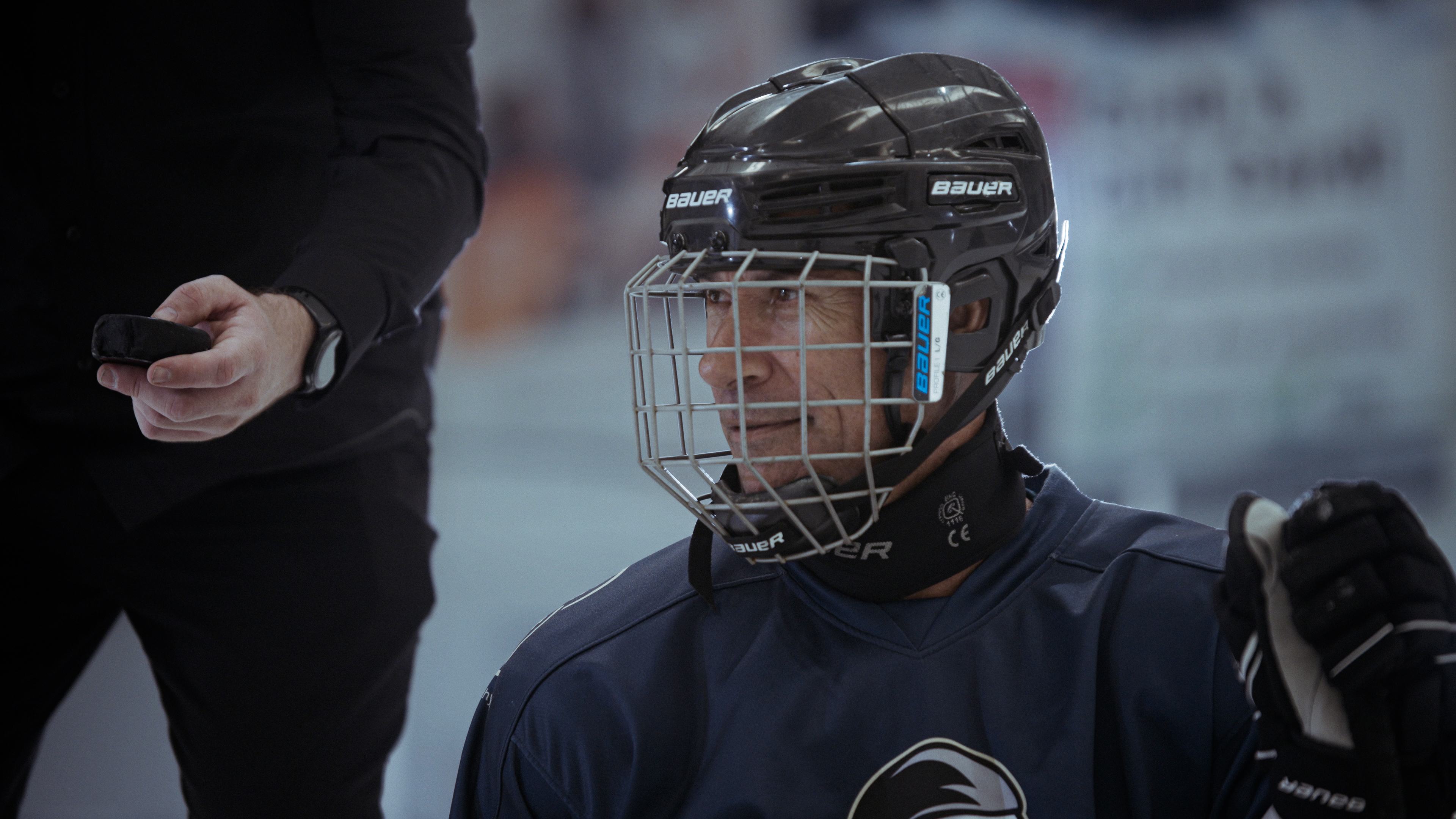
Showing the intense action and the real grit of the players required complex ad hoc rigging and many, many trips to Bunnings.
‘We started trying to film with long lenses from the outside initially, but it just didn’t quite work,’ Elliott explains. ‘I ended up thinking about how we could basically put the camera in the point of view of a sled.’
The solution required plenty of problem solving. Elliott bought a furniture removal dolly, a few hinges and pivots, and a rake handle. He built a platform that could pivot, and was actually a lazy Susan turned on its side.
‘You could twist the handle and it would turn the sled, so you could control where the camera was looking and then push it around,’ Elliott says.
The crew tested the rig first on a glossy basketball court, then made adjustments – including adding pucks for feet and a monopod as a controller – to ensure it would work on ice and sit at the right level to capture the energy of player movements.
One of the younger members of the Hard as Puck crew had experience with ice skating, so they were able to use the rig to get ‘really close’ to players and directly capture the emotion and action.
With the technical filming sorting, an additional challenge arrived in the sound mixing and recording process – another consequences of the complexity of ice hockey. Every part of the sport is noisy. Sticks clack on the ice, the rink is echoey and loud, and music is often played during professional matches, with this confusing the audio mix and any dialogue.
‘Part of our team goes to Slovakia at the end, and any time there’s a goal scored or any stoppage in the game, they just play music really loud,’ Elliott says. ‘A lot of Eminem and Fleetwood Mac, seems to be a really interesting mix. A bit of Lady Gaga, too.’
‘Any time it was quiet enough where we could maybe hear what our coach or someone was saying, they’ve got music playing,’ Elliott laughs.
‘But our soundies did a really good job of, as quickly as possible, getting lapels on under the gear and around the gear, and using swinging booms at the same time. It got pretty intense.’
Taking to the stage at MIFF 2026
Hard as Puck will arrive with prescient timing at MIFF 2026.
When Elliott and the team embarked on their first steps, they were solely focused on the journey of the Garden Island Pirates, and their ambitions to be recognised on a global stage. During development of the project and in the months leading up to it, the profile of ice hockey in general grew considerably, thanks in part to the release of smash hit TV hockey romance series Heated Rivalry.
‘We were aware there was a bit of an upswell in interest in ice hockey,’ Elliott says. ‘But we didn’t really know how to capitalise on it.’
The film’s name – which Elliott jokingly called incidentally horny – was a product of serendipity. If it compels the same audience that flocked to Heated Rivalry, they’ll be able to discover a beautiful, endearing tale of endurance.
‘I think here [in Australia], ice hockey isn’t big, so it kind of feels like a niche sport. People like to be hip and cool and niche, so I think there’s a sort of middle ground [for why more people are getting into it] … It’s just such an interesting space.’
The goal of Hard as Puck is to underscore why para ice hockey is such a compelling sport, and to illuminate the reasons why players take part, even despite barriers like a lack of rinks, and an apparent upper ceiling on growth. That Elliott is able to share such a powerful story, and one that elevates para athletes on a global stage, at MIFF 2026 means so much to the director.
‘I just had a memory come up on Facebook, three days ago, that said “I’m going to another country” and it was a photo of my MIFF passport – the first time I bought a MIFF passport,’ Elliott says.
‘I’ve entered short films at MIFF and been rejected. So, it’s been amazing to finally be playing at MIFF with a feature I’m really proud of, and I think it’s just amazing. I’m not very proud of myself very much, but I’m very proud for this. I think it’s going to be really fun, and I think people are going to have a great time.’
Elliott thanked the Garden Island Pirates team crew for their time, and the chance to tell such an impactful story. He also praised the work of his crew, and their dedication to just ‘working and to keep working … and mucking in to get it done.’
‘I’m really, really proud that we did it.’