Ridley Scott is 88 years old and yet still producing movies at a frankly unnerving rate. In a decade when everyone else discovered the joys of ‘goblin mode,’ ‘quiet quitting,’ and ‘bed rotting,’ Scott has found time to direct The Last Duel, House of Gucci, Napoleon, Gladiator II and now The Dog Stars. That’s quite a feat for a man born in the 1930s – and his most recent film in particular seems very much of our time.
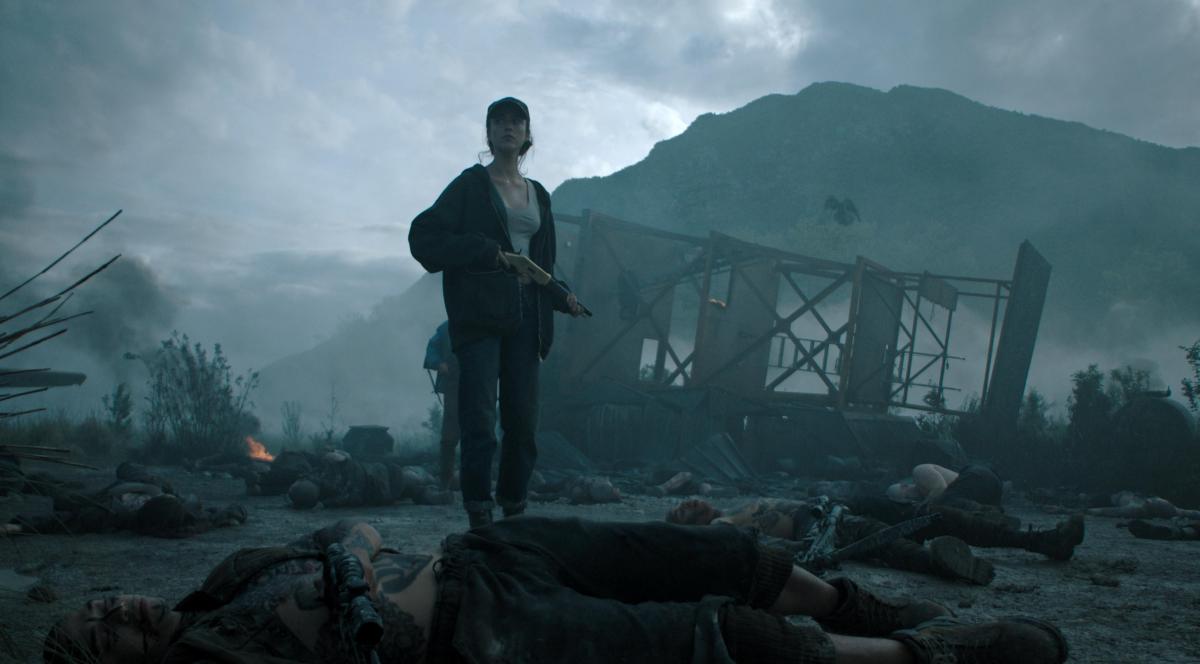
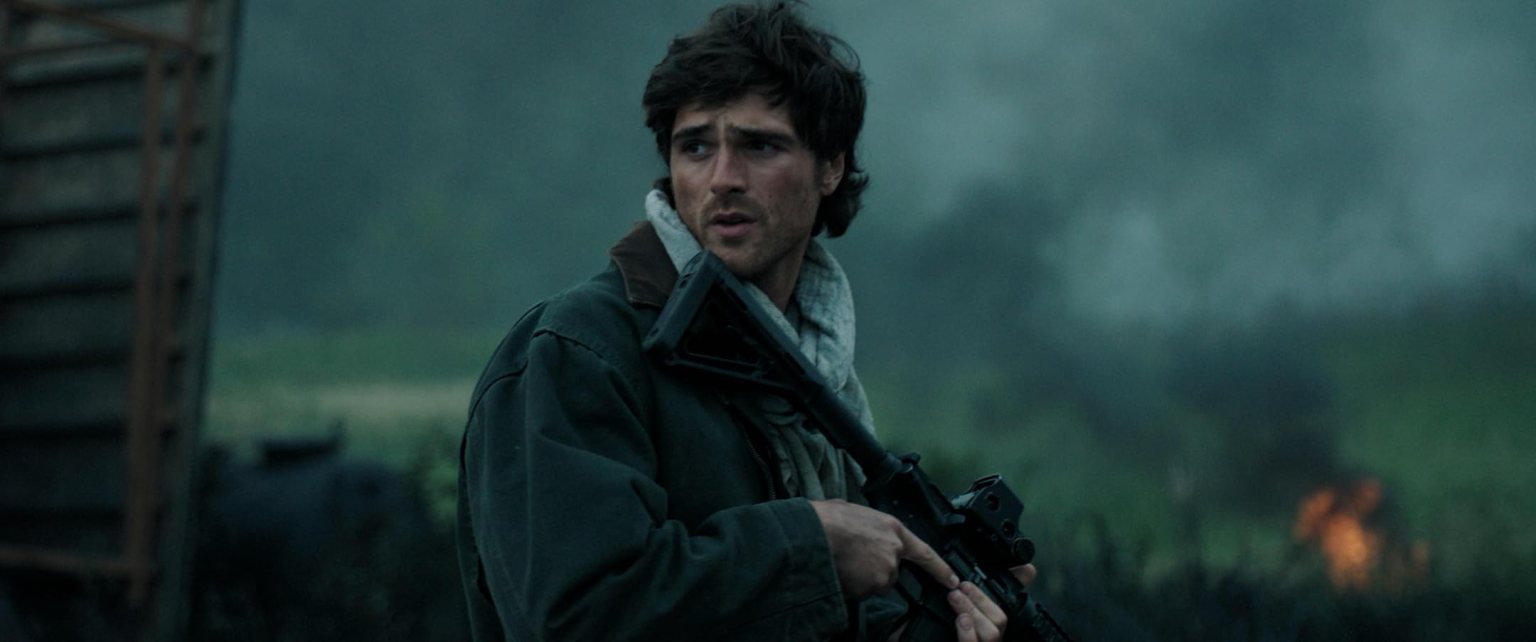
In The Dog Stars, set only nine years into our future, society has collapsed due to a worldwide influenza pandemic. Jacob Elordi tries to survive in a world characterised by scarcity, violence and pervasive suspicion. Critics haven’t been kind, noting the film’s slow pacing and general ennui.
ScreenHub: Jacob Elordi’s post-apocalyptic drama The Dog Stars is all too familiar
Above all, the film seems to take us down a path that has been a little too well-trodden, from The Walking Dead and The Road to The Last of Us. Haven’t we had enough of stoic heroes trudging grimly but resiliently through post-human landscapes yet?
The dystopian dilemma – quick links
Dystopia Rules OK
Dystopian futures are nothing new. Mary Shelley was writing about a disastrous 21st century pandemic all the way back in 1824. In 1909, EM Forster wrote The Machine Stops, in which the population is forced by environmental catastrophe to live underground, communicating with others through an electronic network called ‘The Machine’.
So these themes have been with us for quite a while. Yet there seems to be a definite pessimism in TV and movies in recent years. The future, if depicted at all, is an irredeemably awful place. Some of this is explicitly grounded in current events, like 2024’s Civil War in which racist ultraright militias defend a US president who refuses to leave office. (Unthinkable!)
Hulu’s adaptation of Margaret Atwood’s grim The Handmaid’s Tale was so successful, and so dispiritingly timely, it spawned a sequel. Even comedies have gone dystopian: think of One Night Only, set in a near future in which sex for unmarried people is only permitted on one night of the year.
It’s all pretty bleak. Have we hit peak-dystopia? And if so, why now?
Back to the 90s
I recently saw (via Instagram, naturally) an ad for a ‘retro’ 1990s-themed entertainment venue in Melbourne. This confused me, because obviously the 90s were only 10 years ago, but it’s still worth reflecting on pop culture artefacts then and now.
The 90s, for all its performative cynicism, was a particularly optimistic era. The Cold War gave way to the ‘unipolar moment‘ and the much-heralded (and much-misunderstood) ‘end of history‘. We were assured that liberal-democracy-plus-capitalism had won the battle of ideas – and that because democracies never attack each other, the time had finally come to beat our swords into ploughshares. The future was a frictionless flow of people, goods, capital, information and Big Macs across increasingly meaningless borders.
You may have noticed that’s not quite how things panned out.
Now consider that the highest-grossing blockbuster movies of that era included films like Armageddon, Deep Impact, Independence Day and the Terminator and Matrix franchises: movies in which humanity bands together to solve some sort of external threat. The battle is hard-fought and hugely costly. But in the end, our species manages to see off the aliens or asteroids or killer machines, the hero makes amends with an estranged lover or family member, and Will Smith makes some G-rated wisecracks. Cue Aerosmith.
Endless past, eternal present
We do still make movies like that, occasionally. Project Hail Mary sees Ryan Gosling save Earth from an infected sun, though the comparison is perhaps less Armageddon and more Flight of the Navigator – which, you won’t be surprised to hear, is getting a remake.
Much has been said about the contemporary obsession with catering to endless Gen X nostalgia (even among those born long afterwards). Endless reboots and remakes can make it feel as if pop culture is a snake eating its own tail, redigesting old art instead of pushing forward. And when it does try to envision a future, what it finds there is inevitably horrific.
It doesn’t seem outrageous to suggest that both these emphases – nostalgia and dystopia – are products of a moment in which we have lost the capacity to envision a future worth living in. Outside the stock-juicing fantasies offered by tech bros, all that seems to be waiting for us is a wasteland of collapsing ecosystems, unliveable heat, AI-mediated economic disruption and rising authoritarianism.
Compare Deep Impact to the comedic global warming allegory Don’t Look Up. This time, humanity and its politics are precisely why we can’t defeat the looming comet. We’re simply incapable of acting in concert for our own collective good.
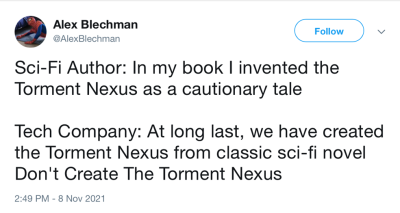
Worse, there is not just pessimism about our ability to save ourselves, but about the capacity of dystopian art itself to make us save ourselves either. In a viral tweet from 2021, Alex Blechman, a writer for The Onion, quipped that the tech industry now seems to take dystopian fiction as a source of inspiration instead of a warning:
Scepticism about the power of art to prevent disaster is, again, nothing new. When the comedian Peter Cook founded his venue The Establishment in 1961, he quipped that his inspiration was the German Cabarets of the 1930s ‘which did so much to stop the rise of Hitler and prevent the outbreak of the second world war’. But the implicit nihilism of Don’t Look Up suggests that we’re now simply riffing grimly on the inevitable, rather than trying to actually change anything.
We don’t need a return to the naïve days of Will Smith punching aliens or Bruce Willis punching asteroids. But part of the democratic malaise of the present moment is, surely, an inability to imagine a future we’d want to live in.
Fixing that deficit is a task for politics, but it is also a task for art. Stories of grim post-apocalyptic survival, emphasising individual resilience rather than collective action and the need for systematic change, aren’t going to give us the wake-up call we need any more than nostalgia for video libraries, 56k dialup modems and Tamagotchis.