Will it ever stop being heartbreaking that the biggest current threat to human expression is the topic that inspires more words right now than any other?
In mid-July, Prime Minister Anthony Albanese joined the chorus of voices pondering artificial intelligence, something that is ‘already part of our daily lives’, he flagged. With AI models partly trained on pirated Australian creativity, tech firms coveting our vast expanse for data centres, and reports of jobs losses arriving frequently – whether overtly driven by AI or not – his outline of the nation’s approach to AI was much anticipated.
That ‘not everything produced in Australia is up for grabs,’ as Albanese put it, was welcome news, after it was feared that copyright legislation might be watered down to benefit the AI sector.
‘Australian writers, musicians, artists and journalists must retain ownership and control of their work. Our laws will spell that out, plain as day,’ the Prime Minister stressed.
Of course, how that will halt AI stealing Australian intellectual property is yet to be seen. The same is true of the pledge to make AI companies accountable for the water and power used by their data centres. And will these promised and necessary safeguards stop Australians working in the arts, creative and media sectors worrying about their jobs?
Quick links
AI’s impacts are already everywhere
The better question might be: can anything? It’s difficult to see how livelihoods might be assured, even as Albanese says that Australia wants ‘AI to support and create good jobs, not replace them’.
‘We should not treat AI as a threat to good jobs – we must use it as an instrument to help create them,’ the Prime Minister reiterated as his speech came to a close.
For the creatives, artists and journalists responsible for the ‘Australian books, music, art [and] news’ that Albanese vows to protect, AI anxiety has long become a fact of life.
If your work hasn’t already changed due to AI – whether via redundancies, fewer job opportunities, a downturn in freelance commissions or just the belief, from anyone controlling budgets, that a computer is faster, cheaper, smarter or better – then you know at least a handful of people (and likely many more) whose professional sphere has suffered.
We live in a time of AI-written short stories possibly winning literary prizes, AI songs earning radio play, AI narrating audiobooks, AI actors starring in movies and AI films playing film festivals.
We now no longer know if we’re even consuming something made at least partially with AI; also this month, Netflix announced that around 300 of its shows have used generative AI so far in 2026.
There’s no escaping the machines
Globally, buzzy studios are embracing AI, and beloved filmmakers as well. A24 partnering with Google to develop AI filmmaking tools and Martin Scorsese backing AI’s use for storyboarding aren’t minor developments. Both have sparked backlash.
AI’s march through journalism continues in Australia and further afield, often wrapped up in terms like ‘streamlining’ and ‘efficiency’, and with writers jettisoned.
We’ve passed the point of human voices echoing loudest online, with more than half of new articles on the internet now the product of AI. When flesh-and-blood fingers are doing the typing, writers can no longer focus on simply filtering the facts and their talents, or their emotions and experiences, into prose – they must also ensure that they don’t sound like AI.
For anyone who values art crafted by humans – tales penned, music played, books read aloud, films lead and directed, and more – almost every day seems to bring another win for the machines.
Don’t like a movie you’ve seen, for instance? Rather than engage meaningfully with your response to the film, you can just use AI to make your own version, as the planet’s richest man apparently intends to with Christopher Nolan’s The Odyssey.
Because we should – or because we can?
Finding examples of AI’s continual seep not only into our everyday existence, but into how we understand and reflect upon the world – what we think and feel, then – is easy.
Feeling dispirited – particularly if your job is to think and feel about the world as artists, creatives and journalists do – is also natural.
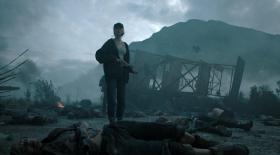
Perhaps it doesn’t help that for decades humanity has been contemplating the worst outcomes of what was, until now, pure science fiction through art. In 2001: A Space Odyssey, The Terminator films, The Matrix franchise, Westworld, WALL-E and well beyond, we’ve read and watched visions of this future, with the results frequently dystopian.
Right now in our very reality, however, we can also see ample evidence of AI’s costs. Even solely focusing on the arts and media, it’s there in the creative works pilfered to train large language models without permission or compensation, and in the disappearing gigs and opportunities for artists, creatives and journalists. It screams at us from the slop filling pages and screens and playlists, and also winning prizes.
It also isn’t hard to spot how the willingness to outsource seemingly routine tasks, such as asking artificial intelligence to write a shopping list or reply to an email, normalises quick fixes over mental effort. And how, slippery slope-style, offloading more and more to AI – because we can, rather than because we actually should, let alone need or want to – fuels the cycle.
ArtsHub: More news about artificial intelligence in the arts
What do humans dream of?
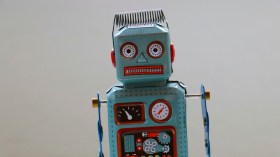
Philip K Dick asked Do Androids Dream of Electric Sheep?, as has the Blade Runner franchise in his novel’s wake. Now, maybe this is the question: is humanity happy to let AI dream for us?
To make art is to dream. The more comfortable that we get with AI in creative endeavours, the more that artists, writers, musicians, filmmakers, actors, poets, playwrights and the like will fear that human input has an expiry date.
When the Prime Minister was wrapping up his AI speech at the University of Sydney, he noted that no-one now expects to have ‘one job, one career’ for life. Drawing upon his own experience in banking out of high school as an example, he still championed the need for ‘secure and fulfilling work – a job that gives you a stake in the economy, the stability to plan for your future and the opportunity to better yourself’.
Will Australia’s pledge to use artificial intelligence to boost jobs, not replace them, genuinely lead to something that is already rare: secure work for artists, creatives and journalists?
Or are we facing a reality predicted by Ex Machina? In Alex Garland’s 2014 film, tech CEO Nathan Bateman feeds humanity’s data en masse, and illegally, into his AI model. So far, so recognisable.
But it isn’t this, or the fact that nothing good comes from his actions, that feels most like a mirror at present. Instead, it’s the striking symbolism of Nathan’s futuristic research lab and its humanoid AI robots secreted away among sprawling greenery and rushing streams.
Natural splendour becomes a mere backdrop. From within such beauty, out springs destruction.
Is the glory of human expression – the very basis of art – destined for the same fate? When we worry about AI job threats in Australia’s arts, creative and media sectors, this is also what we’re worrying about, and why.