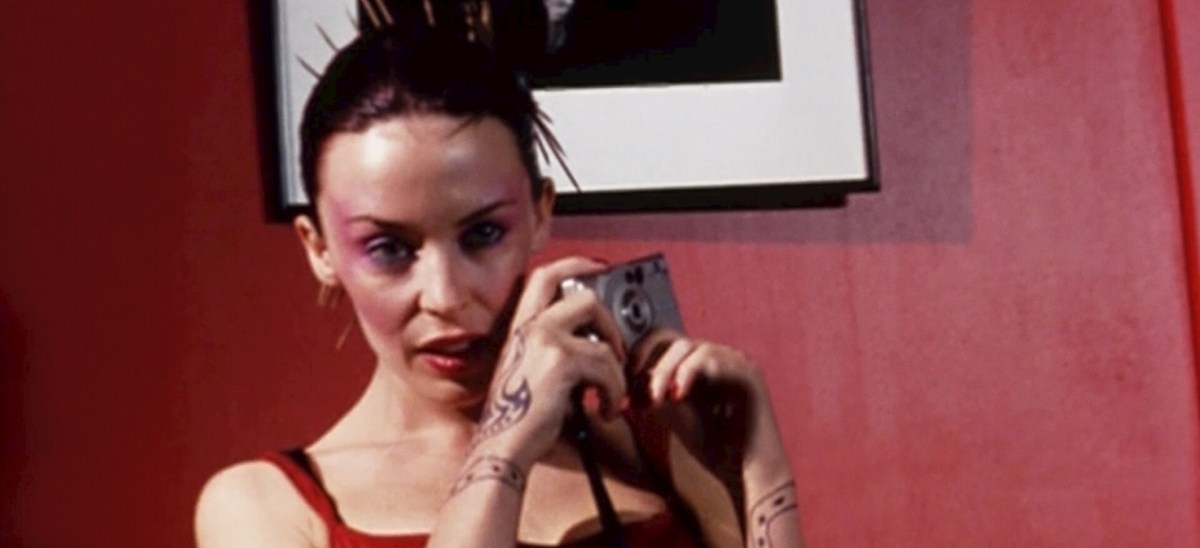
Australian-made film Sample People (2000) was not the smash hit its makers wanted it to be. That’s despite featuring an all-star cast including Kylie Minogue, as well as Ben Mendelsohn and Joel Edgerton in the earlier stages of their lauded careers, and despite the fact that the filmwas about the party scene in Sydney.
Inspired by the experiences of writer and director Clinton Smith, and that of co-writer Peter Buckmaster, the film follows a group of young Sydneysiders trying to find their place in the world during the dawn of the 2000s – ‘aspiring musicians, hustlers and small-time criminals’ – all while on a collision course.
As part of the 2026 Strobe Film Festival, taking place at the Sydney Opera House, Sample People will finally return to cinemas after 26 years away.
The new screening, featuring 4K remastered visuals, aims to shine new light on the film and its importance in the Australian cultural fabric, particularly as a representation of the club scene of the era in Sydney – one that was systemically washed away – and how youth culture developed and changed during this time.
‘[There’s excitement] in looking at the film proper for the first time in 26 years, and then looking at just how things have changed,’ Peter Buckmaster tells me.
‘To actually look at the real film texture, it’s such a beautiful thing.’
Sample People interview – quick links
‘We actually cracked the ambition’
For Buckmaster and Smith, Sample People has a cultural cachet that’s been underestimated. It’s widely regarded as a ‘forgotten’ film, and it’s difficult to find much about its development, or even its status, in a field of other, better-known Australian films from the time.
But it represents an important part of the country’s film history, even beyond featuring strong performances from some of its biggest future stars. As Smith says, it was ‘a highly ambitious film because of how many interweaving stories and characters [there are]’.
‘What I liked is that we actually cracked the ambition, that we brought those stories together, and we had so many great actors involved,’ he adds.
Smith says the team were really lucky to wrangle some of the best up-and-comers in the Australian scene, and give them a chance to go into ‘theatre roots’ of practice to develop scenes and play around with the characters. Their talents also helped to streamline a tricky shooting style without a video split.
‘We didn’t know whether the shot worked perfectly,’ Smith says. ‘Video split was essential to know if you got the shot. But you’re shooting maybe 17 takes for Sample People – we took hours to set the shot up, and then every shot was one take or two take, then moving on without being able to watch it back.
‘I’m amazed that it turned out as well as it did.’
Being able to retrospectively look back at the film has only increased that feeling.
As Buckmaster says, looking at the tape today has allowed the team to reflect about the challenge of working in film at the time, and how it’s changed in recent years. But they’ve also gained a better appreciation for the medium, and an understanding about why shooting on film is coming back in modern times, and what its tangible limitations do for filmmakers.
‘We were talking just about how films are starting to go back to film because of the discipline,’ Buckmaster says. ‘With digital, it’s just “Oh, we do 20 [to] 30 takes” and it’s really fast. Back then … there was a lot of light, and the actors were always constrained. Everyone was on their marks.’
Tight restraints and a hyper-focus on getting it right within a limited time frame and a limited budget defined work on Sample People. It’s for this reason that Buckmaster and Smith believe it remains a sharp-looking film: that it was backed by discipline and traditional, tightly-focused filmmaking techniques.
The ‘long and windy road’ to bring Sample People to life
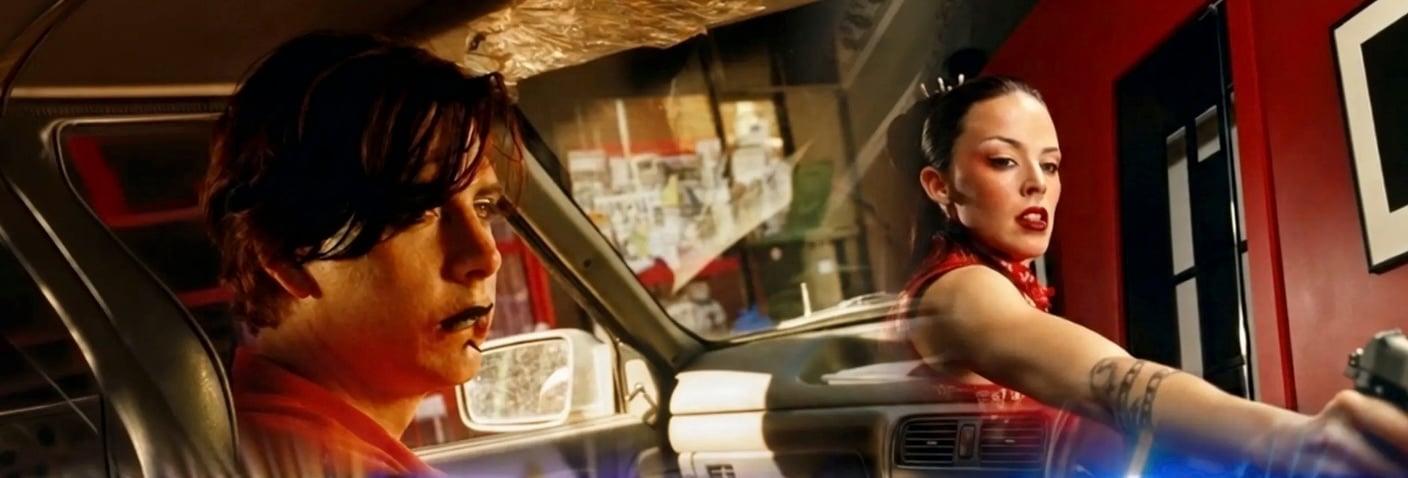
It’s not just development of the film that has changed, but the financial backing for films too. As Smith and Buckmaster explain, much has changed culturally since the creation of Sample People – and that includes the Australian film industry itself.
Sample People was initially proposed as a small budget $60,000 film. As Buckmaster says, in those days, it was essentially an ‘IOU’ for every contributor, but it lacked fairness for those devoting their time and energy to the project.
Backed by a desire to see Sample People in a wide release, with a fair wage paying for every contributor, the team went about the ‘difficult’ process of securing funding.
‘It’s quite difficult,’ Smith says. ‘There’s a long and windy road.’
One of the first major challenges, at the time, was getting funding for a genre feature. While there are now systems in place to fund genre film, and interest in supporting a more diverse array of projects, that was not always the case.
‘At the time, a lot of the funding had to come from government, and they just refused to fund genre,’ Smith says.
Eventually, the team was able to get funding support from the South Australian Government, but not before producing an extensive promo alongside a fully-developed script, and attaching several big name Australian actors to the project – including, at one point, Noah Taylor.
‘As you got more people saying, “Yeah, I’m involved with the project” and they have a certain degree [of success], the money-people and distributors are thinking, “This might actually sell some tickets, so we’ll be involved.” You’re able to get investors, and you’re able to get pre-sales, which is what you need to do to also meet the criteria from a government perspective.’
Kylie Minogue’s involvement also reportedly helped to secure ‘everything else’ the team wanted, allowing them to develop Sample People as an ambitious feature film, rather than a smaller budget project.
The nature of the funding and the increased scale of the project did mean some additional challenges – such as shooting a film set in Newtown and King’s Cross in Adelaide, and subsequently not being able to find a hill for a particularly important scene – but without that support, Sample People would not exist.
From forgotten film to cult success
With the film’s return, and at the Sydney Opera House no less, Smith and Buckmaster have had the chance to reflect on the film’s cultural importance and its comparative lack of success at the time. The team haven’t shied away from the ‘forgotten’ label, and the years since its release have given them a chance to reflect on the reasons why it never became particularly entrenched in Australia’s film history.
‘When we wrote it, we were in our early to mid-20s and it was based on our lives, an amplification of our lives,’ Buckmaster says. ‘Bizarrely, in the UK with Human Traffic (1999) and in America with Go (1999), these filmmakers came up with similar ideas of a multi-character youth culture film set over a crazy weekend.’
Sample People had been ready a year earlier than it released but the distributors reportedly sat on it and the film was quickly eclipsed by other similar, higher budget or higher profile films charting similar themes.
‘When it came out, just a few months after that, it wasn’t as fresh,’ Buckmaster says. ‘I think it would have been a lot more fresh, and we would have gotten more critical and media eyes on it. And also, people only have so much money [for films].’
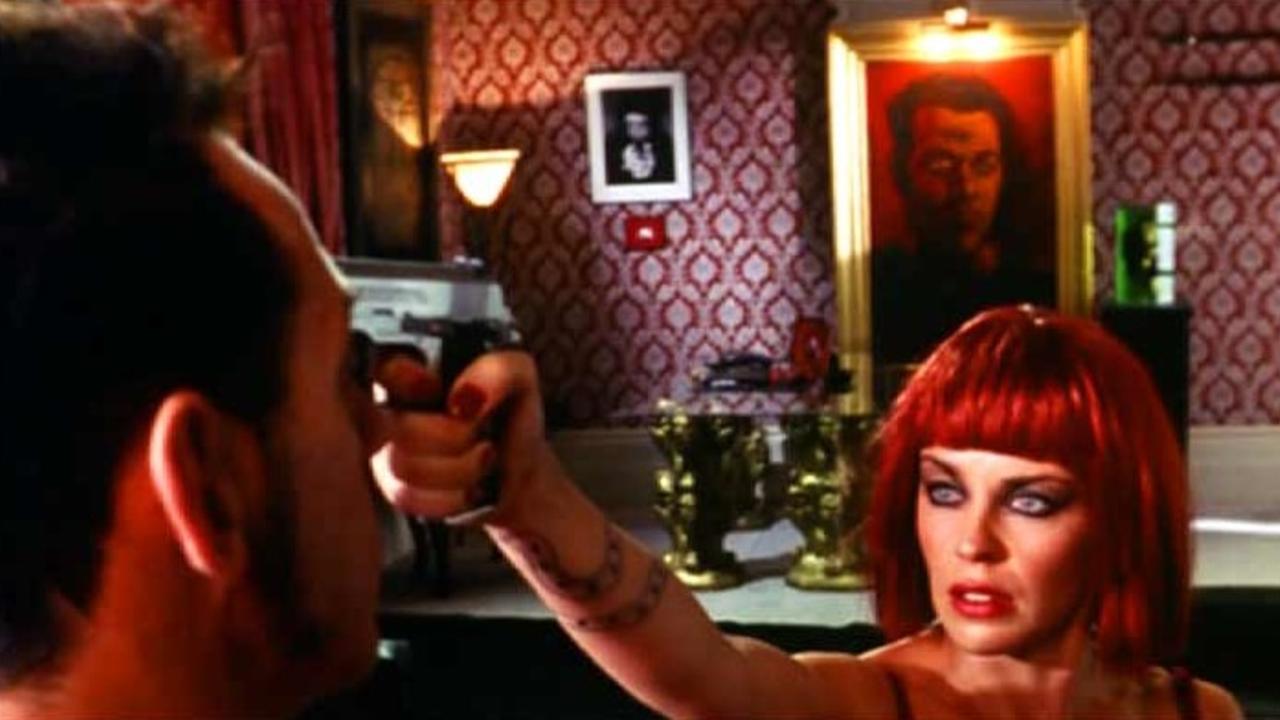
There were other factors Smith and Buckmaster believe played into it – including a tagline which they believed didn’t fit the film. At launch, it was ‘Who says you can trust your friends?’ In the re-release, the tagline is now, ‘Where cool is deadly.’
Ironically, re-releasing the film 26 years later might actually make it fresh once more. As Buckmaster and Smith say, the themes of the film have become relevant again, particularly as young people rediscover the party scene, and adults indulge in nostalgia for the 1990s and early 2000s.
‘There’s really a resurgence for that period, and there’s a lot to be said about the 1990s,’ Buckmaster says. ‘There was no social media. You had a mobile phone, and you sent texts. But there was definitely … you went, you actually met people. You went out and hung out in pubs and did all those things.’
Capturing a bygone Sydney
People long for a period of greater simplicity, and have plenty of fondness for the era. For all of its challenges, the 1990s appear – on the surface, and perhaps even deeper – to be a freer time with fewer stresses. As the state of the modern world changes, there is naturally a desire to go back.
That’s helped along by a timeless 1990s soundtrack including Grinspoon, The Whitlams, The Superjesus and Kylie Minogue.
‘There’s something a bit nostalgic about [the film] but in a sense, it’s kind of current,’ Buckmaster says. ‘It still looks pretty current, even though it was very designed [at the time].’
Even the fashion of Sample People has lasted through the ages, in a way to that speaks to the film’s surprising longevity.
As Buckmaster and Smith say, most of the fashion in the film is ‘stuff you’d wear anyway’ during the 1990s. Wardrobe was sourced from shops round Newtown at the time, and outfits were designed to reflect the cool, edgy wear of the era.
‘We wanted each of the characters and character groups to have a distinct, strong look because the film’s called Sample People. It’s actually about the 1990s – how we’d kind of reached a point possibly in human culture where we were just regurgitating cultures, not necessarily making a brand new thing,’ Smith says.
‘Technology makes brand new things, and there was rapid sampling: of previous eras of fashion, sampling of other people’s cultures … I suppose the [idea of sampling] has become even more accelerated these days, and there’s also silos of culture as well with social media and so forth.’
Sample People is partially about the downside of copying these cultures and not having your own strong identity – as everything becomes a sample of a sample, and technology enables that abstraction. It’s a theme that appears throughout many films of the 1990s, as a reflection of modern anxieties around technology, change and the regurgitation of culture.
In 2026, it remains as relevant as ever.
For an audience that may be seeing Sample People for the first time when it screens at the Sydney Opera House in September, Smith and Buckmaster hope the film’s core message will shine, alongside its cast of recognisable faces.
‘It’s great to have that time capsule to look back at [all of the actors],’ Smith says.
‘Then all the music, and a kind of exploration of the culture back then. Maybe they can see in that culture some echoes that are being replayed for them now.’