One of 2026’s most celebrated indie video games has found itself at the centre of the games industry’s most heated argument.
Melbourne studio House House, best known for its 2019 Untitled Goose Game, has confirmed it used large language models to help fix technical problems in the final stages of developing its most recent game, Big Walk. The disclosure followed a statement from a group of Independent Games Festival jurors refusing to vote for any game made with generative AI.
The fallout has been swift, and the debate around the matter is emotionally charged. The situation is as nuanced as it is ethically fraught. Here’s what we know so far.
Big Walk AI controversy – quick links
What is Big Walk?
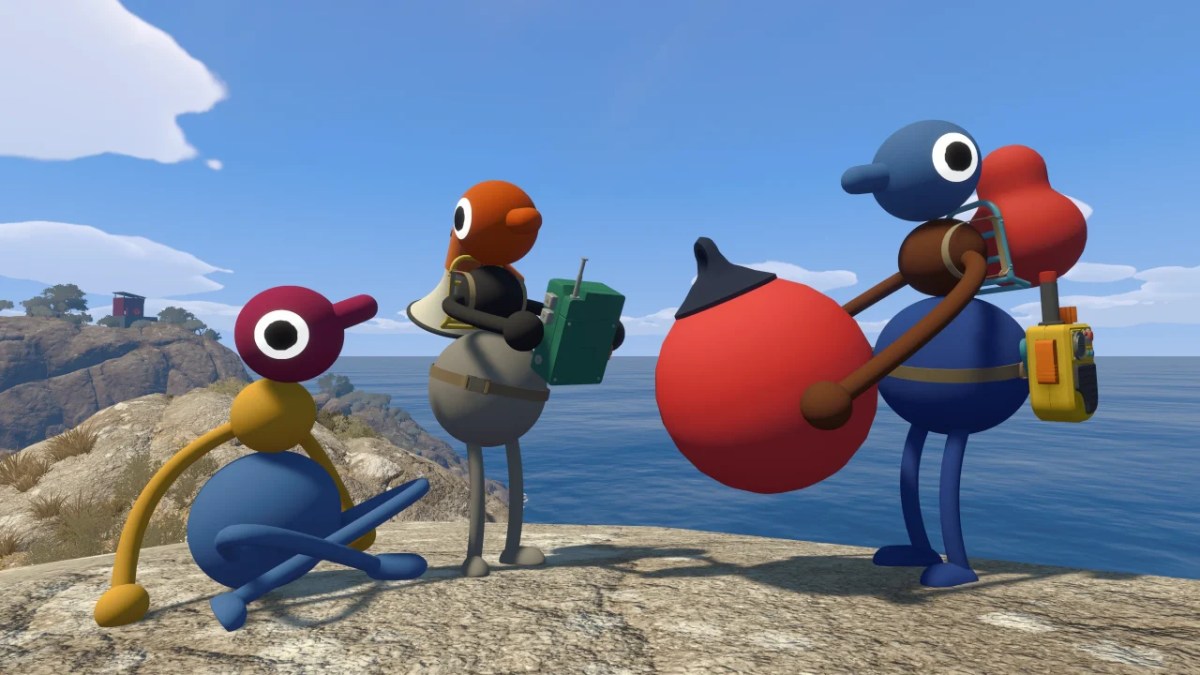
Big Walk is a co-operative online adventure game from House House, published by Panic. It launched on 4 August and quickly became one of the year’s best-reviewed indie releases, with a Metascore of 91.
House House has also built a reputation as a studio willing to take public stands and speak openly. It kept Big Walk off Xbox consoles in support of the pro-Palestinian Boycott, Divestment and Sanctions movement. For many critics, that made the revelation of GenAI use all the more surprising.
What happened?
On 9 November, 19 jurors for the 2027 IGF Awards published a statement on BlueSky, shared by writer and juror Austin Walker. The jurors said there had been a significant rise in submitted games made with GenAI tools, and that it had sparked intense disagreement across the judge and jury pools.
As a result, the signatories said they were ‘declining to vote for any game that uses generative AI in any capacity’. Signatories include Walker, Sam Barlow, Lena Raine and Brendon Chung.
The statement didn’t name any games. But social media posts from people claiming to be judges soon pointed to Big Walk, which had reportedly included an AI disclosure in its IGF submission. Four-time IGF judge Kyle LeClair told Game Informer that Big Walk was the most-discussed game of the year, with its AI use overshadowing almost everything else about it.
House House confirmed its AI use to Aftermath, then published a fuller disclosure in the FAQ on the Big Walk website on 10 November.
How did House House use AI?
According to House House, LLMs were used sparingly in the ‘final stretch’ of development to help with difficult technical challenges and bugs. They were mainly used to research problems with third-party code via chatbots.
House House estimates that well under 0.1% of Big Walk’s code had anything to do with this use. It says GenAI wasn’t used in any other part of making the game.
The studio gave one example: a rendering bug in Unity’s Universal Render Pipeline that made the game run around 50% slower for about 20 seconds at sunrise and sunset. After the team failed to solve it through other channels, it asked a chatbot. After a few dead ends, the chatbot suggested a workaround. The team says it modified the suggestion extensively, and the final fix came to about 10 lines of code.
Why wasn’t it disclosed?
House House says a version of its statement went to the IGF as part of its submission. There’s no AI label on Big Walk’s Steam page because Valve’s disclosure rules don’t cover code or chatbot use.
The studio also admits it had no internal AI policy while making Big Walk. ‘We consider that lack of policy a failure,’ it says, adding that it will develop a more comprehensive policy for future projects.
House House was careful to say the statement is not an endorsement of AI tools, however minimal. It said it supports those working to limit the harm GenAI is doing to video games, and apologised that its use may not meet their standards. It also raised a concern that voluntary disclosures like its own could help normalise the technology.
What are the IGF jurors saying?
The jurors’ statement directly addresses the coding question, arguing that AI-generated code is not an exception. They describe programming as a creative discipline whose labour deserves the same respect as any other part of game-making. They also object to AI models being trained on creators’ work without consent.
The statement doesn’t represent the IGF as a whole, and the festival’s rules don’t currently mention GenAI. Walker has said there are around 50 jurors in total. The signatories noted that others support their stance but feared professional blowback if they signed.
The group has asked the IGF to disallow games containing AI-generated work from next year.
How have players reacted?
Quickly, and harshly. Before the disclosure, Big Walk was drawing only a handful of negative Steam reviews a day. On 10 November, recent reviews dropped to 36% positive as players posted negative reviews, and some said they had requested refunds.
The game’s overall Steam rating remains Very Positive. Many players are also likely beyond Steam’s refund window, given the game launched three months ago.
The game’s Steam forums, and social media platforms like BlueSky, have become a battleground. Some players argue the backlash is wildly disproportionate to 10 lines of bug-fixing code and amounts to review bombing. Others say their anger is about the lack of upfront disclosure, and about what it might mean for future projects.
Why is this so complicated?
The Big Walk case sits at the blurriest edge of the GenAI debate.
Many have argued that there is a meaningful difference between using a chatbot to troubleshoot a rendering bug and filling a game with AI-generated art, writing or voices. That’s the line drawn by many developers, including Gearbox, whose CEO pledged earlier this year not to use GenAI for any work that could be seen.
But the IGF jurors’ position is that the distinction doesn’t hold. In their view, any use supports technology built on unconsented labour and devalues programming as a craft.
Disclosure is another minefield. House House was more transparent than platform rules required, both to the IGF and in its public statement. It is now bearing the brunt of a backlash that undisclosed AI users avoid entirely, which raises its own questions about the incentives for honesty. On the other hand, it also did not disclose its use of AI until months after the game’s launch, preventing customers from making an informed decision about their purchase.
Then there’s the studio’s own position. House House frames its AI use as a failure of policy and is openly sympathetic to its critics. That is a very different stance from studios that have defended or celebrated their use of the technology.
What happens next?
IGF finalists are due to be announced in January, with the awards ceremony on 3 March 2027. Big Walk‘s eligibility for consideration remains in place. Its chances of winning anything are a different question, with 19 jurors publicly opposed.
What remains unclear is whether the IGF will adopt the jurors’ call for a formal ban, and how studios will respond. Will they adopt stricter policies, as House House has promised, or simply disclose less?
For now, Big Walk has become an unlikely test case for where the games industry draws its lines on AI.