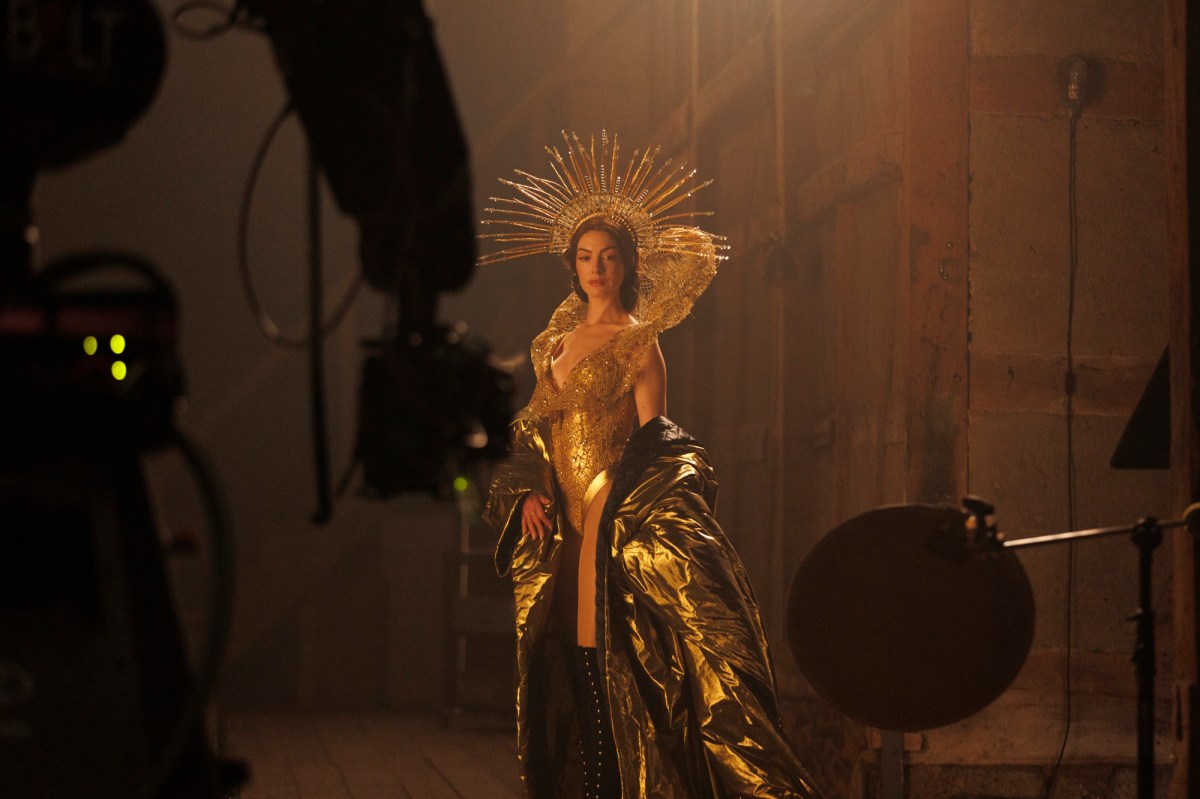
A dazzling shot worthy of Stanley Kubrick ignites Mother Mary, the latest arcane offering from The Green Knight director David Lowery.
The Devil Wears Prada lead Anne Hathaway’s titular pop star stands aloft on a crown-like platform. She’s raised high above a star-blue sea of twinkling smartphones, the fans assembled adoringly around a white light-ringed runway. This glimmering protrusion into the silhouetted crowd looks like a lock in need of a turned key.
But what lies behind this portal?
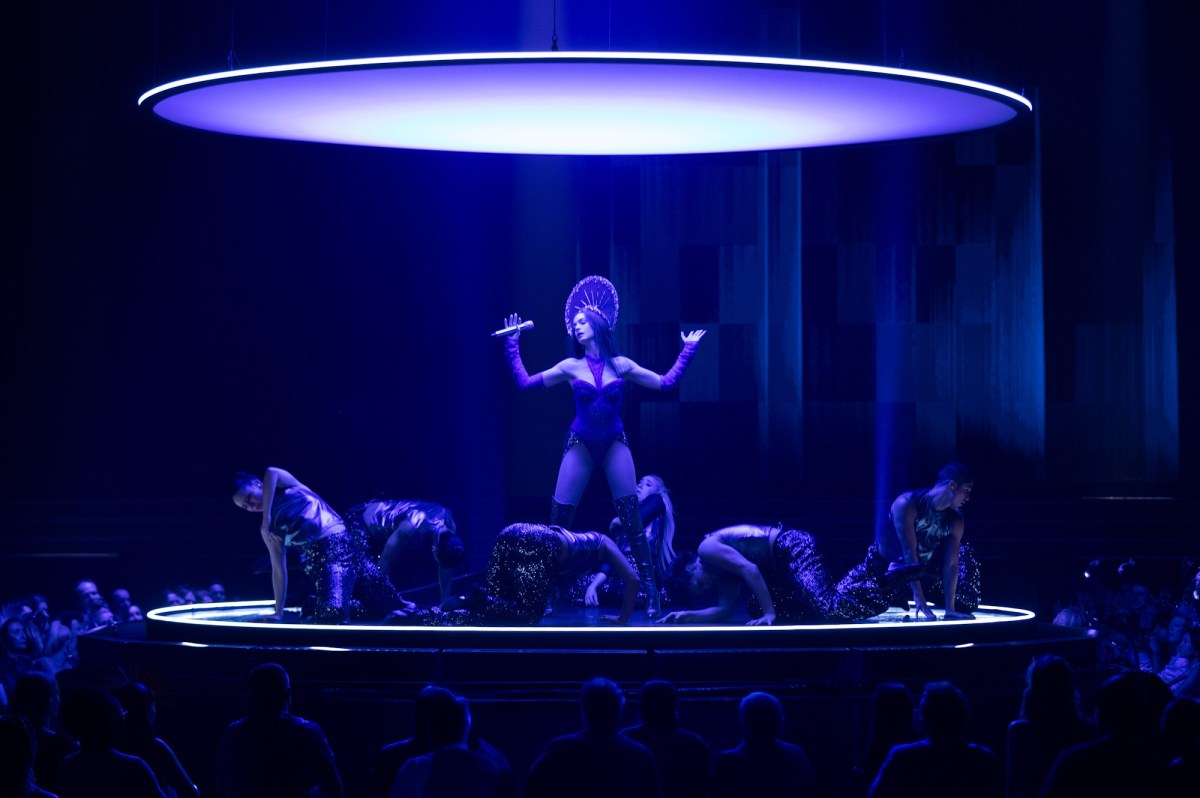
At the peak of her powers, Mother Mary’s siren song seems capable of forcing it open. Particularly as her gothic bangers are penned by The Moment star and Wuthering Heights composer Charli XCX, plus producer and fellow musician Jack Antonoff.
Alas, Mother Mary’s invocation beckons more than her stans’ undying love. There, caught in the smoky haze at the edge of the runway’s glow, is an extraordinary ripple of scarlet, a seeming fold in time and space. This dazzling spectre, both terrifying and beautiful, appears to be an otherworldly red dress.
Women in horror – quick links
Frightening fashion
Fashion (often with a dash of vermillion) has long voyaged arm-in-arm with scary movies that lean into the awful unknown.
English director Peter Strickland terrorised the incandescent Marianne Jean-Baptiste’s Sheila with a cursed red dress bought from a department store in In Fabric (2018).
In Deerskin (2019), a fringed, brown leather jacket, possessive in more ways than one, drives French star Jean Dujardin’s overly enamoured Georges to murder.
Decades earlier, British filmmakers Michael Powell and Emeric Pressburger harnessed Hans Christian Andersen’s stark fable about a poor girl doomed to dance to her death in 1948’s brilliantly dazzling The Red Shoes.
It’s not just blood-coloured killer clothing that will curdle your blood. The fashion industry itself appears haunted by malevolent spirits in many films, including Nicolas Winding Refn’s Elle Fanning-led The Neon Demon (2016). Then there’s the Roman atelier stalked by a serial killer in Giallo director Mario Bava’s fashion-forward thriller Blood and Black Lace (1964). And Faye Dunaway’s titular fashion photographer has alarming visions of a murderer in Irvin Kershner’s The Eyes of Laura Mars (1978).
While all these films are directed by men (surprise), for the most part they feature women front and centre. (Admittedly Adèle Haenel is in a supporting role in Deerskin.)
Vengeance and redemption
So what does Lowery bring to the cutting table? A very theatrically inclined ghost story, that’s what, and one that revels in fabric and the way it seems to shapeshift.
Mother Mary is haunted by what she saw at that show, and by the tragic accident that followed. She’s been shuttered away from the world ever since, but is finally ready to break her silence and emerge for a triumphant finale, but not without backup. Which brings her to the door of Sam Anselm, a fashion designer played by I May Destroy You genius Michaela Coel.
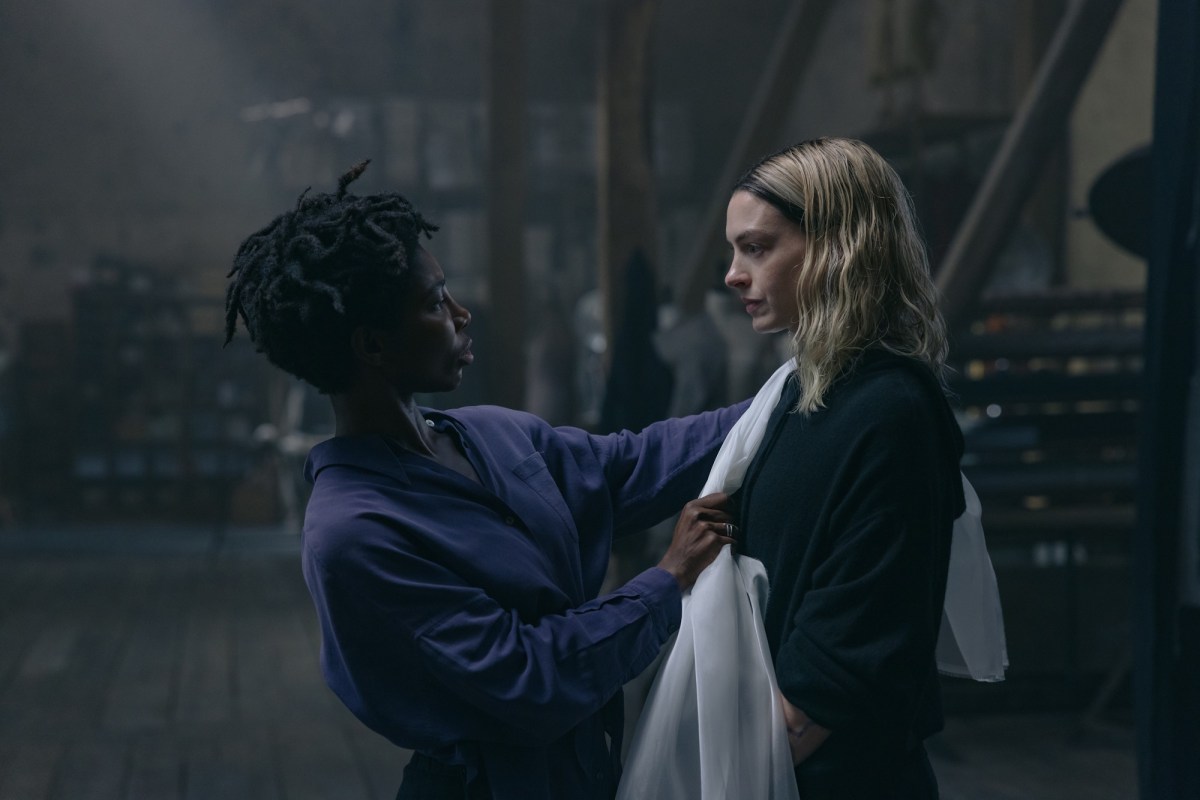
They’re estranged, not because of an acrimonious fall-out over a look, but instead because Mother Mary basically ghosted Sam. A quiet betrayal the costumer has carried inside of her like a cancer, eating away at her bones.
So when the pop queen swans back into Sam’s gothic mansion one dark and stormy night, wet through like a drowned rat and insisting she needs an epic outfit to rise to the occasion, Sam’s less than impressed to dress her.
In Andersen’s myth, an angel bearing a sword appears to the dancing girl in The Red Shoes, both as a vengeful force striking her down for her vanity and as a source of redemption. An eyebrow-cocked Sam captures Mother Mary in the liminal space halfway between these possibilities.
Sure, Sam will create one last costume for the singer, but she will not listen to her music, and she will define how to interpret the performer’s desired look in her echoey workshop, where eternity seems to dance in the shadows.
Watch the trailer
Bleeding hearts
Lowery knows to step back and let these incredible performers tear metaphorical shreds off one another without ever raising their voices, the tattered remnants of their friendship billowing in the breeze like the shawl-like presence that has rendered Mother Mary incapable of wearing red.
So Sam tries on gauzy white and gold fabric and funereal black, via a procession of religious iconography-led looks, but nothing quite sticks. Gradually and guardedly, they open up to one another. But only so far, even as it becomes clear that the apparition in red is a shared spectre.
One that must be cast out, just as their enmity is cast off.
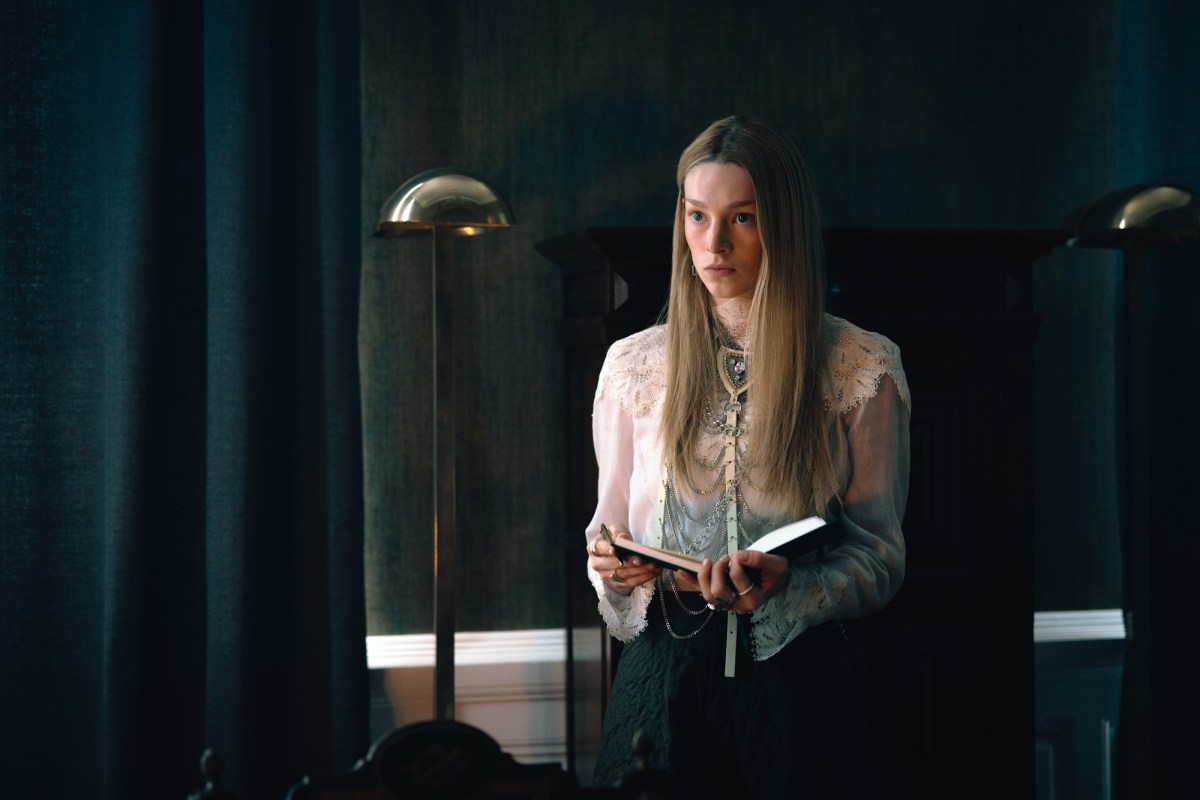
Mother Mary is a marvel, one that shrouds itself in the intimate. Essentially a two-hander, others do come and go, including Cuckoo star Hunter Schaffer, Fleabag’s Sian Clifford and real-deal pop star FKA Twigs, but it’s hung on Coel and Hathaway.
With more to say about how we armour ourselves in fashion than the wan Devil Wears Prada sequel, Lowery’s film is at its most powerful when it gets fully mystical.
Embracing blood and thorny crowns, gore is integral to Mother Mary’s bleeding heart. If it’s less overt than Coralie Fargeat’s The Substance, then it’s no less impactful. Wrapping two wounded women together again, for better or worse, it suggests the haunting of their lost souls may only be healed by forgiveness stitched in red thread.