Why is it that, for the longest time, I’d bashfully confess that director David Frankel’s eminently quotable 2006 hit, The Devil Wears Prada, is a ‘guilty pleasure’?
With the arrival of its 20-years-later sequel (not the zombies), The Devil Wears Prada 2, I can still recite Meryl Streep’s ‘Cerulean’ monologue and regularly assume Emily Blunt’s posh English accent to wickedly ‘No, shan’t,’ anyone who asks him for my aid earnestly.
Given the gig I’m in, it’s not unusual to rewatch films repeatedly. My obsession with Ridley Scott’s Blade Runner fulfils an existential need in my soul that’s not necessarily commensurate with Friday night chill. But I’ve certainly never felt apologetic about it.
So what is there to feel guilty about loving The Devil Wears Prada, curled up on the sofa with a bottle of red and slipping on the Runway girls like a cosy slipper after kicking off your heels?
The Devil Wears Prada: number crunching
There’s a lot to unpack in that. The patriarchy is designed to make women’s stories feel frothy and unimportant. Look at the vanishing of the rom-com in favour of superheroes.
That bleeds through the film industry like fine wine spilled on vintage Chanel. The stats on women directors are stark. It’s not just that there are infinitely fewer opportunities. Look how quicky women’s careers are dashed after one box office bomb, while there are infinite examples of blokes failing upwards.
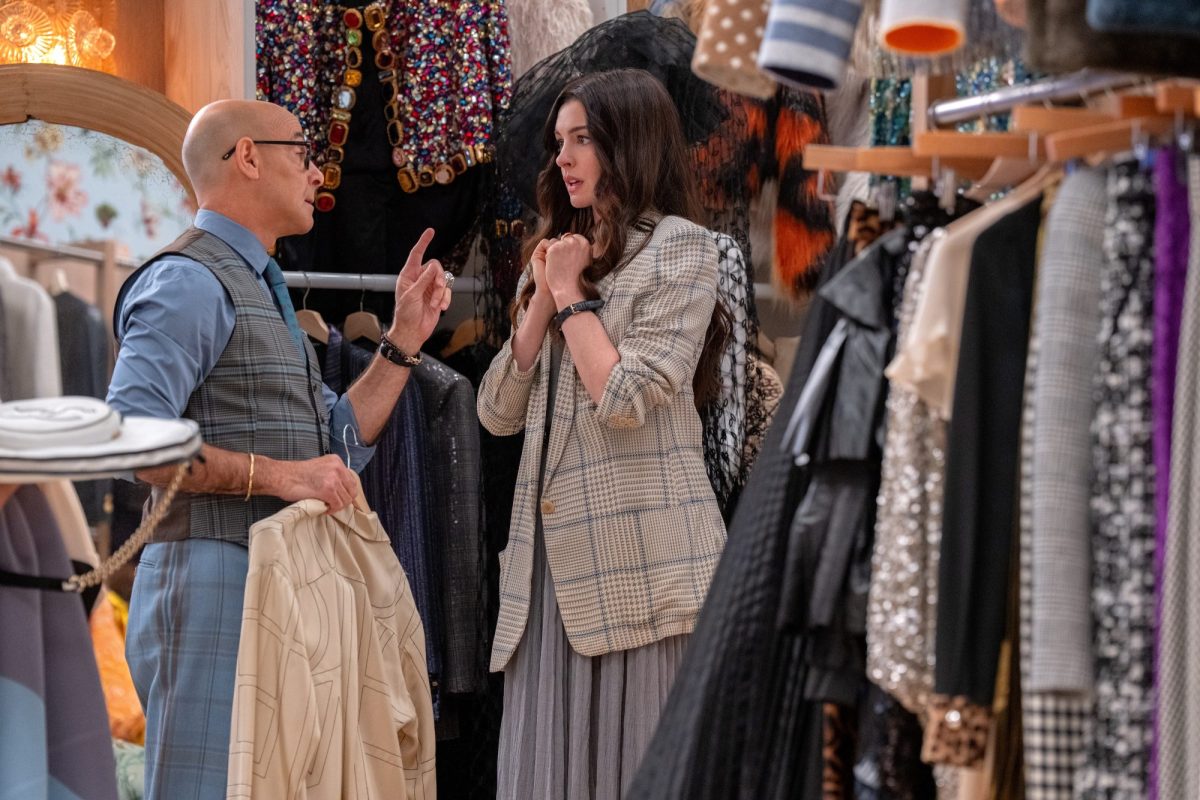
No offence to Frankel, but why is The Devil Wears Prada and its sequel directed by a dude? Equal opportunities and all, but there is no level playing field.
There are important women behind the scenes. The films are adapted by Aline Brosh McKenna from author Lauren Weisberger’s 2003 roman à clef of the same name. She worked as an assistant to Vogue chief Anna Wintour, who astounded and terrified her equally. The lightly fictionalised novel and the films, therefore, are a sassy insider’s swipe at the ferocious mores of the fashion industry and that of the glossy magazine business.
Not that the fashion world isn’t populated by many men, heaps of them queer. Heck, when I was trying to make my way as a journalist in London while picking up other gigs to pay the bills, I scored a stint at a soon-to-fold menswear magazine, but not before I was kindly handed, as if by Stanley Tucci’s Nigel, a few schmick shirts I could never afford. I often spent my last tenner on a coffee and a glossy.
But the ivory towers of creative director and CEOs are predominantly stacked with guys, despite women accounting for around 85% of all roles.
While Streep, Hathaway, Blunt, Tucci and co appealed to my adoration of iconic women and fashion I could never afford, my fondness for The Devil Wears Prada still rang a niggling bell at the back of my mind that I should feel embarrassed.
Well, I don’t. I refuse. I adore.
The Devil Wears Prada: groundbreaking
I could see myself in Hathaway’s self-serious Andy Sachs and her determination to be a great writer in The Devil Wears Prada. This, despite her being poorly supported by her mates (only Traice Thoms carries over to the sequel) and selfish boyfriends (Adrian Grenier and Aussie Simon Baker, neither of whom are back).
But I could also see Andy was snooty, willing to take the much-coveted assistant gig at Runway magazine while sneering at fashion as beneath her concerns.
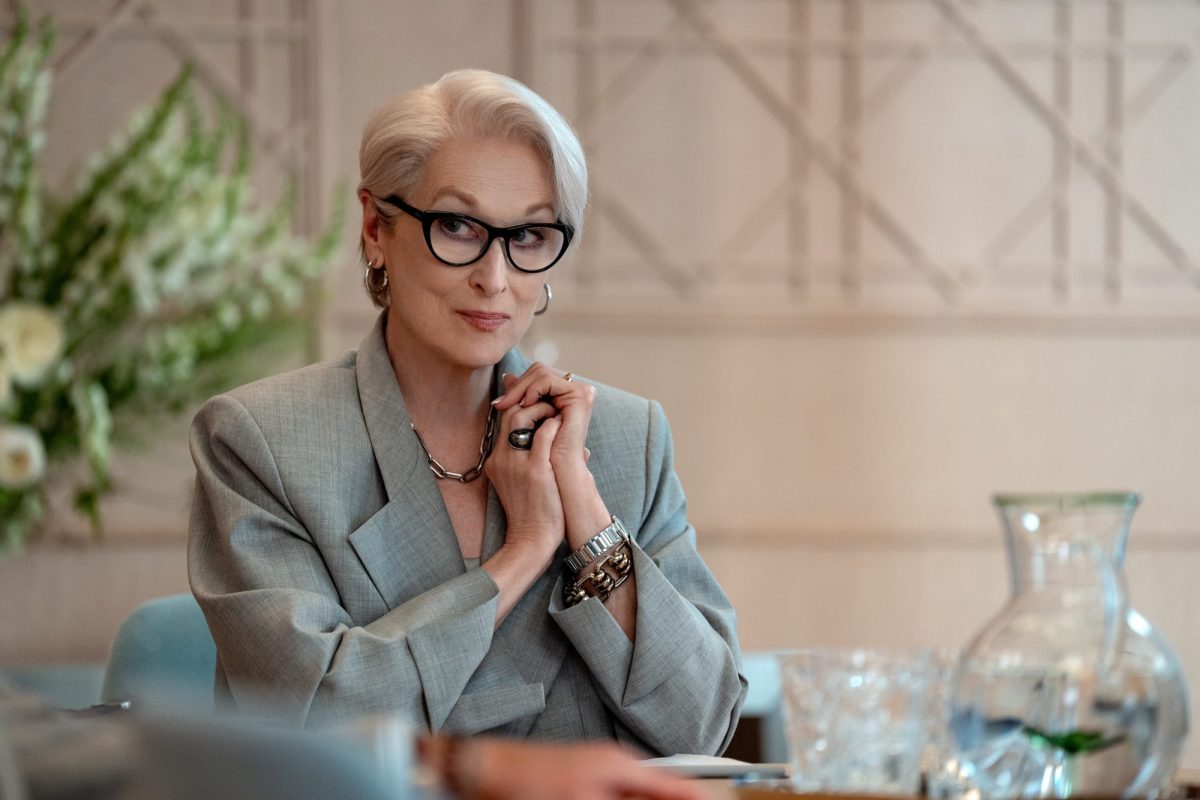
Hence the imperious Miranda Priestly (Meryl Streep) withering with both a raised eyebrow and that magnetic speech on the lifecycle leading to Andy’s sleeveless cerulean jumper. ‘It’s sort of comical how you think that you’ve made a choice that exempts you from the fashion industry when, in fact, you’re wearing the sweater that was selected for you by the people in this room.’
Andy’s transformation into full clacker (after the sound of heels in Runway halls) is great drama. As is her principled stand, chucking it all way (phone into a Parisian fountain included), when she realises Miranda’s manipulative determination to protect her own job by sacrificing Nigel.
Tucci plays it ever so gently, a big teddy bear who’s always waiting for Miranda to truly love him, while saving Andy’s ass in an achingly gorgeous performance. ‘Let me know when your whole life goes up in smoke. Means it’s time for a promotion.’
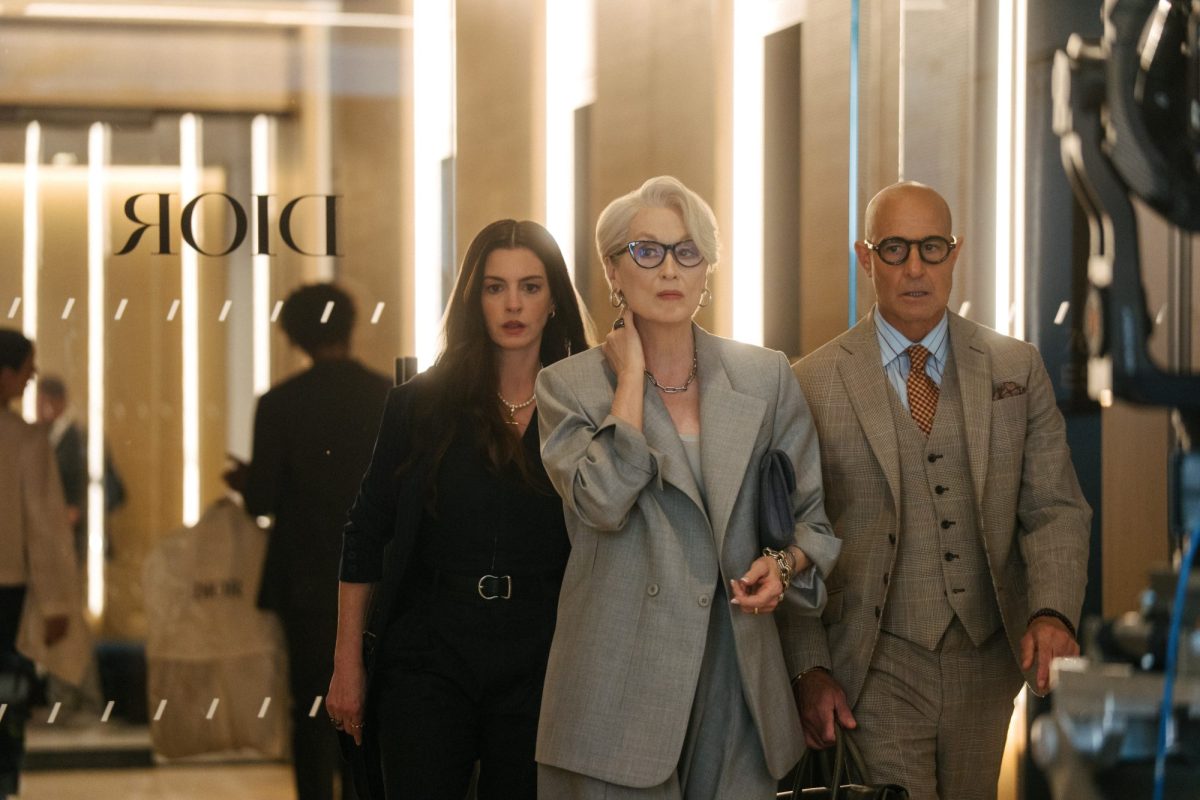
There’s also a bittersweet beauty to the frenemy clash between the ever-so sweet Andy and Blunt’s blunt and bitter Emily, the assistant closest to Miranda who’s more than a little furious at the naif taking her place at Paris fashion week after only eating one cube of cheese when about to faint, all so she can rock sample sizes from Runway’s Narnia-like closet. ‘I’m just one stomach flu away from my goal weight.’
Speaking of Narnia, Streep is spectacular in the white witch role, but it’s Blunt’s comic timing, pitiless put-downs and facial tics flung Andy’s way that really punches up the original’s remarkable fusion of screwball comedy peppered with satirical spice.
Lush to look at, The Devil Wears Prada takes you on a wild ride through a rarefied world, where the punchlines are still as fresh as florals, even if Miranda would snarl that they’re hardly groundbreaking for spring.
The Devil Wears Prada: can you ever go back?
While I probably won’t watch The Devil Wears Prada 2 as often as the original, it’s still fun, even if it leans too heavily on nostalgia-laden callbacks, rather than truly asking where these characters would be, 20 years later.
An oddly melancholic tone never quite fits. McKenna’s screenplay smartly sets up that journalism is in dire straits. Bums on seats, fashionably attired or not, are dropping like Miranda Priestly’s coat on an unsuspecting assistant’s desk (before HR put paid to that).
But it stretches credulity that Andy would cross that burned bridge to strut back into Runway, covering for Miranda at all costs. Likewise, it’s unlikely Runway would now be online-only. Sure, that’s the sorry fate of many a once-proud print publication, but hardly that of Vogue, with the Madonna track again reminding us of where we truly are.
Another relationship with an Aussie, this time with Patrick Brammall’s real estate agent, accent intact, feels shoehorned, rather than a natural part of Andy’s arc. (Also keep your eyes peeled for two seconds of Ronny Chieng).
The shift to Rome, mirroring the recent run of Emily in Paris, doesn’t feel as packed with potential, though Donatella Versace’s mic drop is sublime.
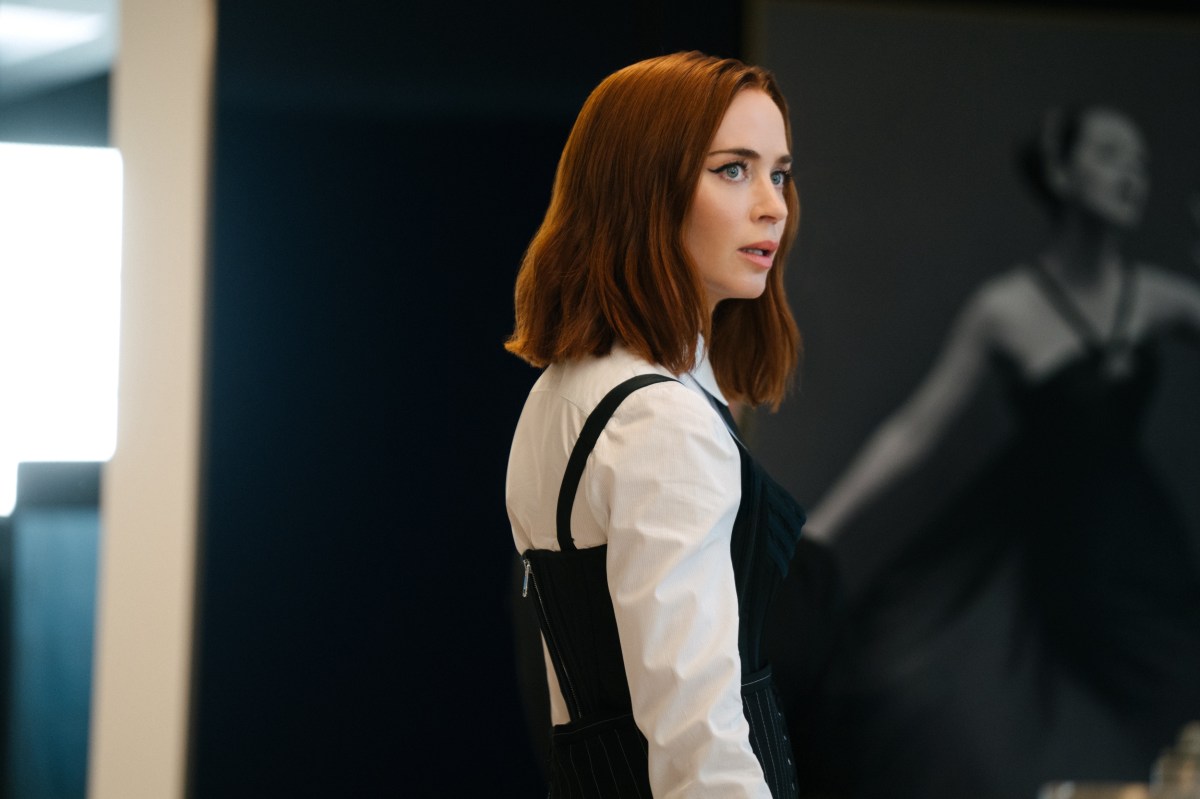
As ever, Emily is the queen bee. Blunt’s perfectly poised put-downs trump Miranda’s marvellous malignance, even upstaging a spicy Lady Gaga. Now at Dior, Emily is still navigating that fine line between kinda loving Andy whilst also begrudging her everything. Her goofing around with Justin Theroux’s AI-loving tech bro Benji Barnes leads, unexpectedly, to the film’s finest moment. Well, that and a last supper I won’t spoil.
It is still a feast for the soul. I guess there’s no harm in double featuring them …