Alongside talent, dedication, perseverance and hard work, filmmaking requires more than a little bit of luck. Movie magic isn’t solely limited to the on-screen end product, then.
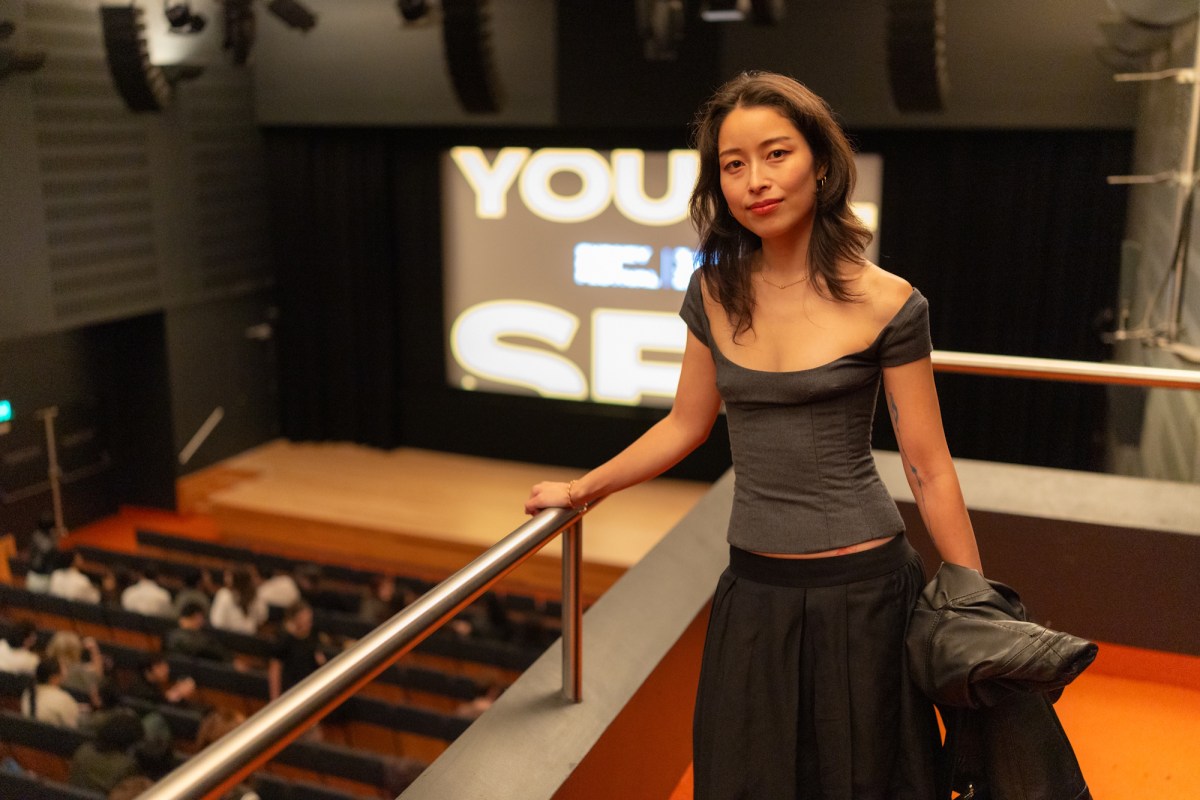
Perhaps a screenwriter will pen hyper-specific fictional characters that inhabit a distinctive world, then somehow meet their real-life equivalents. Maybe a director will assemble the crew for their first-ever microbudget feature through a series of unlikely encounters and chance connections. Both happened to Hyun Lee on French Girls.
Another fortuitous development in the $28,000 production’s story – and a twist of fate that has helped the modelling-focused picture become one of the homegrown hits on Australia’s film festival circuit in 2026 – is that Sydney Film Festival devoted a programming strand to the fashion realm this year.
‘It was a real coincidence and a lucky alignment that we just happened to release the same year – the one year that they’ve done a fashion retrospective,’ Lee tells me.
‘In the making of the whole film, we’ve had lots of nice little synchronicities and alignments like that. And that was just another one to top it off, to be the cherry on the cake.’
French Girls interview
In good company
At SFF, as part of the Harbour City festival’s Sartorial: Fashion on Film line-up, French Girls screened alongside the work of acclaimed directors Sofia Coppola, Agnès Varda, Jia Zhangke, Frederick Wiseman, Wim Wenders and Robert Altman.
‘When I first was sent that list of the line-up, I was just cracking up, because that’s a ridiculous line-up to see my name under. It was all auteur filmmakers and then little old me,’ Lee laughs.
Lee says ‘almost 2000 people saw it at Sydney Film Festival in the space of three days,’ and now French Girls is also playing the 2026 Melbourne International Film Festival from 20 to 22 August. That’s two big local festival berths ticked off, aka a dream debut run for an Australian filmmaker.
Initially, the Korean-Australian writer and director wasn’t aspiring to Aussie film success. Being a filmmaker wasn’t on the cards, either. ‘I really wanted to be a fashion photographer. My dream was to work for Prada in Europe and be that type of fashion photographer,’ she says.
Lee began chasing that goal as a teenager, worked as a freelancer ‘for quite a few years’ and still does photography work, ‘but my career didn’t take off,’ she says.
‘I saw other people, my peers, young photographers whose careers did take off. And at the time, I probably felt a bit hopeless and a bit like “Oh, maybe it’s just never going to happen for me”,’ she says.
‘But now, I think having had the perspective of 10, 15 years later, I can look back on it and be grateful that it didn’t take off because my life would be so different. And then I wouldn’t be making films.’
‘I think I’m really happy with how things have come about – and if I hadn’t had those experiences, then I wouldn’t have made French Girls.’
Mirroring life’s ups and downs
Lee’s journey to her first feature also spans art school, starting French Girls as a video installation project a decade back and making the 2018 short Asian Girls, which premiered at SXSW and went on to screen at SFF and MIFF. That’s alongside writing and directing on TV’s Born to Spy, and writing on the Asher Keddie- and David Wenham-led 2024 series Fake.
Her segue from photography to film wasn’t a sudden, serendipitous move like the switch from construction to modelling made by Mia, her protagonist in French Girls. Still, just as Lee has followed the path that life offered – challenges, triumphs and all – so does her lead character.
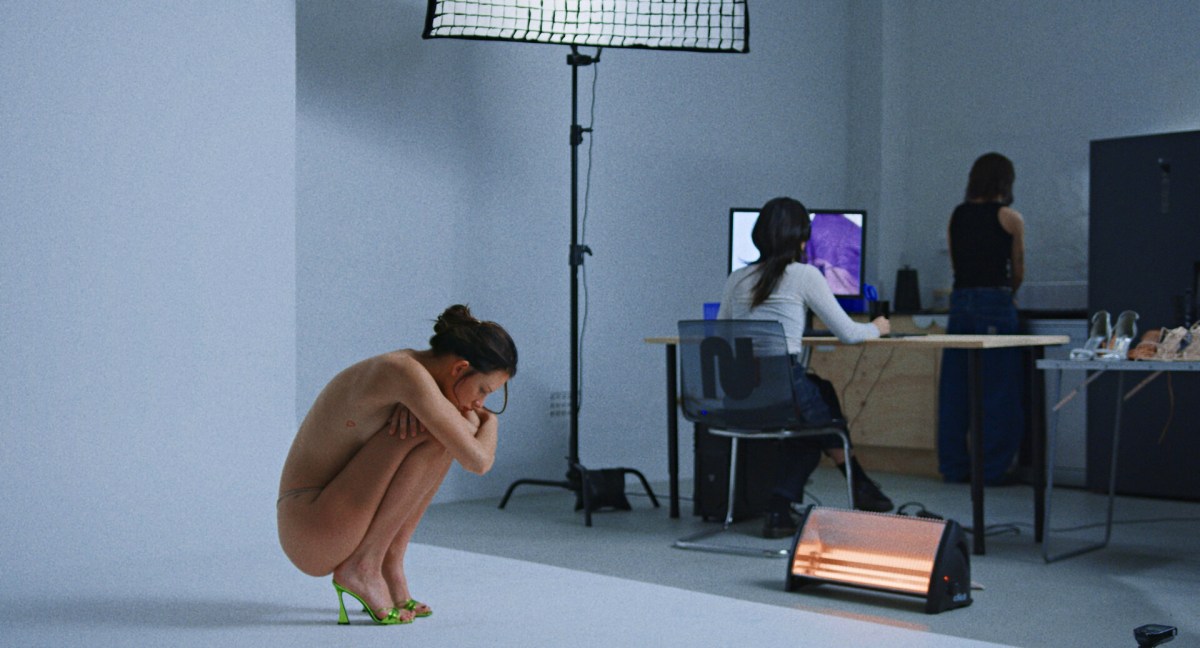
Lee is well-aware that her own experience, and not just as a photographer in the fashion industry, informs French Girls. ‘It’s given me the perspective of understanding a zoomed-out view of the good and the bad that happens. It all evens out in the end,’ she says.
‘And you see that worldview in French Girls – the good and the bad, you just zoom out so far that it all becomes quite neutral.’
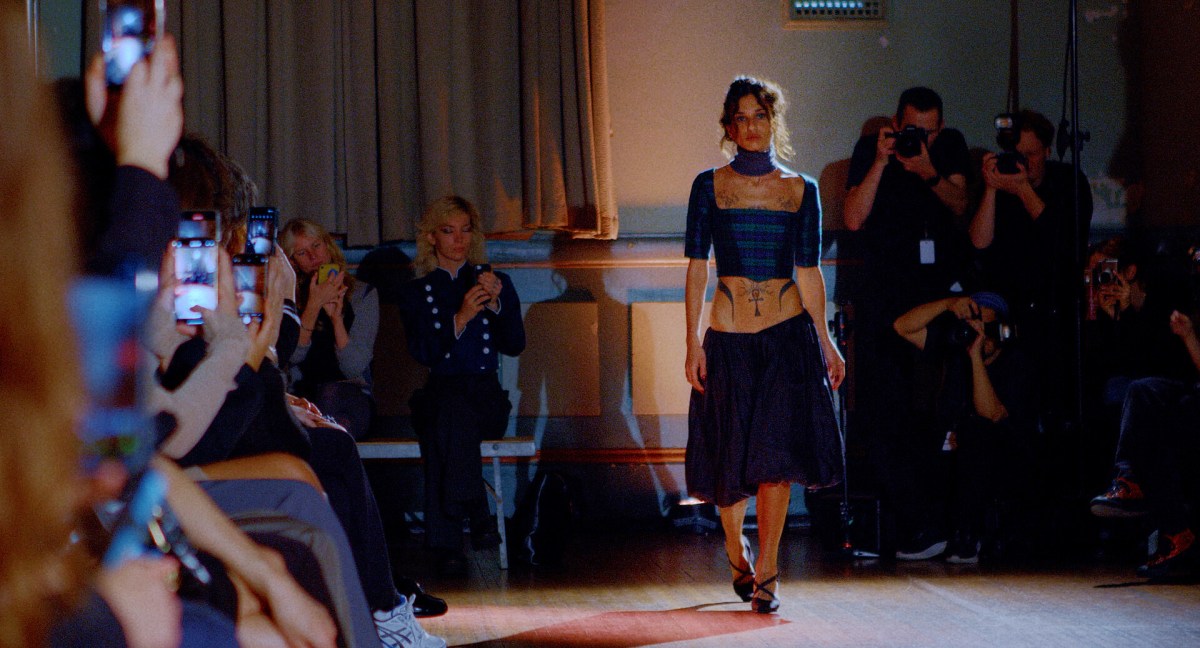
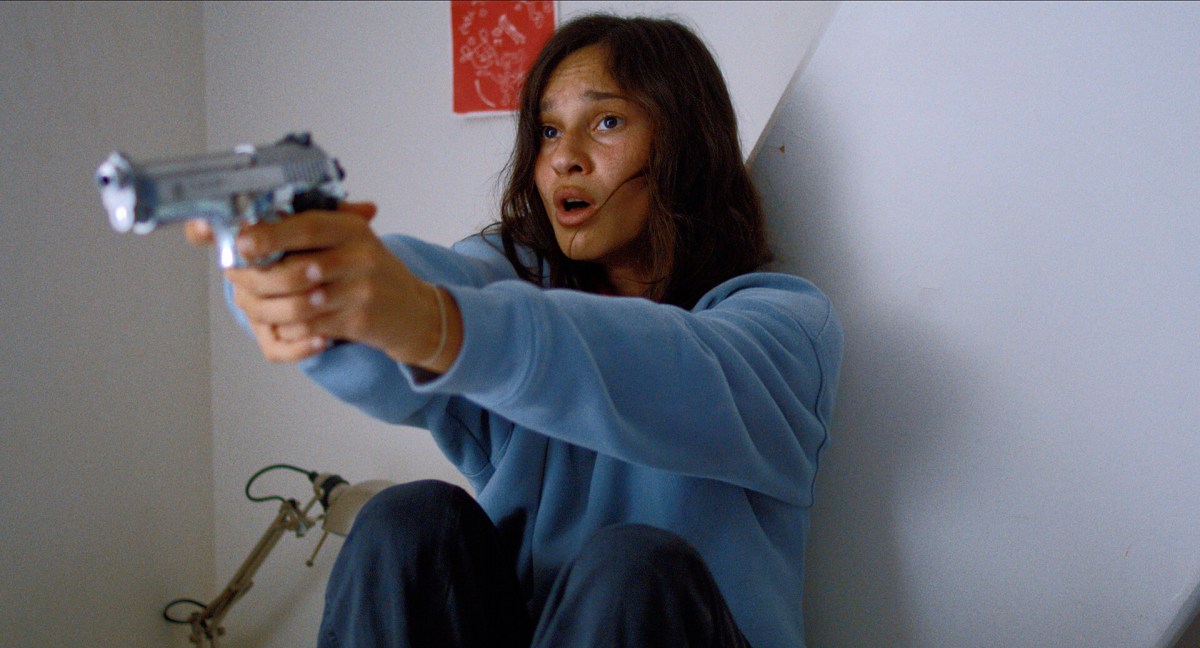
For Mia, played by IRL model-turned-acting newcomer Mia Kidis, the good includes getting scouted by an agent while simply walking along a Sydney street, quickly proving a sought-after talent, adorning towering billboards and scoring lucrative paydays.
The fact that she has zero connection to France? That doesn’t stop her from becoming the face of a ubiquitous ‘French girls’ campaign.
As for the bad, Mia’s change of profession doesn’t cure her boredom or existential malaise, or impart a sense of purpose or fulfilment. Despite boasting years of modelling experience behind them, her new colleagues are just as uncertain; some are also envious of her swift success. Then there’s the judgement from Mia’s old friends, especially her boyfriend, who thinks that a fashion scam will solve his money troubles.
Aptly and knowingly nodding to the French New Wave, Lee also takes inspiration from Jean-Luc Godard – because her film has a girl and also a gun.
When perception and reality clash
As presented with a documentary-style gaze, but also a playful willingness to get ‘really silly,’ says Lee – ‘obviously, it’s not real,’ she advises – French Girls finds much to dig into.
The standards that society places on both beauty and femininity, the power of images, the labour required for both, how all of the above can be manufactured and manipulated, what types of work are valued: Lee’s film puts them all on its thematic catwalk.
‘I think it is about all of that, but to zoom out even further, I think some of the universal themes in this film are just about what it is to be yourself, as clichéd as that is,’ Lee says.
‘It’s a difficult thing to figure out who you are. And in this world of modelling, where models are told constantly, “Just be yourself, just be yourself” in front of the camera, it’s such an ironic piece of advice, because that’s probably the most uncomfortable environment that is the least conducive to being yourself.’
‘And I think, in a way, all people can relate to that feeling. In general in life, you hear people telling you to “Just be yourself” – but what can you do if you don’t know who you are? Everyone’s figuring that out.’
Indeed, at every turn, French Girls is as much about the contradictions between perception and truth. This is a movie that heroes a ‘French girls’ campaign with absolutely no French girls in it, for example, while also eagerly contrasting the glossy visuals that result from modelling with the behind-the-scenes process, and unpacking the supposed glamour versus the evident mundanity of working in fashion.
Even the film’s existence and aesthetics, stepping into this seemingly glitzy domain on a minuscule budget and exceeding what audiences might expect of a $28,000 film, adds to its many probing layers.
In drawing from reality, and also preferring naturalism in both performances and cinematography, all while making a firmly fictional picture, ‘it was intentional to blur the boundaries,’ Lee says – ‘and then to get really ridiculous when the scripted parts come through.’
Casting coincidences
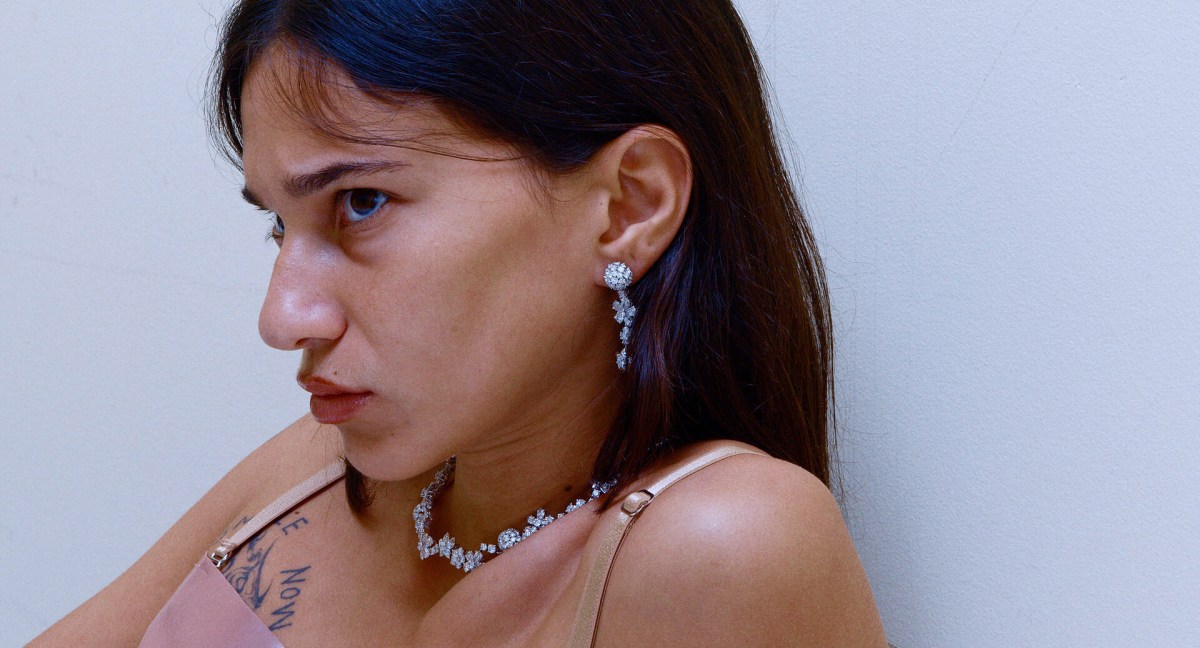
Enlisting models, including Kidis as Mia and Daia as her new friend Anya, is another of French Girls’ boundary-blurring touches and strokes of good fortune.
Lee also calls the casting kismet, after meeting both talents when ‘they happened to be living their lives in parallel to the characters that were written in the script’.
She adds, ‘I had a full script before I met them, and it was a total coincidence that their lives just completely matched the characters that were written.’
‘Mia, she had pretty much just been signed with a model agency, and I was struck by her, because I could see that her life was unfolding as with the character in the script,’ says Lee.
The fact that a Mia plays Mia as well? ‘It was also a coincidence that her name was the same as what was written long before I met her,’ Lee explains.
‘With Daia, the character that was written in the script was extremely specific, and I had no idea how I was going to find an actor to play a specifically Russian model who was modelling since she was a young teenager, who had gotten to a point in her career where she was getting a bit over it, and a much more experienced model than Mia – and with that same bubbly personality,’ says Lee.
‘It was a total coincidence that I came across Daia also when I was filming documentary-style proof-of-concept footage for this film.’
‘So the way that I met her was extremely lucky, and she and Mia also organically became friends outside of me. It really was this blurring between fiction and reality, and it was all unfolding in real life.’
Big risks, bigger rewards
Given the tiny budget, plus the fact that French Girls was shot on weekends over the course of a year, those coincidences were significant. ‘I think it’s inevitable, and learned that while making the film,’ reflects Lee.
‘Because you do take such a leap of faith, and there is this overwhelming sense of not knowing what you’re doing and not being sure how you’re going to get there, but just taking the leap of faith and doing it anyway.
‘I guess the payoff for doing that is that you then experience all of these magical things that reward you for taking the risk – and that comes in the form of chance encounters, and lucky coincidences and alignments, that make things possible when they really shouldn’t have been possible.’
Lee is now ‘a big believer in the power of invisible forces that make these things possible,’ she says. Ask her if finding Kidis and Daia felt particularly destined, and she answers ‘absolutely – it was truly fateful’.
‘I have had moments where I’ve just been in total disbelief. It makes me a bit scared to write scripts now, to be careful writing a script, because it might just come true.’
‘We had a lot of things come true and it was really freaky.’
Another learning from making French Girls came from the limited financing, resources and shooting windows. ‘I actually think that a small budget is not a detriment, but it can be a real advantage if you approach each obstacle like an opportunity to do something inventive and creative,’ says Lee.
‘You have so many [obstacles] all the time, and then you have to adapt to the situation to find a way to turn that problem into a result that’s even better than what you had originally planned.’
Watch the trailer
Great style endures
Lee has plenty of examples to back up her point. ‘I’m so incredibly proud of how we navigated our lack of gear or time,’ she says.
‘There was a scene where we were shooting at Carriageworks, backstage at Fashion Week, really guerrilla-style filming. And at one point, we tied a light tube to our sound recordist’s boom pole, because we didn’t have light stands and that was a mobile way to light the scene,’ Lee explains.
She’s also pleased that, while time was of the essence on every shoot weekend, filming across a year meant that everyone could figure out and settle into a rhythm. ‘Then, by the end of the film, we were like a professional machine,’ she says.
Next up for Lee is a full-length version of Asian Girls, a screenplay that she wrote before shooting French Girls, but will now benefit from her feature experience.
‘I guess the script was made in a sort of theoretical space – it was a “One day if I make a film, this is what I’d do”. And I look back at that script now and I’m just like “That would be impossible to shoot”,’ says Lee.
‘I think from making French Girls, I’ve learned ways and approaches to write a script with the concrete, practical steps of actually making the thing in the back of my mind.’
‘So things like when you make locations more accessible, you will tell the story more efficiently – so that the same emotional beats can be communicated in just one location, as opposed to 10 spread-out locations that would make your budget way too big, and it would make the shooting schedule way too inefficient,’ she says.
‘I think it gave me a practical, on-the-ground perspective on what it is to actually make the thing that you’ve written.’