This review references violence and suicidal ideation.
British filmmaker Kirk Jones’ vital film I Swear is both feel good and bad. The biopic is a timely look at the battle against ableism and the ignorance that stubbornly surrounds so many folks living with Tourette syndrome, which can manifest in physical and occasionally offensive vocal tics that are entirely beyond control.
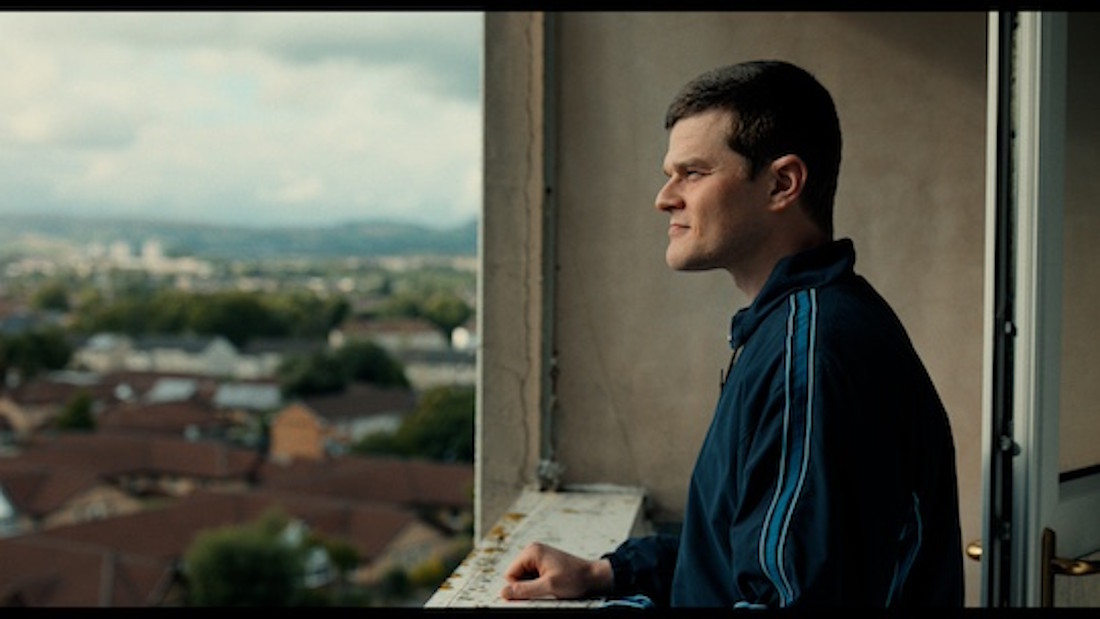
Handsomely shot by cinematographer James Blann and niftily edited by Sam Sneade, I Swear is a beautiful, if occasionally bleak, biopic that centres on the real-life activist John Davidson, who has dedicated his life to raising awareness about Tourette’s in the hope that it will get easier for kids following in his footsteps.
I Swear review – quick links
Bottling it up
John grew up in the Scottish border town of Galashiels in the 80s, and his tics first started to make themselves known when he was a young lad. Initially played by brilliantly expressive newcomer Scott Ellis Watson, his physical ticks come first.
They manifest at the dinner table, much to the annoyance of his mum Heather, played with exasperated hauteur by Trainspotting star Shirley Henderson, and his occasionally aggro dad David (Outlander actor Steven Cree), who assume their son’s taking the piss.
Trying to conceal behaviours he does not yet understand, John struggles to bottle them deep inside. But they have a habit of erupting explosively, like a shook-up bottle of Irn Bru. So it does on his first date, when John takes a girl to see Tootsie with her already less-than-impressed mum, only to involuntarily blurt out ‘suck my dick’ while the iconic Pearl and Dean buh-buh-bah-bah ident plays before the film begins.
If that’s not mortifying enough, signalling why so many folks living with Tourette’s feel isolated, unable to forge romantic or, sadly, even friendship bonds sometimes, then things get much worse for John at school. He repeatedly swears at his headmaster (Ron Donachie), subsequently enduring the lash with a belt. John pleads that it isn’t his fault, but the unforgiving man insists, ‘But it is, and it always will be’.
Promptly expelled, John’s dream of playing in goals for Berwick Rangers is also derailed. Leading him to a very dark place, tragically, the lack of understanding he receives causes John to wonder if it’s worthwhile living at all.
Watch the trailer
A little love
We rejoin John’s travails as a 20-something, now played by Robert Aramayo, or young Elrond from The Lord of the Rings: The Rings of Power. His dad has left the picture, and his mum isn’t coping with the stigma. Henderson’s brittle but nuanced performance conveys just how difficult it can be to stand alongside a kid with Tourette’s.
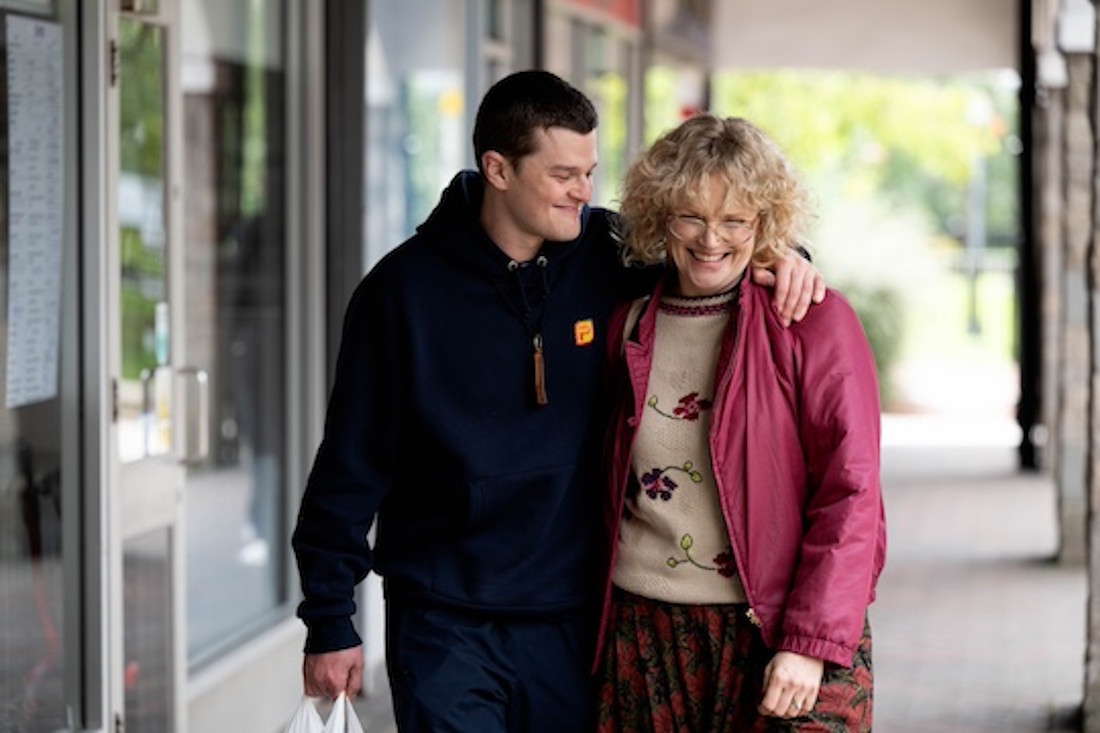
Bumping into his sympathetic former schoolmate Murray, first played by Jamie McAllister, then Masters of the Air actor Francesco Piacentini-Smith, John is at first reluctant, but soon falls in with Murray’s family. Even if Shameless and stage star Maxine Peake, who is from Bolton, lays on her Scottish accent a touch too thick as Murray’s doting mum Dottie, it’s forgivable, because she brings such light to the film.
Diagnosed with terminal cancer, Dottie values the brutal truth that’s blurted at her by John against his will. Her big-hearted acceptance, insisting he mustn’t apologise for what he cannot help, becomes a rock for the lost lad, a mother figure he can rely on. Even when his physical ticks result in accidentally hitting Dottie in the supermarket, she cackles, ‘You’ve given me a thick lip, you numpty’.
Dottie is a talker, but it’s the unspoken stuff that is the film’s most luminous aspect. Through Peake and Aramayo’s fantastic performances, we grasp just how important Dottie’s support of John is in the way he holds his shoulders when he’s around her, dancing in the living room. It’s there in his vulnerability, coming off the meds that Dottie, a mental health worker, worries might be holding him back.
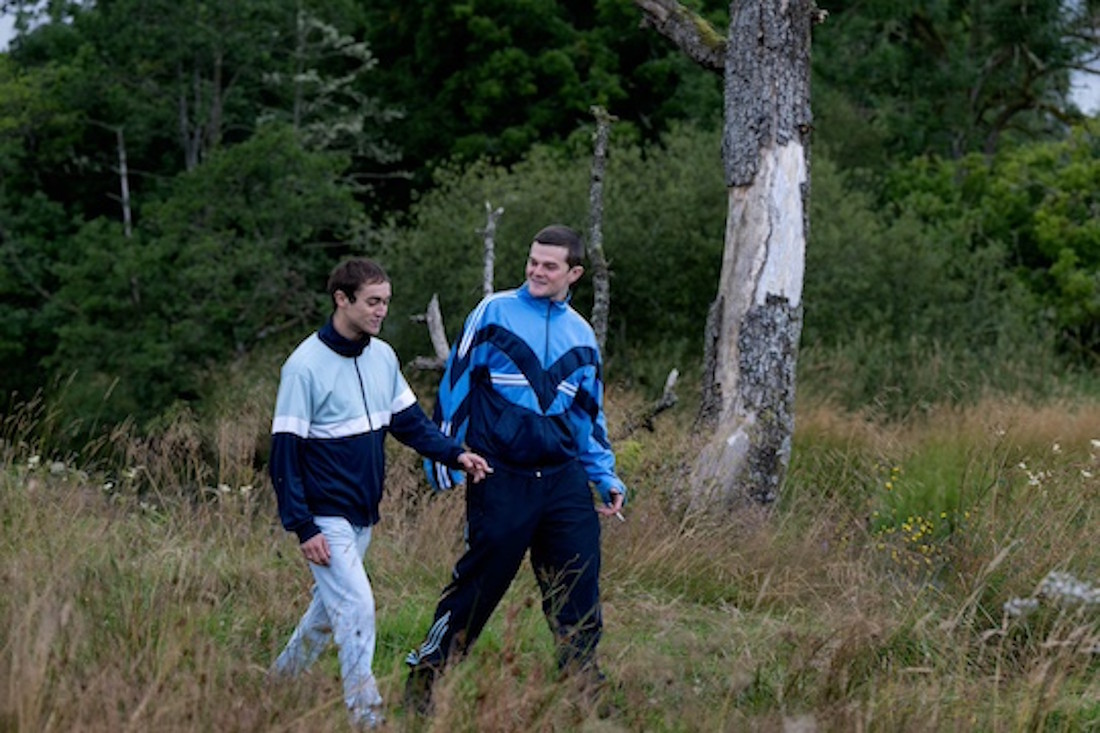
Likewise, Peter Mullan’s caretaker Tommy offers a father figure. Like Dottie, he enthusiastically looks past John’s ticks, offering the younger man a reliable gig at the local community centre, though he does draw the line at his dog getting whacked.
When John later winds up in court after a fractious mix-up, Tommy springs to his eloquent defence. The C-bombed judge questions whether John is faking it. Tommy’s no-nonsense response? ‘Why would you pretend to have a condition that results in you being hit by a crowbar?’
Speaking out
One of the UK’s biggest box office successes last year, and Scotland’s best performing film since Trainspotting way back in 1996, I Swear missed out on the Outstanding British Film of the Year Award at BAFTAs, which went to Chinese-American director Chloé Zhao’s Hamnet.
I Swear did win Best Casting, for Lauren Evans, and, in a welcome surprise for a voting body that far too often apes the Oscars by venerating American films rather than championing British talent, Aramayo also won Best Leading Actor.
It’s utterly gutting that what should have been a joyous evening for Davidson, an executive producer on the film, turned into a deeply upsetting week. It is for the BAFTA organisers to answer why they placed a microphone near his table. BBC editors should explain why they did not edit out an undoubtedly devastating slur Davidson involuntarily uttered while now Oscar-winner Michael B Jordan was presenting an award with fellow Sinners star Delroy Lindo, who were visibly shaken. This, even though the public broadcaster, working with a two-hour delay, censored speeches, including My Father’s Shadow director Akinola Davies Jr, who spoke up in defence of Palestine.
That far too many keyboard warriors accused Davidson of being racist goes to why I Swear is such an essential film. If only more of those so quick to tear him down, or to suggest Davidson shouldn’t have been present on the night when the film about his life’s work triumphed, had actually bothered to watch it and educate themselves.
While there are valid critiques that a person with Tourette’s should have been cast in the lead, Aramayo and Watson do a sterling job with great care taken. There is a joyous sequence featuring many people living with Tourette’s and their families, plus a standout cameo for Andrea Bisset, who gained acclaim for her driving lessons. Change takes time. Hopefully the gorgeous I Swear can help.
I Swear releases in Australian cinemas on 20 March.
Discover more screen, games & arts news and reviews on ScreenHub and ArtsHub. Sign up for our free ArtsHub and ScreenHub newsletters.
Actors:
Robert Aramayo, Maxine Peaker, Peter Mullan, Shirley Henderson, Scott Ellis Watson
Director:
Kirk Jones
Format: Movie
Country: UK
Release: 20 March 2026