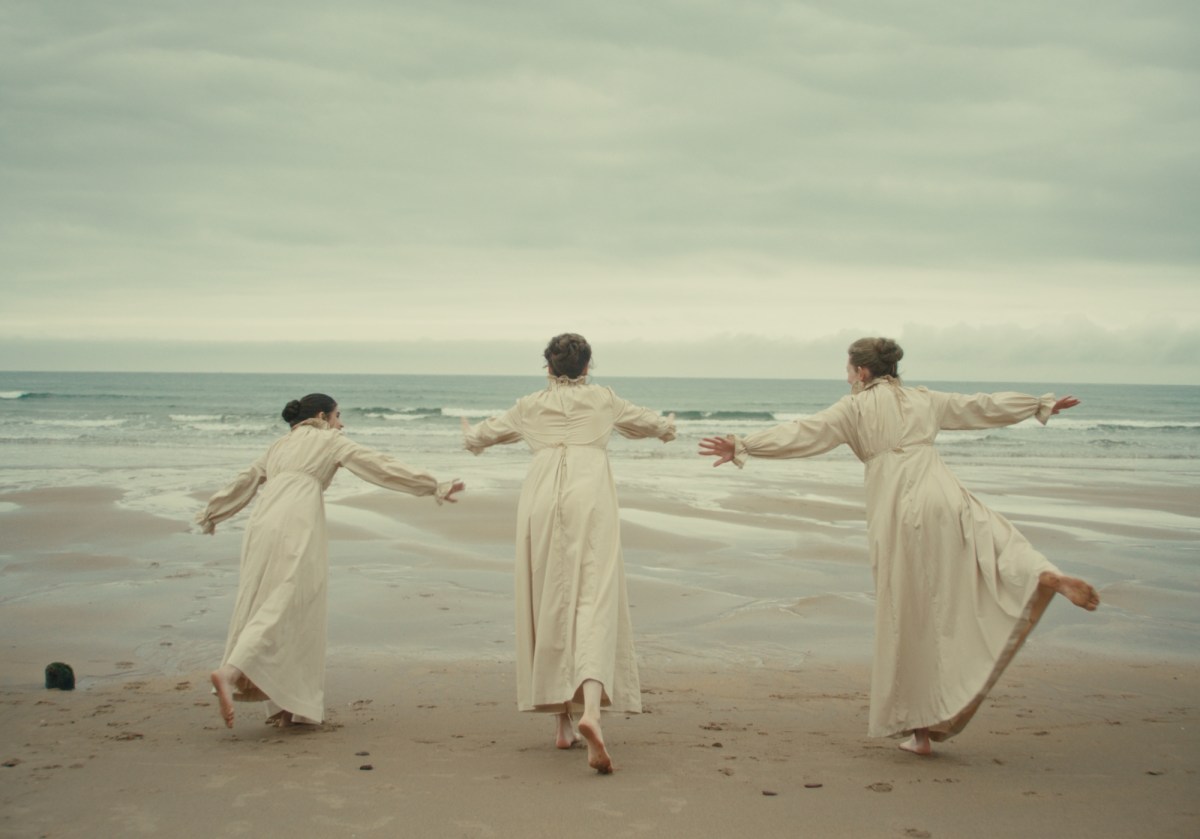
A whole lot of history sits behind Edinburgh-set biopic The Education of Jane Cumming, German director Sophie Heldman’s lushly sapphic highlight at the Melbourne Queer Film Festival.
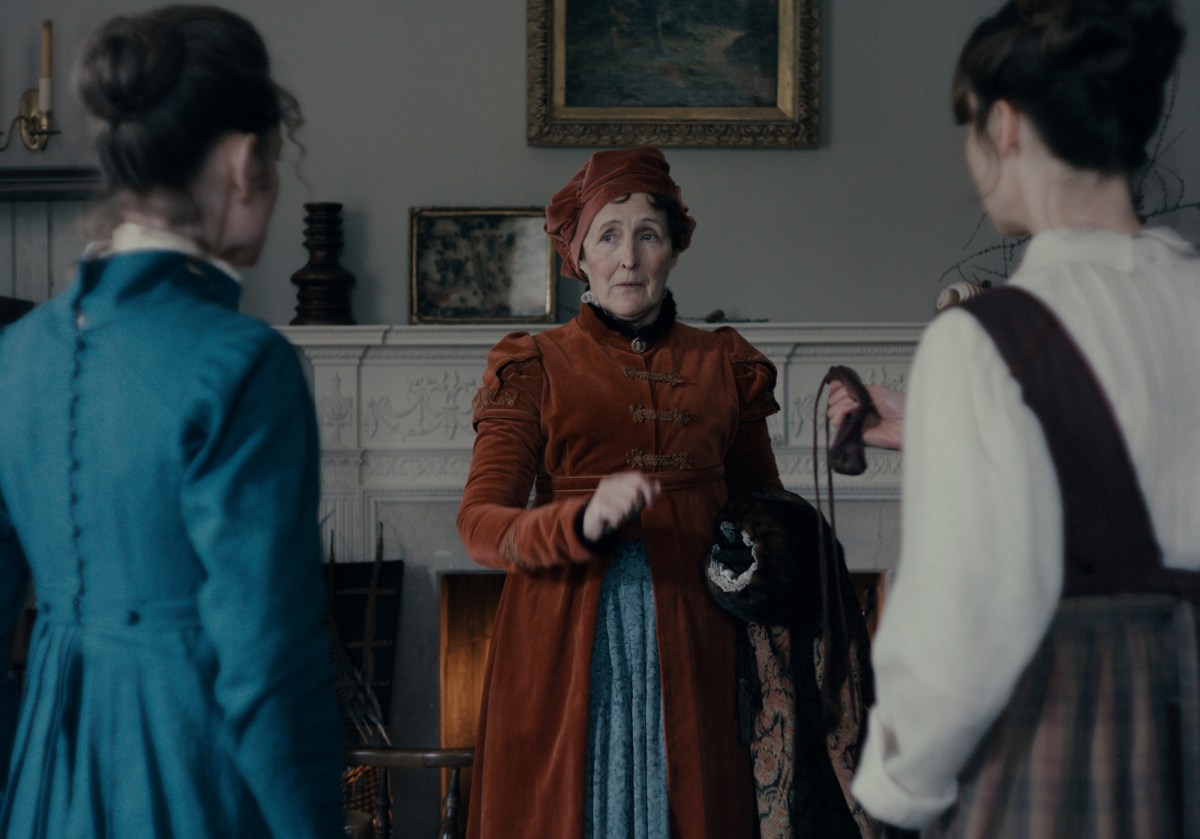
Marianne Woods (played in this take on events by Clare Dunne) and Jane Pirie (Flora Nicholson) founded Drumsheugh boarding school for girls in 1809. The wealthy Lady Cumming Gordon (Fiona Shaw) enrolled Jane (Mia Tharia), her newly recognised granddaughter by her late son George and an unknown Indian woman.
While the teachers worried about their reputation, in a less accepting time when a mixed-race pupil conceived out of wedlock could raise eyebrows, they were swayed by Lady Cumming Gordon’s money and standing. Scandal awaited, but not the one Woods and Pirie predicted. Jane accused them of being lovers in In 1810. The libel suit that followed, raised by the teachers, backfired spectacularly, not unlike Oscar Wilde’s.
The Education of Jane Cumming – quick links
The fascination with Drumsheugh
American playwright Lillian Hellman was fascinated by the case, adapting it into her wildly successful 1934 Broadway play The Children’s Hour. It was, in turn, adapted by German-born, US-based filmmaker William Wyler – not once, but twice!
The moralising Hays Code de-gayed the story in Wyler’s 1936 film These Three, led by Merle Oberon and Miriam Hopkins. But he was able to embrace the queerness more fully in 1961’s The Children’s Hour, this time starring Breakfast at Tiffany’s Audrey Hepburn and The Apartment’s Shirely Maclaine.
The latter film led Heldman to the story in a roundabout way, the writer and director tells me as we meet at the Berlinale after the Teddy Award-nominated film’s world premiere.
‘I went to see Wyler’s Ben Hur, and it reminded me that he did The Children’s Hour, which sent me on a Google search leading to two Scottish teachers and their biracial student,’ Heldman says.
She felt the story in her body. ‘I went to an austere school run by nuns who accused me of being a lesbian, over what was really just a friendship with two girls that I’m still friends with,’ Heldman says.
It was a traumatic experience that also unlocked a certain truth. ‘The nuns I’m sure were all lesbians themselves, and to accuse me of that, of course they saw a grain of truth,’ Heldman says.
‘They saw me, a young lesbian, and they used it as a form of power. That did something to my sexuality. But the moment I went to film school and into the Berlin nightlife, I had my coming out.’
Enlightenment and resistance
Engrossed by lesbian historian Lillian Faderman’s non-fiction book about the case, Scotch Verdict, Heldman discerned the foundations of The Education of Jane Cumming. ‘I could identify with the teachers, but also with Jane Cumming, who has no space to exist, torn between cultures and classes.’
Optioning the book, Heldman started adapting it into a film that brings the story back to Edinburgh, focused on the drama before the court case. ‘I knew from the beginning that I wanted to end with that, only including the most poignant things.’
ScreenHub: 10 films to catch at the Melbourne Queer Film Festival
The film’s time and place lend so much to the narrative. ‘What’s fascinating about this story is that it takes place during the Scottish Enlightenment, a time of transition where there are incredibly progressive ideas that formed a lot of our understanding of democracy and the societies we live in,’ Heldman says.
‘But on the other hand, 1810 was very backwards, so there’s friction there – a pushback that resonated very strongly with the problems we’re dealing with today.’
Heldman met Darkest Hour actor Nicholson when the latter attended a play starring their mutual friend Jeanne Balibar, who appeared alongside Nicholson in the Nicole Kidman-led Grace of Monaco.
‘When we spoke about the case, Flora’s eyes lit up, and I knew I had my co-author,’ Heldman says. ‘So we went on a journey.’
It was a mutually rewarding one, Nicholson says. ‘I kept asking Sophie more and more questions about this court case, about these women, driven by pure curiosity and immediate empathy.
‘Before I knew it, we were writing it together, which was a surprise to both of us.’
Laying the foundations
Federman’s book was a sturdy foundation stone. ‘As a queer historian, she was trying to find queer lives by looking at court documents, because it was one of the only places that you could find lesbians and the minutiae of their life,’ Nicholson says.
‘We not only have the legal debates, but we also have their account book full of the things they bought for the school. We have Marianne’s letters, and Jane’s. You can feel how different they are, and how alive.’
Nicholson could even see their moods. ‘There’s one letter from Jane Pirie where she’s so furious, you can tell by her handwriting. She’s writing a lot faster than she usually does, because it’s all over the place, and her quill pierces through the page, ripping it.
‘These papers vibrate with life. It was a treat to discover the stamp Jane used to seal her letters with the word “truth”, even before the case. It gave me tingles.’
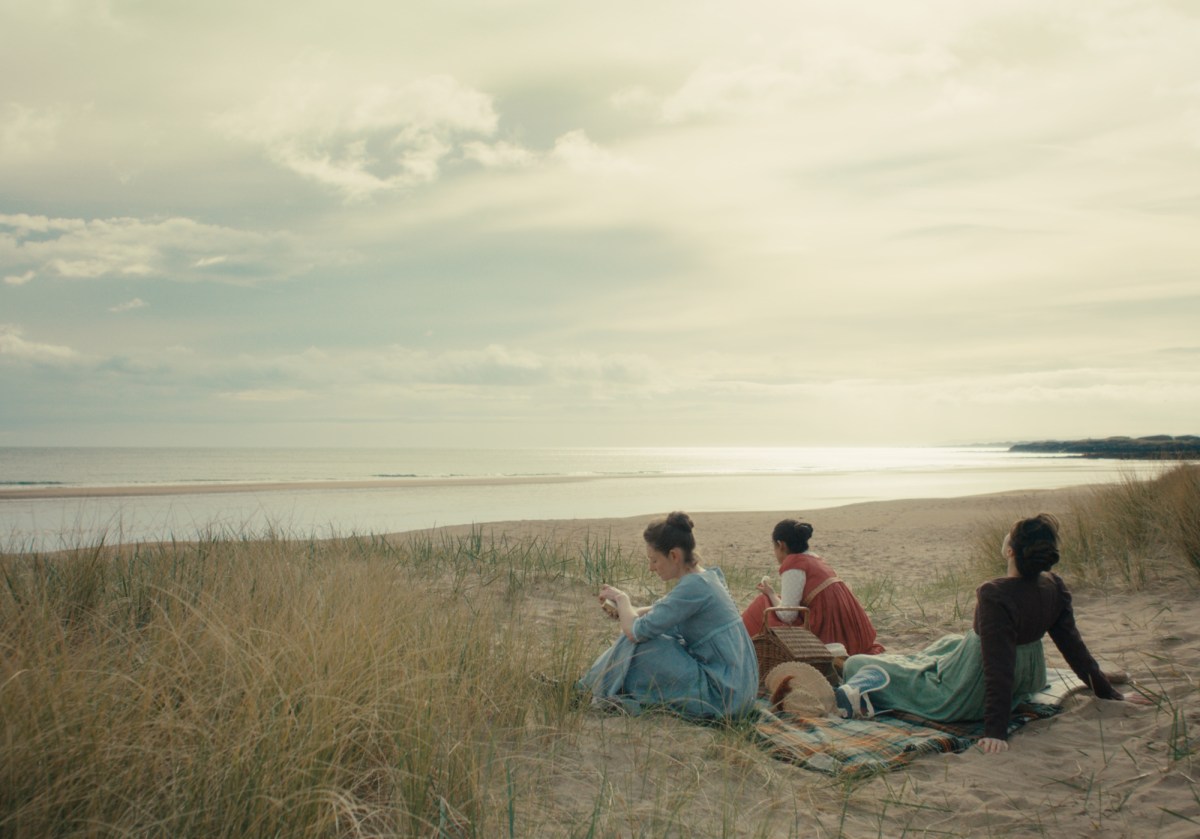
Tingles aside, it wasn’t always part of the plan that Nicholson would play Pirie.
‘I wanted the film to have the right actors, and I knew I could do that when I financed through the European system, because they allow you artistic freedom,’ Heldman says. ‘So Flora and I went to Edinburgh to research, and when I saw her looking through the papers, I thought, “She’s written herself the part.” And so I offered it to her.’
Despite her instant fascination, Nicholson was cautious about stepping into Pirie’s shoes. ‘It was quite important for me to put that idea away, in my head, because I really wanted to write it without bias,’ she says. ‘I was sort of playing everyone, and that was the only way I could do it.’ Even when Heldman offered the role, Nicholson was still film-first. ‘I wouldn’t be Jane if we couldn’t find a Marianne that would fit with me.’
A Dubliner, Dunne was equally won over by the screenplay. ‘It was just brilliant, really, really beautifully written, very balanced,’ she says. ‘You’re straight in, you know what’s happening and you care. Even though it’s based on this true [event] and laden with tonnes of research, you don’t feel weighed down.’
That includes the weight of colonial history. ‘It’s like going back to one of those old-fashioned Empire stories and blowing it up,’ Dunne says. ‘It’s revolutionary.’
Worlds apart
The Education of Jane Cumming’s revolutionary spirit is multifaceted. Uncovering queer history, it also questions the empire’s legal system. Lesbians were ironically shielded from some structural homophobic repression simply because male bigwigs literally couldn’t conceive of their existence.
But there’s more to it for Small Things Like These actor Dunne. ‘This is from the time of Jane Austen, and for me, as an Irish person, and I don’t mean to cling to my identity too much, but something in my body turns away when I see the corsets coming out,’ she says.
Nicholson’s screenplay allayed Dunne’s concerns. ‘Here’s these women who get out of the city and go out into the mountains. They learn their own skills, and they’re revolutionising these young women’s hearts and minds,’ she says.
‘There was something so exciting and freeing about all that. Fiona Shaw said she gets offers for dramas like this all the time, but she could see that this film was different. We’re going back and we’re doing herstory.’
Centring the women and their sexuality does them justice. ‘It’s lovely to be reminded of the sacredness of bodies coming together,’ Dunne says. ‘In my soul, as Marianne, I felt this earthy woman who knew that the future would be far more expansive … than the constraints of these men.’
Klara and the Sun lead Tharia was likewise drawn to the nuanced depiction of Jane Cumming. ‘She was educated in an English school in Calcutta, a very western, anglicised education, whilst also having this part of her that doesn’t fit into that world,’ she says. ‘And yet, she has a very strong centre.’
She knows herself. ‘Jane inherited her grandmother’s strength and stubbornness,’ Tharia adds. ‘She has this beautiful Indian heritage you can see in the way she expresses herself. She also has that English stoicism, even if there isn’t a place of belonging for her. And that’s what she hopes to find in this school, in this slightly unconventional family.’
But this ‘logical’ family is torn apart by her actions. ‘I don’t think that Jane is malicious, or that it was a calculated act,’ Tharia says. ‘She’s 15, and remember that age and feeling like an outsider, feeling angry, hurt, rejected, deeply misunderstood, and it being so unjust.
‘So I see her through this lens of empathy, zooming out and looking at the socio-political landscape at the time. That’s where the fault lies, with those men in the courtroom.’
Speak of love
Walking in the women’s footsteps, shooting in Edinburgh, brought the story home for Heldman, who brought Scottish cinematographer Kate Reid on board. ‘That was very important for me, to have a female [Director of Photography],’ she says. ‘I didn’t even know she was Scottish. I just saw her work, thinking something rings true in it.’
That truth informs every breath of the beautiful, if bittersweet The Education of Jane Cumming. ‘It speaks about love,’ Heldman says. ‘If they all could act according to their heart, this wouldn’t have happened.’