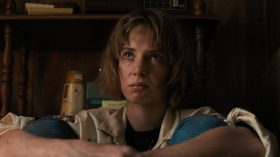
Theranos founder and convicted fraudster Elizabeth Holmes is guilty.
This is not a controversial statement, no matter how often co-directors Nathan Fielder (The Curse) and Lance Oppenheim (Primetime) frame it as such in You Can See Everything, their frequently infuriating, inarguably fascinating documentary about her last days of freedom.
While Holmes was cleared of defrauding patients, she was convicted on four counts of scamming investors who poured hundreds of millions of dollars into her health tech startup’s Edison machine. She claimed the compact device could run hundreds of tests on a tiny pinprick’s worth of blood. It could not.
Holmes is currently three and a half years into an 11-year sentence at a minimum-security women’s prison in Bryan, Texas. Have innocent people gone to jail before? Absolutely! But the litany of evidence amassed against Holmes – and Ramesh ‘Sunny’ Balwani, her also-jailed then-partner in the Theranos business and (concealed from investors) life – is overwhelming.
Despite this, Holmes maintains she has never lied in her adult life. As such, she and her cartoonishly creepy fiancé Billy Evans invited Fielder and the largely offscreen Oppenheim into their beach shack rental to put forward her side of the story 34 days before she went away. Then shit got really weird.
You Can See Everything review – quick links
Playing the man
There’s certainly scope for a more probing portrait of Holmes. Alex Gibney’s arm’s-length doco The Inventor: Out for Blood in Silicon Valley offered a detailed, if paint-by-numbers, rundown, like a filmed Wikipedia entry, while Elizabeth Meriwether’s excellent Amanda Seyfried-led show The Dropout took fictional liberties.
Oppenheim’s documentary films, such as the magnificent retirement home portrait Some Kind of Heaven, have an almost Wes Andersen-style whimsy to them, also examining the artificiality of ‘reality’ TV through his down-and-dirty Robert Pattinson-led To Catch a Predator biopic, Primetime.
But it’s Fielder, as the on-camera directorial face of You Can See Everything, who feels like the best fit to get under Holmes’ skin – up to a point. Like her, he presents as very socially awkward, perhaps neurodivergent. But he has muddied the waters before, playing heightened versions of himself in both The Rehearsal and Nathan for You, so it’s hard to be sure how much is him, and how much is an affectation.

For me at least, Holmes is an easier read. She acts like a naïve, rabbit-in-the-headlights soul who doesn’t understand why anyone would doubt her. ‘The world believes a reality about me that isn’t true,’ she says. ‘How did that happen?’
Well, there’s the mountain of proof. On a more primal level, my bullshit radar rang every second Holmes was on screen. This isn’t helped by her maddening knack for twisting words out of shape, a dark art she shares with political spin doctors.
A series of torturously funny scenes bamboozle Fielder, with Holmes’ playing a semantically slippery game as she attempts to reposition the found-fraudulent claim that the Edison can run any test more as a could, assuming the tech advances enough in the future. You’d be hard-pressed to find any investors who’d agree with Holmes’ retroactive line reading, but the wily Evans backs her in, insisting that she just thinks differently from most folks.
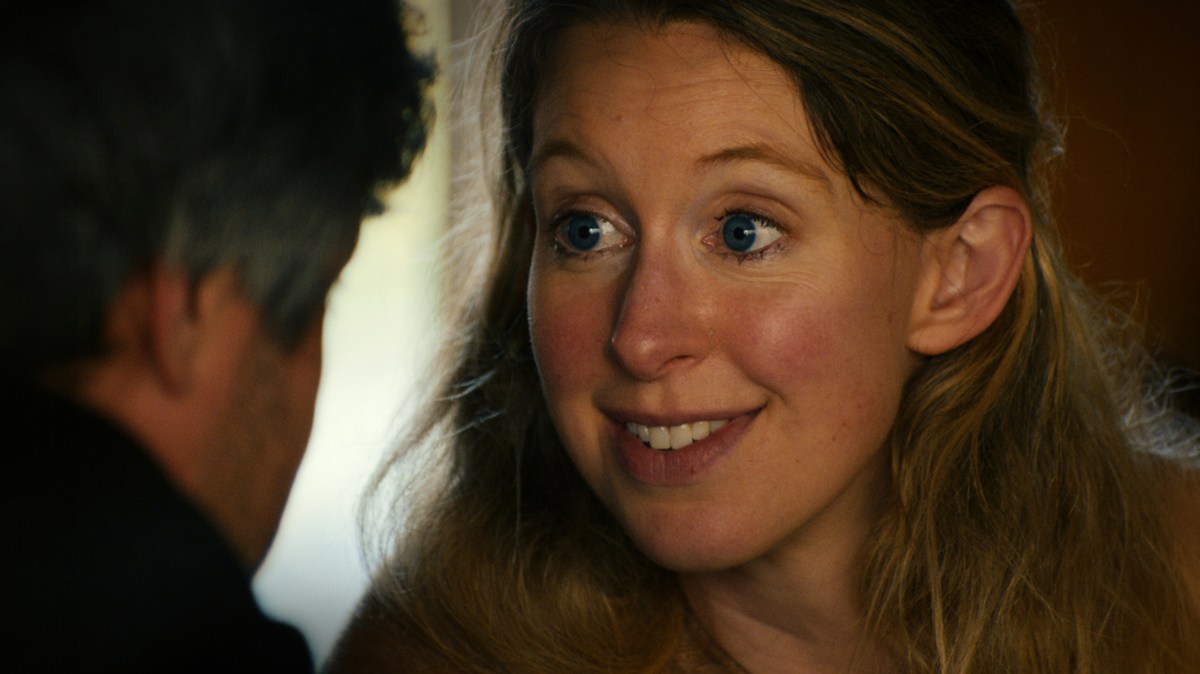
Part of Holmes’ schtick, beyond that faux deep voice she adopted to lend herself gravitas in the boardroom as a teenager, is her wide-eyed, unblinking stare. It’s the snake oil ‘charm’ that hooked in her mostly older male investors, including cunning fox Rupert Murdoch and Oracle co-founder Larry Ellison, and it seems to do the same with Fielder the longer he stares into those glassy blue eyes that cry on cue.
To his credit, Fielder goes in with healthy suspicions, but pretty soon, it appears as if he’s inexplicably buying what Holmes is selling, frustratingly so. Later, both he and others will wonder if he’s too close. That the film twice shows him splashing playfully in the sea with Holmes seems to send its own message in a bottle.
Watch the trailer
Two truths
As much as You Can See Everything wows on a first watch, you may, like me, find yourself less impressed the more you think about it.
Fielder is very much out of his depth, with newshounds likely to be frustrated by his often-softball questioning and weak or non-existent follow-through. He worries aloud that Holmes and Evans picked him because he doesn’t have a scientific background to challenge the facts. Which is odd, given that the details have been widely reported on, so it’s simply a matter of rigorous research, then a documentarian’s gift for giving a subject enough rope.
Holmes and Evans want to frame the documentary as a magazine-style story about a desperate young mother of two infant kids facing her worst nightmare. ‘All I know is my truth and my love for my family, and I could be taken away from them,’ she says, as if this weren’t the consequences of her own nefarious actions.
There’s a more insidious play here, one that hooks into #MeToo in bad faith by positing that Holmes was simply a bystander led astray by a controlling Sunny. It’s risible, given her Steve Jobs girl-bossing in a black polo neck back in the day. But two things can be true at once. Sunny was much older when they met, and Evans gives off malignant energy, willing to trade on his partner’s image.
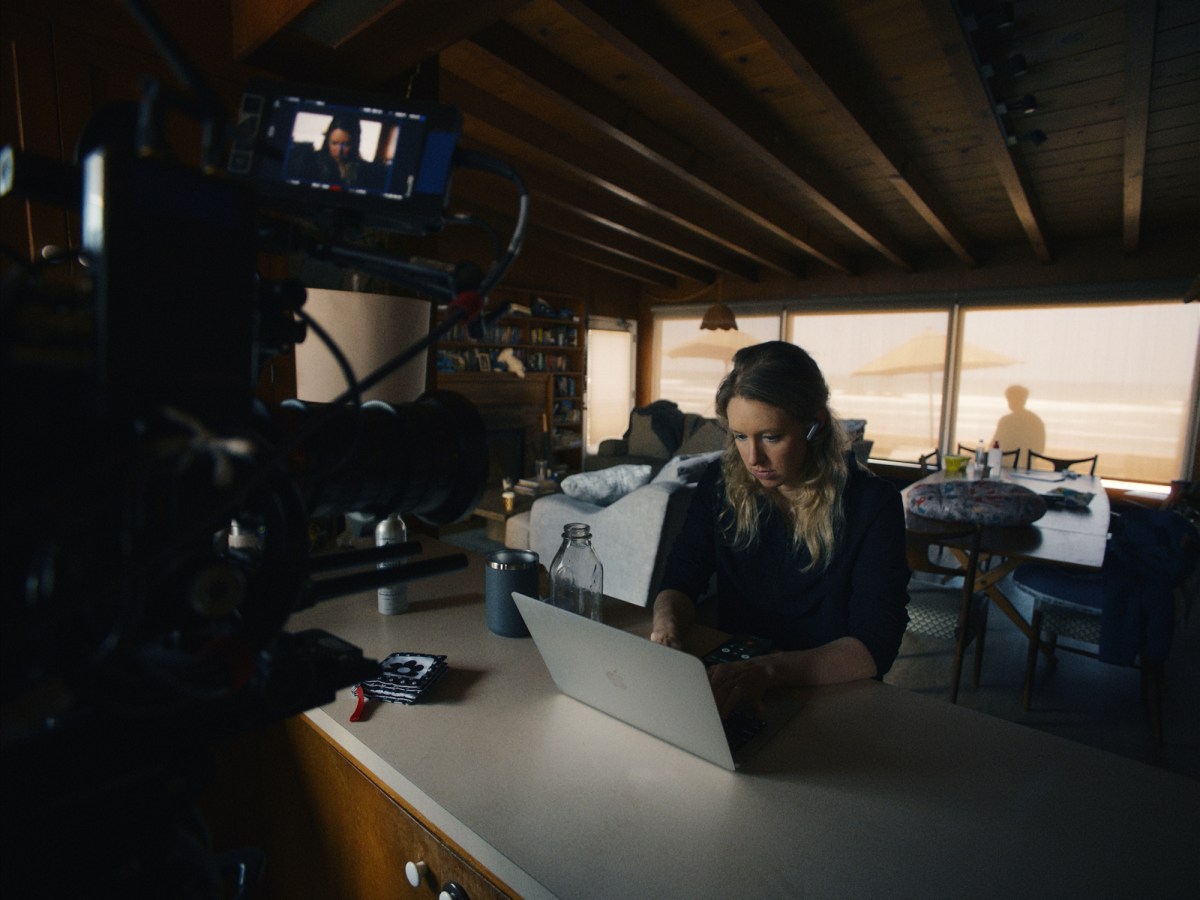
But many scenes in You Can See Everything suggest the couple are mutually manipulative. There’s seeming skullduggery afoot in who leaves the room when and why, particularly during a humdinger of a backroom deal that paints distributor A24 in a less than perfect light.
Holmes allegedly watches The Dropout for the first time on camera with Fielder, arguing that Meriwether and Seyfried have twisted her words. But her latter actions seem to court her impostors, while happily stretching her own words way past credulity. She and Evans also insist, despite never providing evidence, that former New York Times reporter Amy Chozick misquoted her as saying, of that show, ‘They’re not playing me, they’re playing a character I created.’
Who’s playing who becomes increasingly relevant in the documentary’s wild swing of a back half, which is simultaneously jaw-dropping and inherently weaker.
Clanking machinery
We’ve been asked not to reveal the far-out nature of this pivot, which is kinda spoilery, though it makes discussing the true nature of the beast tricky. Suffice it to say that things get exceedingly metatextual when Holmes surrenders herself in Texas and someone else steps in to to depict her.
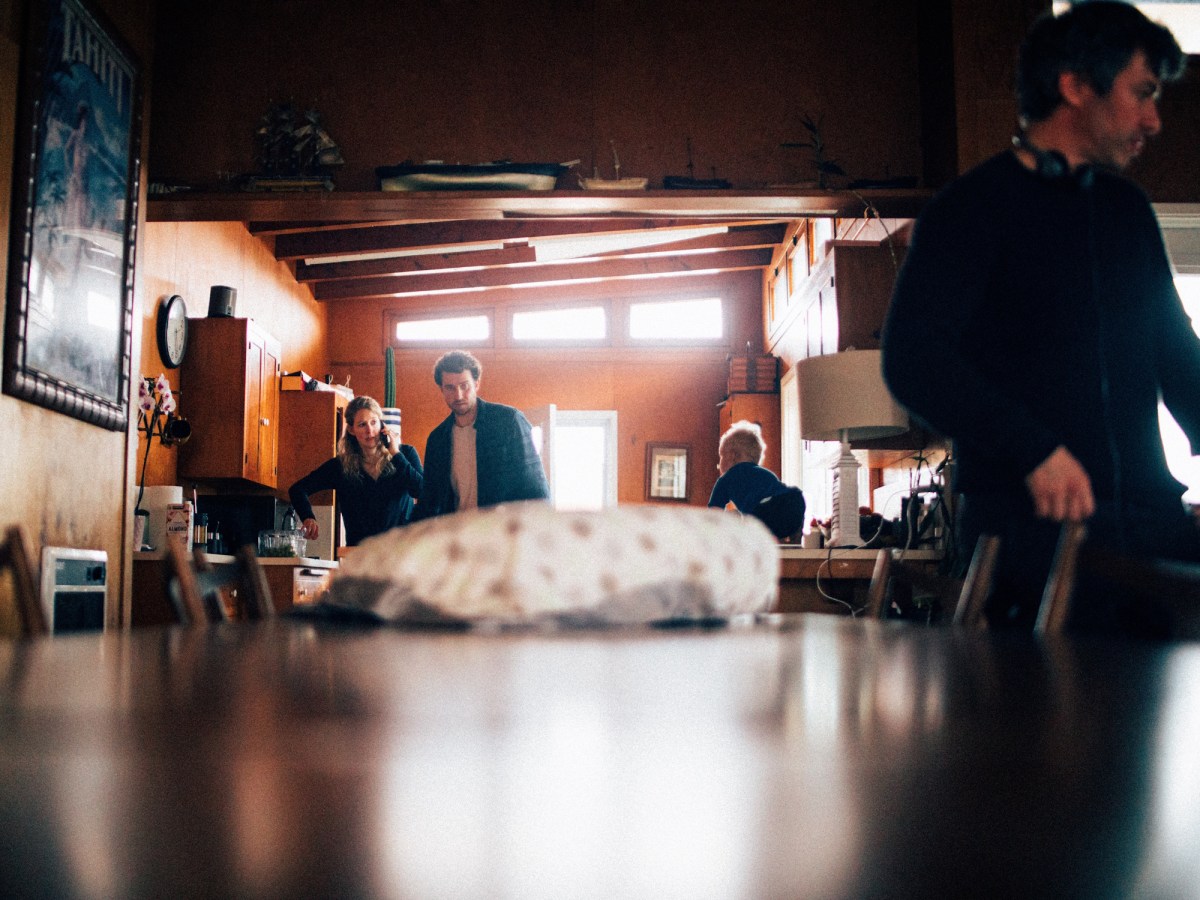
Getting at the curliest rights and responsibilities when telling someone else’s story, it’s thrilling to behold, and this person is sharper at prosecuting the case than Fielder is. But the fake Elizabeth Holmes, for all their abundant talent, isn’t as interesting as the real fraud, even as she vacillates on her character’s culpability.
We don’t really require them to know that Evans is up to no good. He tips his hand maniacally in how he wields his own partner’s image, via uncanny AI, body-shaming comments included, and her voice, via the social media platform formerly known as Twitter. Observe, too, how he shuts down anyone who complicates their narrative, including Holmes’ parents and the tech dude working on their egregious plans for Theranos 2.0. It’s also abundantly clear that Holmes likely knows more about Evans’ tactics than she’s letting on, as those word games are deployed again.
Where You Can See Everything really works is in its framing. Not Holmes and Evans’ dubious rewriting of their narrative, but canny cinematographer David Bolen’s boxy 4:3 aspect ratio.

It captures the ambient light of the beach shack where the subjects and their often stunned interrogator are holed up. Bolen hems them in, letting us read between the lines of their up-too-close faces as this Edward Albee-like psychodrama plays out.
Some of his exterior night-time shots are as chilling as The Exorcist, as is the text message that lends the film its name. Composer Ari Balouzian ratchets up this tension with a deeply menacing score that’s part-thriller, part-unnerving beeps and mechanical whirrs.
You Can See Everything’s machinery clunks and crunches with a fizzer of an ending that probably should have come shortly after Holmes went to prison, though the film never feels its three-hour length, thanks to Adam Locke-Norton’s propulsive editing. For all these niggles, I’ve thought about Fielder and Oppenheim’s clickbait curio non-stop, which says plenty about our fake news era and our morbid curiosity for monsters who devour themselves. Ain’t that the bloody truth.
You Can See Everything is in Australian cinemas from 12 November.
Discover more screen, games & arts news and reviews on ScreenHub and ArtsHub. Sign up for our free ArtsHub and ScreenHub newsletters.
Actors:
Elizabeth Holmes, Billy Evans, Nathan Fielder
Director:
Nathan Fielder, Lance Oppenheim
Format: Movie
Country: US
Release: 12 November 2026