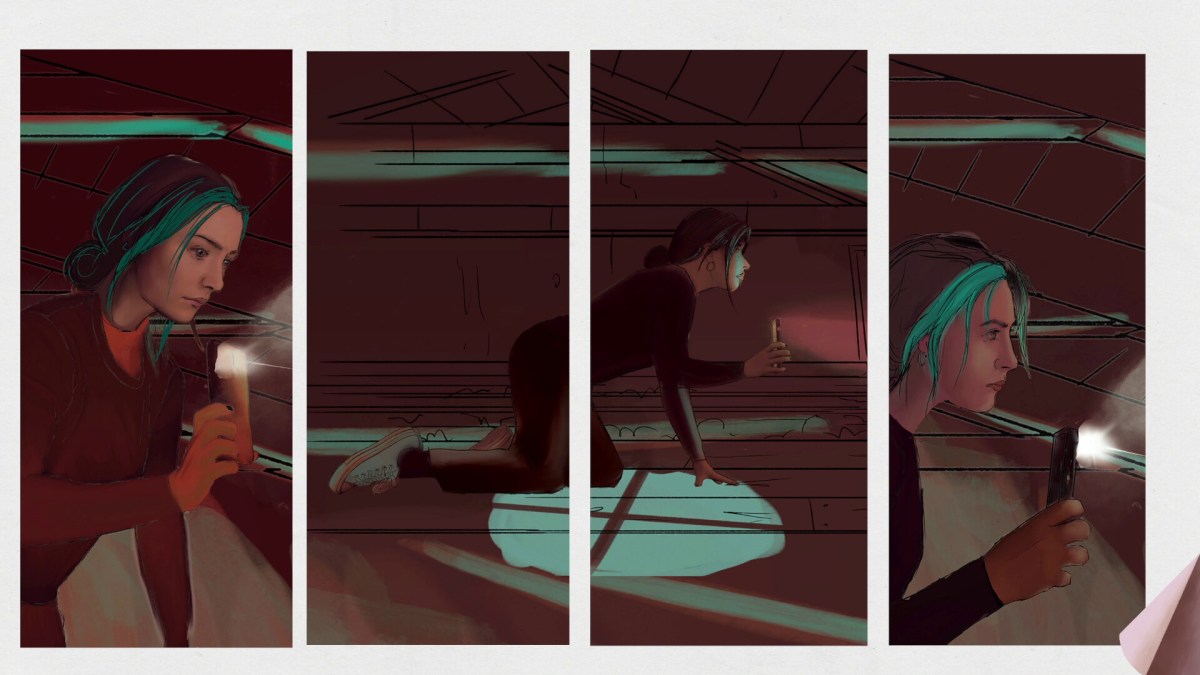
Ashes, a newly-released narrative adventure game about a young girl who witnesses a murder, was a dream project for developer Cléa Frost.
After a long career in film, contributing story development to screen projects as a writer, script editor and executive, Frost embarked on a journey to a new medium to challenge herself and her skills.
‘I was so excited to work in games, and just to think about storytelling a different way, to approach it in a different way,’ Frost tells ScreenHub. ‘To think about player agency, and the collaborative nature of sharing a game with a player, or making something that you don’t know exactly how people are going to interpret.’
Ashes – quick links
How Frost got her start in game development
As Frost explains, she’d had opportunities to branch out into the world of games in the past, being asked to contribute to interactive fiction stories in 2017 and 2018. While these didn’t end up shipping, the experience of working in a differently creative field ‘lit a fuse’ in her.
Working alongside a variety of teams, she quickly understood the power of games as a medium, and the potential to tell engaging stories with players at the centre of the narrative. Unlike film, storytelling naturally had to involve an unseen third party, the player, whose own interests and behaviours could reshape and give new meaning to the story.
During the Covid pandemic, Frost had the push and time she needed to really branch out and embrace this newly-discovered medium, driven by intrigue around that player collaboration, and what layers of interactivity can generate.
So, Ashes began to take shape.
It wasn’t only her background in film which inspired the journey, but also a love of modern graphic novels, many found during the isolation of the pandemic era – from Something is Killing the Children to Saga, and beyond.
‘I just really fell down a rabbit hole,’ Frost says. ‘Coming out of the pandemic, I had these two big thoughts in my head about wanting to make something myself in games, or in using interactive fiction, using some of the things I’d learned from working on these other projects – and then just really falling in love with the graphic novel format for storytelling.’
Frost was moved by the immersive nature of interactive stories, as well as the sharp, punchy storytelling distilled in graphic novels. Both elements combine in the tale of Ashes, a game which sits between cinema and video game graphic novel in its approach.
Shaping the story of Ashes
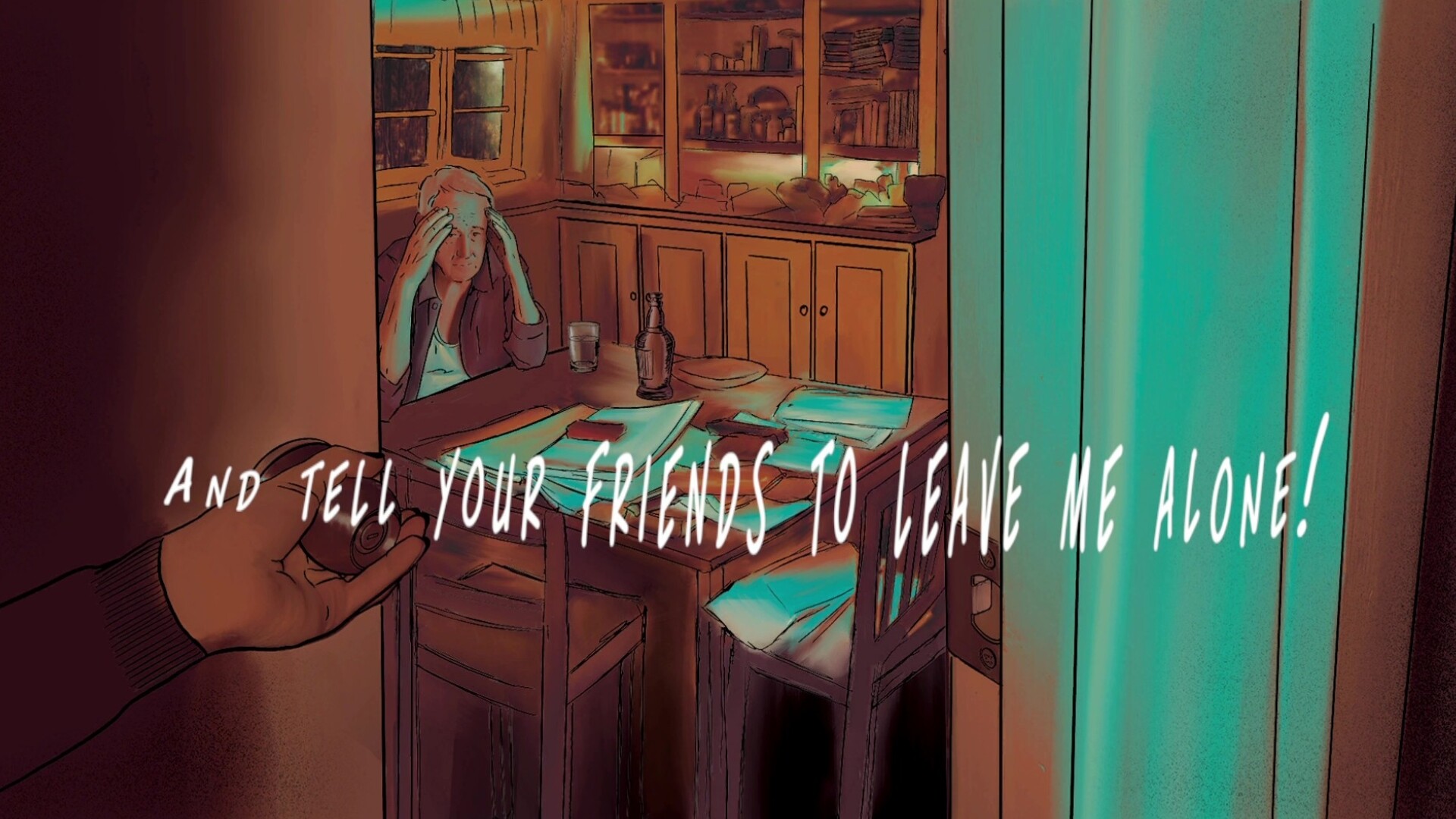
As Frost shared, Ashes is a game that follows the story of Azar Warren, a young girl who witnesses a murder, and must then hide out on her estranged grandfather’s rural estate for safety. It leans into tropes of gothic and noir fiction, although it’s grounded in a relatable reality.
‘I learned from [past experimentation] to try and think about a story I could tell with a smaller scope, knowing that it would be a small team, knowing that I’d do a lot of it,’ Frost says.
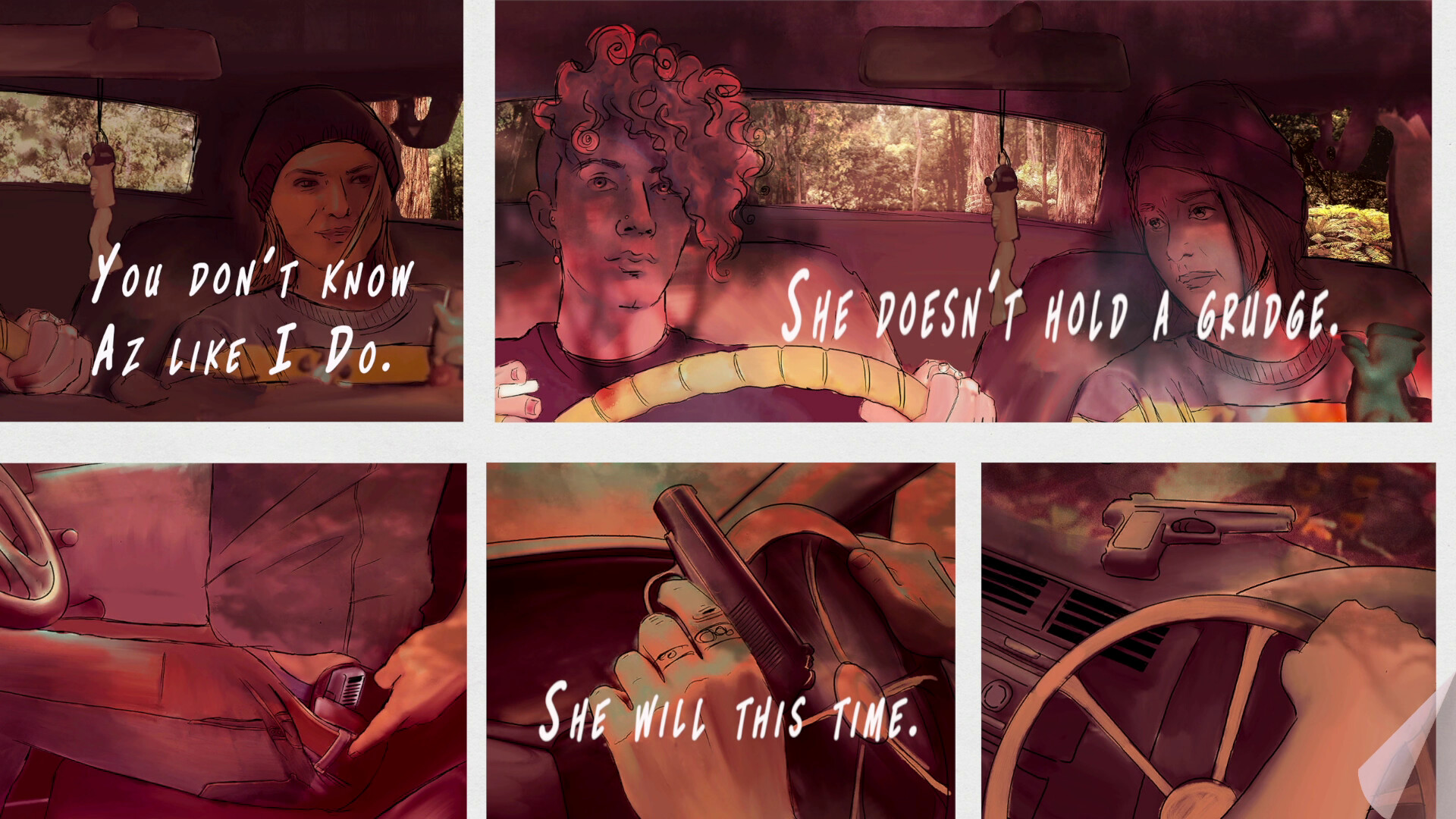
‘I had several story ideas, and I just really love genre. I’ve worked a lot in genre film. So, the kind of gothic, spooky nature of the story is just a place I really like to be. I really like to explore those dark psychological places … I’ve always been drawn to trying to understand why people do terrible things.’
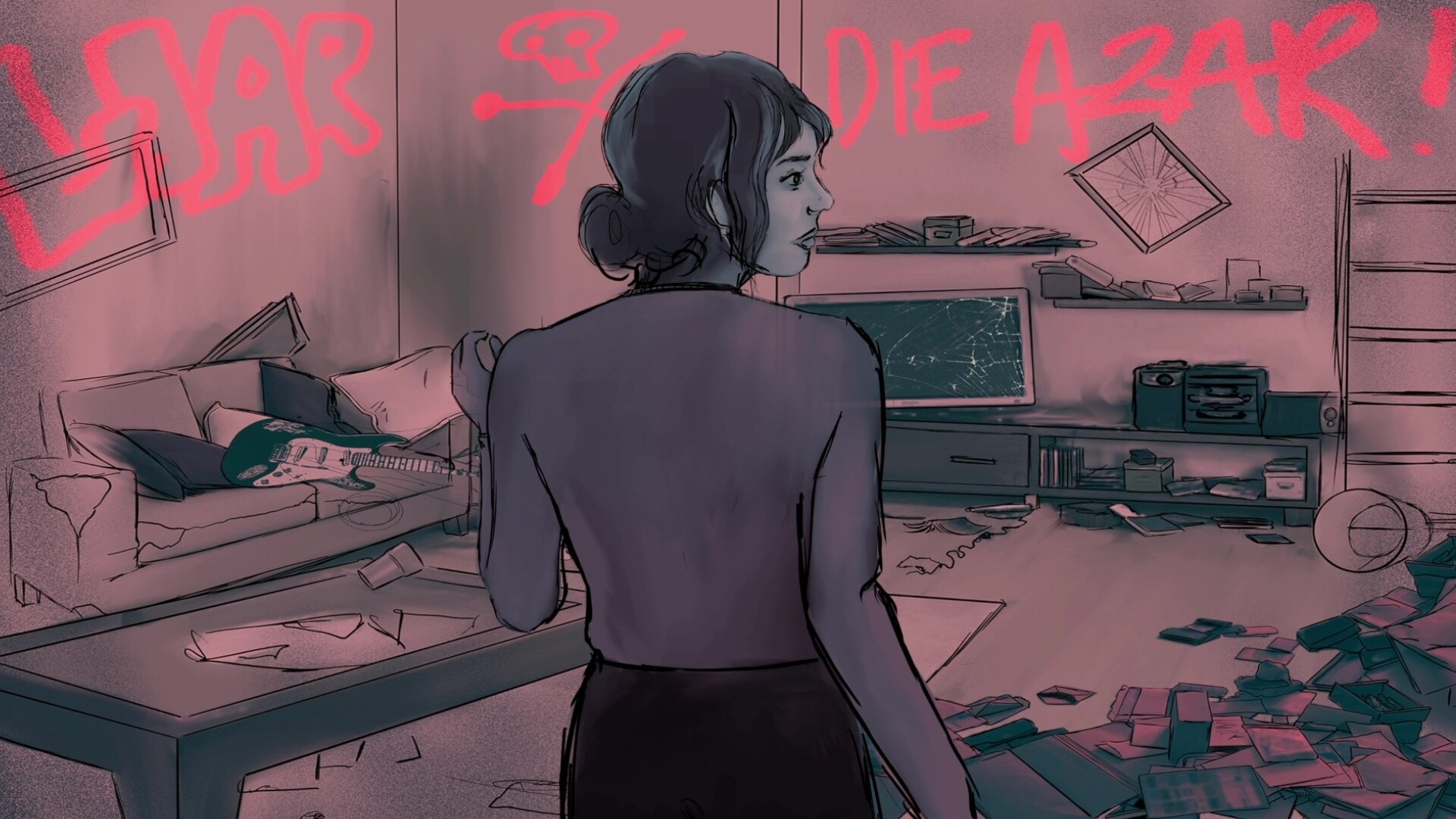
As Frost says, Azar is a character that she ‘could have known’ or ‘almost could have been.’ She faces a great many troubles, and the game follows her growth as she tackles them in turn. This journey is represented quite visually, with the game’s stark colour palette underlining her latest trouble, and dark, scared emotions often written on-screen.
Much of Ashes‘ approach to storytelling is cinematic in nature, as inspired by Frost’s background.
Moving from film to games
As Frost says, the transition to working on games, with a background in film, was fairly smooth, even with new skills to learn. Both games and film share similar purposes, and similar ideas about storytelling.
While games are typically less linear than other screen projects, they still aim to move audiences, and provide experiences to create empathy, education, or entertainment. Many of the lessons Frost learned in her film career were handy for creating Ashes, from storyboarding, to working on plot points and transitions.
‘Story structure and narrative arcs for characters are very applicable skills in games,’ Frost says.
The main difference in the transition, as Frost shares, is that you must think more about immersion and agency, and to reduce the rigidity of your story to allow for players wandering off the ‘intended’ path.
‘One of the things games does so well, and the reason I was really drawn to it, is that immersive quality of a game, the point when someone is really immersed in something. That’s the point when you can really emotionally connect with them, which is the point of telling stories,’ Frost says.
‘I think my training in terms of narrative structure and what kind of ways you can communicate with the audience definitely apply.’
As Frost began working out the rougher edges of Ashes, she was also surprised by another difference: that creating games can be a collaborative process, and that you can actually get feedback from the player audience, shaping the game around their impressions and desires.
‘When I started working on games projects, I saw that iteration, and that ability to talk to players directly,’ she says. ‘How are they finding the mini games? Are there too many? Not enough? Are they too easy?’
Frost attended various game jams to hone her game development skills, and attended various meetups and talks along the way. As she says, it was ‘quite intimidating,’ but the local games community has been ‘very welcoming’ and has helped to ‘shepherd along’ the project.
Also aiding development is a small team of creatives, with each working together to deliver the Ashes story. Frost says she’s worked with two different illustrators to bring the game’s ideas to life, as well as a composer, sound designer, and others helping to ‘refine’ the game’s structure.
‘[Those meet-ups are] where I found, when I did have some support, I could hire some people to come into the development side. That’s the network that helped me find those people, and they’ve been just so wonderful and amazing.
‘We have a small industry here in Australia, but it’s quite close knit and collegial.’
The most important thing is to just get started
Frost describes her game development journey as one buoyed by passion and drive, as well as the support of talented peers. At first lacking deep technical skills, Frost simply chose to get started anyway, self-teaching along the way.
As the old adage goes: make something first, then you can make it good.
‘I set up the project myself, but I’m self taught, so it was pretty shonky in places,’ Frost admits.
But without taking those steps, Ashes wouldn’t exist at all. It certainly wouldn’t have caught the attention of Screen Australia, or received funding to see it through to release.
‘Just start meeting people, just start playing around,’ Frost says.
That’s all it takes.
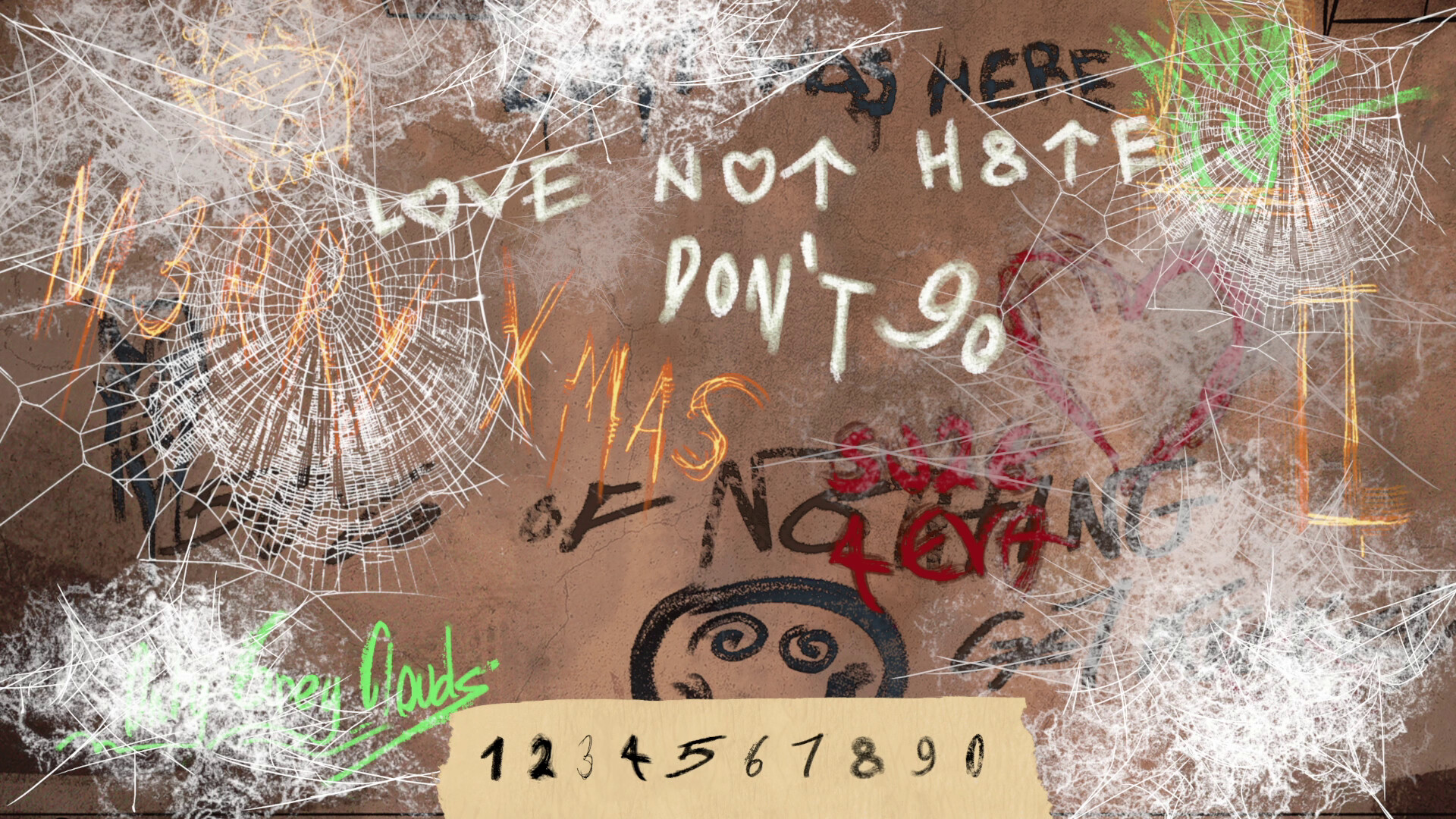
To begin her journey in game development, she set up a ‘very basic’ version of Ashes, found a Unity plug-in, and just started. As she says, that’s usually the biggest barrier for those wanting to create art: just getting started.
ScreenHub: How to start making video games: advice from Australian developers
In the years since Ashes began as a small scope project, to test Frost’s skills, it’s evolved to become an artful and bold visual novel adventure, one that tells a moving, emotive tale about struggle and facing the horrors of the world.
‘I’m most proud of the fact that I’ve done it. That I started with just a concept, a vague notion of a concept, and I’d never made a game before, and I taught myself a lot of things,’ Frost says. ‘I also had some really great people on board to help get me there.’
‘[Ashes] is a small game. It’s limited in scope. But I think hopefully, the story and some of the mechanics, and some of the mini-games will really appeal to people … This is a little break from reality. This is something you can enjoy on your commute.’
‘I think there’s a place for all kinds of different games, and I see that the industry is expanding into different kinds of games. I’m just really glad to be part of that.’