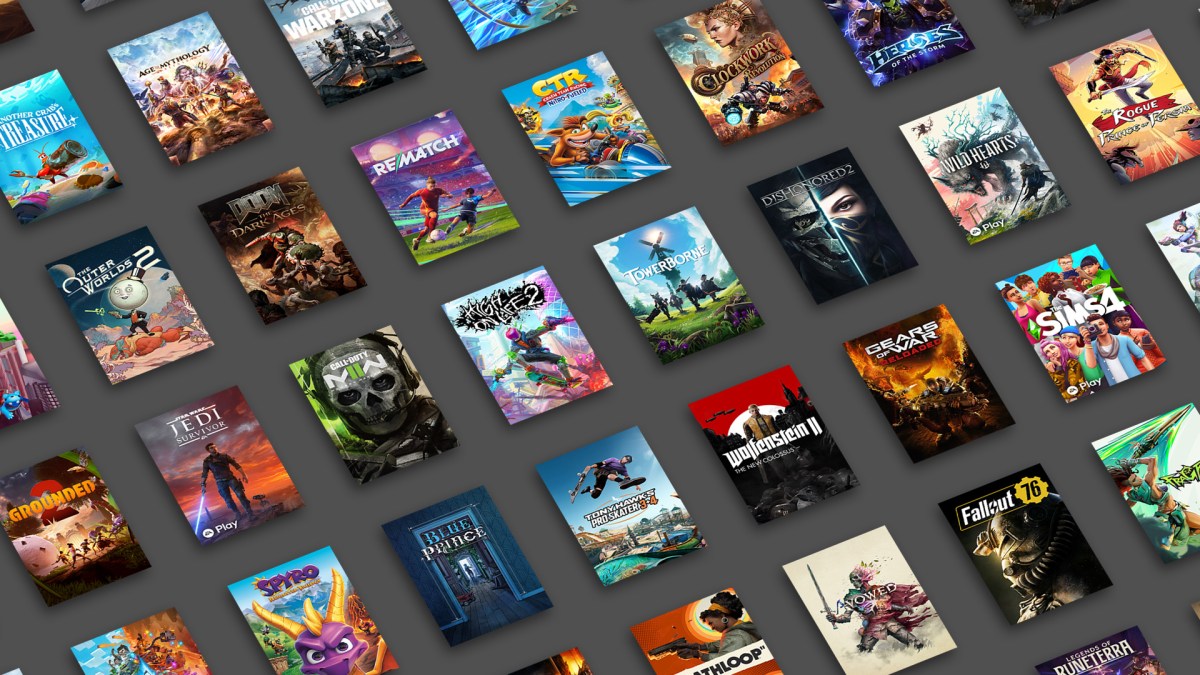
When it was launched in 2017, Xbox Game Pass promised a revolution for game players. For a relatively affordable monthly cost, it offered players a library of new and classic games to play, charting many different genres and gameplay styles.
Behind the scenes, it appears the promise of the service is now waning, as it’s reportedly failed to meet the lofty expectations of Xbox and Microsoft, and is instead becoming a financial burden.
Xbox Game Pass underperforms – quick links
Xbox Game Pass reportedly falls short of targets
As reported by Bloomberg and The Wall Street Journal, Microsoft spent around US$80 billion on deals to help revitalise Xbox and Xbox Game Pass, but this has seemingly not resulted in comparative growth.
‘Our business today is not healthy,’ Asha Sharma, CEO and EVP of Xbox, recently said, in the wake of major layoffs and cost-cutting across the global business. ‘We are operating at margins that are 3-10x lower than comparable platform and publishing businesses. We entered Gen 9 with a smaller install base and a higher cost structure.’
‘To grow, we bet on Game Pass, multi-platform, and a broader portfolio of content. While those businesses have created meaningful value, they did not grow at the pace we expected. As that happened, our core business weakened, and we added more teams, more investment, and more time, hoping for a better outcome.’
Per Bloomberg and The Wall Street Journal, that ‘better outcome’ did not arrive for Xbox Game Pass, which has failed to hit major goals for subscribers.
Xbox was reportedly aiming to have 77 million Game Pass subscribers by the end of the 2026 fiscal year. A source told Bloomberg, corroborating information in The Wall Street Journal, that the company has only managed to achieve 30 million subscribers in that period, well short of expectations and investment targets.
Bloomberg‘s sources also claimed the Game Pass is an increasing concern, with fears the subscription number has peaked, and that further growth simply isn’t possible.
Has Xbox Game Pass already hit its peak?

Matthew Ball, Xbox Chief Strategy Officer, revealed in early June that price hikes for Xbox Game Pass (from US$20 to US$30 per month) that were intended to increase its profit margins actually did the opposite, off-siding millions of players who chose to cancel their subscription instead.
‘We shed millions of subscribers over the span of a few months,’ Ball admitted.
Xbox was forced to correct this error in the months following its price hike, pushing the price of the subscription service down by a significant margin. As the organisation discovered, there is a core, understood value for the platform, and audiences are only willing to pay so much to access the games they want to play each month.
Currently, it appears this value offering does not match the internal investment required to secure access to the range of games available via Xbox Game Pass.
It’s also worth understanding that subscribers can only play a certain number of games per month. Xbox can claim it wants to entertain ‘more than a billion people each day,’ but that doesn’t make the reality a possibility. Everyone has finite time, and adding more perceived ‘value’ doesn’t change the number of hours that people are able to devote to gaming per day, or the number of people willing (and finding the need) to subscribe.
It’s also true that game players tend to gel with certain games, and seek them out directly. Exploration via a longer-term subscription is something largely reserved for enthusiasts.
As veteran analyst Mat Piscatella wrote on Bluesky in response to Bloomberg‘s report: ‘If the goal is to sell subscriptions, you do exactly what Xbox did with Game Pass. Problem is, outside of the enthusiast core, few cared. The mass market didn’t want to play lots of different games. It wanted to play Fortnite, Minecraft and Roblox.’
Third-party ‘day one’ game deals are a significant expense
One of the other big problems with Xbox Game Pass, and one that can be easily understood, is that it’s expected to maintain fresh content – meaning constant, new first-party games ‘for free’ on day one.
Offered a chance to play a brand new game for a one-off monthly cost of around $25.95, instead of the full $119.95 price to own a copy, even with the caveat of needing to play it within the month for the best value, most would choose the subscription service.
For Xbox itself, it means a surely significant cannibalisation of sales for first-party studios and others who release games day-one on the platform. It also reportedly comes with significant expense. When it comes to third-party game deals, Bloomberg reports around US$1 billion was being spent annually by the company to secure deals, as incentive to sign up for Xbox Game Pass.
The US$75.4 billion deal to acquire Activision Blizzard and the US$7.5 billion deal to acquire ZeniMax (Bethesda) are also both considered to be parts of Xbox’s strategy to grow Xbox Game Pass and its core offering.
That spend has not been matched by growth in return.
It’s unclear, at this stage, what Xbox plans to do about Xbox Game Pass and its seeming failure to meet expectations. While exact subscription numbers and profit margins are unlikely to be reported by Xbox itself, the reported numbers suggest the service is in trouble, and in need of a significant overhaul.
What recent reports reveal most of all is that this style of streaming subscription, where players pay a monthly fee to access a content library, may not suit the world of gaming. It hasn’t taken off in the same way that streaming for other entertainment has, with players seemingly preferring ownership and self-directed exploration over paying a monthly fee for game access.
There are plenty of factors that may be contributing to this aversion. Perhaps it’s to do with the mix of game releases – although they are already diverse, with plenty of great games offered on Xbox Game Pass. Or perhaps it’s in how players choose to spend their time, and what games they’re already playing.
Whatever the case, it does appear Xbox Game Pass is becoming a problem to solve, with potential change on the horizon.