It’s now easier than ever to make video games. There’s a treasure trove of online resources available – educational courses, advice on YouTube and even free, fully-featured tools to experiment with.
But even with this accessibility, games remain a complex art, and it requires rigour and drive to produce work that is impactful and engaging. So, can anyone can create games? More importantly, in an era where access is easy, should anyone create games?
ScreenHub talks to three local Australian game developers about what inspired their own first steps into game-making and how they carved their own path. While their stories are very different, their experiences suggest that for those beginning their own journey making games, perhaps the most important question of all is why?
How to become a game developer – quick links
Develop storytelling skills wherever you can
‘It’s kind of like being in a river, and just getting carried by the current,’ says developer Cecile Richard about their journey into game development. ‘You’re like “where does this go?” – which I don’t recommend as a way of being on a river, but for artistic, creative practice, I think it’s actually really good.’
Richard didn’t always want to be a game developer. Their background is in graphic design, and they previously worked on independent comics as an artist. They say games were an ‘extension’ of practice at first, giving them a means to explore new creative ideas and stretch their storytelling and design skills.
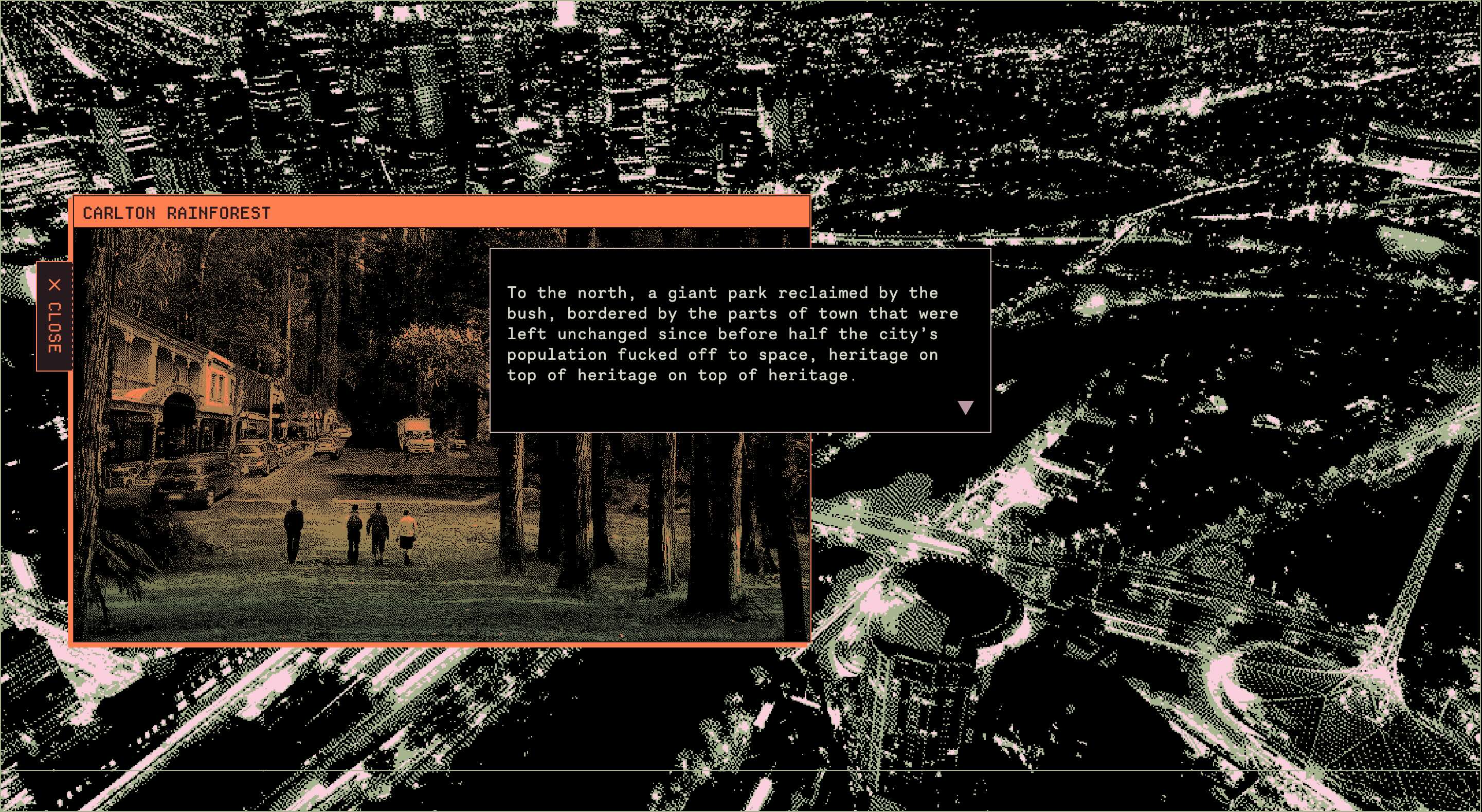
‘In graphic design, you’re putting a lot of different things together: colour theory, shapes and composition … Comics are the same. It’s about writing and drawing, how it all fits in on the page, how it all fits in within the story,’ Richard says.
‘Games are exactly the same. Usually you’ll be juggling different fields, different things, whether it’s mechanics or writing or art or programming.’
For Richard, what these different mediums have in common is that corralling of different elements, slowly seeing the sum of the parts come together, to realise an intention and tell a story. When they began their game development work, it was all about finding new ways to share their experiences, and experimenting with new forms.
Take on fresh challenges – but start small
For developer Meredith Hall, game-making was a long-term goal. When she finally dived in, it was a chance to push her creative practice and apply skills learned across the pond in marketing.
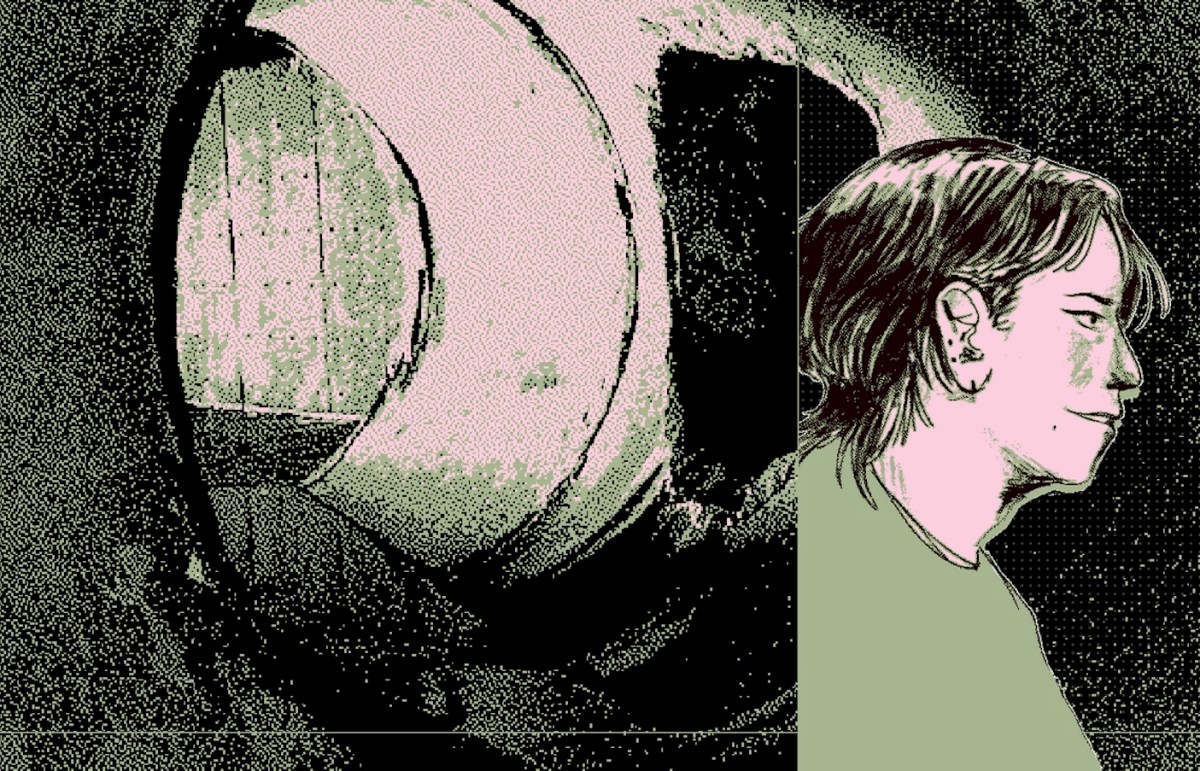
Hall has been a stalwart of the local Melbourne games community for many years now, working at institutions like VicScreen and game studios including Summerfall (Stray Gods). As she told ScreenHub, she’s loved games since she was little, and that interest guided her initial foray into the industry as a marketer, producer and business lead.
These roles gave her a chance to develop her game-making skills by getting hands-on with select projects, asking the right questions, and drawing on the expertise of peers. Eventually, Hall decided she wanted to work on her own game.
As she says, it was both to prove to herself that she could, and also dabble in something creative beyond her day-to-day work.
‘[While at my last role] I was like, “What am I going to do next?” and I thought, well if there’s a period where I’m figuring stuff out, it would be great to really dig into something creative, and try to learn and expand my skillset in places that I don’t have it,’ Hall says.
‘It felt like a good time to press my skills and try to do something different.’
During this time, it was game development that Hall found most intriguing. She set about defining a small, reasonably-scoped idea that could become a fully-fledged game – a concept about household chores that eventually gained Screen Australia support under the Emerging Gamemakers Fund.
For Hall, it was important to start small, and the project gave her a way to both recognise her greatest strengths and work to fill gaps in her knowledge.
Embrace the interactivity of games
Like Richard and Hall, fellow game developer Cléa Frost was also looking to stretch her skills when she was beginning her journey of developing Ashes, a soon-to-be-launched narrative adventure game that follows a young girl who witnesses a murder.
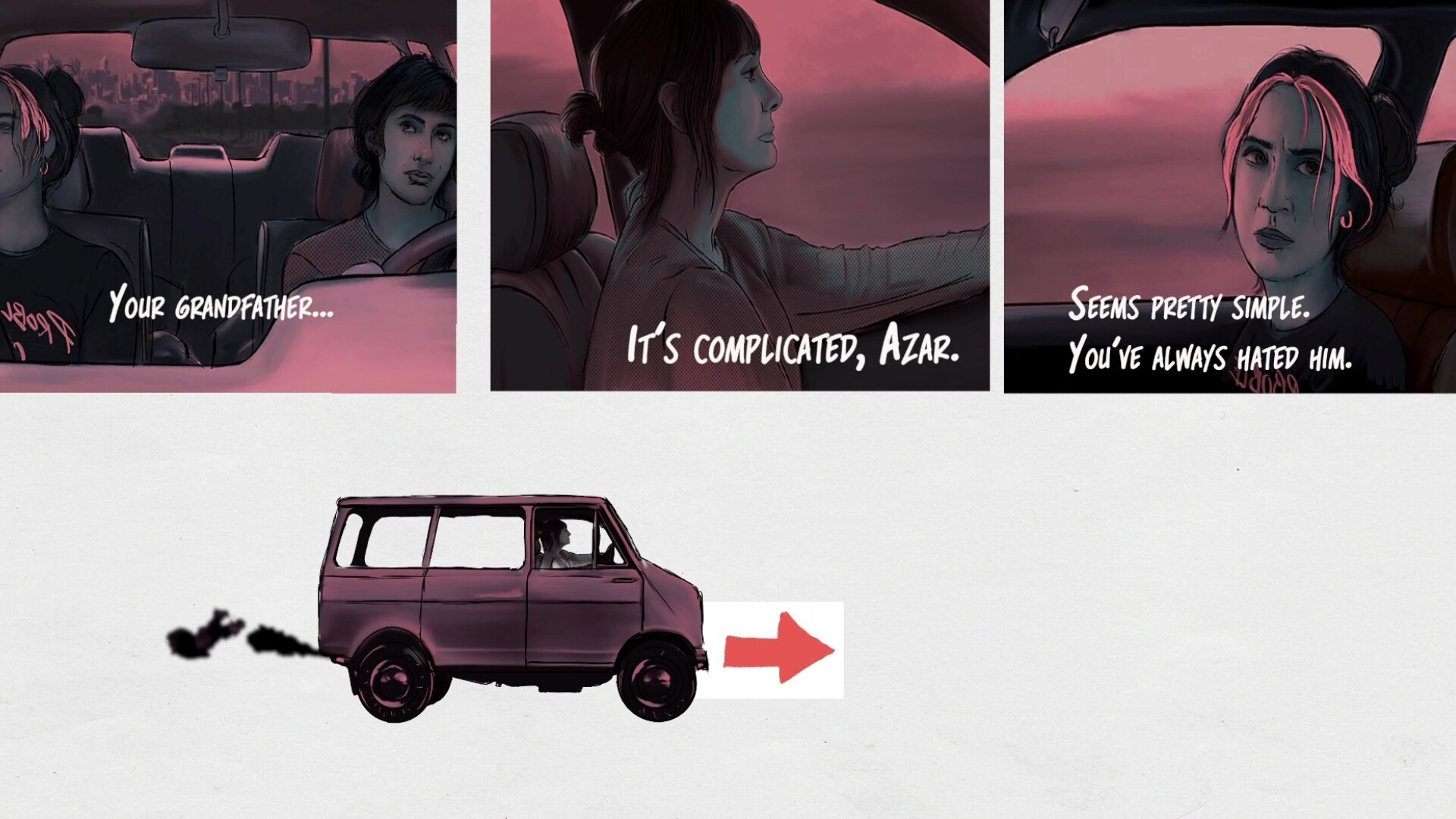
Frost’s background is in film and television, working on story development as a writer, script editor and development executive on screen projects. With a long history in the screen industry, Frost was looking to branch out and experiment with new forms of storytelling, inspired by her interest in interactive fiction, as well as the more cartoonish style of visual storytelling found in graphic novels.
‘I was so excited to work in games and just to think about storytelling in a different way – to approach it in different way and to think about player agency, and the collaborative nature of making a game with a player,’ Frost says.
‘You don’t know how people are going to interpret it,’ she adds. ‘[That’s] maybe sometimes a bit scary, but that collaboration [between maker and player] was really exciting to me.’
Leaning on her cinematic background, Frost was initially dreaming of something grand – a multi-platform sci-fi saga with a ‘massive’ scope, she says. But she quickly reckoned with her own skills – both transferrable and newly-learned – and chose to focus instead on Ashes, as a more grounded and smaller-scoped exploration of life.
The best way to learn is to have a goal
What Richard, Hall, and Frost have in common is a self-taught approach to game-making. While there are professional skills courses that teach game development skills, the best learning often comes from getting hands-on, figuring of what transferrable skills you already have, and identifying where you might need to bolster your practice.
Sometimes, it’s about researching online, or getting stuck into available development tools. Other times, it’s about asking the right people the right questions, and talking to peers or other knowledge holders.
‘It was quite intimidating to me, at first,’ Frost says. ‘Even though I’d worked in film and TV, games is a very different space. Even though that community is very welcoming, when you’re pushing yourself to do something new and learn new skills, especially technical skills, it can be overwhelming.
‘But what I found was that if you’re interested in making a game, and you have no knowledge about how to make a game, you can teach yourself a lot, and there is a community that will help to shepherd you along.’
To develop her storytelling skills and improve her game-making, Frost went along to various game jams – short, relatively quick sessions of game-making in teams – to work alongside others who were also interested and skilled in creating games. In addition, she attended talks from various experienced developers, and was able to find direction in her self-guided learning from their advice.
Back yourself and have a go
‘Just start meeting people, and then also just start playing around,’ she recommends. ‘There are so many tools. I set up very basic version of Ashes myself. I have no background in engineering or programming. I found a Unity plug-in and just sort of started.’
‘That barrier to entry can be just having the confidence to start something.’

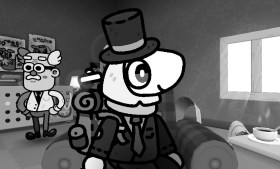
Richard’s own explorations were similar. They started with a tool called Bitsy, which is designed for small, experimental and simple game-making. It allowed them to grasp the basics of game development and programming, and to grow their knowledge base.
‘It’s a very interesting introduction to getting your hands under the hood,’ Richard says. ‘Just opening up the hood of the car and being like, “Okay, what’s going on here?”‘
Like Frost, they agree the process can be intimidating for first-timers, although starting small and learning basic skills like HTML first can provide the confidence and backing to experiment.
‘[Bitsy] was perfect for me because it allowed me to really interface with the more complicated or more intimidating sides of game-making,’ Richard says.
‘It was natural and I felt like I could go at my own pace – hence the advantage of self-taught game-making.
‘You can just do what you need to do, and not worry about what else is out there. That’s the curiosity that just carries you naturally where you need to go.’
In places where community is not available, or where community is not cohesive and welcoming, Richard believes this self-taught approach can lead to unique, creative games. A hands-on, self-guided approach may allow for more insightful, experimental or artful works, elevated by a freedom from expectation.
Abandon the ego and follow your curiosity
For Hall, reaching out to community and asking for help was ‘terrifying’, but she had a strong desire to see her goals through, and so she worked on pushing past the fear of looking silly or ‘new’ in the game-making space in order to advance her practice.
‘I was terrified to do it and that’s why I did it. There was always [the thought] “what if I suck?” But … I think looking at this year, I [decided this was] the death of ego. I wanted to be uncomfortable, embarrassed, unsure, scared, because I think otherwise I’m just going to be comfortable, and that’s not going to help me grow as a creative.’
As Hall explained, she needed to learn plenty to begin realising her vision for her game. While she’d constantly been around game-making teams, she really wanted to dig more into specialist skills, particularly programming and making art resources.
‘I wanted to broaden my understanding of game dev holistically,’ Hall says.
Over weekends, she began to learn via tutorials and messing around with a bunch of programs, starting off by copying code, then learning to change it for her own means.
‘I would just break the build all the time,’ she says. ‘And I needed to be fine to break it. That’s going to happen. I need to get comfortable with doing something that doesn’t work, and reversing it, or doing something that doesn’t work and learning from it.’
Plenty of online resources helped this learning, with a ‘bunch of materials’ teaching about great systems to use, she says. On the practical side, she was also able to reach out to peers in the games industry to ask ‘really silly questions’ and figure out why certain things operated as they did.
Hall is currently working alongside developers Tana Tanoi (Shape Sender Deluxe), Andrew Mendlik, Christopher Harrison and Cherie Davidson to shape her debut project, with daily work on the title being defined by curiosity, back and forth and, as she puts it, ‘poking at the edges and exploring together’.
Can anyone make video games?
Speaking to Hall, Richard, and Frost, one thing was clear: no two game-makers are the same. They come from a range of disciplines, with some having the advantage of transferrable skills and others needing to learn game-making from scratch.
So do they believe anyone can make games? ‘I really do,’ Frost says. ‘You don’t need to be an engineer, or a programmer, or know every facet of game development to create something with impact. All you really need is the intention and desire to create, a strong idea, and inspiration to embark on your own game-making journey.’
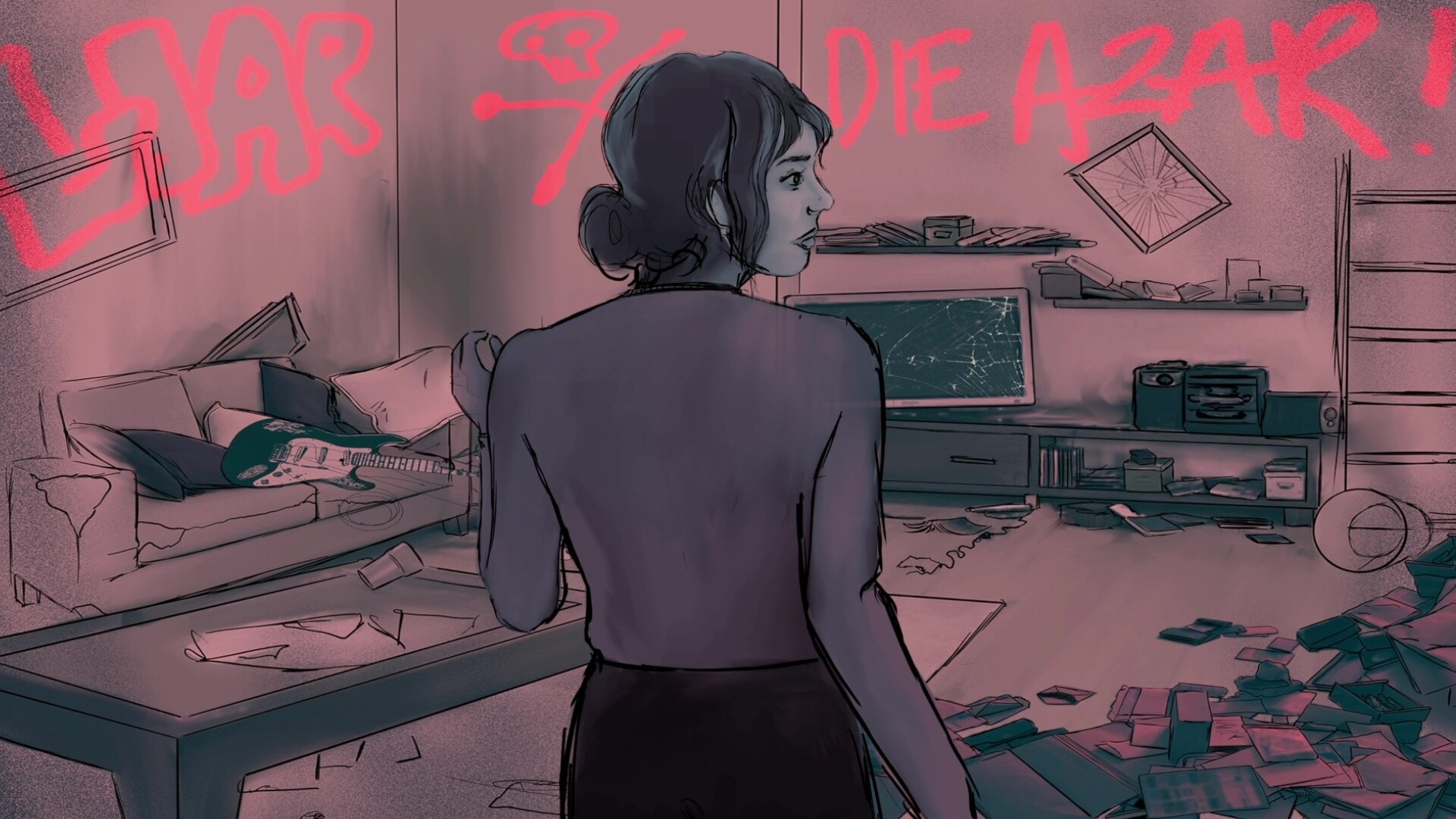
It’s not always easy to make games. Frost says she felt ‘lost all the time’ at the start of her experiments, with so much ‘missing’ from her understanding. But with resources online, and a willing community to help, many of these hurdles can be climbed.
‘It’s possible to go on that journey when you’re coming from a baseline of almost no knowledge,’ Frost says. ‘That’s the thing I’m most proud of.’
For Hall, it was also this achievement that was gratifying in her journey. From a position of some knowledge, she was able to grasp new skills in programming and design, while gaining a new appreciation for game development as a whole.
‘All those little pieces of trying to create something in a day … when that works, the satisfaction in that is crazy,’ Hall says.
She believes that even if her early prototype doesn’t pan out – something everyone needs to account for and accept as a natural part of the creative process – she’s grown through the work, harnessing new skills as a game developer.
For Hall, ‘regardless of that [outcome], what I’m learning and what I’ve learned already’ has value. ‘I feel like I’ve learned more in this period of time than I have in years of broadening my skillset.’
Richard finds the satisfaction in releasing art into the world, making a statement and finding new methods to communicate their storytelling. While they’re not particularly achievement-focused, making games for the ‘love of it’ and with ‘creative freedom’ is what motivates them.
They also believe that everyone should embrace the opportunity to create games, should they feel the pull, although they underlined that every approach is different, and tradition shouldn’t always be followed.
Be proud to walk your own path
‘The way that the [career] pathways are set up at the moment, it really does … make people feel like there is only one way to make games,’ Richard says.
‘That paradigm is literally get a game degree, get funding, make a game commercially. We’re really blessed [in Australia] to have these opportunities where a lot of countries don’t have that.
‘But at the same time, that’s boring as well. If there’s only one way of making things, then where’s the culture? If everyone’s always only making products … what’s going on?’
Per Richard, the beauty of game-making, and particularly solo and self-guided game-making, is that it allows creators to follow their own path and develop their own vision.
Everyone can make video games. While there are caveats in that statement, it’s a simple truth that should be internalised. You can make video games. You can make great art. You just need the right spark to get started, and to know why you’re taking your first steps.