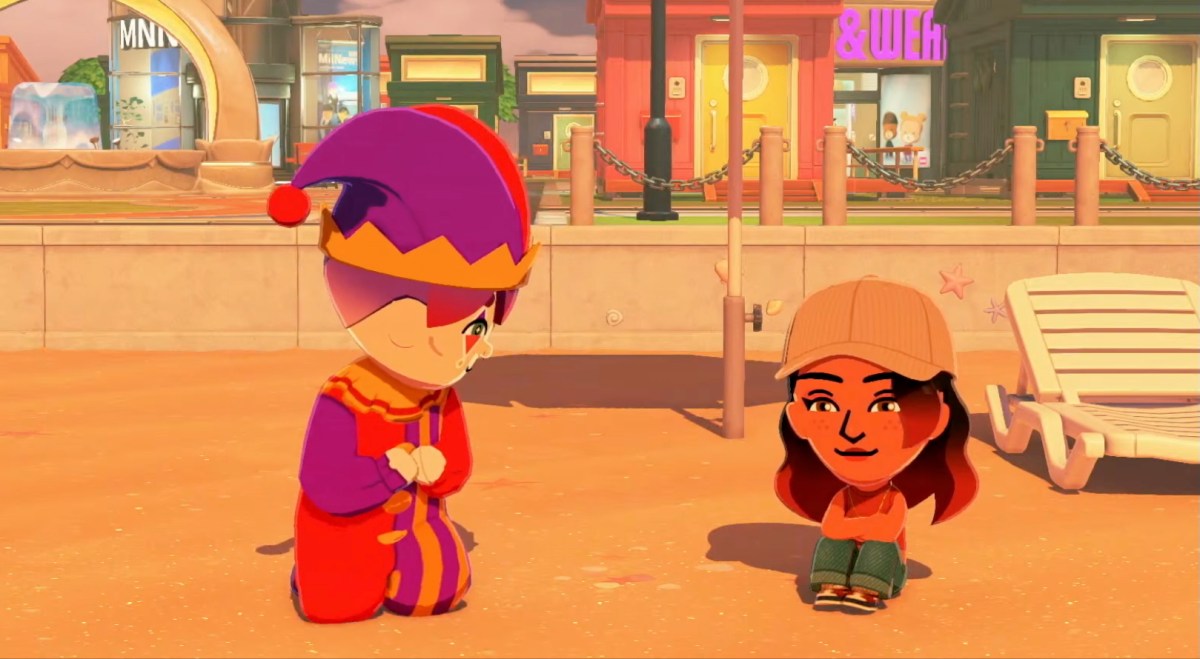
Tomodachi Life: Living the Dream invites you into a perfect little world, where tiny humans go about their day. The grass is green, the ocean is blue, and life is a breeze. So, what do you do? You ruin it all, of course, by creating drama and romance between your tiny citizens. It can be beautiful. It can be tense. Their life is what you make of it.
As part of an early preview, ScreenHub was able to get hands-on with the first hours of this upcoming Tomodachi Life sequel to discover how it expands on its predecessors. If you’ve played a game in the series before, you’ll be familiar with the off-kilter style and player-created dramas made along the way.
If this is your first time in the world of Tomodachi Life, the weirdness might just surprise.
Tomodachi Life Living the Dream preview – quick links
It’s a wonderful Tomodachi Life
To begin your journey in Tomodachi Life: Living the Dream, you’re given your own personal island to oversee as a present God. The island is empty, and you must fill it by creating various human-like Miis in many shapes and forms. You might like to create friends and family (and set relationships, to ensure there’s no weirdness in interactions) or you might like to introduce pop culture characters.
After a lovely rewatch run, I decided to make an island of Marvel superheroes, if only to see the unfolding drama, and to see which characters I could make fall in love. Like pressing action figures together, Tomodachi Life: Living the Dream encourages you to make your Miis meet, and to explore new opportunities based on circumstances.
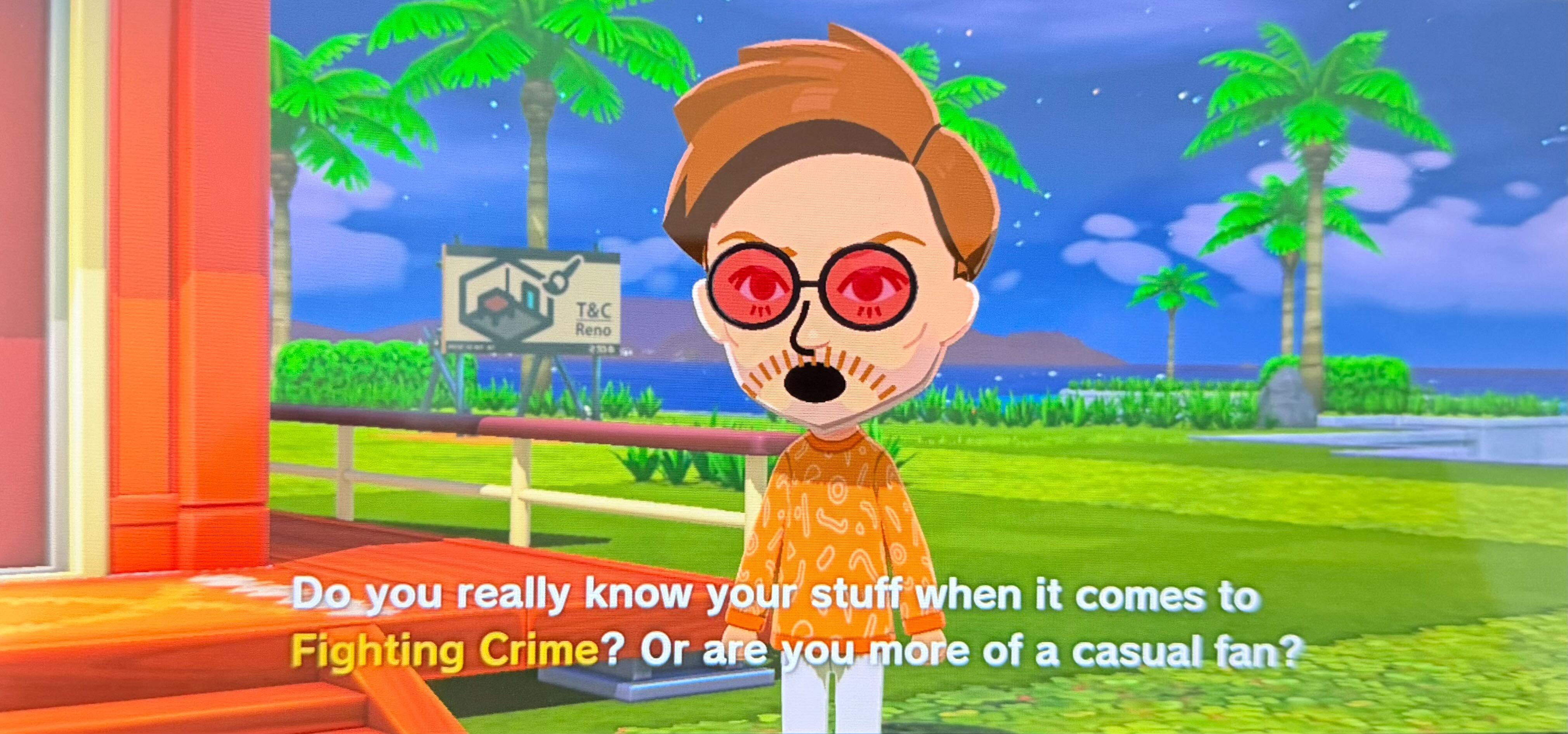
My core six team – the maximum allowed for the early game preview – consisted of some iconic faces: Matt Murdock, Yelena Belova, Wolverine, Robert Reynolds, Natasha Romanoff and Bruce Banner.
Having a core theme also allows you to curate a set vibe for your island, as well as the interests of those that reside there. One of my first elected talking points for my citizens was ‘fighting crime’ and eventually, the whole island bonded over ‘fighting crime’.
In excited little titters – the game uses voice-to-speech for its dialogue – everyone bonded over this subject, forming friendships based on their own personal interest, and their judgement of others. You can also set personality types for each of your Miis, and these determine how they get along with others – although that also seems to involve luck.
One character might appreciate another character’s passion for fighting crime. In another interaction, they might suddenly rear up, and question that character’s commitment. They will also have different interactions based on various random happenstances, such as when characters suddenly ‘freeze’ or ‘fall down’ and need help.
The art of romance
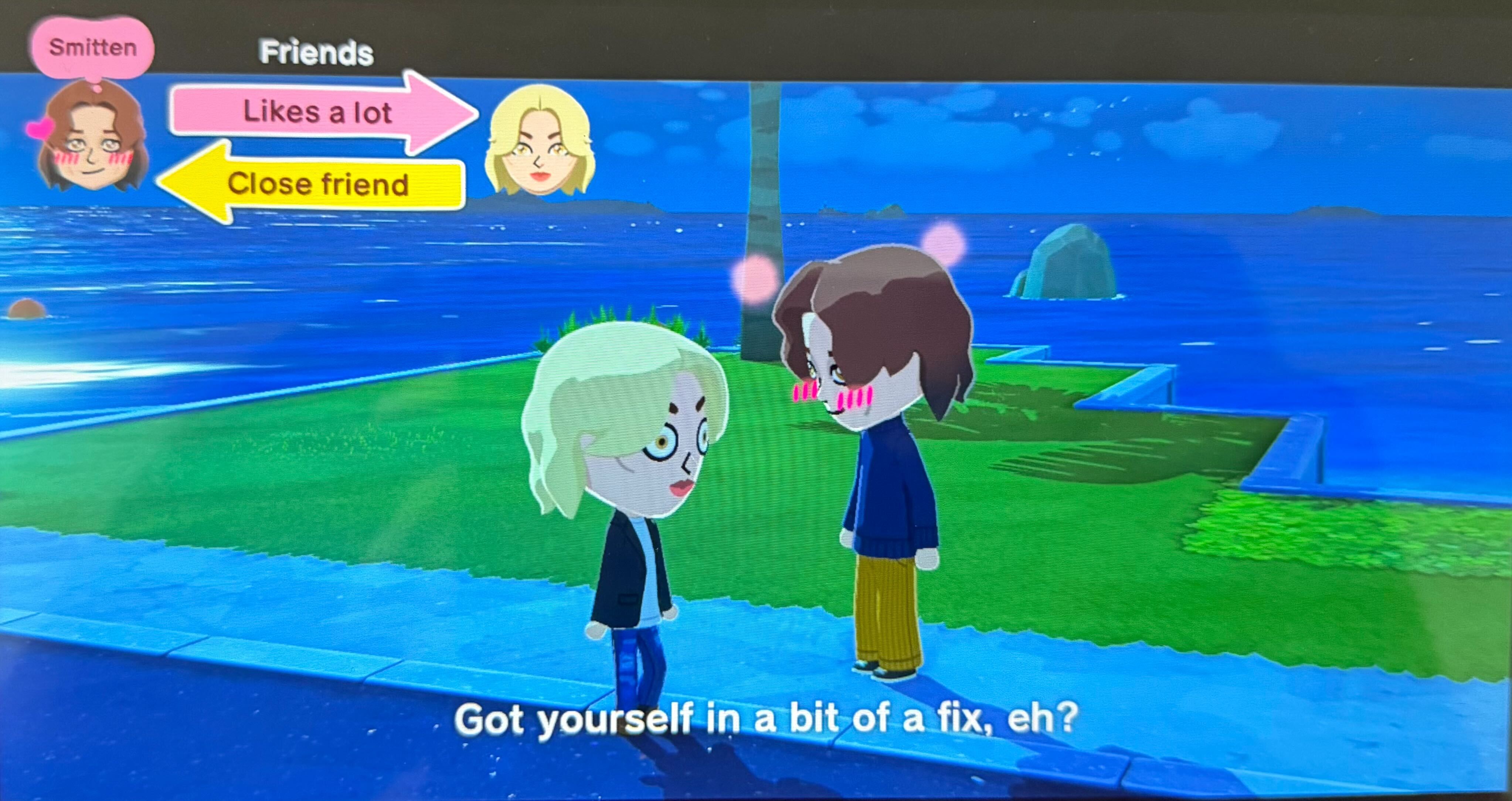
Tomodachi Life: Living the Dream presents an array of opportunities for deeper storytelling, with slow-burn romances kickstarted by chance, and by character whims. Sometimes, you’ll get a pop-up with a character ruminating on whether they like their friends in that way, and you get to choose whether that’s a legitimate thought or whether they should dismiss it.
Sometimes, a Mii will fall over and require aid, and while you can simply help them up and they’ll dust themselves off, you can also summon a fellow character to help, and that may inspire deep feelings to develop. It was particularly fun to have female characters picking up male characters, because it inevitably resulted in a romance-starting cutscene where everybody goes all rosy-cheeked and googly-eyed.
If the other character falls over or freezes later, you can again bring those characters together, to start a longer and more passionate romance.
What I most appreciate about this system is that it’s not a simple matter of pushing characters together. You can’t just make romance happen straight away. Instead, you must nurture your characters’ relationships day-by-day and allow them to get to know each other in dialogue before they can become smitten and confess their love.
It’s more about prodding and poking than actually putting folks together, and you still have to contend with the chance that your chosen beaus won’t love each other, or that a tiny interaction might draw them apart – but the joy is in discovering how each relationship evolves.
In the first hours of Tomodachi Life: Living the Dream, you’ll swiftly find yourself invested in this growth – or you should be, at least. This is the sort of game that requires some measure of your own emotion, and your own creativity, to really come alive.
You’ll want to care deeply about your flock, so the time you spend developing them (gifting them clothes and food, adding special quirks and encouraging their relationships) is rewarding.
Life moves slowly on Tomodachi island
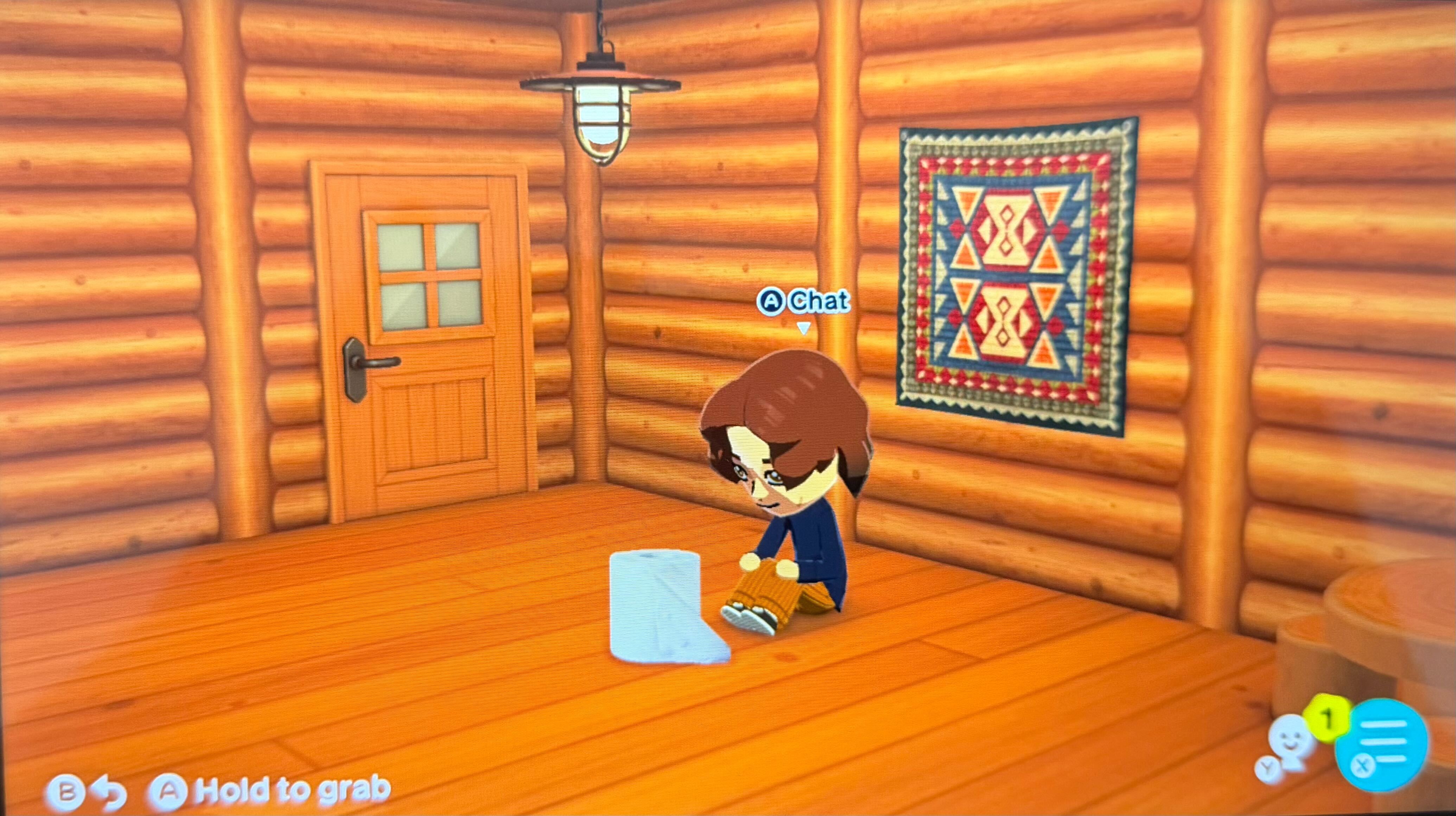
Tomodachi Life: Living the Dream is a game that demands emotional investment, which is why I found creating characters I already liked a very neat entry into gameplay. You need to spin your own sense of storytelling here, as there’s a relatively light narrative to guide your hand.
Once you have your Miis and you know exactly what you want for each of them, you’ll find it much more satisfying to set them on their path, and to see how their interests and relationships change day-by-day.
Currently, I’m busy knocking Yelena and Robert together, in the hopes of sparking a blossoming romance. In the background, I’m also working away on Matt and Natasha finding love – this one is comics accurate, of course. My own personal fun is derived from seeing how each of my couples skirt around each other, and the anticipation of finally seeing them declare love.
Hopefully, by the time my full review is complete, I’ll have a grander story of passion to share. Until then, stay tuned for more updates on my menagerie of boisterous little Miis.
Tomodachi Life: Living the Dream launches for Nintendo Switch on 16 April.
A code for Tomodachi Life: Living the Dream was provided by the publisher for the purposes of this preview.