Fire Emblem: Fortune’s Weave holds its secrets close in its opening chapters. So close, I was almost off-sided by a surprising blandness and familiarity in my preview. Its introductory story tells of a gathering darkness, and a need to create a hero for the ages – a custom character created by the player with few real options for customisation.
There are countless games that start in this manner. It’s a classic Hero’s Journey. Subsequent moments of learning turn-based combat strategy did little to dispel the illusion that Fortune’s Weave would be ordinary. I wasn’t enamoured by the non-speaking protagonist. I didn’t particularly care for the threads of generic plot.
Then came the twist.
Fire Emblem: Fortune’s Weave‘s prequel chapters gave way to something much grander, more ambitious, and staggeringly stylish – in a way that completely reversed my course and had me locked in entirely. It washed away the underwhelming opening and it paved a path for a complex, multi-layered story to come.
Perhaps it was even made better by its opening lull, which attempts to convince you this game will be about an infallible hero, born to fight in epic turn-based battles. Not so, as it turns out – and to its great benefit.
Fire Emblem: Fortune’s Weave preview – quick links
The secret at the heart of Fire Emblem: Fortune’s Weave

The ‘protagonist’ of this story, so far, has turned out to be a bit of a red herring. While there’s hints at who they might become in snippets of dialogue that speak of a reverence and fear, they largely operate on the fringes of the core story that defines the early stages of the game.
They’re the lynchpin for the action, introducing the core cast and their plight through a major battle, then leaving them to go along their unique pathways.
Essentially, the core is this: the ‘real’ protagonist of Fire Emblem: Fortune’s Weave are four key soldiers (Leda, Dietrich, Cai and Theodora) who players meet as brainwashed soldiers in the army of a tyrant. In desperate, quiet dialogue they hint that their intention is not evil, even as they’re dispatched by the protagonist.
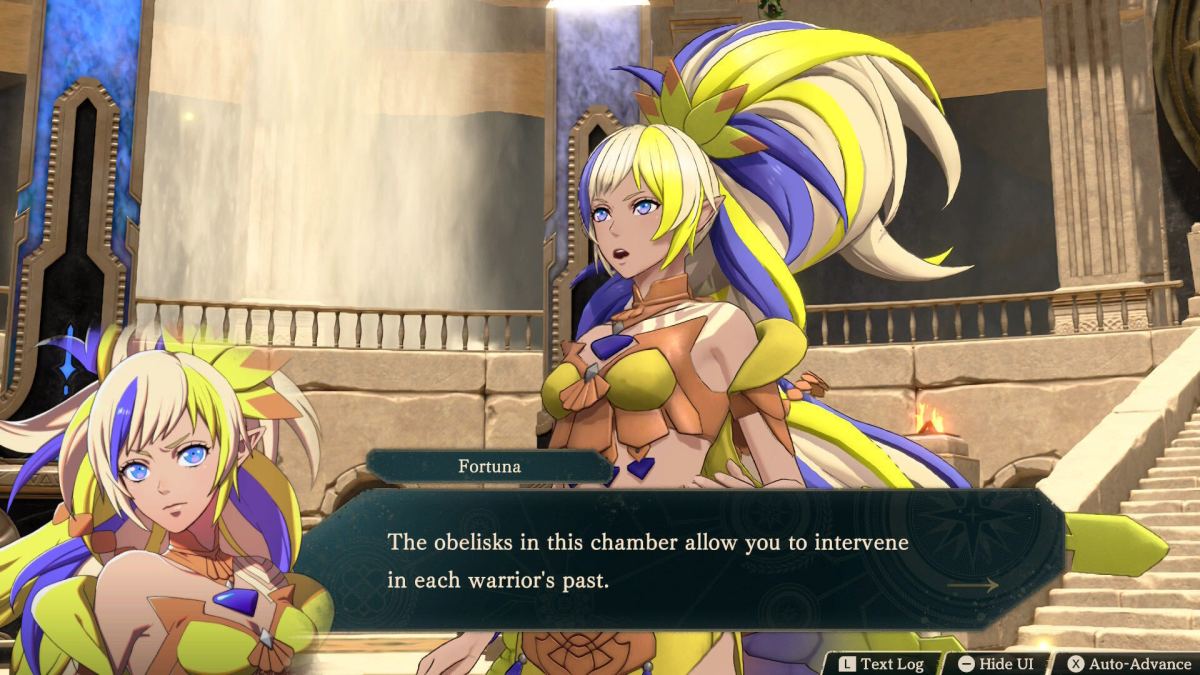
But of course, death isn’t the end of their story. With the Goddess of Fate by the protagonist’s side, they are given an alternative quest: to save these former heroes and enable them to become the saviours of the known world. Visiting a locale known as the Obelisk Chamber, players will be able to go back in time to experience the events of the lives of these heroes and reshape their path into the future.
While the threads will inevitably tangle back together, all characters have their own unique path to follow, which can be experienced linearly or by ducking in and out of chapters as you wish. There is a connective thread, as Fortuna and the protagonist will make appearances at times to guide these characters and change their fate, but the early steps – comprising our preview – were relatively siloed.
It allows a freshness in each embarkment as you learn more about your menagerie of destined villains and how their paths took them from their individual noble quests to being pawns in an undead army.
Journeying with the beautiful Dietrich in Fire Emblem: Fortune’s Weave
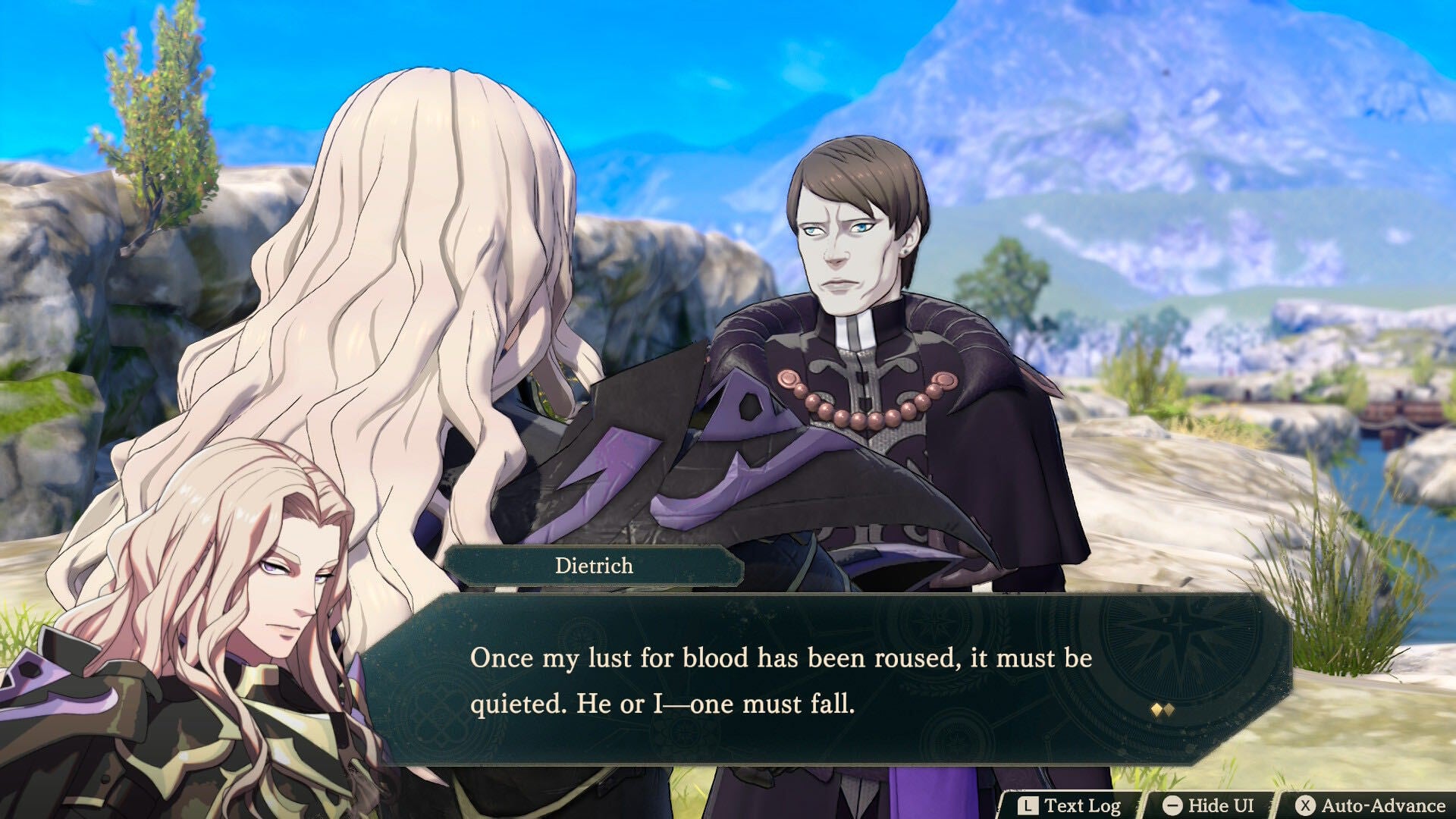
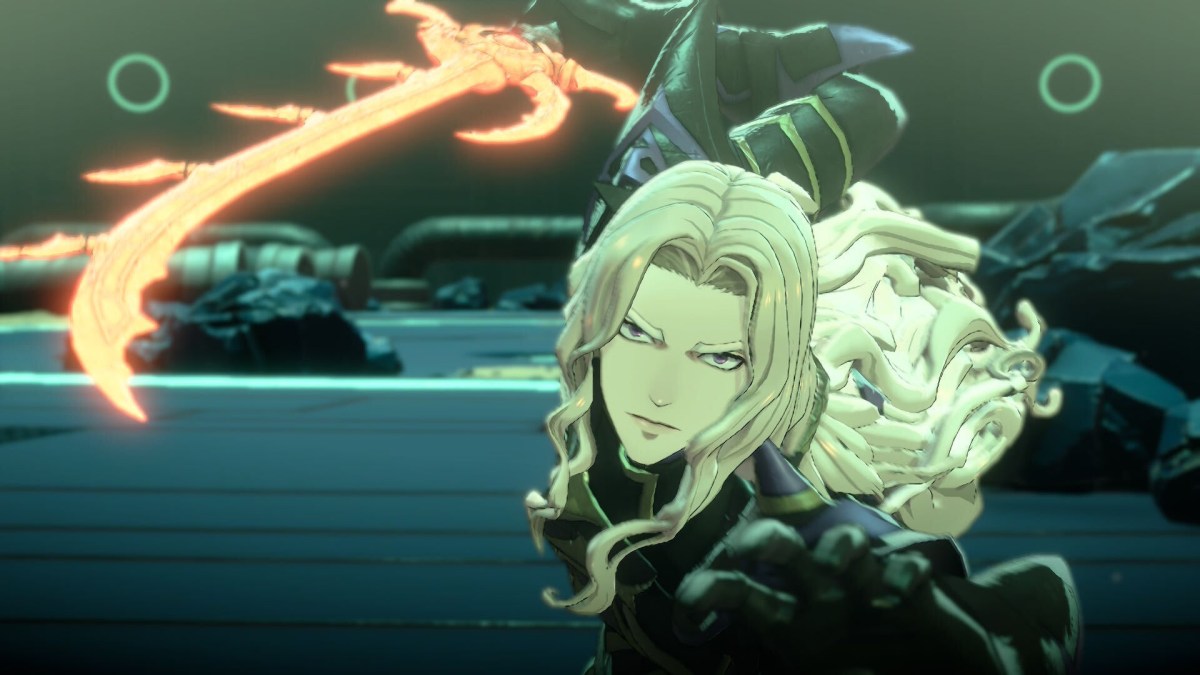
The mistake I made early on in previewing Fire Emblem: Fortune’s Weave was to pick Dietrich’s path for my first forays. “Mistake” in the sense that I became immediately enamoured by Dietrich and chose to follow along his path even with preview guidelines to suggest I should venture elsewhere, as well.
If you want to pick one character and follow their path all of the way, it does appear – so far – that Fire Emblem: Fortune’s Weave will allow you to do so. There hasn’t been major intrusions into the plot yet, and I’ve been perfectly satisfied to roll along with Dietrich and his companions because this plot is giving me everything I need.
That is: a broody vampire-coded man who’s self-obsessed, even in his nobility.
I wouldn’t be surprised if developers used Hideyuki Kikuchi’s Vampire Hunter D as inspiration for this character, or even the more visually-adjacent Alucard from Castlevania.
Dietrich has the same cold calm and deadliness of these particular characters, although he’s not specifically a vampire – just a knight who loves to talk about his bloodlust and might.
His particular questline, in the early stages, has been very compelling so far. In his first steps, he pairs up with a priest named Fabio, who’s skilled in dark magic and healing. I’m not sure I trust Fabio completely (although I would dislike a villain turn, as it’d feel fairly lazy) but he makes for a hopeful companion so far.
Dietrich also meets the bright and peppy Esmeralda, who has a lovely Hatsune Miku pop style with bright turquoise hair and a vibrant, determined personality. She’s a fun addition to Dietrich’s lonely wandering through the world, allowing him to see a lighter side in his travels and to gain trust in his friends.
Dietrich’s story feels particularly well-layered in that regard. He goes from being a stoic wanderer, travelling alone by boat on a mysterious journey to gathering companions that he cares about, and that care for him. They break his tough exterior and allow his warmth and kindness to shine through.
That’s been a strength of Fire Emblem: Fortune’s Weave in its narrative so far. Like other games in the series, it has a focus on a variety of personalities, and allowing them to be revealed in dramatic moments of combat or in narrative story beats that play out in dialogue.
The game asks you to push aside your assumptions and judgements, and let each character stand in its own right. With character and dialogue defining the adventure, there’s ample flavour in the journey.
Turn-based combat is made better with flavour and friendship
One of the biggest challenges of introducing the Fire Emblem series to those unfamiliar is the game’s primary combat system, which is arguably the least flavourful but most important part of this gameplay.
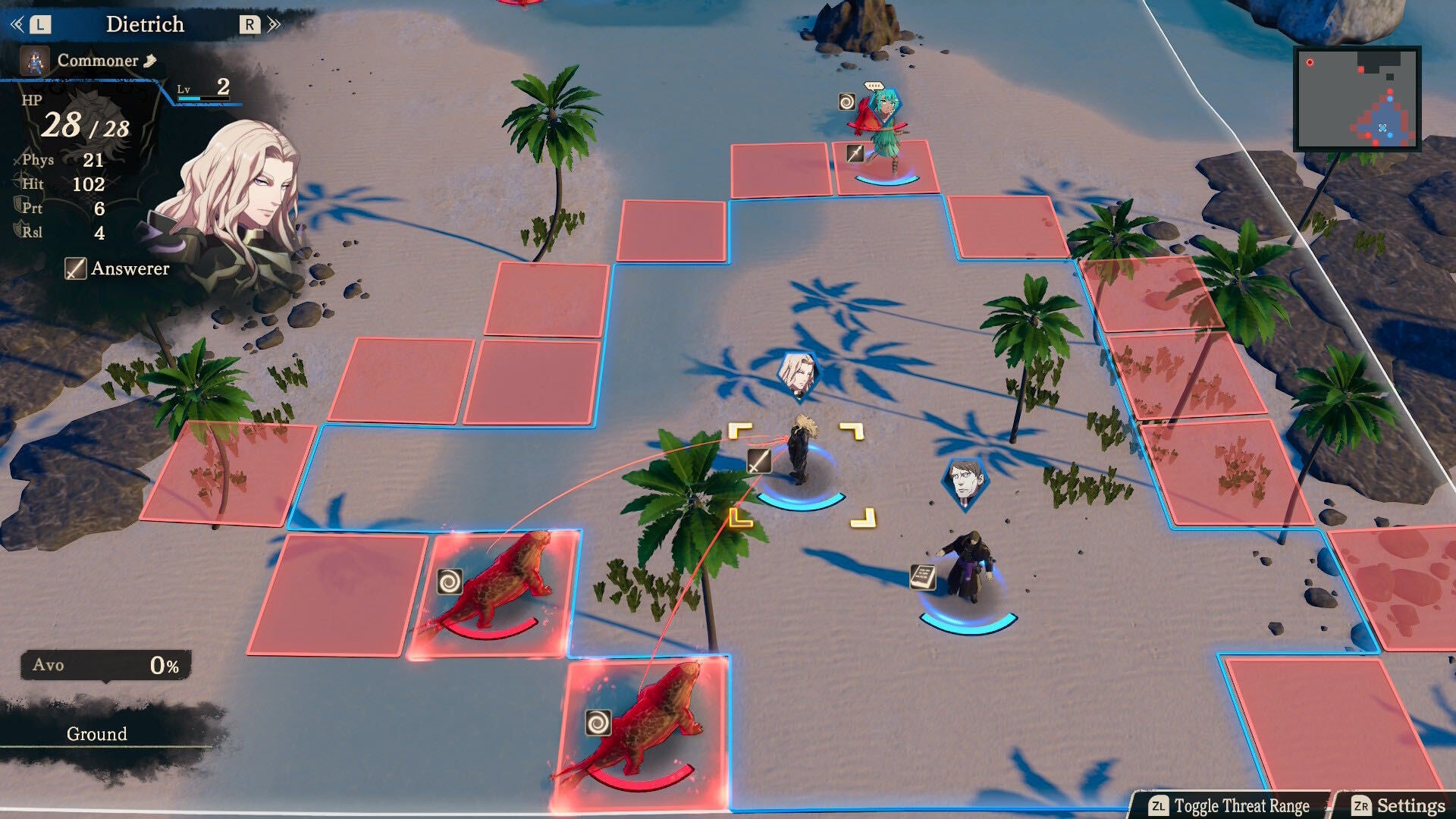
This is a turn-based game. In ‘player’ and ‘enemy’ rounds, you’ll move your characters across a combat chessboard, figuring out where best to place them to ensure maximum damage and protection during enemy rounds. I quite like turn-based combat generally, but it is a slower-paced system and one that demands mental investment in strategy and deeper thinking.
Active combat tends to be far more dynamic and exciting, with a tension in when to swing and how to attack. Turn-based combat requires you to pause and assess your situation before making a calculated move. Both have their upsides and downsides, and neither is better than the other.
But there is a perception that turn-based combat can be boring and unrewarding, in general.
Fire Emblem: Fortune’s Weave spices up its own system with a variety of clever choices. As a small addition, characters can interact on the battlefield and improve their friendship by chatting, giving them a boost as they weave together. It’s a novel touch, and one that elevates character.
As a more involved choice, the combat in Fortune’s Weave involves multi-part attacks. Based on chance and terrains, characters will attack, then defend, and occasionally attack again. It’s all about maximising your placement on the chessboard and figuring out how best to whittle away enemy health.
Even on an easier mode, the combat is challenging, and it all depends on placement. If you choose a front-on attack and send your crew into battle with aplomb, you might actually find them overwhelmed and defeated. In this case, you can use Fortuna’s magical power to turn back the clock and make better decisions, but there is encouragement to pick more wisely from the get-go.
Analyse the battlefield around you, and you’ll figure out distances from your enemies and where you can move to maintain your advancement without getting into enemy territory. Make them come to you, and you’ll usually have a better time and longer thrift to make your mark.
The next steps into Fire Emblem: Fortune’s Weave
So far in this journey, in its flavour-infused turn-based combat and its menagerie of characters, there’s plenty in Fire Emblem: Fortune’s Weave for a diverse array of players.
If you love artfully-designed characters with clear, well-written personalities – and particularly the tragic, brooding types – there’s a lovely cohort of new pals here, all of which have their own well-developed and compelling plots to follow.
If you’re into turn-based combat, no series is doing it quite like Fire Emblem, and there’s plenty of additional flavour and vibes in turns to keep your strategy-minded brain engaged while the plot moves along around you.
With Fortuna and the custom protagonist waiting in the wings, I suspect the plot of this game will grow very complex very quickly, and that intrigue is what’s kept me pounding the pavement through hordes of enemies and monsters. That, plus getting to spend more time with Dietrich, who I have no doubt will swiftly become a fan-favourite.
After brief teething issues in the opening chapters, my eyes are now firmly on the future of Fire Emblem: Fortune’s Weave, and what fate has in store for my new companions.
A Fire Emblem: Fortune’s Weave code for Nintendo Switch 2 was provided by the publisher for the purposes of this preview.