The My Hero Academia anime ended its epic run in December 2025, drawing the story of plucky hero Izuku Midoriya to a tearful, satisfying conclusion. If you’ve missed the series ever since, the forthcoming game My Hero Academia: All’s Justice will be a wonderful salve.
All’s Justice is a plucky, high-speed anime fighter that adapts the events of the anime (and the original manga) while providing a new chance to hang out with the heroes of UA High School. Ahead of its launch in February, I was able to get hands-on with multiple gameplay segments charting the game’s main story mode, game-exclusive team-up missions, and various character missions.
Each revealed a new part of All’s Justice, and confirmed this upcoming fighter goes well beyond being a simple adaptation.
My Hero Academia: All’s Justice preview – quick links
My Hero Academia: All’s Justice is a leap above its predecessors
Jumping into this sequel, what’s most notable about All’s Justice is that it’s a cut above what’s come before. I enjoyed My Hero One’s Justice – the first game in the My Hero Academia video game franchise – but it lacked the bells and whistles to elevate it above other bog-standard anime fighters.
My Hero One’s Justice was solid and engaging, with a strong combat system, but it was simple. It adapted story beats with short, ineffectual cutscenes and largely played out like a box-ticking exercise. Remember that moment from the anime? Here it is, in clipped form. Tick the box, fight the next enemy, move on.
My Hero One’s Justice 2 improved on this somewhat, but My Hero Academia: All’s Justice feels leaps and bounds ahead.
Read: Netflix is going ahead with live-action My Hero Academia adaptation
While my preview was limited to set modes and fights, what was on show was impressive. Previously, players were left in bare menus. Now, you now get an overworld to explore, filled with characters to engage with and new missions to take on.
There isn’t only a main story. You can spend your time getting to know each individual MHA hero in dedicated cutscenes and missions that use their key abilities.
You can also get to know them in new team-up missions that take place in a virtual world – a hologram version of the manga’s world where enemies and allies mix under the guise of ‘training’.
In one particular mission, you’ll need to fight the entire UA High School crew to strengthen yourself, then head off into epic battles against the Nomu and villainous Shigaraki. In another, you’ll need to prove yourself to Aizawa, even as his Quirk negates yours in battle.
As a final curtain call for the My Hero Academia characters, All’s Justice makes sure you really get to know everyone. While many of the peripheral modes beyond story mode feel superfluous, they’ve got their own compelling little stories to follow, and they’re great excuses to spend more time with each hero before the inevitable end.
Story mode is where My Hero Academia: All’s Justice really shines
Really, these extra modes are just a light-hearted, moreish distraction from the heart of All’s Justice: a story mode that well-adapts the franchise’s hard-hitting fights in frantic, comic book style.
Story mode hauls you along with lush animated cutscenes, which take inspiration from both the manga and the anime, before you’re tossed into heart-pounding battles that require quick thinking and reaction time. No matter which hero you play, you’ll have access to an array of impactful moves, based on individual Quirks.
Getting to know fighters and their quirks
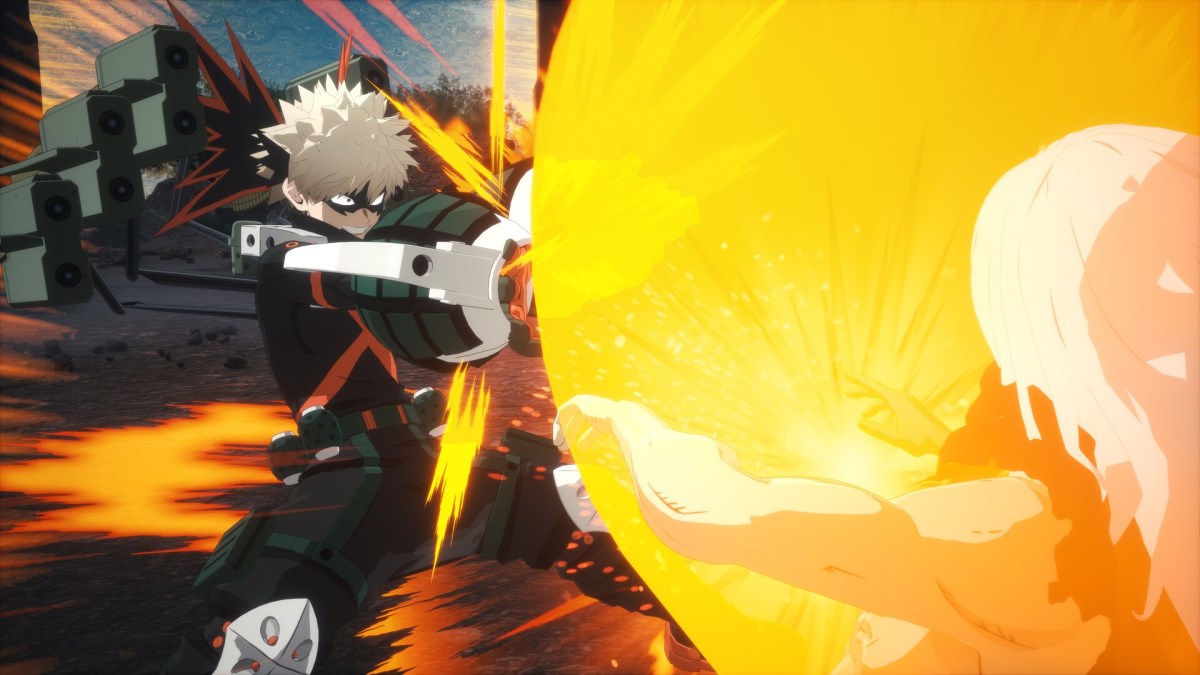
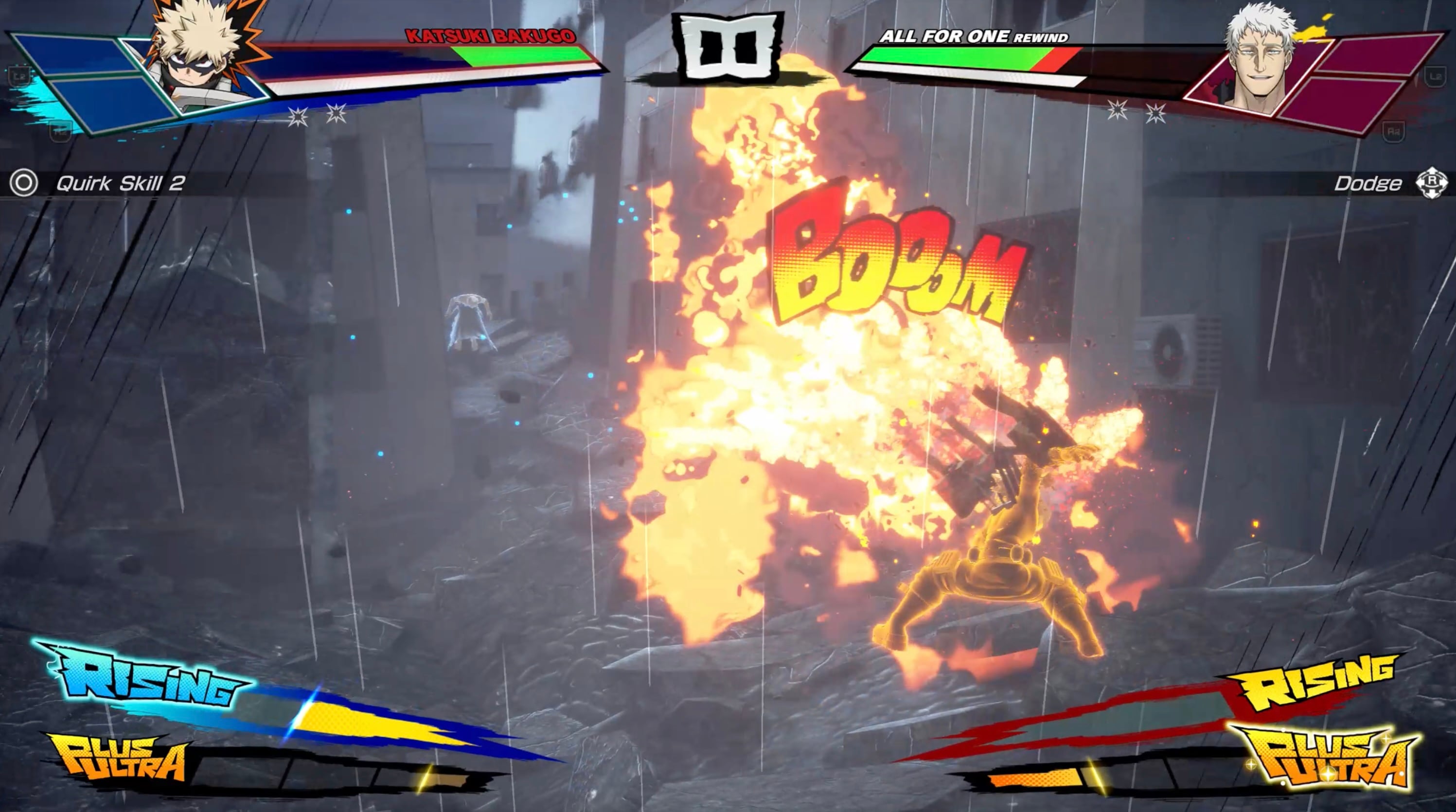
Bakugo and Deku are the flashiest of the heroes, with sparkling abilities that smash into enemies and environments, creating explosions on-screen, alongside visual onomatopoeia that highlight the franchise’s comic book inspirations.
Fighting All For One (Rewind) as Bakugo was a spectacle. Activating Bakugo’s Rising skill, you get access to this entire arsenal of explosion-based abilities, including ranged rockets that target your enemies. If you manage to break an enemy’s guard, you can initiate a high-powered sequence that ends in a Plus Ultra attack, where enemies are caught in a firestorm.
Deku primarily wielded his Blackwhip ability in the preview, allowing him to fly across the battlefield and unleash a devastating array of grab-and-slam-based attacks on his foes. His Plus Ultra move is also very flashy, as he unleashes a ground-breaking smash that puts a major dent in enemy health bars.
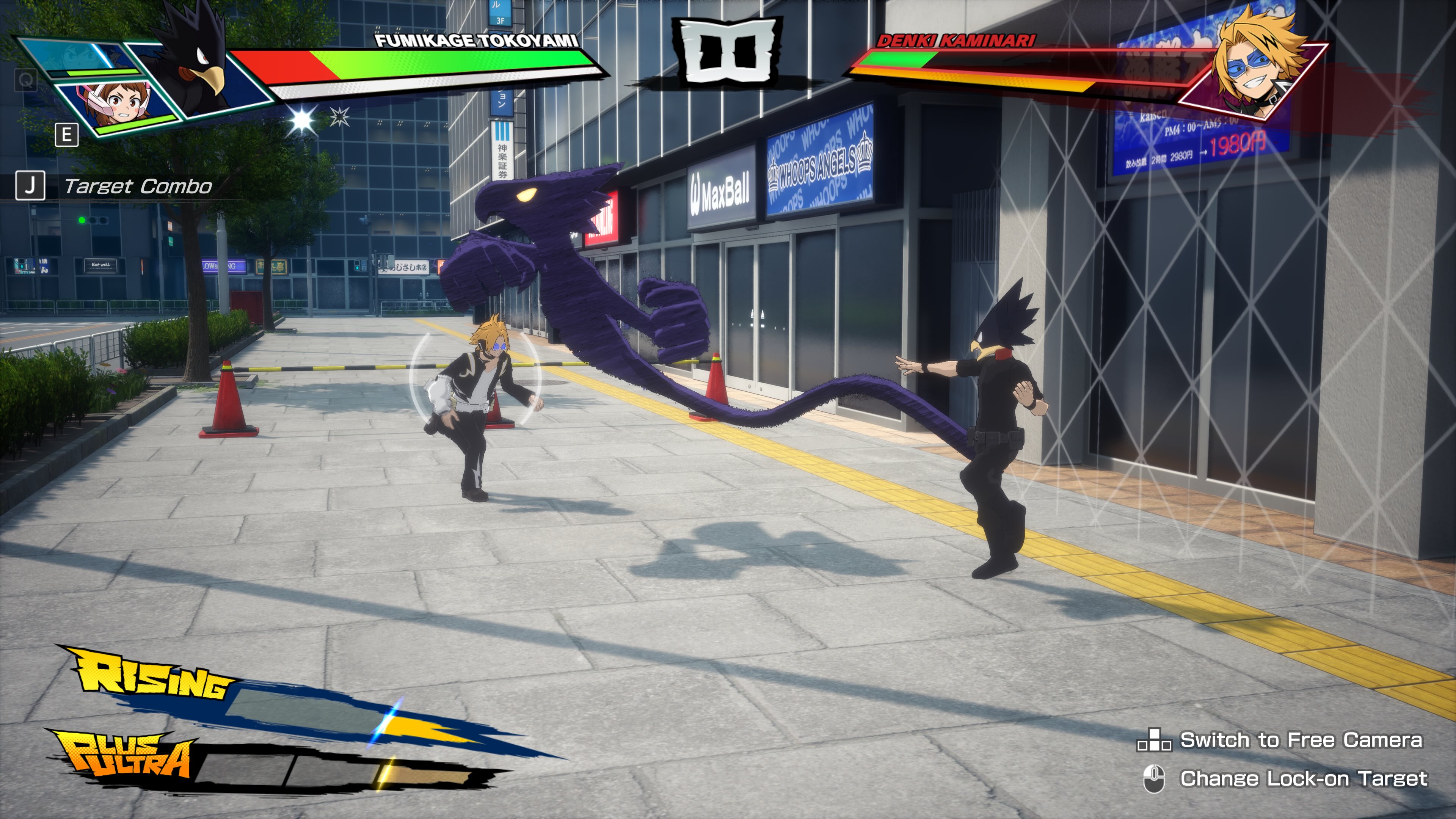
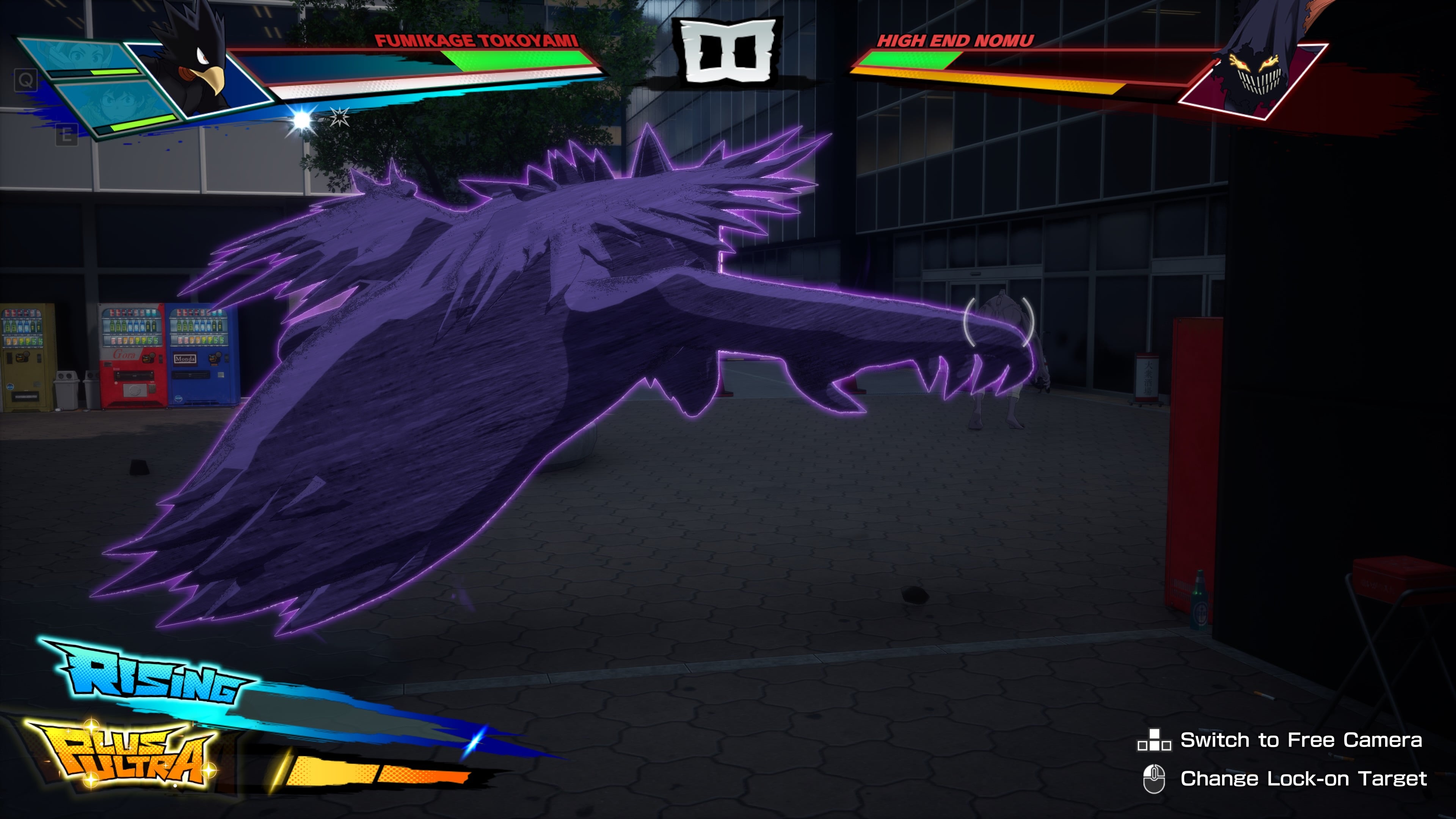
Tokoyami actually proved to be one of my favourite fighters in the preview, as he’s able to wield Dark Shadow as a ranged appendage, which travels ahead of him to slam opponents. While he’s relatively vulnerable while fighting this way, you can keep enemies at arms length by mashing the attack button.
In his Rising form, Tokoyami also completely transforms into Dark Shadow, and can fight as a nearly invulnerable, towering kaiju that squishes enemies in his path.
When the full game lands in a few weeks, I’m most keen to experiment with every fighter on its roster, to see just how wildly their abilities differ. Even with limited time in the preview, I could see just how different every hero operated, and that a different strategy was needed for each.
While they all have the same basic combats, there’s plenty of variety in movesets. It means every battle, while having the potential to be repetitive, feels new and novel.
As only a taste of what’s to come in My Hero Academia: All’s Justice, there was plenty in my recent preview to give me a hunger for more. With the game set to arrive on 6 February, there’s not long to go before the battle will commence once more.