Google has reportedly invested US$75 million into film production and distribution company A24, cementing a partnership to develop new AI-powered technologies to aid filmmaking.
Per The Wall Street Journal, as part of the deal, A24 will gain access to Google’s DeepMind research laboratory, while researchers will work alongside the studio to build new filmmaking workflows.
It’s believed Google will not gain access to A24’s content library or its data as part of the deal.
A24 and Google partner for AI tools – quick links
What to know about Google’s AI investment into A24
Google’s investment arrives as A24 rides a wave of public popularity, buoyed by its approach to telling original stories, led by sharp-minded creatives.
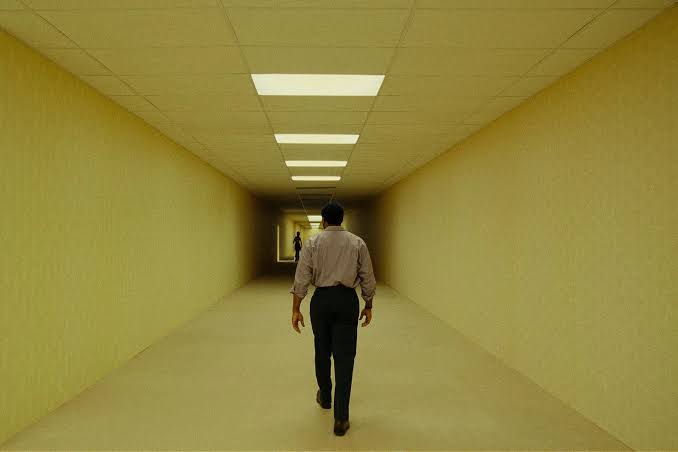
One of its biggest recent successes is Backrooms, led by 20-year-old filmmaker Kane Parsons, who developed the film on a reported US$20 million budget. With a tight scope and artful use of filmic techniques, it became A24’s highest-grossing film to date.
And as Parsons said following this success, it had nothing to do with AI.
‘If I could snap my fingers and make generative AI disappear forever, I probably would,’ Parsons told The Australian (via Variety). ‘Creatively, I get no enjoyment from using those tools. It defeats the purpose entirely for me.’
While he acknowledged that AI could make some VFX tasks more approachable, he also said: ‘Right now it’s difficult to discuss objectively because there’s so much at stake and so many genuinely harmful consequences already happening.’
ScreenHub: What local game developers really think about using GenAI artworks as ‘placeholders’
As we’re seeing in multiple industries around the world, those ‘genuinely harmful consequences’ are very real, with many creatives – from game developers to writers, artists, and beyond – reporting job losses in the race to harness AI to gain efficiency and reduce production costs.
A24 reportedly believes its own AI partnership will have a different impact.
A24 on its AI partnership with Google
As shared by The Wall Street Journal, Scott Belsky, who oversees innovation and technology for A24 Labs, believes A24’s partnership with Google will be different to other deals made in the AI space as it doesn’t intend to make films cheaper or faster.
Reportedly, one of the core applications being developed is the generation of AI storyboards.
‘We think there are better uses that preserve creative control and support risk-taking,’ Belsky reportedly said. He believed the tools ‘won’t look anything like the prompted generation type of AI that people feel uncomfortable with’.
What goes unsaid is what happens to existing storyboard artists, and how workflows will change around AI production processes.
ScreenHub: More news about GenAI in the screen and games industries
ScreenHub recently spoke to game developers about the importance of illustrated placeholders for developing the tone and direction of creative projects. While labour-intensive and time consuming, this early development work serves as an essential part of creative processes.
‘Scrappy sketches or placeholders … grant me new insight into what another team member is thinking when they’re designing a feature or asset, which is always something I really enjoy seeing, and often gives me new ideas on how the final asset should look,’ game developer and artist Lucy Mutimer told ScreenHub.
‘If you jump straight to the end with a fully rendered “snazzy” (to the AI-enjoying eye) piece of art then you’ve devalued a core piece of video game development and robbed your art team the time to iterate on their ideas the same way a programmer or designer would.’
For now, it’s unclear how A24 will integrate new AI tools into its workflow, and how it will be received. The studio has made a name for itself as a creatively-minded independent studio, with plenty of goodwill from film fans who appreciate human-led art.
With online chatter already heating up, it remains to be seen how this investment will transform A24 in the eyes of its audience.
Also on ScreenHub:
Backrooms: how a creepypasta became the year’s most anticipated horror
Before Kane Parsons had a Hollywood deal, he had a cheap laptop in his bedroom, a consumer-grade camera, and a grainy image from a 4chan forum.
Now 20, the filmmaker known online as Kane Pixels has gone from posting lo-fi horror videos on YouTube as a teenager to directing a film with the popular studio A24.
Backrooms will open in cinemas on 29 May. Its producer credits include filmmaker Shawn Levy and horror maven James Wan, and stars Oscar nominees Chiwetel Ejiofor and Renate Reinsve.
Far from a lucky break, Parsons’ trajectory demonstrates a significant shift in where the screen industry is looking for its future big ideas – particularly in the realm of horror. Read more …