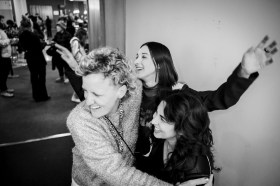
Why am I so interested in 1000 Women in Horror, the new documentary by Fanarchy director Donna Davies? Like most things, it goes back to childhood.
As a full-time teacher, mum instilled a strong work ethic and an enduring love of words in me from the day dot. With her generally stuck in school for a while after the bell rang, my wee bro and I would often scoot over to the chaotic good brood of our cousins’ joint.
It was here, assembled like a particularly excitable cult that bows down to scuzzily worn-out VHS tapes, that my education in horror began. Witnessing unimaginable abominations play out in an abundance of startlingly scarlet blood, abusively oozing gore and remarkably saucy suggestion, my love of cinema was forged in this comfortably numb darkness long before I was old enough to know any better.
1000 Women in Horror
I was reminded of my wide-eyed stare, mind-blown and nightmare-saddled, while watching Davies’ latest documentary tribute to the passions that go beyond the pale/veil, 1000 Women in Horror.
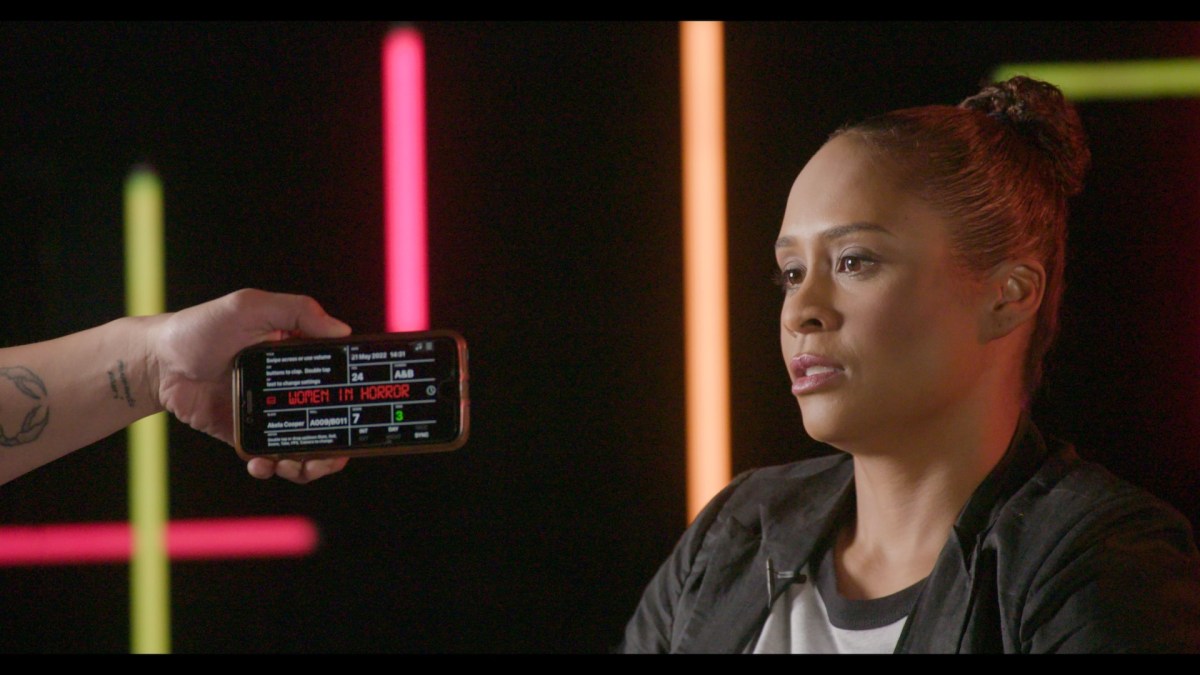
Malignant and M3GAN screenwriter Akela Cooper, one of the film’s most fabulous talking (still attached) heads, recalls a similar scenario.
‘My sister being ten years older than me, she was a teenager when she was babysitting us, and she did not give a flying fuck what she was watching,’ Cooper notes, on recalling being scared shitless while witnessing the skinned Cenobite convert, Julia, in Hellraiser II.
A magnificently macabre trip through women and non-binary folks’ contribution to the gnarliest of dream-stealing genres, 1000 Women in Horror debuted at the Melbourne International Film Festival and now lands on eminently spooky streamer Shudder.
Adapted from Alexandra Heller-Nicholas’ book of the same name, it’s a sassy, 90-minute hell ride that will appeal to fans of Kier-La Janisse’s Woodlands Dark and Days Bewitched: A History of Folk Horror, with that director also contributing.
A woman’s work
Rather than something I grew out of, far from heaven forbid, my love of horror and the women who carry that cursed chalice has only deepened in my middle age.
Luckily, I’m surrounded by a mighty coven of matriarchal warrior women, on both sides of the planet, who embrace the dark arts wholeheartedly. People like Cinemaniacs board members Heller-Nicholas, Sally Christie, Hande Hislop and 30 Miles from Nowhere director Caitlin Koller. Like Bride of Frankenstein monograph editor Emma Westwood and Belfast-born, Glasgow-based creative force to be reckoned with, Laura Kelly.
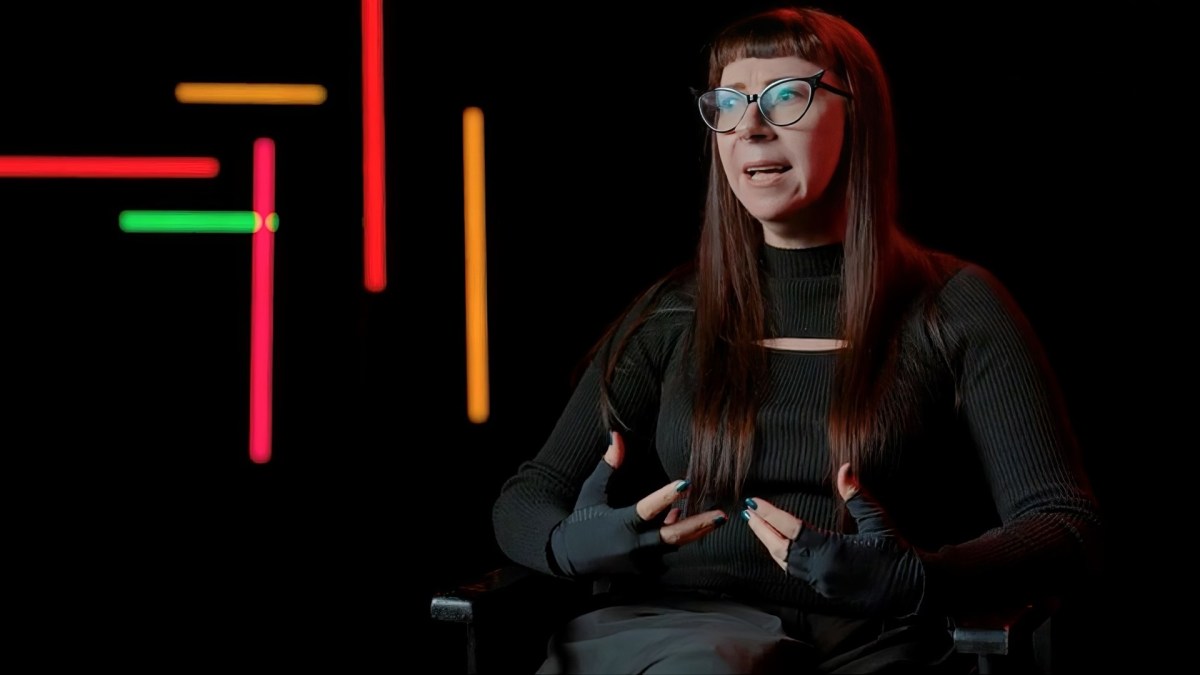
Melbourne Cinémathèque co-curator, critic and academic Cerise Howard, another dear mate, is a trans woman who’s often written and spoken about horror’s enduring fascination with transmogrification, also pops up as a wise and wisecracking voice in 1000 Women in Horror. In addressing the genre’s surfeit of survivors who are women, Howard says something that’s really stuck with me:
‘The “Final Girl” concept … entirely divorced the sense that a spectator will identify most with a same-gendered person on screen.’
ScreenHub: Laurie Strode and the legacy of the final girl
And it’s true. Maybe it was as much entwined with my nascent queerness as my unbending admiration for my mum (same same?), but I associated most with, and felt empowered by, the valiant women doing furious battle with the forces of darkness.
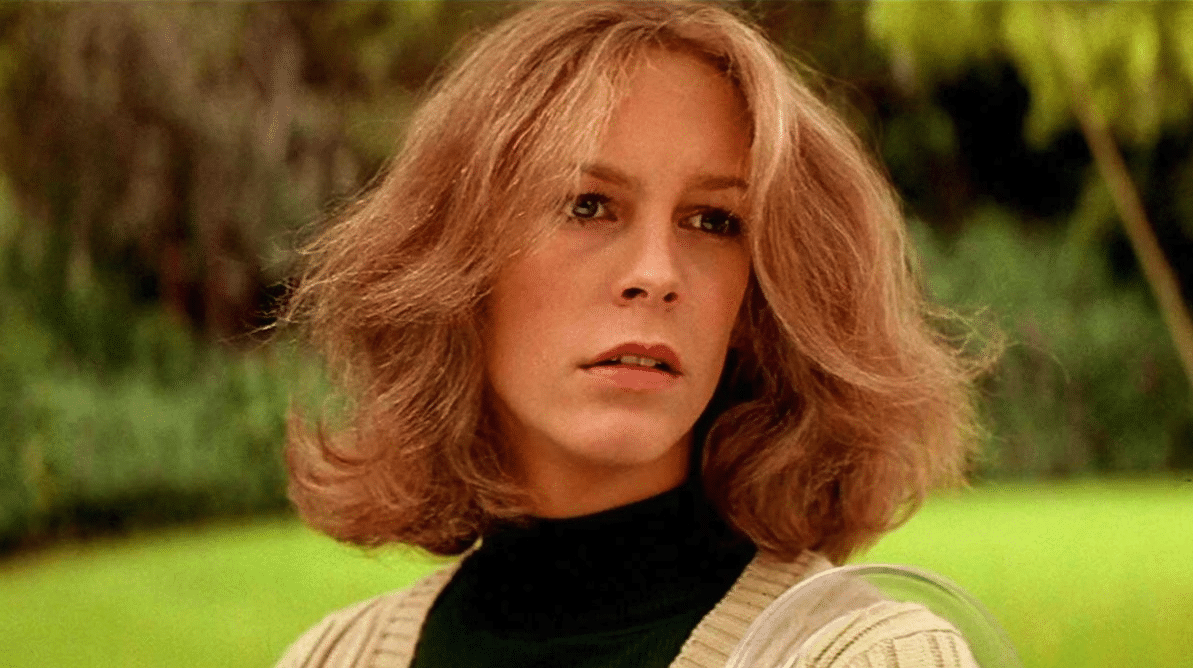
People like Jamie Lee Curtis’ babysitter, Laurie Strode, locked in ferocious battle with the stalking bogeyman Michael Myers in Halloween, and Shelley Duvall’s wigged-out Wendy, resiliently dealing with demonic domestic abuse while protecting her kid in the snowed-in Overlook Hotel in The Shining. Or Sigourney Weaver’s mostly cool, calm and collected Ellen Ripley, who manages to save both herself and Jones the cat in Alien.
That last action hero did her thing in spite of being repeatedly gaslit by the rapidly diminishing number of boorish blokes on board the Nostromo, as Midnight Mass actor and Hush writer Kate Siegel notes in 1000 Women in Horror. Siegel also steals the show, with a no surgically-cut-while-still-awake holes (sic) barred segue on enduring a C-section that is easily the documentary’s best/most brutal moment.
Even the ones that don’t make it (or do they?) left an indelible mark on my young mind. As someone who was brutally bullied at school for all manner of reasons, including being gay (I didn’t even realise I was, yet), being posh (sorry I speak properly, but you have better runners than me), and, checks notes, having ginger curls, I’m not gonna lie.
There were moments when I wished I could telekinetically lose my shit like Sissy Spacek’s Carrie and burn the joint down. Fun fact: like Buffy and Sunnydale High, I outlived that toxic pile of bricks, which was demolished many moons ago and not a moment too soon.
Seeing is believing
If emo-teen me could see myself in the ever-proliferating army of Final Girls holding the line against the oncoming apocalypse, then the matrilineal line spanning from Frankenstein author Mary Shelley is even stronger.
ScreenHub: Frankenstein – Guillermo del Toro’s take is monstrously good
And it’s not just the stars burning bright on camera. Satanic Panic director Chelsea Stardust reveals that it was seeing Mary Harron’s name pop up on a rented VHS as the helmer of American Psycho (Harron is in the 1000 Women in Horror mix), Kathryn Bigelow’s Near Dark, Mary Lambert’s Pet Sematary and Amy Holden Jones’ The Slumber Party Massacre that allowed her to grow up to be who she could see: a horror director.
All hail the dark goddesses. May many more monstrous mothers follow in their footsteps, birthing by womb or otherwise our deepest, darkest nights in cinemas or on sofas. As Heller-Nicholas says, and really she should have the last word: ‘Little girls can achieve a lot when they are given the freedom to do so.’