Eurovision Song Contest 2026 airs around the world this week, with the semifinals kicking off on 13 May and 15 May, leading into the grand final on 17 May.
As in past years, Australia has a strong presence at the show, with superstar Delta Goodrem representing the country with her new track, Eclipse. Artist Go-Jo, who represented Australia in 2025 with the fan-favourite jig Milkshake Man, is also back to perform as an interval act in the first semifinal.
For those keen to watch along with Eurovision Song Contest 2026 in Australia, here’s when can tune in.
Eurovision Song Contest 2026 – quick links
Where to watch the Eurovision Song Contest 2026 in Australia

Eurovision Song Contest 2026 airs on SBS and SBS On Demand in Australia.
It will be available live on these platforms, and there will also be prime time ‘Access All Areas’ re-broadcasts across the week, with these including interviews and other new content.
When to watch the Eurovision Song Contest 2026 in Australia
As usual, the Eurovision Song Contest comprises three stages: the two semifinals, plus the grand final.
In the two semifinals, countries from around the world compete for a highly coveted spot in the grand final.
Semifinal 1 – 13 May
The first semifinal airs 13 May at the following times around Australia:
- 5am AEST
- 4.30am ACST
- 3.00am AWST
The Access All Areas re-broadcast airs 15 May at:
- 7.30pm AEST
- 7pm ACST
- 5.30pm AWST
Semifinal 2 – 15 May
The second semifinal, where Delta Goodrem will perform Eclipse, airs 15 May at the following times around Australia:
- 5am AEST
- 4.30am ACST
- 3am AWST
The Access All Areas re-broadcast airs 16 May at:
- 7.30pm AEST
- 7pm ACST
- 5.30pm AWST
Grand final – 17 May
The Eurovision Song Contest grand final airs 17 May at the following times around Australia:
- 5am AEST
- 4.30am ACST
- 3am AWST
The Access All Areas re-broadcast airs 17 May at:
- 7.30pm AEST
- 7pm ACST
- 5.30pm AWST
What to know about Delta Goodrem’s performance
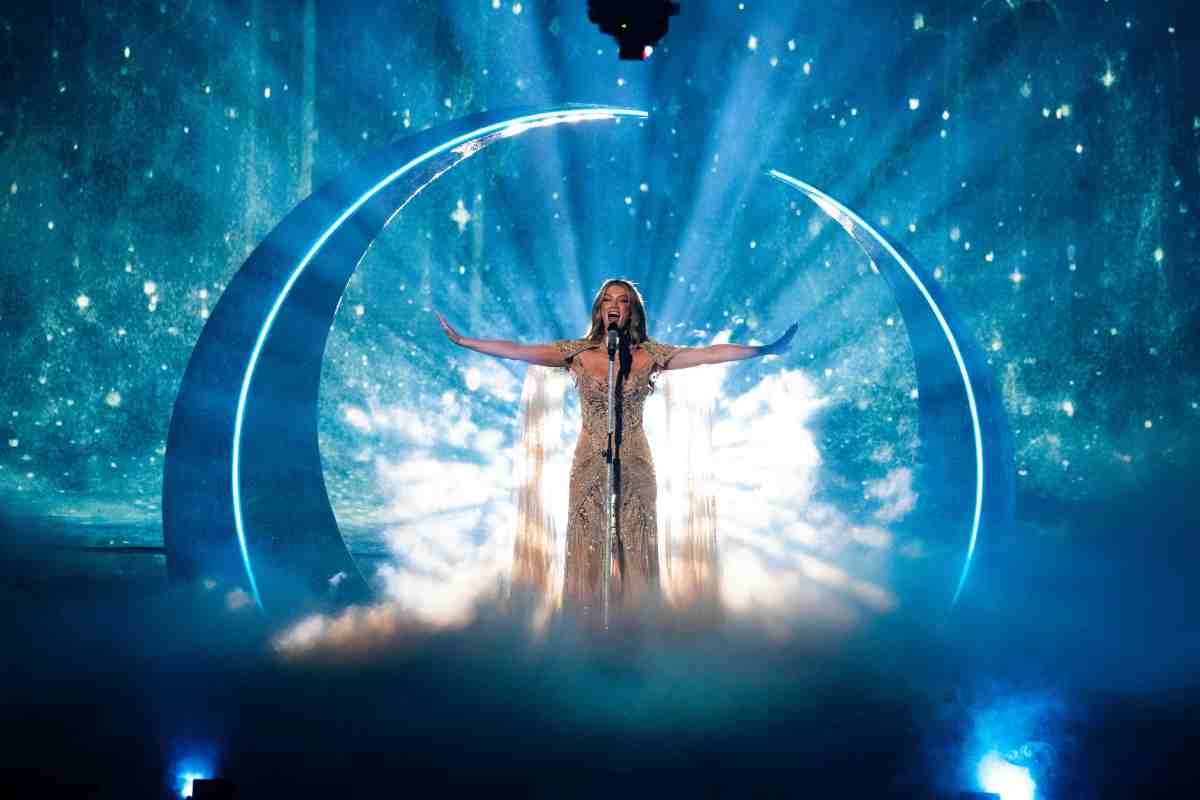
Delta Goodrem’s Eclipse is the song that will represent Australia this year, and is described as a ballad about worlds colliding, with a focus on ‘the tension between night and day, moon and sun, light and shadow’.
Goodrem said of her performance: ‘Performing on the Eurovision stage is something I feel so deeply in my heart, carrying Australia with me in every note and every moment.
‘I wanted the staging to move like the universe itself, embracing light and shade, softness and strength. It was also incredibly important to me to wear the vision of Australian designers, while weaving in the beauty and elegance of our host city, Vienna.’
There are high hopes for Eclipse in the second semi-final, and perhaps it will finally see Australia back in the grand final after a few disappointing years.
What happens if Australia wins Eurovision Song Contest 2026
Perhaps the biggest curiosity around Australia’s involvement in Eurovision is what would happen if the country actually wins the contest. While it’s been close in the past, with a second-place finish for Dami Im in 2016 for Sound of Silence, Australia has never taken out the trophy.
Should Australia win, it’s actually ineligible to host the next event. Per the rules set out by the European Broadcasting Union, the show cannot take place in the Southern Hemisphere, and so Australia would need to co-host the event with a full EBU member.
It’s believed Germany would be the first port of call for hosting the event in the case of an Australian win, with the United Kingdom being a back-up.
In any case, we wish Goodrem luck as she takes to the stage this week.