Long before Joan Baez‘s plea not to sing love songs in Silver Dagger (1960), the lyrics of the folk ballad danced on the wind, whistling through cities and homesteads across frontier America. The forbidden promise and threat of tragedy also whispers through the short stories of Ben Shattuck’s collection The History of Sound, now adapted into a film of the same name.
The American author adapted his collection into a screenplay for South African filmmaker Oliver Hermanus’ film, in which we’ll first hear the folk song sung by All of Us Strangers star Paul Mescal. And oh, what a voice!
The History of Sound review – quick links
The sound of a story
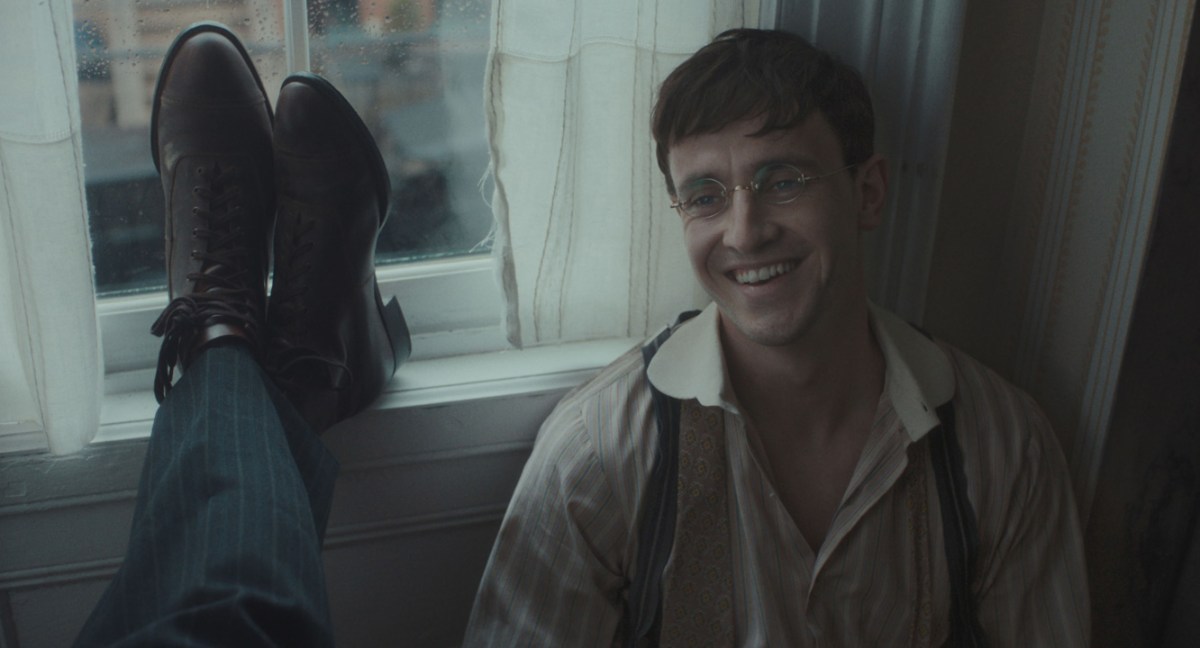
Mescal plays Lionel, a shy and sweet young man who grew up on a dirt-poor farm. It’s here, as a kid (played by Leo Cocovinis) that Lionel discovers his ability to keenly perceive the sound of music – not just as shimmering colour (interestingly never visualised by Hermanus) but also a taste on his tongue – is a gift most unusual.
Lionel’s breadth of knowledge about these ditties and his ability to hold each tune carefully leads him to Boston’s New England Conservatory on a scholarship.
It’s here that his well-honed ear leads him to the orphan David (Josh O’Connor), tinkling at the piano while humming an enticing reverie like the sirens of ancient mythology. O’Connor’s back is to us so we don’t see David’s face until he turns to see Lionel by his side. It’s the first subtle hint we have of their path’s mirroring of the fateful Eurydice and Orpheus.
Capturing the ephemeral in The History of Sound
O’Connor proved his mettle in his breakthrough role as a troubled, closeted farmer in Francis Lee’s ruggedly sublime queer love story, God’s Own Country. Here he also hovers in the shadows – it’s 1917 and such love still dares not speak its name – but there’s a playful light in David that seems, at first, to flow freely.
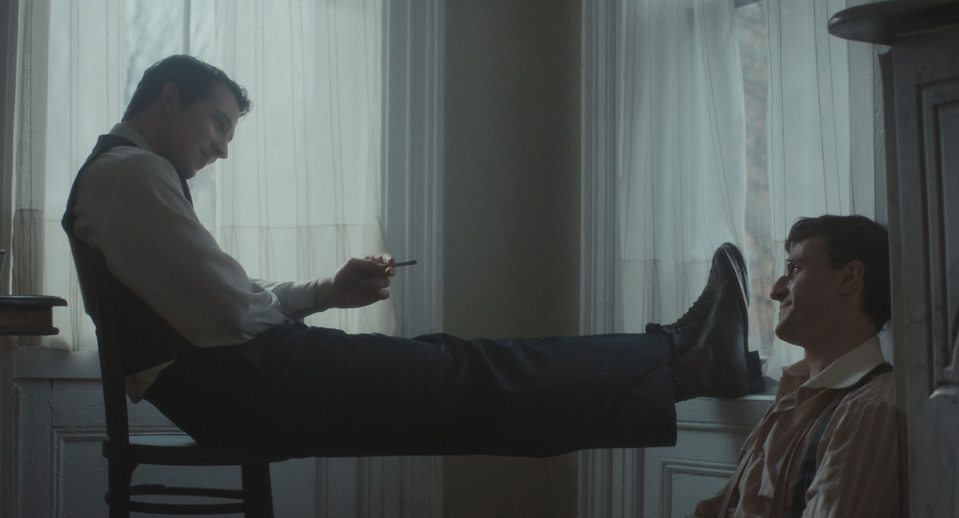
He and an instantly smitten Lionel tumble home drunken together, with the bashful farm boy lingering on the threshold when asked if he’ll come on in. They talk until sunrise through a fug of cigarette smoke and whisky. Lionel again pauses by the bedroom door before plunging headlong in.
The golden days of delicately drawn eroticism that follow are rudely interrupted by the the First World War. As the United States marches into the cataclysm, a teary-eyed Lionel, unable to serve on account of wearing glasses, waves off his now uniformed man at the train station with an entreaty that he survive.
Retreating to the farm after the too-soon passing of his father, Lionel instead throws himself into caring for his ailing mother (Molly Price). As we hold our collective breath, sure enough, David returns across the gaping chasm that claimed so many.
Inviting Lionel to accompany him on a college-commissioned tour of the country’s lesser-known spots, they set out to collect songs brought by the victims of the slave trade, such as Briana Middleton’s Thankful Mary Swain, or the Irish immigrants and the cry of their dead who want to be left in peace to rest.
Again, there’s a glimmer of myth as David dips to pick up white feathers, dropped as if by Icarus from Lionel’s busted pillow, and deposits them in his pocket.
Sound may be invisible, but together they capture it like lighting in a bottle using cylinders of wax, recording what they hear on their winding way and falling into one another in their tent as the moon rises.
Powerful and tender performances
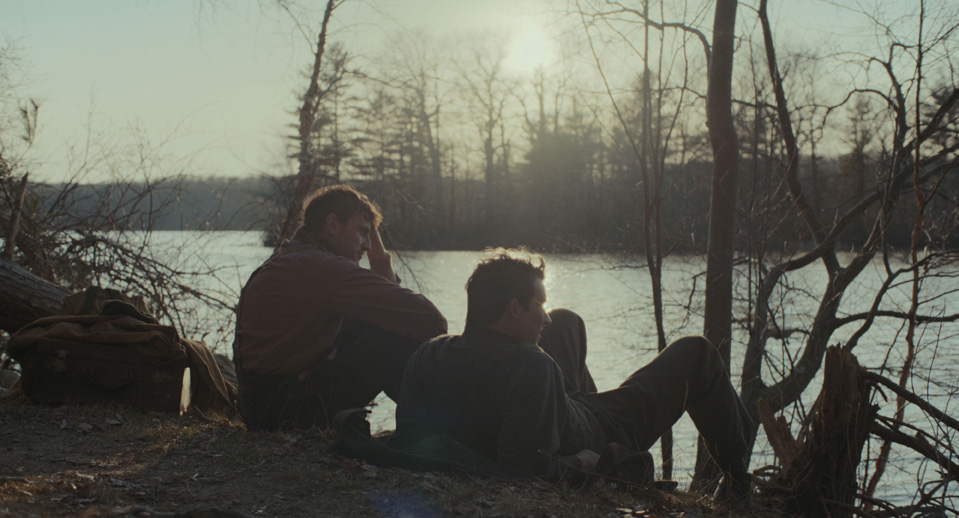
Tender are these nights as The History of Sound captures the faintest shiver, both fear and longing, in the softest touch of a taut shoulder, or the crinkle of crow’s feet around dazzling eyes. Mescal and O’Connor both are remarkably gifted at quiet acting, in the way that nothing at all says more than we’ll ever know.
Hermanus, a restrained and yet impactful director, understands how to let these stolen beats sing. He artfully captured connection in broken hours in his home country movies Beauty (2011) and Moffie (2019), as well as his London-set Living, a loving remake of Akira Kurosawa’s Ikiru, starring Bill Nighy and Aimee Lou Wood.
In the History of Sound, each of the lovers are caught halfway between life and death, as they weigh the promise of what might be if only one is brave enough to try. And it’s here that Lionel hangs.
When he and David are separated again, Lionel’s increasingly beseeching letters go unanswered. At first losing himself in Rome’s ancient thoroughfares as a choir master, he passes on his pain to a poor young man (Alessandro Bedett) who stood no chance. Then the hollow promise of a life less honest presents itself when Lionel’s work takes him to Oxford and the adoring gaze of upper-class Clarissa (Emma Canning).
It’s in her ancestral pile that Lionel, increasingly haunted by fragmentary visions of his David, will spy a portrait of Orpheus and Eurydice and understands that he must turn back. But to what? The farm is empty now, a tumble of spiderwebs and fallen leaves long gone to brown.
Gentle storytelling at its best
The History of Sound follows the incessant march of the seasons, captured by Master Gardener cinematographer Alexander Dynan with the crispest clarity.
Composer Oliver Coates, who caught me off guard with his divine work on Charlotte Wells’ Mescal-starring Aftersun, again upends us. As does God’s Own Country and Living editor Chris Wyatt’s nimble stitching of past, present and future as Mescal passes the baton to Chris Cooper’s older Lionel.
I’m not sure exactly when tears began to run in rivulets along my face’s careworn crevices, but they carried my heart through the torrents tumbling deep below the surface of The History of Sound’s devastatingly beautiful final act. The lyrics of the folk ballad Silver Dagger cut deep: ‘I can’t be your bride…For I’ve been warned and I’ve decided to sleep alone all of my life.’
Hermanus’ impeccably liminal filmmaking captures the vibration of aching: the very echoes of a cherished song long silenced, yet wrapped around the world and back through time; of chance and fate and the towering import of queer stories, so many never recorded, only amplifying the triumph of those sustained in wax.
The History of Sound is currently screening at select cinemas across Australia as part of the British Film Festival, before general release on 18 December.
Discover more screen, games & arts news and reviews on ScreenHub and ArtsHub. Sign up for our free ArtsHub and ScreenHub newsletters.
Actors:
Paul Mescal, Josh O’Connor, Chris Cooper, Leo Cocovinis, Molly Price
Director:
Oliver Hermanus
Format: Movie
Country: United States
Release: 18 December 2025