
My Hero Academia: All’s Justice is an entirely flashy fighter. It excels when you’re mid-battle, corralling crews of heroes in fights against evil villains, using special powers to unleash devastating blows, or strategising your way to victory.
Moment to moment, you’ll feel adrenaline surging. While it’s not always earned, as this My Hero Academia adaptation occasionally allows you to soft-lock enemies by spamming simple attacks (and vice versa), it’s always big, bold and dramatic.
All’s Justice successfully captures the high energy of the My Hero Academia anime and manga, with combat that’s striking and satisfying. In comparison, the rest of the game suffers from a significant lack of focus.
My Hero Academia All’s Justice review – quick links
All’s Justice is a messy adventure
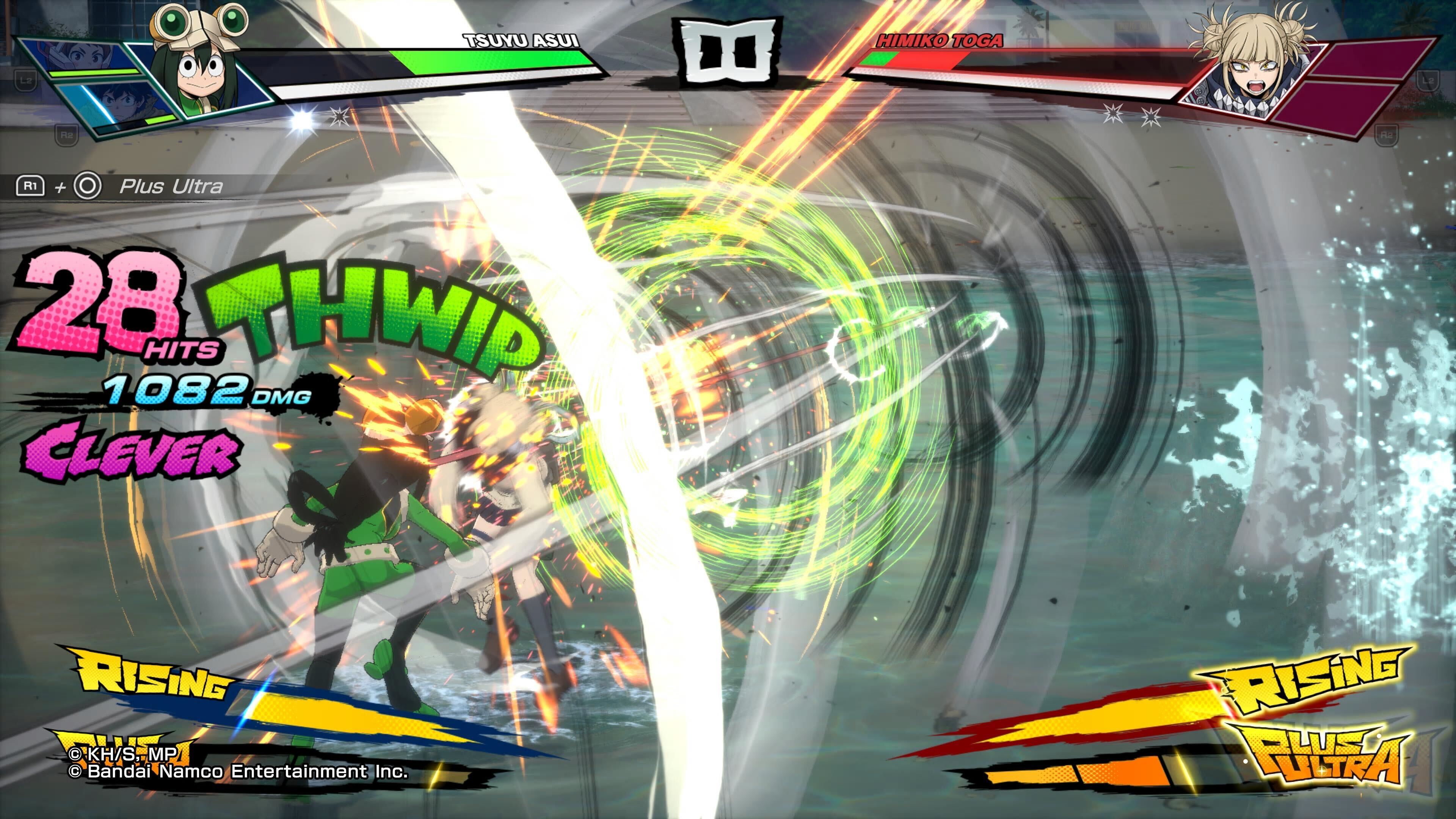
While the fights of All’s Justice are nicely polished (barring a few unfairly difficult late game encounters), they’re housed within a game that feels oddly distracted.
This is the third game in the My Hero Academia series, and it adapts the final, most important arc of the anime and manga series. While that should mean a focus on bold, game-changing battles, and the drama of this concluding arc, All’s Justice takes a different track.
To kick off your adventures, you take part in a short, overwhelming battle with series antagonist Tomura Shigaraki. Then, you’re simply dropped into a Tokyo-inspired overworld filled with supermarkets and populated by roaming heroes.
Rather than prioritising or properly dramatising the game’s story mode, which should rightfully be the core of this game, All’s Justice instead encourages you into various side modes first. There’s one where you can experience the memories and stories of your fellow heroes, wielding their abilities in bite-sized missions. There’s another where you can team-up with heroes to take on set quests.
I wandered well across the game’s map searching for the entrance to story mode before I realised it was simply unlocked on my in-game phone, like an afterthought. In fact, most of the game’s main modes are accessed through a phone submenu, rather than being able to be discovered organically.
I’d liken this game to the Naruto: Ultimate Ninja Storm games as an example. This franchise knew exactly how to adapt an anime, maintaining a focus on the overarching story and allowing players to explore within it via activities that genuinely enhanced the action. These games let you wander through key anime set pieces, get to know your fellow heroes, and complete mini-games that feel part of your overarching missions.
My Hero Academia: All’s Justice has all of these elements, but in a way that feels wrongly placed. The game’s overworld is very bare and feels sadly generic for a franchise with plenty of other, more interesting locations that could’ve been adapted. Mini-games and side-quest missions that allow you to get closer to your companions are tacked-on and siloed in separate modes that don’t interact with the main story.
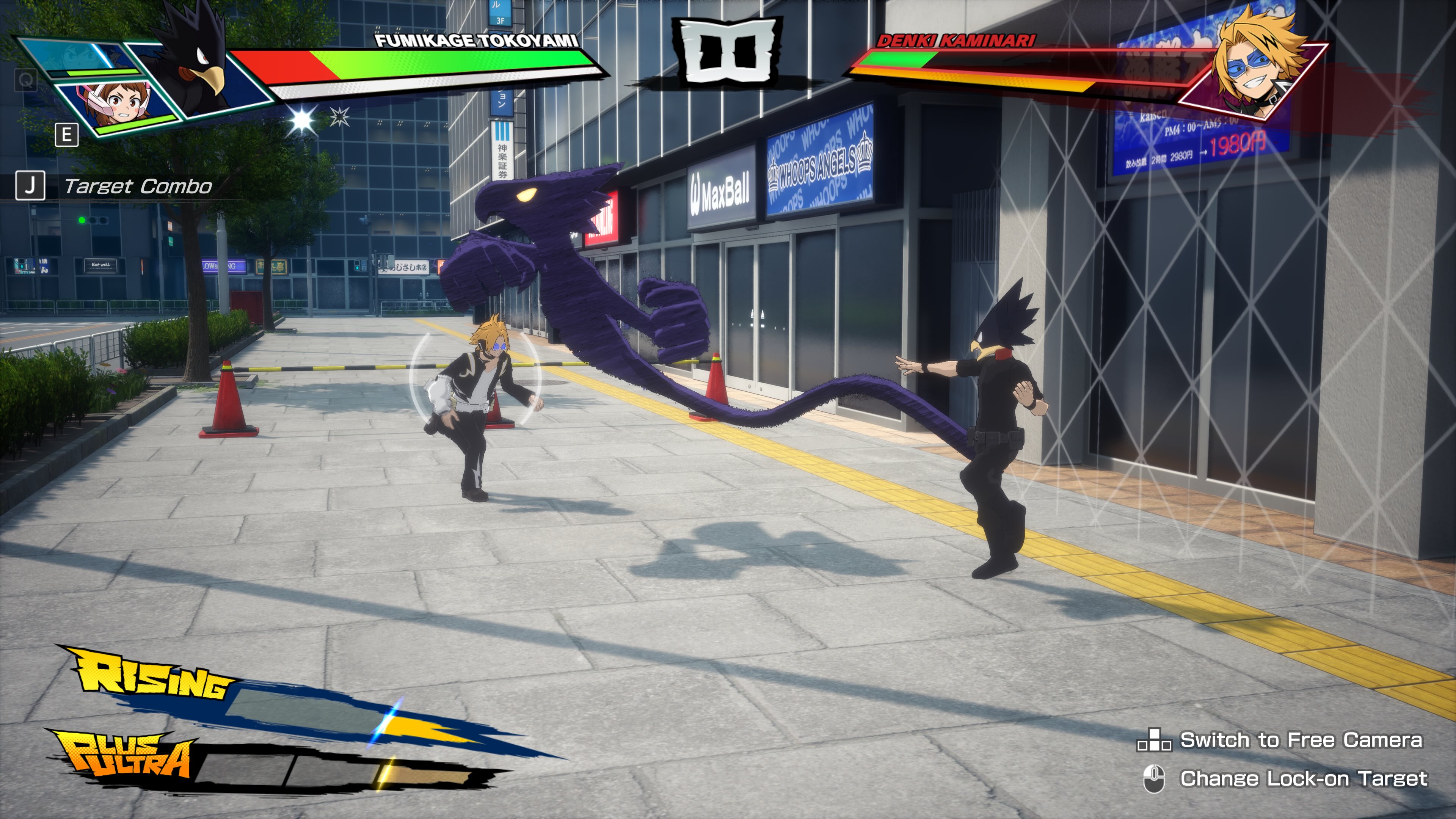
There’s a real sense here of bigger being better, with lots of content packed in, but not much of it feels entirely relevant, gripping or neatly woven into the main plot.
Team-Up Mission is a fun mode with neat story beats, and a nice layer of challenge to spice up battles. There are fun, light-hearted moments in Hero’s Diary that illuminate character growth. I enjoy that both of these modes give a chance for the students of UA High School to shine in ways they don’t often get, even in the manga and anime. In alternative scenarios, you get the chance to see more of their personality shine through.
Even lacking confirmed canonicity, there are bright spots of fun here. It’s just a shame these modes don’t better serve the primary story mode, which is a patchwork of good and bad.
Heavy-hitting story mode breezes past key moments
I mentioned the action of story mode is good – and it is. Battles are intuitive and heavy-hitting, with a combination of sleek controls and comic-like aesthetic touches (including visual onomatopoeia, colourful strikes and stylish power attacks) allowing for breathtaking sights.
There’s also a neat companion system that lets you seamlessly swap in your companions as you pull off high-powered moves, with each contributing their own unique battle attacks.
Outside of these flashy battles, story mode does leave you somewhat wanting, as the anime and manga’s biggest moments are dealt with in snappy cutscenes (using combinations of static images, animated images and in-engine scenes) that leave little room for emotions to play out.
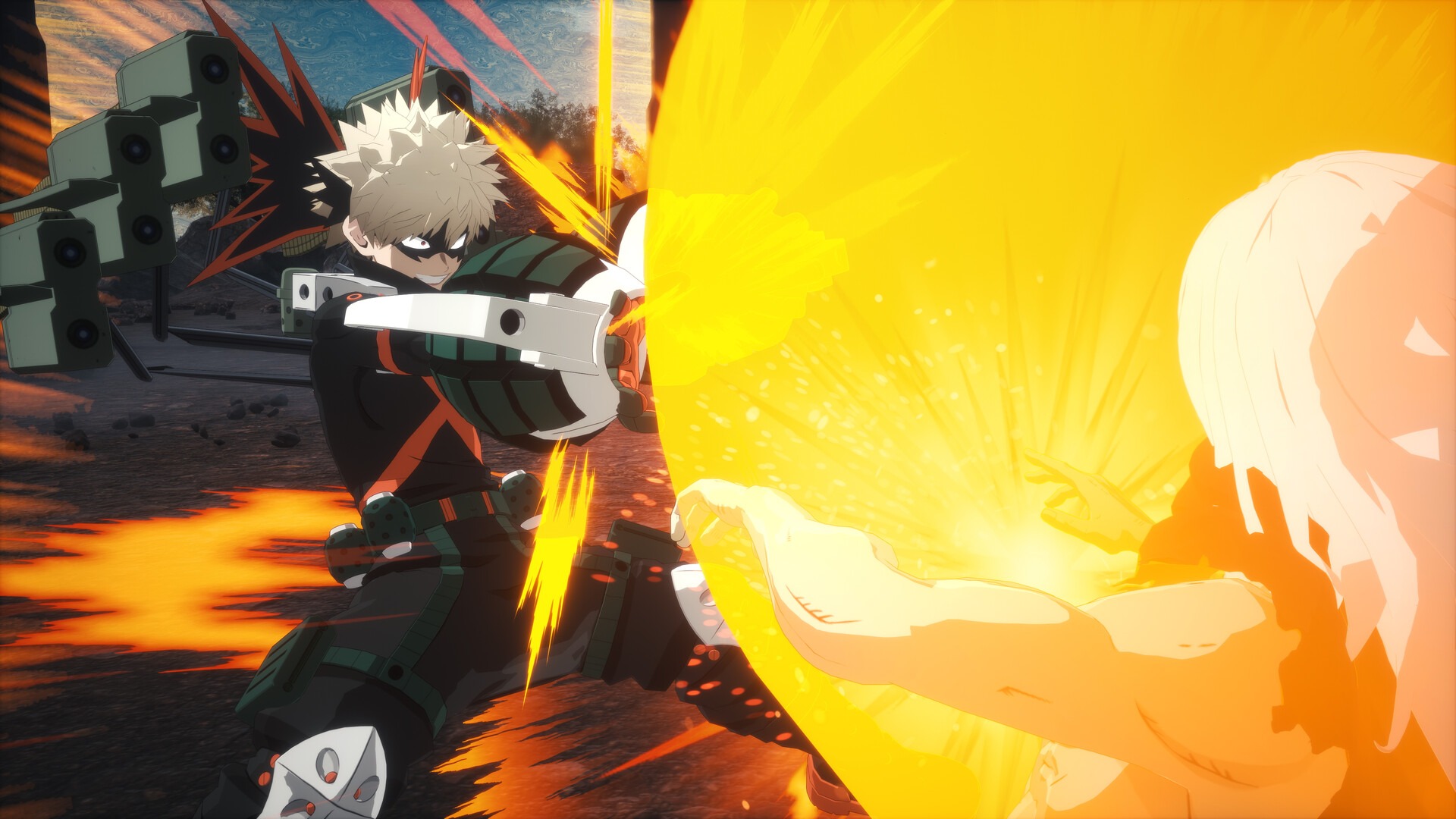
It’s not entirely the fault of developer Byking. The final arc of My Hero Academia is entirely snappy, with an escalating row of battles against Shigaraki and his team of villains. But where the anime and manga leave room to understand the toll on the heroes, with meaningful dialogue illuminating connections, emotions and frustrations, the clipped speed of this game’s adaptation means there’s little nuance between battles.
Read: Netflix is going ahead with live-action My Hero Academia adaptation
There are funny moments stuffed in, but they’re all breezed past as the action plows on, and players go from battle to battle in a rush of colour and sound.
Perhaps story mode’s biggest moments would land with more impact if there was greater integration of the game’s more emotive side quests – but as it stands, the game’s modes are siloed and hyper-focused.
The good, the bad, the triumphant
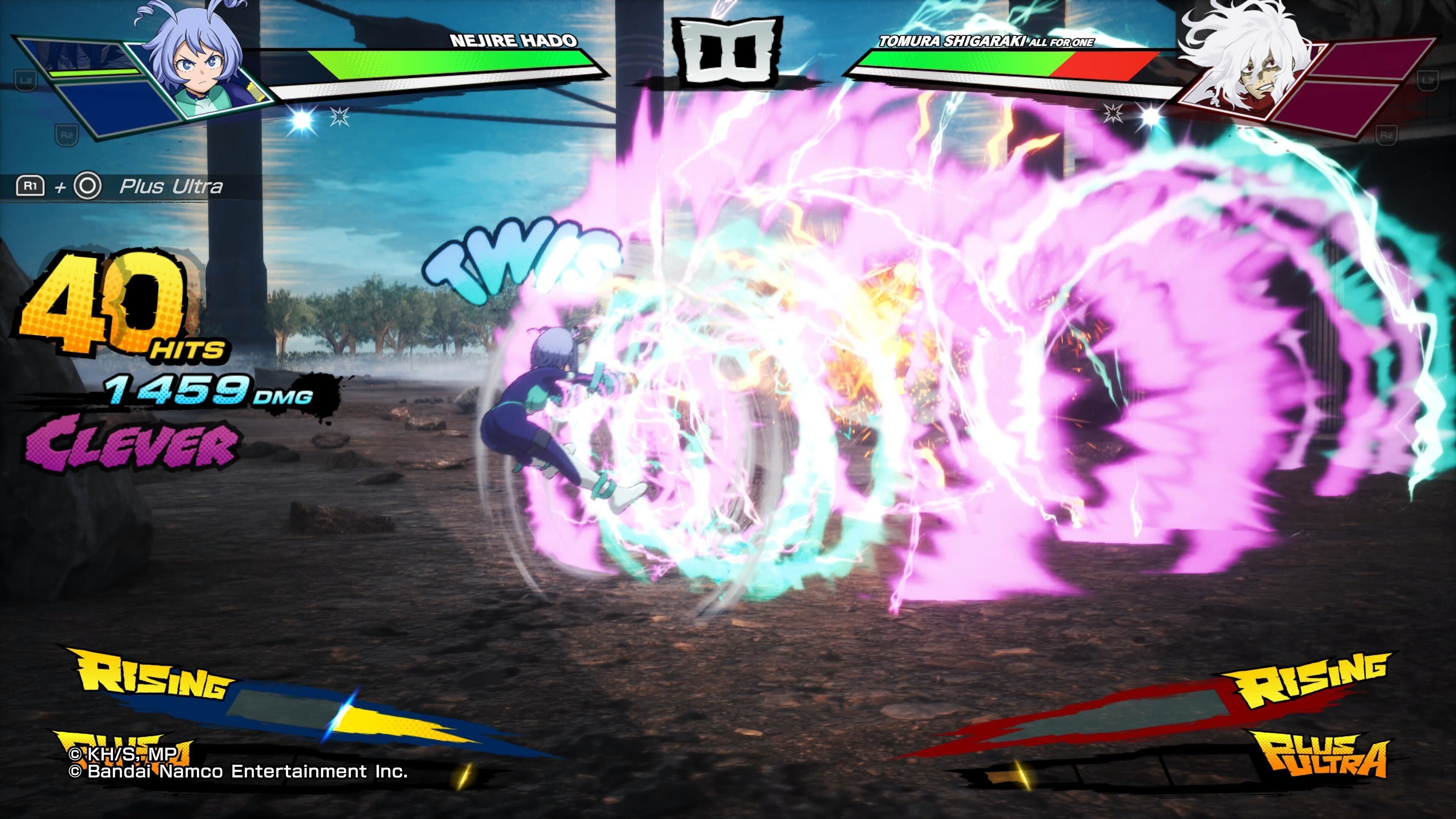
My Hero Academia: All’s Justice is a lopsided fighter with inherent flaws in its structure and delivery but even considering these, it’s more often a blast than a bore.
Thanks to its high-speed, frantic approach, there’s always something to do here, whether that’s making mincemeat of Shigaraki in battle after battle (perhaps too many battles, but that’s in line with the manga and anime) or spending time with your UA High School friends.
With its sense of flash and dazzle, All’s Justice frequently inspires euphoria as you flit from one battle to the next. The action is breathtaking, to the point where it often paves over the game’s lesser elements.
That will likely be more than enough for some players, but certainly not for everyone.
A PlayStation 5 code for My Hero Academia: All’s Justice was provided by the publisher for the purposes of this review.
Discover more screen, games & arts news and reviews on ScreenHub and ArtsHub. Sign up for our free ArtsHub and ScreenHub newsletters.
Developer
Byking
Publisher:
Bandai Namco Entertainment
Release Date:
05 February 2026