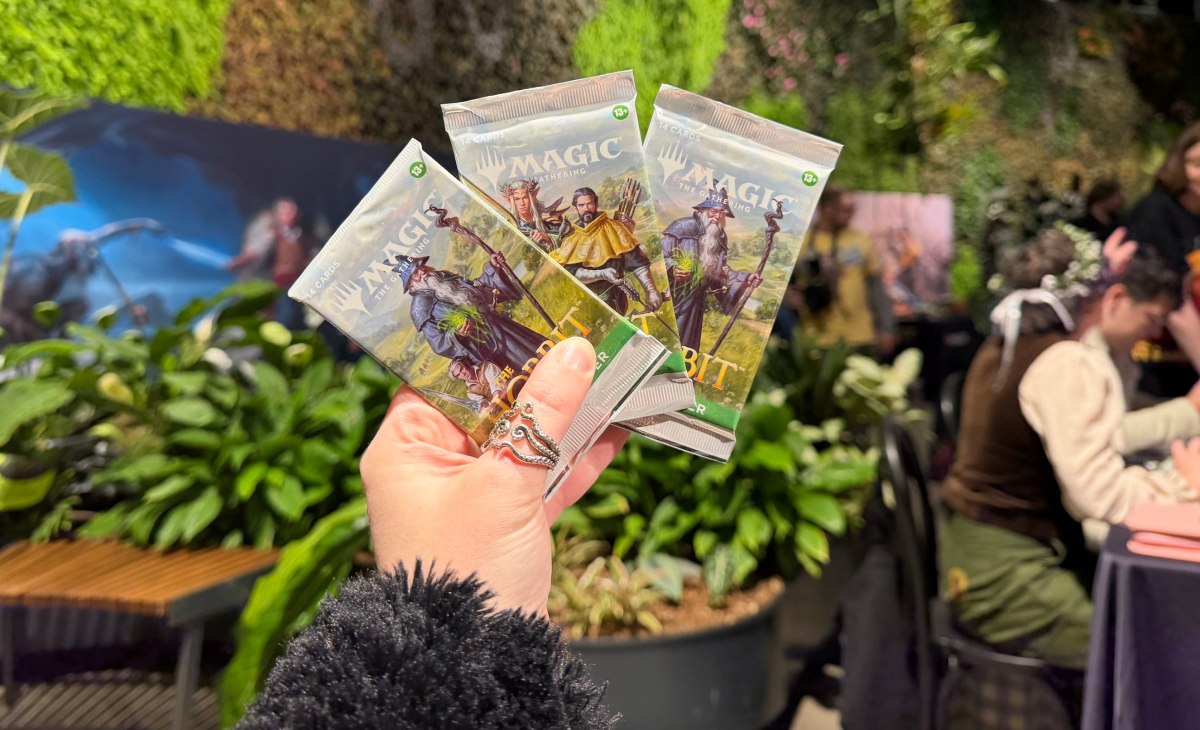
Magic: The Gathering heads back to JRR Tolkien’s Middle-earth in its latest Universes Beyond set, which adapts the beloved children’s story The Hobbit and its many wily characters.
With some influence from the Hobbit film trilogy – notably, in the appearance of characters like Thranduil – as well as deep cuts from the original novel, this set is a worthy adaptation for Tolkien fans, with strong cards and plenty of synergy to make it feel powerful and essential in the world of MTG too.
MTG The Hobbit set review – quick links
A small but mighty new set
This is a smaller set overall, which is surprising on the surface. Its direct predecessor, MTG Lord of the Rings, was a major set complete with pre-constructed Commander Decks and a higher card count. But there are clever choices here that justify this smaller size, particularly in the set’s focus on faction-based warfare, as well as integration with the Lord of the Rings set.
The cards here all adapt the events of The Hobbit, from the first steps of protagonist Bilbo Baggins out of The Shire, through his meetings with dwarves, goblins and elves, all the way to the iconic Battle of the Five Armies.
The more poetic parts of the book are adapted into Sagas – cards that have multi-part actions inspired by the plot of the novel – and most other cards are focused on harder-hitting action, with very little ‘filler’ in terms of the set narrative (beyond a few cute, flavourful cards like the Long-bodied Grey Dog).
Inspired directly by the Battle of the Five Armies, there is a strong split between all of the cards included here, with most belonging to a recognisable faction that can be built around in draft formats: elves, humans, goblins and dwarves. There’s also a scattering of bears, trolls, wargs, wizards and other creatures, including the titular Hobbit, Bilbo.
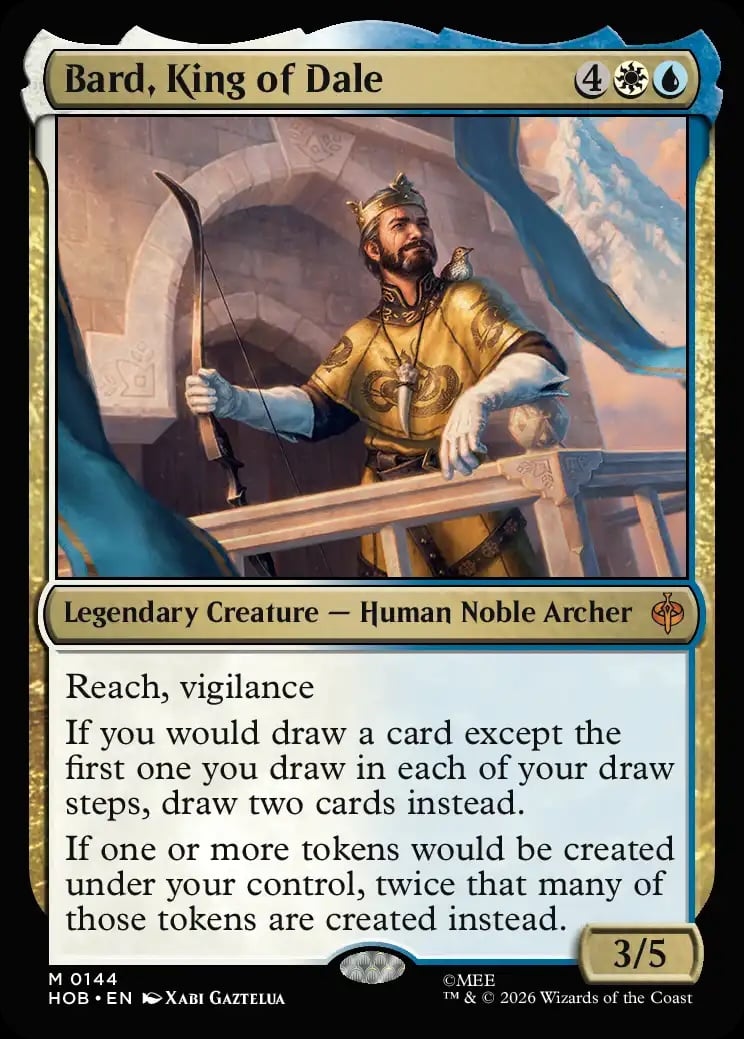
Belonging to a particular faction means great synergy, with draft archetypes easily and quickly understood. White-blue decks are typically human, although they do have synergy with some powerful elves. In the events of The Hobbit, these factions do form a temporary alliance, which is great flavour for the set.
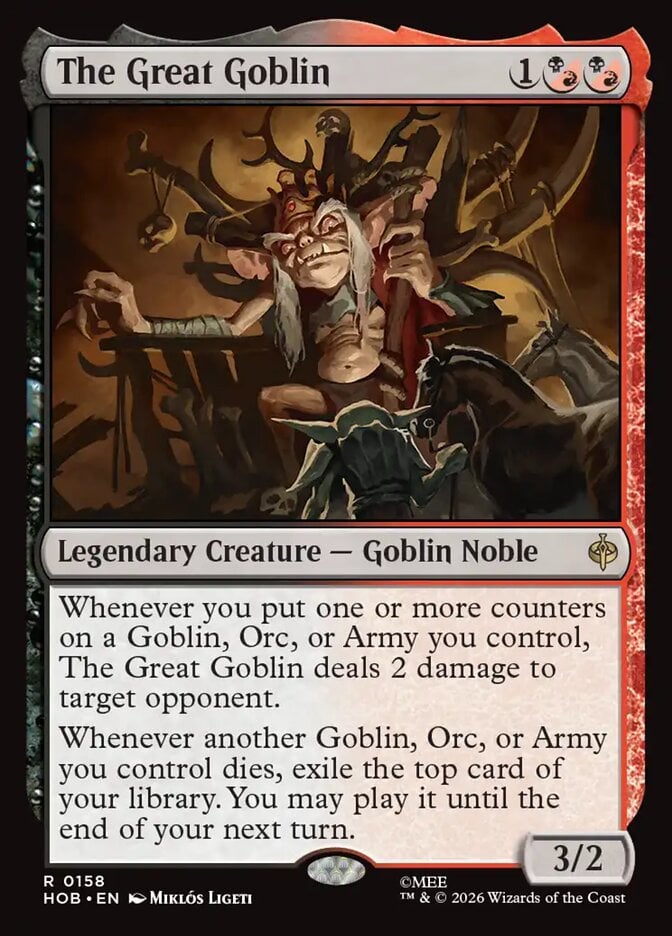
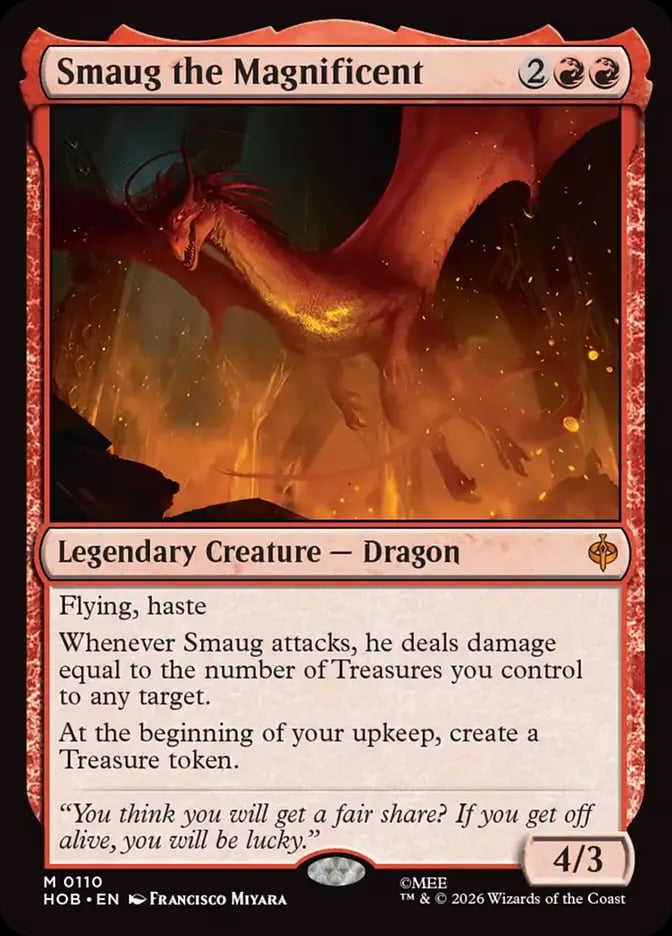
Black-red decks usually involve goblins, orcs or Smaug the dragon, all of which are darker enemies with attacks including fire blasts and other black magic. Smaug is a bit of an add-on to this particular faction, but makes for a very powerful opponent if he’s able to be played in draft (as in, if players are able to ramp enough to play him with great impact).
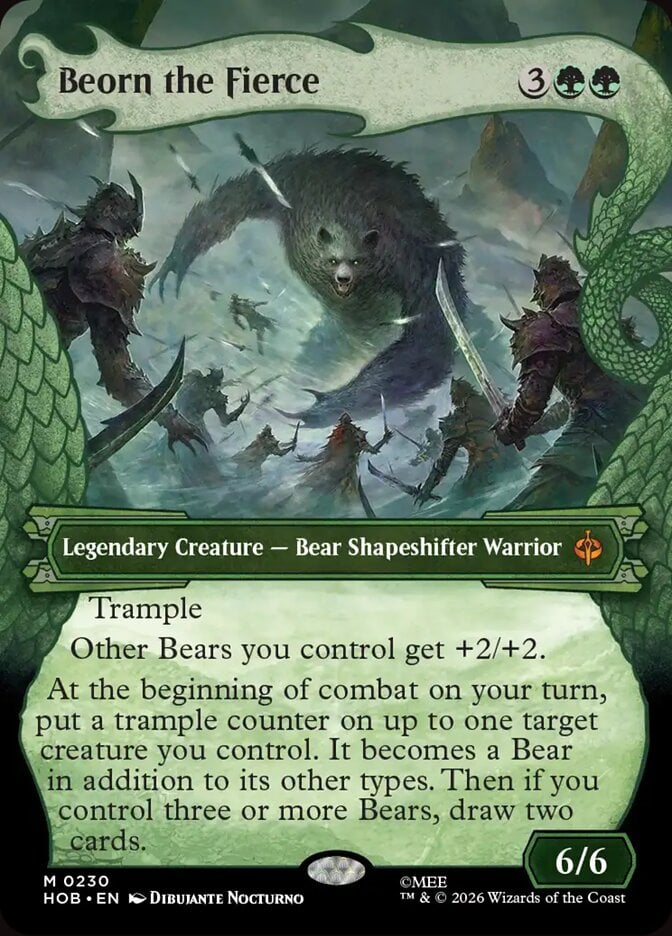
Black-green decks, funnily known as the ‘Mirkwood Furries’, include a scattered array of bears, spiders and beasties – include shapeshifter Beorn – defined by their raw power and swiping claws.
The two most fun archetypes, in my personal experience, are the red-white dwarves and the blue-green elves.
The red-white dwarves are absolutely stacked in MTG The Hobbit, which makes sense, given they’re the primary characters of the adventure alongside Bilbo and Gandalf. In packs, you’ll find Thorin, Balin, Dwalin, Fili, Kili, Óin, Glóin, Dori, Nori, Ori, Bifur, Bofur and Bombur, all on their own cards and with their own set abilities, based on their place in the story.
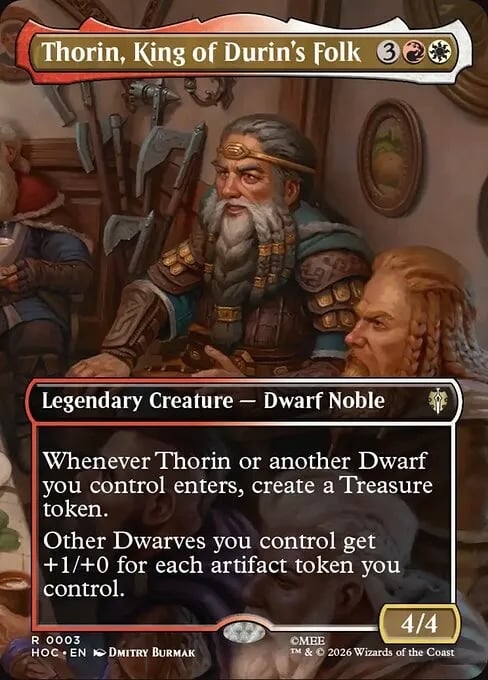
Thorin, naturally, is the most powerful among the dwarves, with cards that let him attach any number of target Equipment cards to any creature you control when he enters (essentially allowing you to build a powerful army on entrance), as well as create treasure tokens.
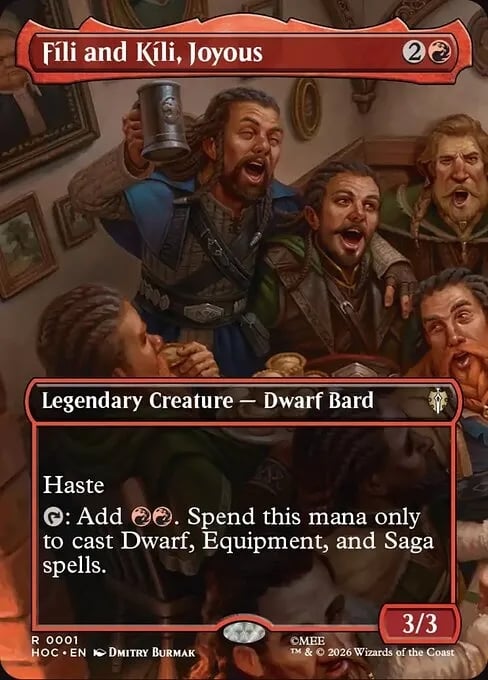
Other dwarves are also worthy of building around – Ori can destroy enchantments, Fili and Kili (together) allow you to add two additional red mana per dwarf, equipment or saga, and Bofur has a lifelink card with options for making artifacts or creatures indestructible.
No matter which dwarf you draft, it’s likely you’ll gain a strong synergy with others, as most of them will buff their fellow dwarves or equipment cards.
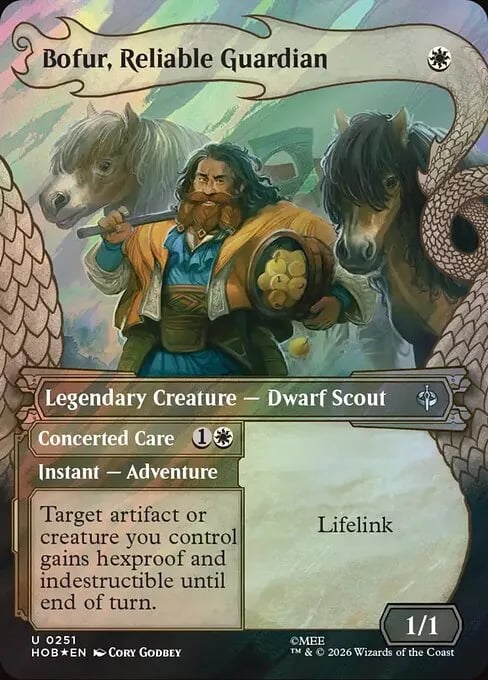
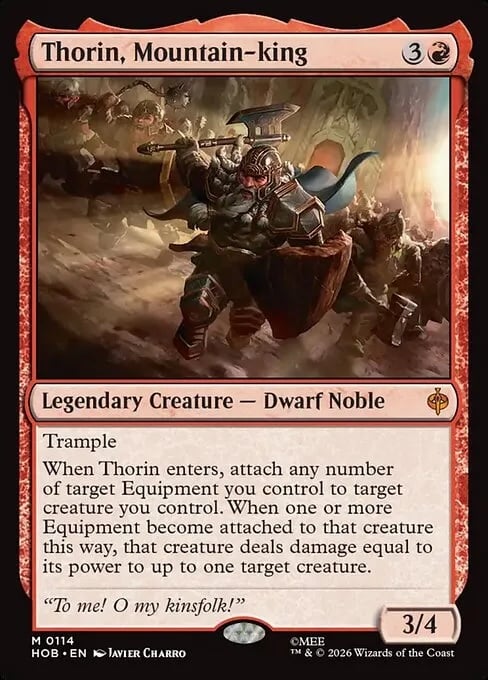
The overarching goal here is play as many dwarves as possible to have them bounce off each other and work in some powerful Equipment cards to have them armed and dangerous ASAP. With dwarves being relatively low-cost in general and many having multiple abilities, there’s a neat synergy here.
For me personally, what I love most in MTG The Hobbit so far is actually the Elf faction and how it works in practice. Whether I’ve been lucky in draft or it’s really the case, there always seems to be ample elves in Booster Packs, and if you can pick the right ones you’ll have an incredibly powerful force to contend with.
Elves are the MVP of MTG The Hobbit
There are a bunch of mid-cost elves with powerful synergy in this particular set, particularly ones with landfall (you get a benefit when land enters) and other abilities that buff fellow elves, allowing the creation of 1/1 elves to absorb killing blows and ramp lands played per turn.
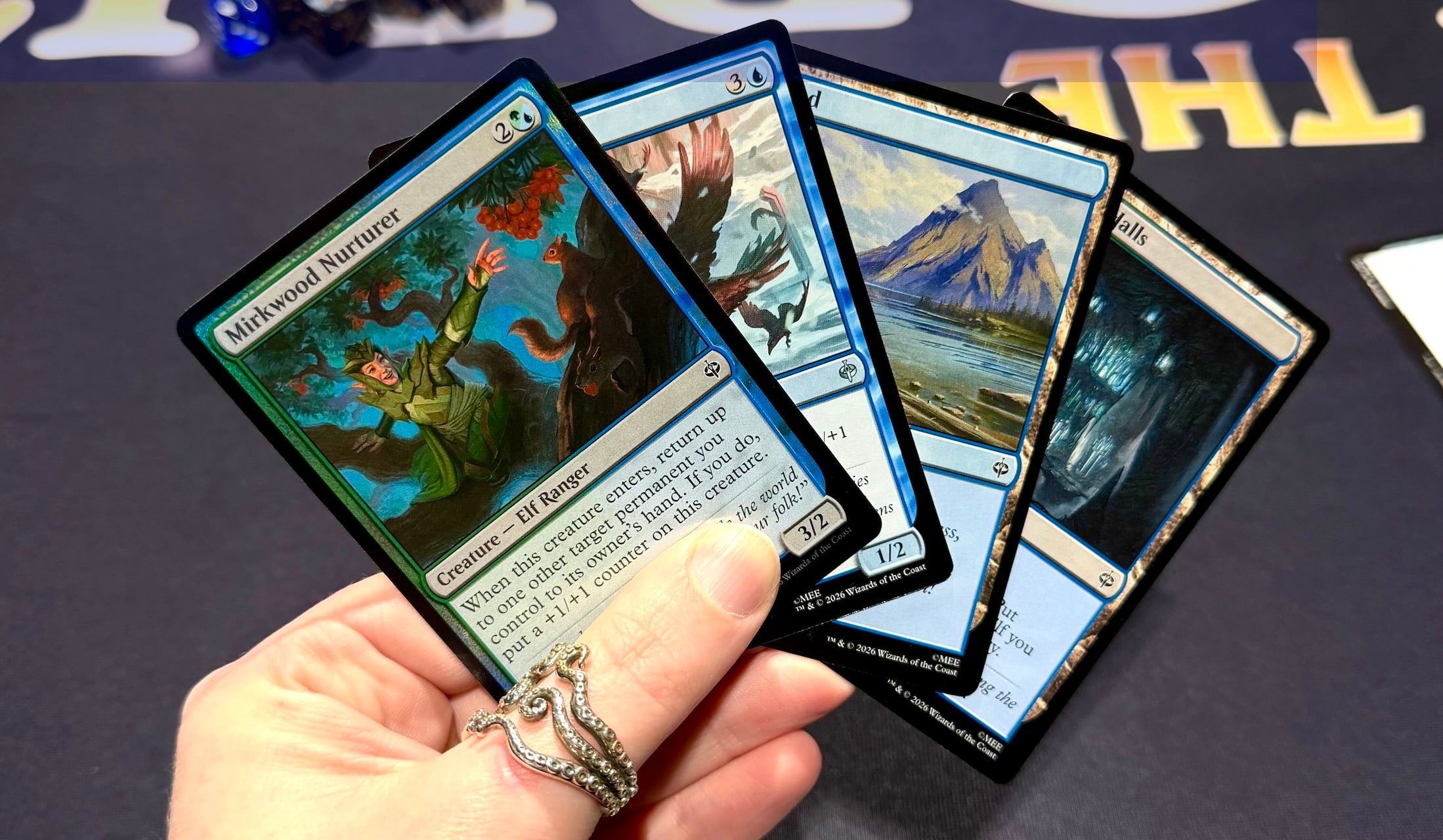
Thranduil, Sindarin Liege can be an essential part of draft if you’re lucky. He’s a three-cost Elf which allows you to either mill four cards to ensure you have land drops, or can (and should) be played as a creature that gives all other elves +1/+1, and whenever a land you control enters while he’s on the battlefield, you can create a 1/1 elf.
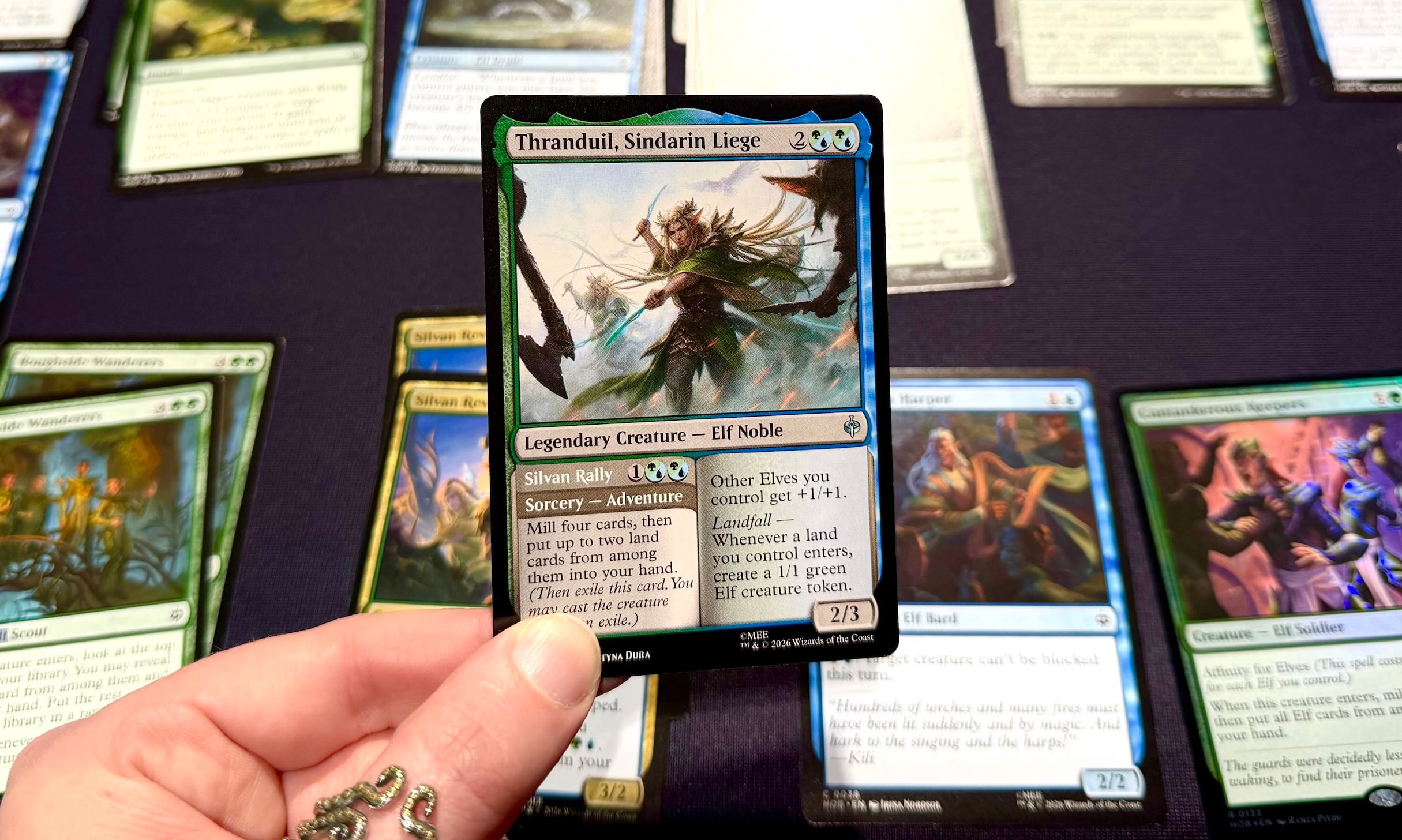
In multiple rounds, Thranduil proved very handy for buffing my elves, and for ensuring additional cannon fodder when opponents full sent their creatures at me.
There’s also a lovely range of cards that allow you to bounce around elves and lands to make the best use of abilities that speak to any ‘enter’ mechanics. Play Thranduil prior to your land for turn, and you’ll make use of his elf generation. Mirkwood Nurturer allows you to return other target permanents to your hand to use these bounce effects, and it gains a +1/+1 counter in the bargain.
Woodland Weavemaster also benefits from these moves as any time an Elf enters it gets +1/+1 until the end of turn, as does Mirkwood Meditator, which becomes a 4/2 whenever a land you control enters.
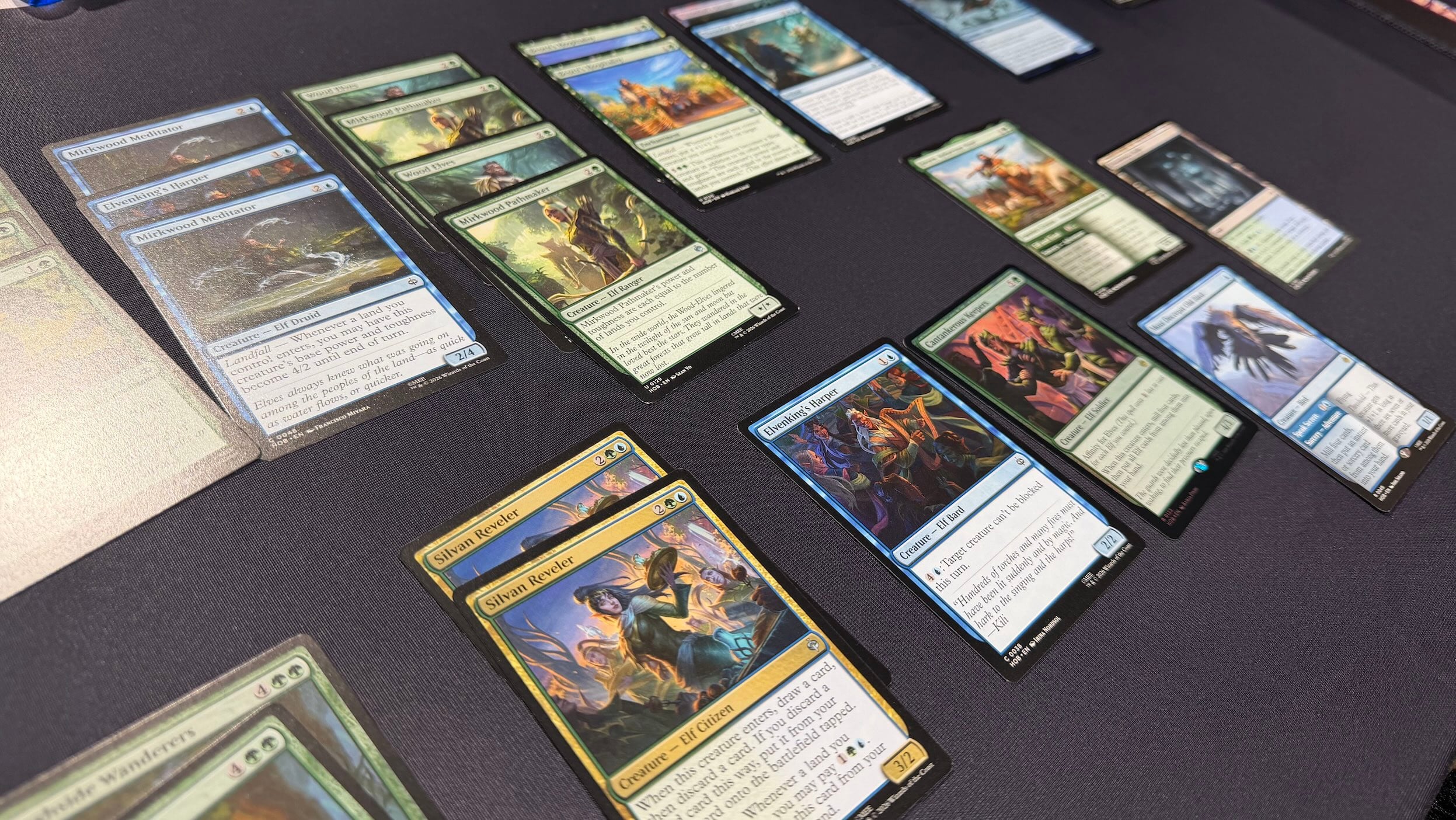
There is deep strategy needed to make these moves all work together, but with a strong sense of identity in each card and easily recognisable mechanics, it does feel like this particular set is geared towards drafters of all levels and experiences. You don’t need to be a high-level player to recognise that landfall is a solid mechanic, and that anything buffing elves should probably go in your deck.
During a pre-release event for MTG The Hobbit, I played pick-two draft, and that specific format feels fantastic for this set because being able to pick two cards rather than one lets you build around a key faction early and figure out what sort of mechanics you’ll be working with.
A strong, thematic set ties well into the world of MTG
This is a smaller set, featuring contained battles inspired by the events of The Hobbit, though there’s some solid synergy within it, even despite its smaller-than-usual array of cards. It’s also worth noting that this smaller size isn’t really a bugbear when integrating MTG The Hobbit across other MTG decks.
It’s specifically good for any decks featuring the highlighted character types, particularly elves and dwarves, which also feature in other MTG sets as more generic fantasy factions. More landfall cards are always good, as are new elves that can buff their companions.
I can see Thranduil fitting neatly into any other Simic Combine (green-blue) decks, and many of the dwarves would work well alongside their traditional fantasy counterparts.
Where MTG The Hobbit feels like it’ll work even better is in buffing existing MTG Lord of the Rings decks. All of the pre-constructed decks (Sauron, Éowyn, Frodo and Sam, and Galadariel) can be buffed by adding in cards from The Hobbit – both new cards and reprints.
You can add Bilbo into the Frodo and Sam deck for some flavour and fun. Sauron has some helpful new goblins to recruit alongside his orcs. Galadriel has plenty of ethereal new elves to recruit for her cause. Éowyn, meanwhile, has some powerful and sturdy new humans to rally.
When you’re not collecting for new synergy, MTG The Hobbit is good in other senses as well. This is a beautiful set, with an array of fresh and stylish treatments to collect. I’m particularly enamoured by the book cover treatment, which pays homage to the origins of The Hobbit, and there’s also lovely Dwarvish language treatment cards which are very pretty.
In this mix of cards, MTG The Hobbit arrives as a very thoughtful, beautifully-created and charming set. While it appears to be best used as a companion to other MTG sets thanks to its smaller size, it’s also sharply designed to stand alone in its own right, with plenty of potential in drafting and competitive formats.
We expect MTG The Hobbit will have a significant impact on games of Magic in the long-term, with its cards and strong storytelling enabling it to fit seamlessly with the flow of traditional MTG, while having its own identity and synergy.
Magic: The Gathering Booster Packs and Collector Booster Packs were provided by Wizards of the Coast for the purposes of this review.