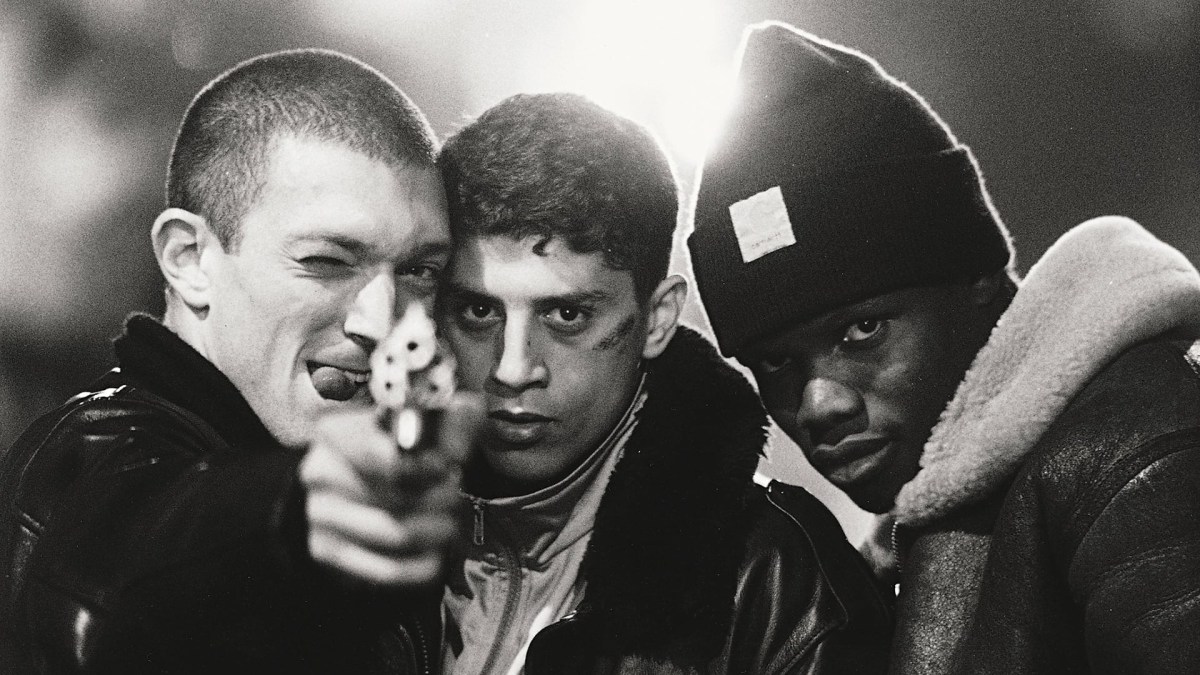
Mathieu Kassovitz’s La Haine, starring Vincent Cassel, Hubert Koundé and Saïd Taghmaoui, recently re-screened in Australia as part of Vivid Sydney’s program of films elevated by music. This particular version was re-dubbed with a live soundtrack performance by the Asian Dub Foundation, with its score rising to prominence, often over dialogue.
While this was considered the draw for the screening, for me as a first-time viewer, it wasn’t the most striking aspect. Rather, what entranced me most about La Haine was how, more than 30 years later, it maintains such a breathtaking relevance.
It shouldn’t have, and it’s to the detriment of our global social progression, but it means La Haine feels like a timeless film, and one that should be essential watching for anyone interested in learning more about the state of the world, and the tension that exists on its fringes.
La Haine’s ongoing relevance – quick links
The sharp style and pop culture influences in La Haine
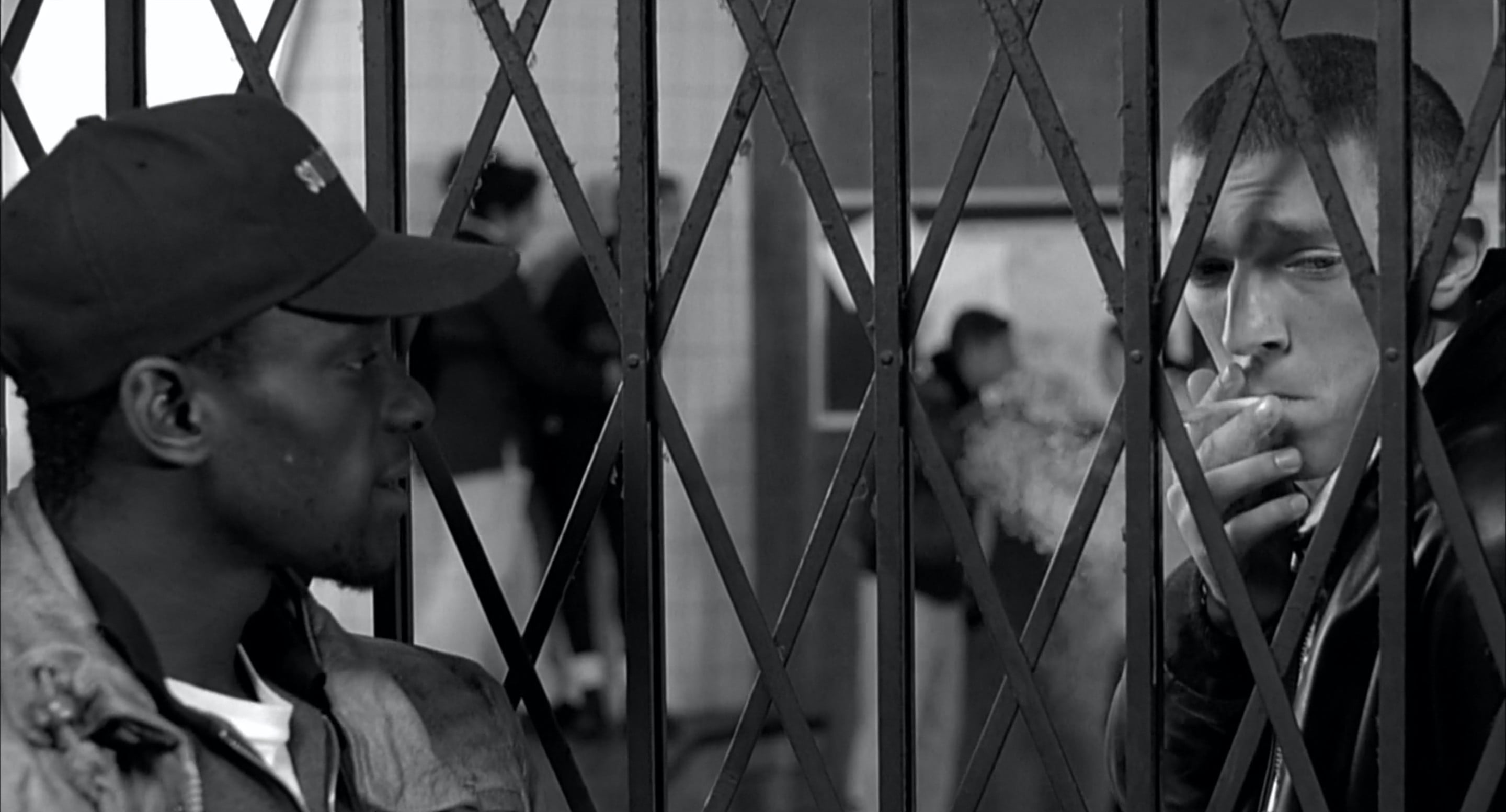
La Haine opens scenes of street violence in the French suburbs. A riot has taken place in protest of the mistreatment of a man named Abdel, seriously injured and in intensive care after being taken into police custody. In the chaos, one police officer loses his revolver – and this gun becomes a core fascination for its new owner, a young and disenfranchised man named Vinz (Vincent Cassel), who was friends with Abdel.
The film explores the multi-layered aspects of Vinz’s life, and his journey towards radicalisation against the police, with a fairly measured lens. He’s presented as a product of circumstances – a young, pop culture-loving man who idolises the idea of masculinity and longs for escape from his suburban bounds.
He spends days wandering his broken suburb with his friends Hubert (Hubert Koundé) and Saïd (Saïd Taghmaoui), while all three reckon with their place in the world and their future. Hubert verbalises a desire to leave behind poverty and crime, and to succeed as a boxer on a global stage. Saïd is more placid, often functioning as the glue that keeps the group together, attempting to pave over grievances while trying push down Vinz’s growing radicalism and Hubert’s advancing protests.
The missing gun becomes the catalyst for their splintering, as Vinz begins to see it as a ticket to his own freedom and success, wielded as a tool to keep his rivals in line and to carve out a place ‘on top’.
Kassovitz’s camera work excellently portrays the struggles of all three boys – and they are boys, despite their aspirations to be men. In close-up scenes, Vinz attempts to emulate the machismo of the era, gurning and threatening his own reflection with his hands formed in the shape of a gun. With these close-ups, you can see the uncertainty and posturing, and how it covers up for a lack of real confidence and conviction.
La Haine is marked by clever, artful choices on all levels, from its character-spotlighting camera work to its frenetic, dance-like chase sequences. The use of music, as highlighted during Vivid Sydney, is also phenomenal.
This is a film that follows three young boys influenced by pop culture at the time – Vinz is notably introduced in a Spider-Man shirt, reflecting a love for American media, and his mirror posturing calls to mind the edgy antics of the violent anti-heroes of 1980s and 1990s cinema.
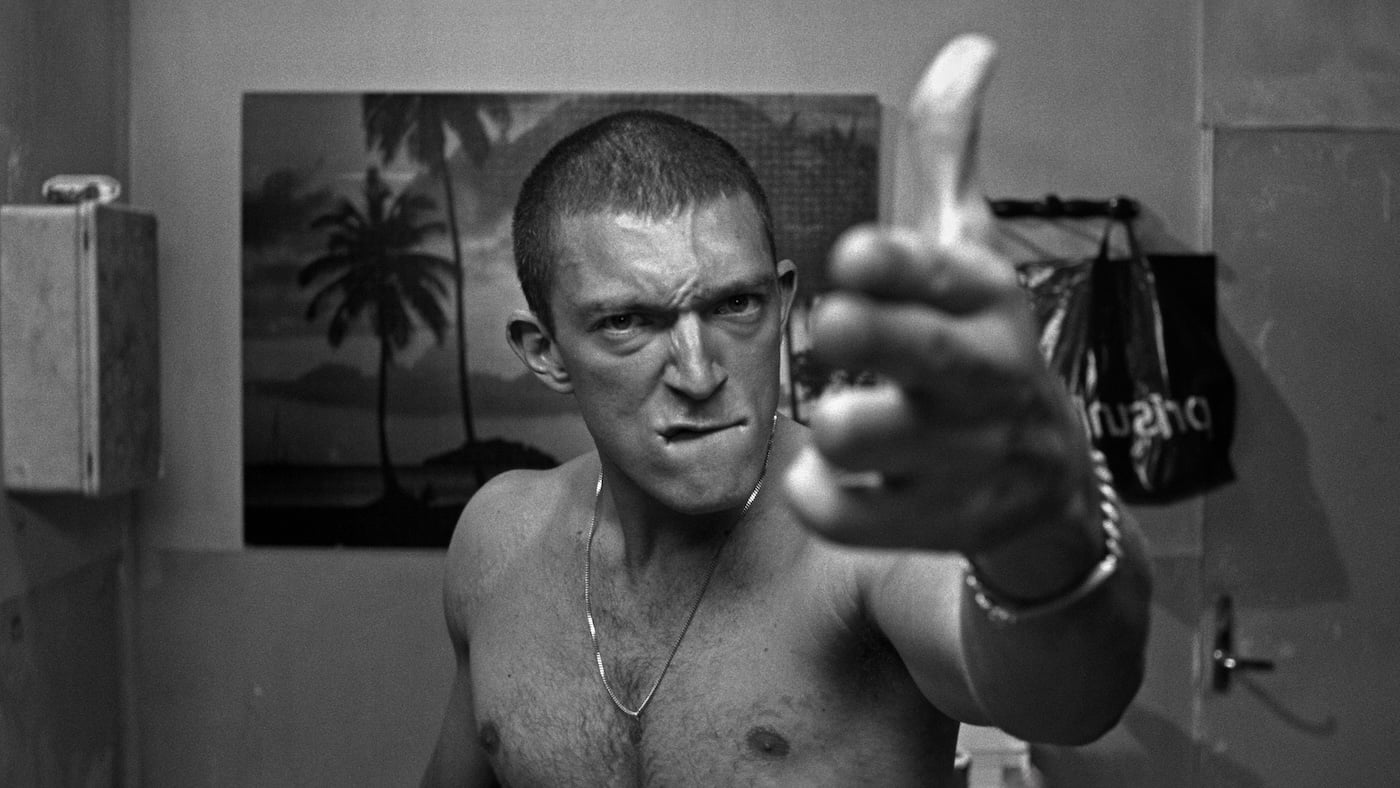
The soundtrack reflects the moods and interests of Vinz and his crew well, with many moments of their adventures scored with sharp, pounding hip-hop beats to get the heart racing. This dynamic, fast-moving score mirrors the evolution of Vinz’s frustration, anger and hatred. It gives insight that’s otherwise hard to glean with the character’s constant aggression and moody strike-outs.
It reveals a more relatable heart to Vinz, even as the events of La Haine begin to devolve into high chaos, and the missing gun leads Vinz, Hubert and Saïd down darker paths that even their posturing can’t save them from.
Ideas of masculinity
The events of La Haine and their continued relevance are distilled in a played-for-laughs scene where Vinz, Hubert and Saïd meet an overly-friendly man in a public restroom.
He tells them a story about another man who leaves a moving train to relieve himself in the frozen winter. He’s caught out when the train starts moving again, and ends up being left behind as his pants keep falling down, and has has to keep stopping to pick them back up.
He eventually dies frozen in the landscape, lost and alone.
The film makes a point to say Vinz, Hubert and Saïd don’t understand the message – that perhaps they’re too young or inexperienced to know what it means, or why the story was told.
There are, of course, many ways to interpret it. That’s the beauty of rich cinema like this. But the simplest is that the man was not willing to make a small sacrifice to save his own life – that sometimes, a practical choice must be made, or something must be shed, to survive.
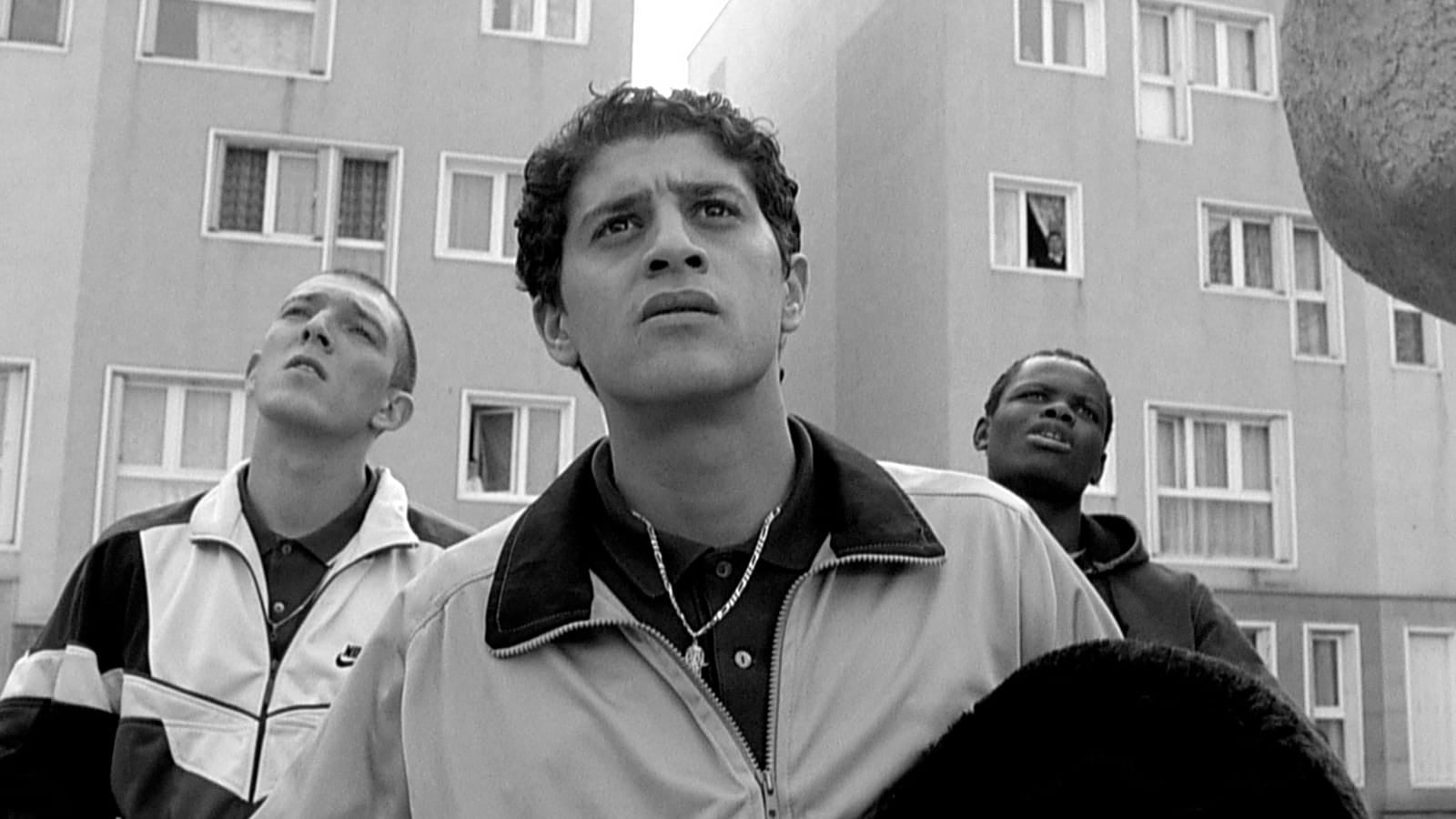
These are not compromises the boys of La Haine are willing to make. They live in a harsh world, and believe their only way to survive is to save face. They must preen and posture, and pretend to be something they’re not, to stay hard and weathered against the world’s forces.
It’s a message that remains relevant even 30 years on, particularly in the rise of predatory masculinity movements, from looksmaxxing that demands real men look a certain way, with a certain body, through to the manosphere and its narrow view of how men should behave in modern society.
La Haine is revelatory in that it highlights how these pressures have existed in different forms at different times.
The cycle of violence
In its layered depiction of these pressures, La Haine also draws a link between performative masculinity and a cycle of enduring street violence. The film is named for the central concept that defines the action: ‘La haine attire la haine.’ In English: hatred breeds hatred.
The riots that start the film begin over outrage of the treatment of Abdel, with the rage and frustration of his young male friends boiling over into physical aggression and violence. It’s the final straw in the tension between the youth of the film and the police and gentry class that demonise them – a reaction to being perceivably trapped in their stereotypes, and mistreated by assumptions.
They are acting as they are assumed to, fulfilling a role that’s left to them. And so, they perpetuate a cycle. Young, directionless men are called vagrants and criminals, and so a fear of them grows. Given these expectations, many will conform to this box, perpetuating ideas rather than defying them.
If someone tells you what you are, it’s easier to become that thing than it is to break out of the box.
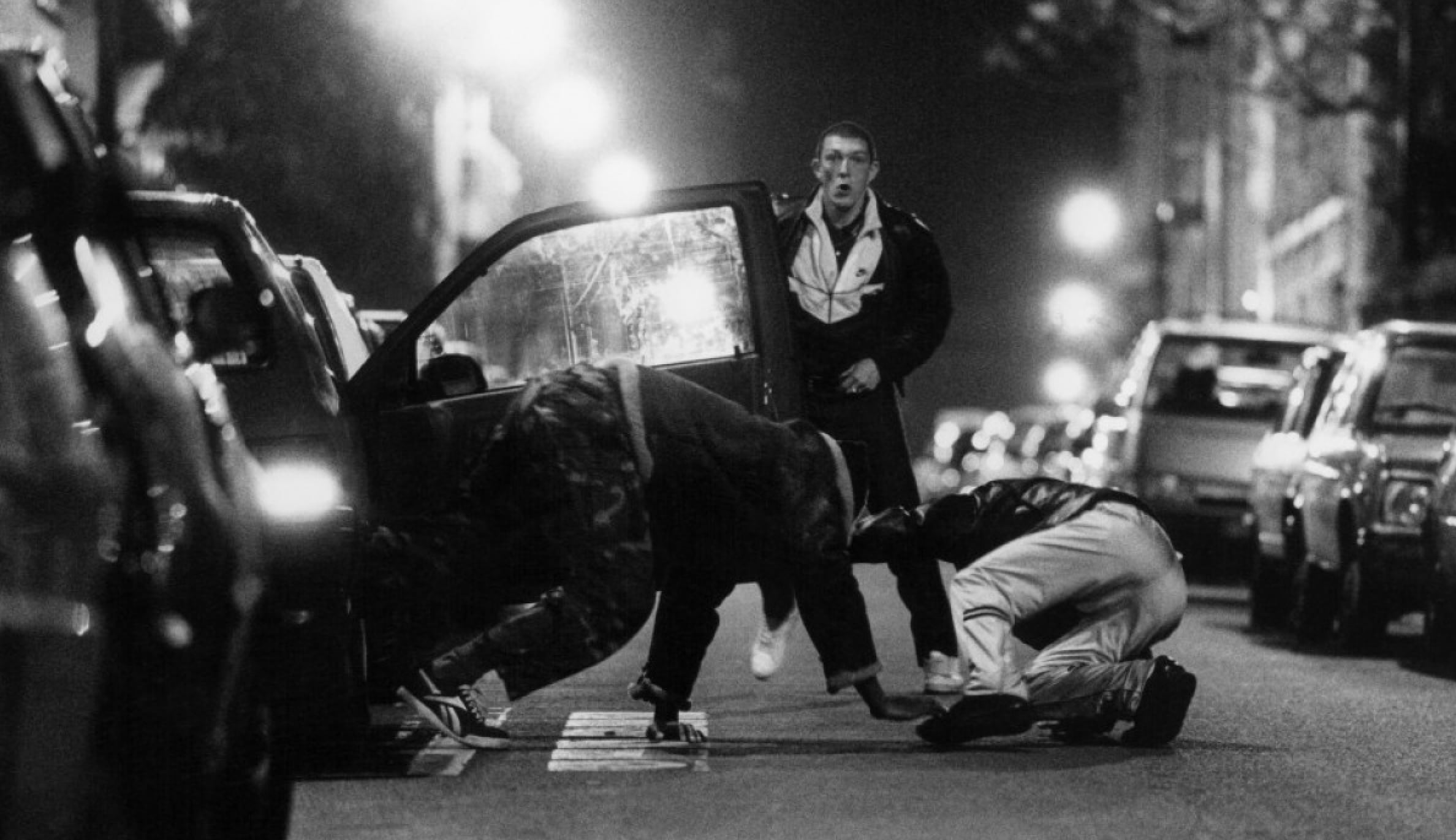
It’s a story we see in the news again and again. The same cycle of violence often hits the headlines in the US but we also see it in news reports about e-bike use by young kids, and in stories about the harms of social media.
La Haine is about lashing out beyond these expectations and trying to find a place in the world, while being trapped by the labels that haunt you. It’s a tragedy by its conclusion, but in the journey to its payoff, it presents such a nuanced depiction of the consequences of stereotyping, and how violence only creates more, and worse, violence.
In late 1995, the then Prime Minister of France Alain Juppé reportedly screened La Haine in a mandatory session for his cabinet, so they could better understand the realities of certain members of French society.
It was a prescient move, and one that can be easily understood. This is a film with a potent, character-driven story that explores issues that endure today – whether that be the toxic draw of performative masculinity, or the ways in which certain narratives breed hatred and contribute to a cycle of enduring violence.
Thirty years on, La Haine remains essential viewing for its rich insight.