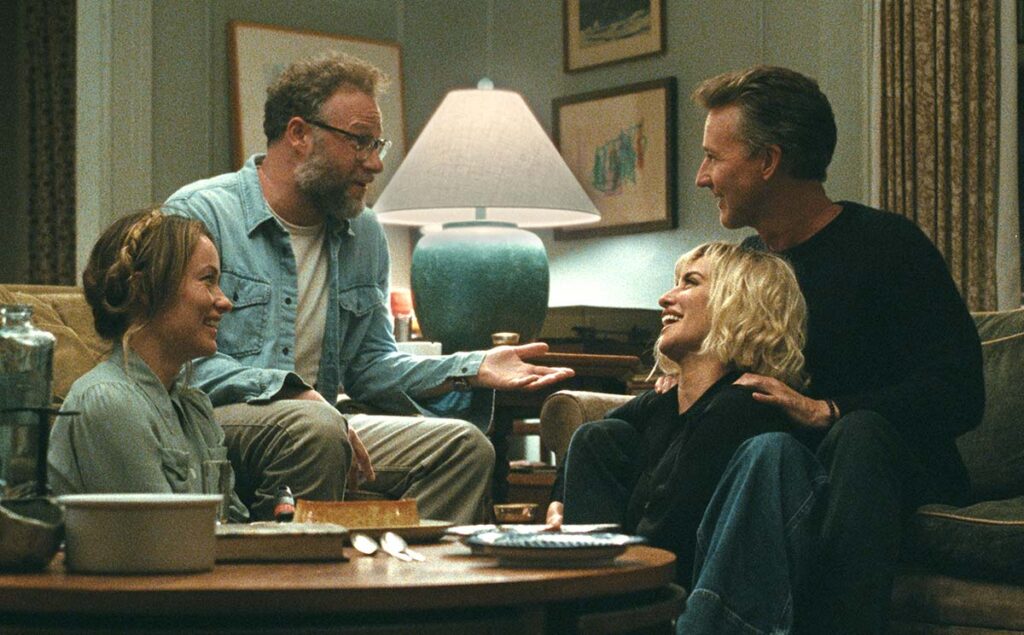
The Invite might be a US remake of a Spanish film adapted from a play, telling a tale that was also given the Italian, Swiss, French and South Korean big-screen treatment before Olivia Wilde took it on, but it’s the perfect new movie for right now.
Throw four people into a room – or a sprawling, newly renovated San Francisco apartment – together, then watch them explode. Throw just two of those people together beforehand, in fact, and the arguing still starts immediately.
Wilde’s astute and amusing dramedy knows that its viewers expect these conflicts – not just because they might’ve seen one of The Invite’s predecessors, or this film’s own trailer, and not only because friction is what sparks both comedy and drama alike, either.
Who hasn’t harboured grudges against their neighbours? Been snippy at a social engagement with casual acquaintances? Resented plans being unexpectedly thrust upon them by their significant other? Felt as if everything, from commuting to and from the job that they don’t love to having a simple conversation, can be a struggle?
In our polarised times, who doesn’t see battles and divisions everywhere around them, to the point that their absence, let alone an appeal for love not war, is a genuine surprise?
The Invite – quick links
Funny, tense, relatable
It’s artist-turned-homemaker Angela who has extended an invitation, on behalf of herself and her music-teacher husband Joe, to the couple upstairs. But bickering about the dinner party is just the first of the film’s squabbles.
Joe also has a bone to pick with their guests, ex-fireman Hawk (Edward Norton) and therapist Piña (Penélope Cruz), over the loud, early-hours lovemaking that frequently echoes down from above, however Angela is adamant the subject shouldn’t be broached.
As its quartet of characters navigate acrimony and awkwardness, as well as society’s accepted ideas about relationships, The Invite is laugh-out-loud funny – consistently so. Smart and sublimely cast, too, it’s the best comedy to reach cinemas so far this year. Hopefully it will remind Hollywood that the silver screen should be evoking chuckles far more often than it does in the streaming age.
After her delightful feature directorial debut Booksmart, and then the scandal-plagued but still engaging Don’t Worry Darling, Wilde again interrogates the moments in life – big and small – that can inspire awakenings and reassessments.
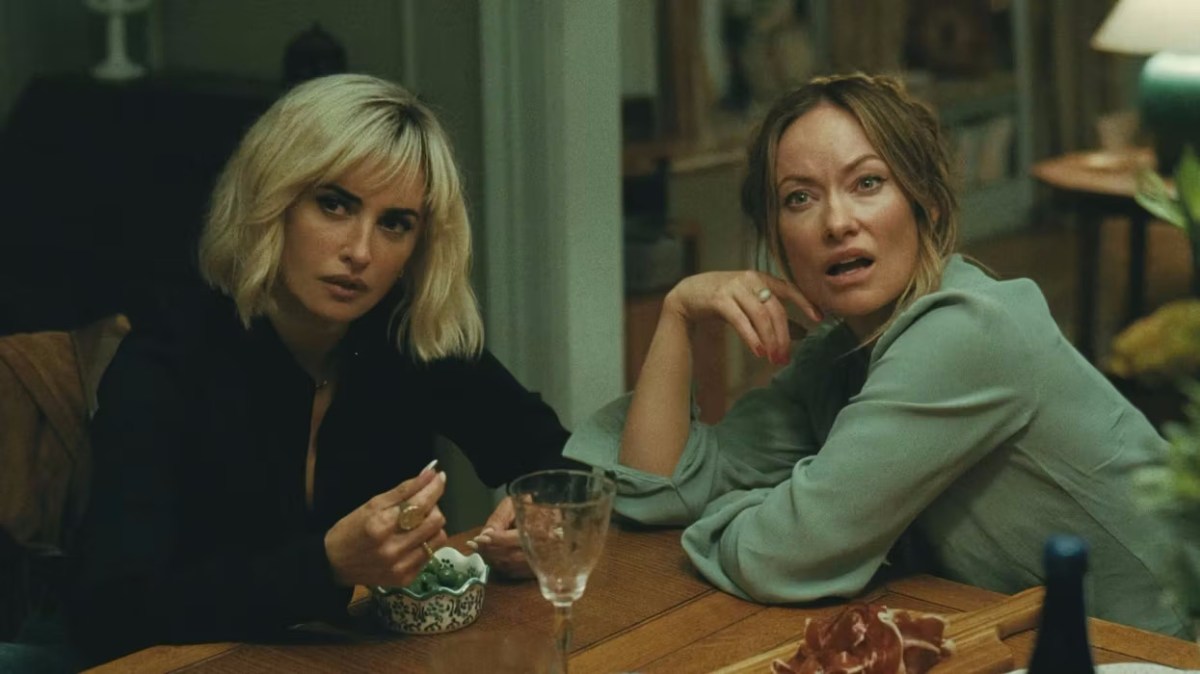
Mining those relatable experiences is proving to be actor-turned-filmmaker Wilde’s niche, in fact – delivered in The Invite with expertly calibrated tension that drips through from the movie’s earliest moments, even before Hawk and Piña even knock on Angela and Joe’s door.
A sign of fractured times
A movie can be hilarious, entertaining, highly strung and be like looking in a mirror all at once, clearly. The Invite depends on it. The stress-laden genre that is anxiety cinema, which it flirts with, downright thrives on it.
In the films of the Safdie brothers, not just recognising the pressure of daily life but revelling in it gives the likes of Good Time, Uncut Gems and Josh Safdie’s solo effort Marty Supreme their nervy edge. Mary Bronstein’s If I Had Legs I’d Kick You, which earned Rose Byrne her first Oscar nomination, tapped into the same sensation. So did the Zendaya and Robert Pattinson-starring wedding comedy The Drama.
As with The Invite, each of these features have sprung from A24, alongside the clash of Anne Hathaway and Michaela Coel in Mother Mary, Joaquin Phoenix and Pedro Pascal in Eddington, and Tim Robinson and Paul Rudd in Friendship, all in Australian cinemas over the past 18 months.
From its TV slate, Beef – which won almost every award that it could for its Steven Yeun and Ali Wong-led first season in 2023, then returned in 2026 with a killer cast of Oscar Isaac, Carey Mulligan, Charles Melton and Cailee Spaeny – is the company’s biggest hit.
Is the US indie powerhouse spearheading a feud-driven era? Or is it merely reflecting the state of off-screen life and letting audiences process the chaos of deeply polarised times in a safe space? The answer is straightforward, as any cursory awareness of the current political landscape and everyday reality, especially since Covid’s arrival, makes plain.
Spats and schisms everywhere
It might be obvious that a fractured world might push fallings-out further into the spotlight on-screen, beyond the archetypal good-versus-evil narratives and revenge stories, but there’s nothing simplistic about what this crop of quarrel-heavy movies and TV shows is digging into.
The Invite also grapples with the expectation that a marriage will fulfil every possible need. Like The Drama, it asks how we can face our loved ones’ flaws – though in The Drama, this is done in Kristoffer Borgli’s typically provocative fashion.
With Friendship and Mother Mary, close bonds are stretched to breaking point – one through a yearning to stem the loneliness of our era and the other through ambition, the same drive that has Marty Supreme’s ping pong-playing namesake virtually feuding with all of New York and then the world.
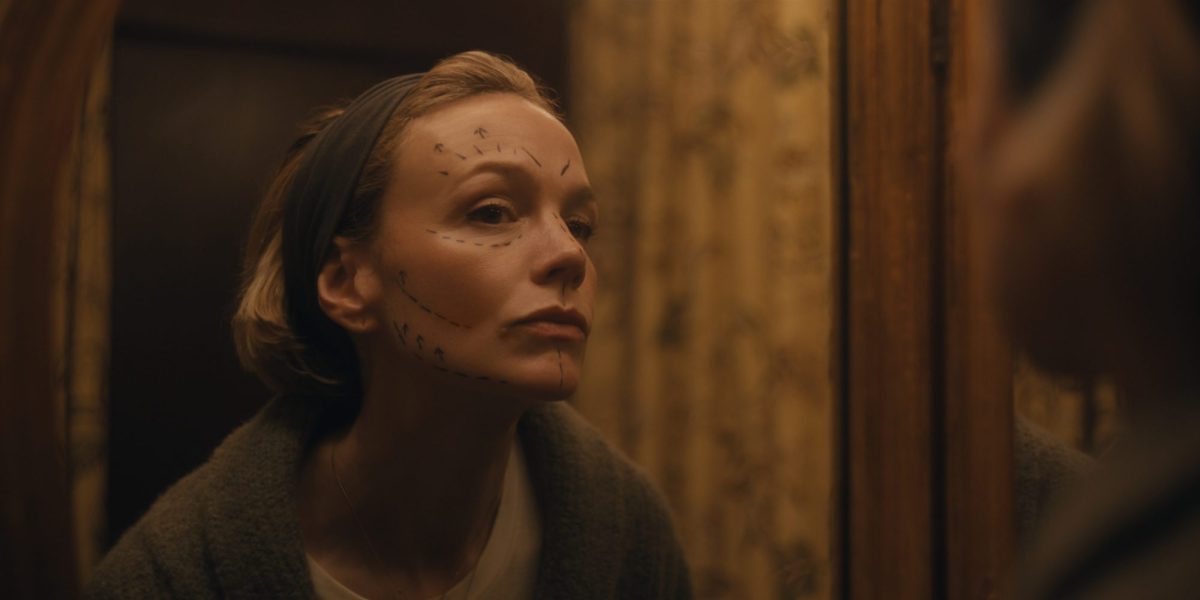
The second season of Beef also unpacks the inner workings of strained relationships, and sees how shattering it can feel when the connection that’s meant to nourish instead inflames.
Series creator Lee Sung Jin isn’t done tearing apart wealth disparities, though, as he did in the road rage-fuelled first season, or the powder-keg societal vibe that can turn any interaction into an altercation. Still, generational chasms are also in his focus this time around, as is bad blood between colleagues.
Ari Aster’s Eddington spies a fight on every corner almost literally across its small-town setting, while just as keenly noticing how propagating an environment of constant animosity can be used as a distraction – and pointing out who benefits and even profits when the bulk of the population is basically manipulated to be at each other’s throats.
The gift of catharsis and context
Just from one production company’s recent output alone, there’s a schism for everyone, whether about petty scraps or existential tussles, or how the former is always linked to the latter.
The fact that what we argue about, and why and how and with whom, says everything about us is the screen’s hottest theme of late.
To name just a few examples beyond A24, it’s there in Australian gem Birthright, with its parents-versus-children property battle, and in Power Ballad’s music bromance-turned-song theft plot. (Squabbling with ever-likeable Paul Rudd, as Nick Jonas does in the Irish comedy, is particularly watchable.)
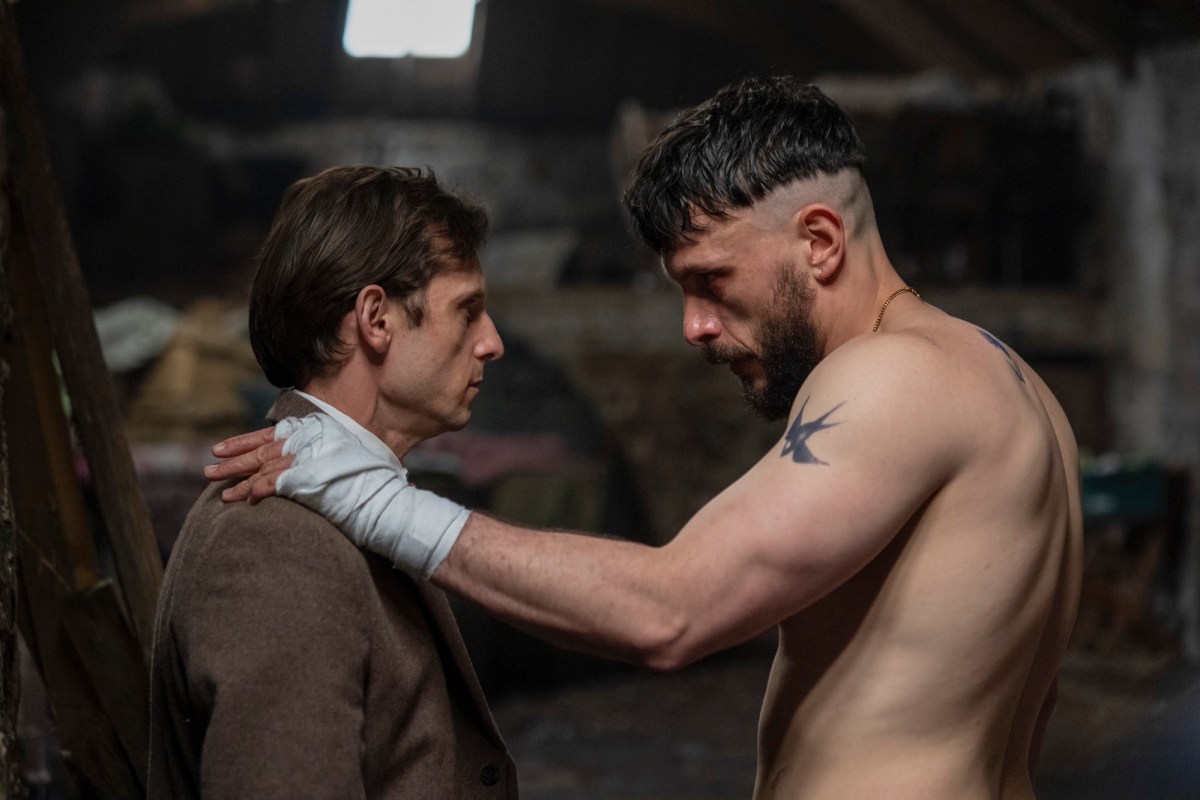
A trio of 2026’s standout new UK TV shows have dedicated their frames to antagonism, including Richard Gadd’s stunning Baby Reindeer follow-up Half Man, about estranged brothers; Manchester-set miniseries Tip Toe, where Russell T Davies has neighbours combusting; and Alice and Steve, which explores the rift between lifelong besties when one starts dating the other’s twentysomething daughter.
In the process, these series have torn into toxic masculinity, the death of community in post-Brexit Britain and the loss of collective norms.
While it’s impossible to divorce the present wave of hostility-driven screen stories from the embittered times they’re both being made in and responding to, this is hardly a new trend. Sam Neill’s passing gives reason to revisit and celebrate one of the all-time greats and most singular examples – because amid its madness and tentacles, 1981 horror masterpiece Possession is first and foremost about feuding spouses grappling with the end of a fraying marriage.
Why are we so drawn to these confrontational tales now, and in general? Again, the parallels with the off-screen mayhem of the world, and our lives, couldn’t be more pronounced at this very moment. The catharsis of sinking into cinema and replacing your own woes with someone else’s, and of seeing another person share similar stresses and struggles, should never be underestimated.
Perhaps The Invite’s director explains it best. ‘We need to laugh at ourselves, together, in order to keep going,’ Wilde said in a note on her film for A24. ‘The best comedies allow us to see how close pain is to pleasure, how connected heartbreak is to love, because it makes it all feel inevitable and therefore survivable.’
Many movies and television shows with duelling characters aren’t comedies, but the same notion applies: we still need to witness their spats to have our own plights put in context and learn, oh-so-crucially, that we aren’t alone in own battles.