I made the fatal mistake of rereading Animal Farm, George Orwell’s blistering allegory of Stalin’s iron grip on the Soviet Union, post-monarchy-dispensing revolution. Not because it isn’t a brilliantly economic political precis of far-reaching import. It is!
But as a warm-up act for the abomination that is the new animated adaptation, directed by The Lord of the Rings actor Andy Serkis, it cruelly underlines that the new take is baleful.
Adaptations do not need to be as slavishly faithful as Gollum was to the One Ring. Ridley Scott’s Blade Runner is rightly regarded as an industry-reshaping classic despite playing fast and loose with sci-fi author Philip K Dick’s dystopian novel Do Androids Dream of Electric Sheep?
The key? The replicant bears the heart and soul of the original. As do Peter Jackson’s largely wise-as-Gandalf chops and changes to his first Middle-earth trilogy (let’s not speak of The Hobbit).
On that basis, it’s totally fine for Serkis to take a cartoonishly goofball approach to 1984 author Orwell’s other masterpiece, right? RIGHT??
Animal Farm – quick links
Difficult history
A quick-and-dirty primer: Orwell was a card-carrying democratic socialist who believed in a political and economic reality that placed power in the hands of the people, steadily replacing capitalism with a public ownership system run by and for workers.
Orwell was not a fan of Stalin’s brutally totalitarian, top-down perversion of Communism. He literally put down his reporter’s pen to take up arms against another monstrous dictator, the fascist Francisco Franco, during the Spanish Civil War, after all.
Animal Farm was written between 1943 and 1944, when Winston Churchill was allied with Stalin, a tactic that disgusted Orwell. The novella hit bookshelves in August 1945, three months after Hitler’s suicide in his Berlin bunker.
Originally subtitled A Fairy Story, it opens with the neglectful farmer Mr Jones being overthrown by his hungry animals, clearly mirroring the Bolshevik revolution that violently unseated and then murdered the Romanov royalty.
At first, things go well. But as with that real-life bloodshed, the ideal that ‘all animals are equal’, adopted from the late boar Old Major, is lost in the new world order. The pigs start taking the piss, commandeering milk and apples, purportedly to fuel their brainy plans, then get increasingly aggro about their superiority.
‘All animals are equal, but some animals are more equal than others.’
The pigs represent Orwell’s disgust with Stalin, and the author’s support of the Soviet people, who endured back-breaking labour, starvation, execution and persecution. His analogue, here, is the knowingly monikered Napoleon.
Naploeon’s wingman, Snowball, represents the exiled and ultimately assassinated Leon Trotsky. After Snowball’s engineered departure, Napoleon uses his name as a handy bogeyman for anything that goes wrong, a Stalin did with Trotsky. All the while, the pigs become increasingly human and royal in the worst way possible.
Rehabilitating the reputation of the pigs
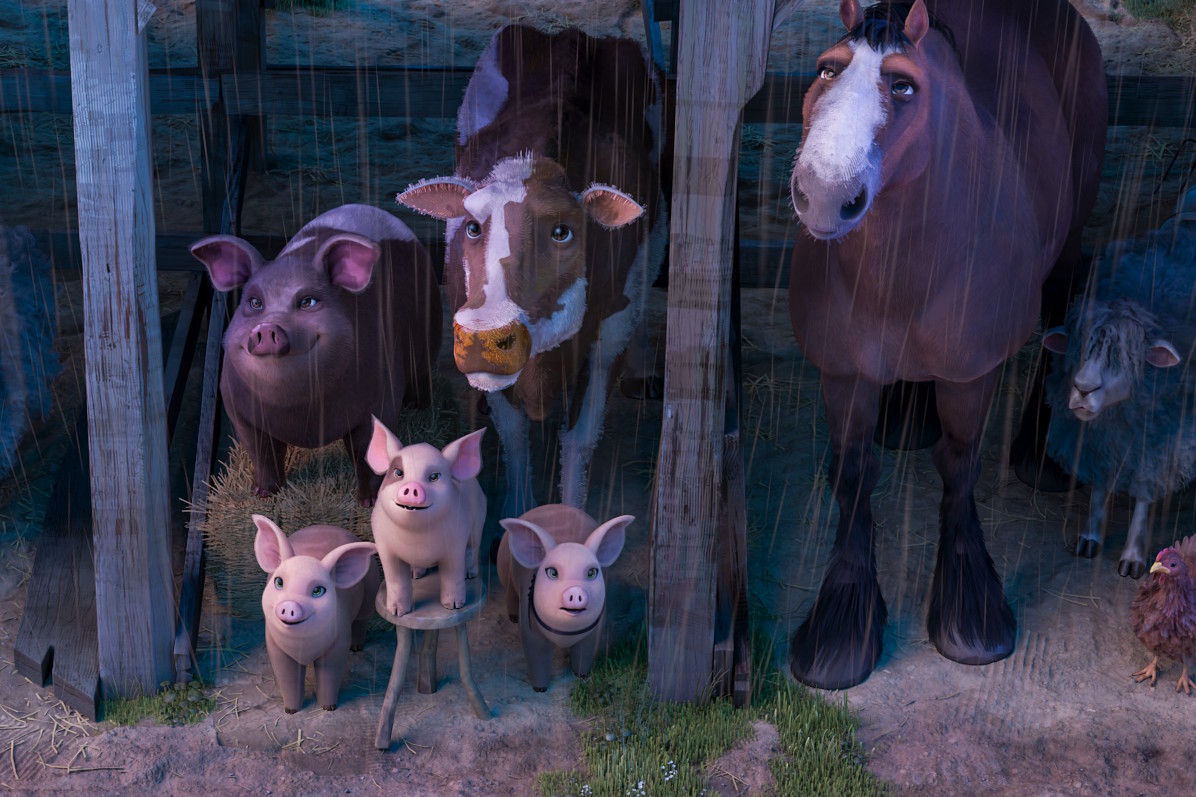
Very little of this tragedy of broken promises survives Serkis’ mangling hands. Working from a screenplay by the usually sharp-as-a-tack Platonic co-creator Nicholas Stoller, there’s very little that’s recognisable here in a Pixar-like powderpuff take that absolutely should not be relied upon by students of Orwell.
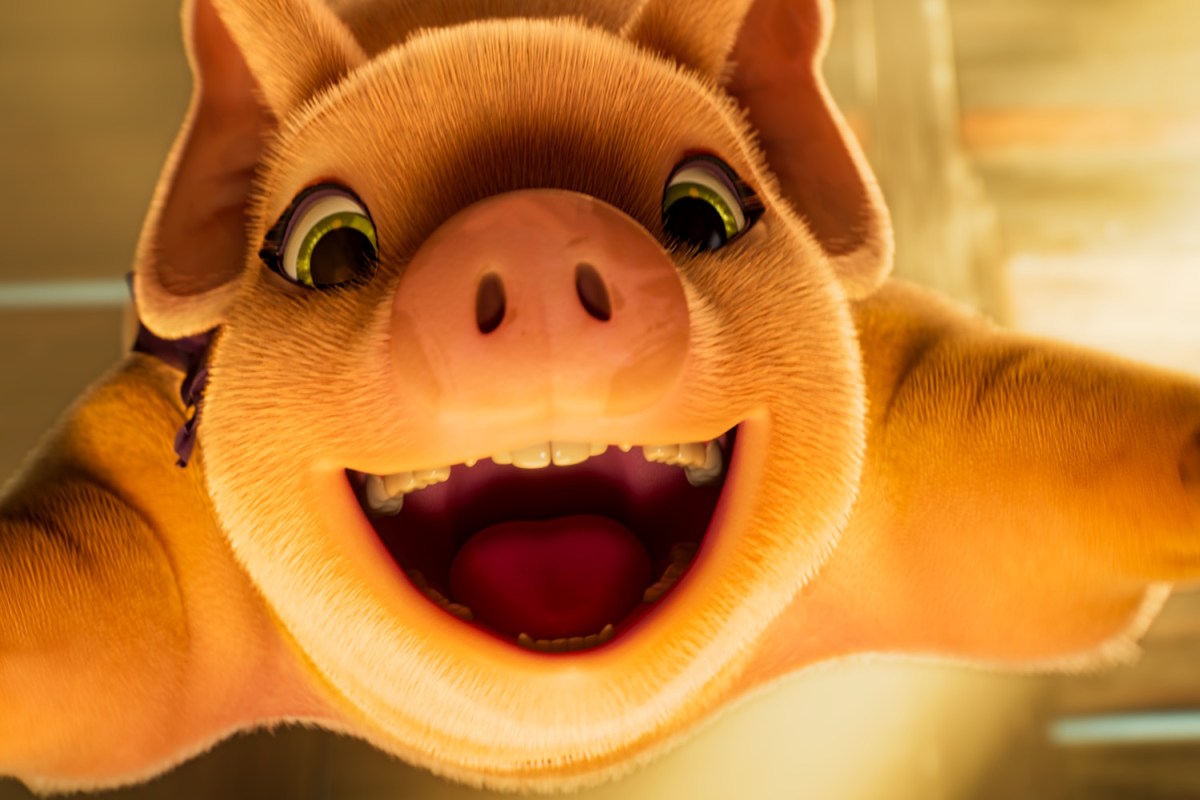
The first sign Animal Farm has gone horribly awry is in its catastrophic misunderstanding (or wilful mangling) of Orwell’s pigs. Instead of them remaining the slippery, opportunistic villains of the piece, Platonic star Seth Rogen voices Napoleon with his usual garrulously guffawing charm.
Sure, he’s meant to be a charismatic figure, and this Napoleon does wind up betraying his people and their values as he aligns with a corporate crim, who is voiced by a very Cruella Glenn Close. But the casting’s way too cheesy, with Seth at his silliest. Napoleon also farts and belches. A lot.
Snowball is there, voiced by Laverne Cox, but the worst attributes of the pair are sanded away so that they’re far less menacing than even your average Disney villain.
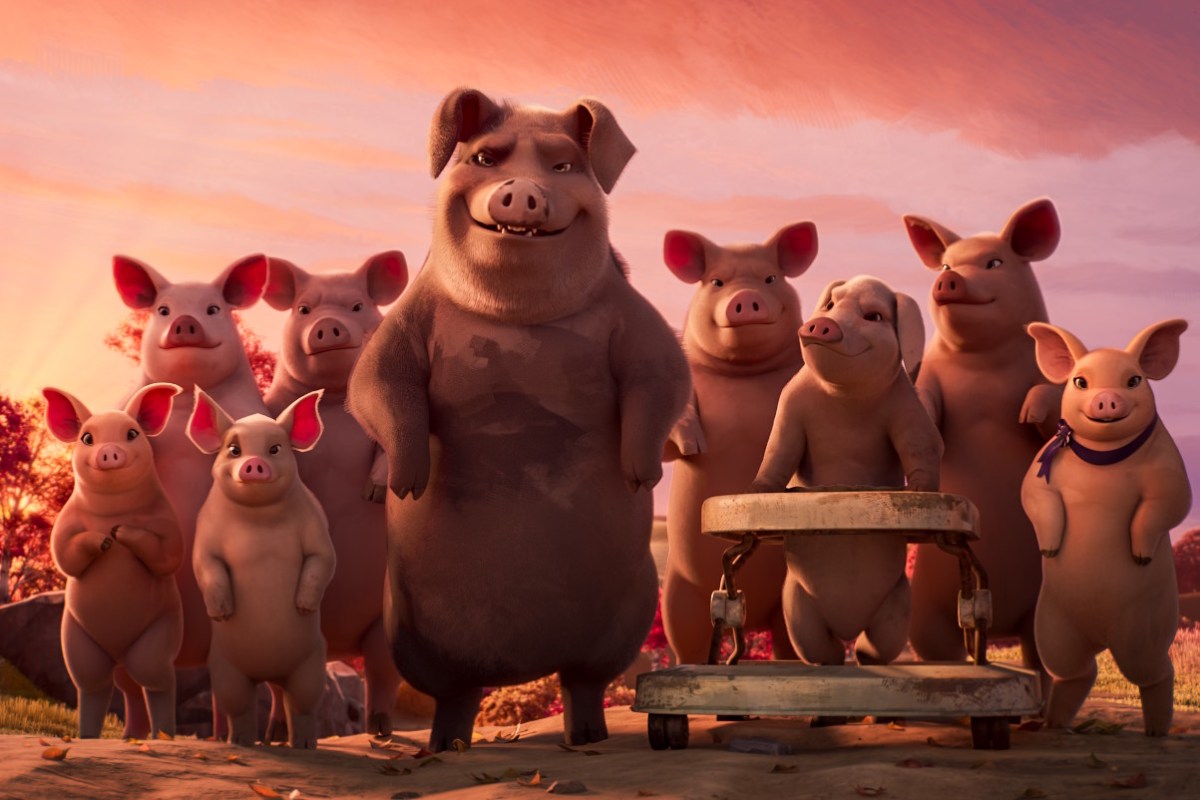
The real failing is the insertion of a plucky young pig-hero named Lucky (Stranger Things lead Gaten Matarazzo), along with his sidekicks Puff and Tammy (both voiced by Iman Vellani), to cutsie things up.
Their sugary sweetness is aided by a barrage of mercenarily poppy funk soul covers and pastel-pretty animation from Eamonn Butler’s team that totally undermine the story.
There is one fun visual gag, when a slaughterhouse van is parked in such a way as to obscure the first letter, but that change in meaning is one of the only times Animal Farm comes close to representing the insidious truths that Orwell was on about. Though I’ll admit to a dumb chuckle over Napoleon adopting the title Notorious P.I.G.
Overall, the messages are as muddy as a pigsty, pulling in bits of anti-capitalist chat about Amazon-adjacent commercialism as well as a nefarious banker pushing overstretched loans, plus a spot of police brutality and environmental stuff about the damage that would be caused by a proposed dam. None of it lands.
Watch the trailer
A twee mish-mash
Played far too young for the source material, Animal Farm is overshadowed by John Halas and Joy Batchelor’s far darker 1954 animation of the same name, which was surreally funded by the CIA as anti-Communist propaganda for schools!
Stoller, no doubt strangled by the studio, is too timid to even use the word ‘alcohol’, branding it naughty juice instead, which sounds like something entirely unsuitable for kids.
Great talent, including Kathleen Turner, Woody Harrelson and Kieran Culkin are entirely wasted, with Serkis himself voicing a randy rooster (the tone really is all over the place). It’s fair to say the Venom: Let There Be Carnage director has cocked this one up.
Sure, fly (like the proverbial pig) free from the source, but if the soul’s missing, like Snowball, at the expense of any textual meaning, what’s the point?