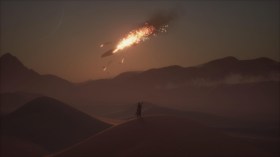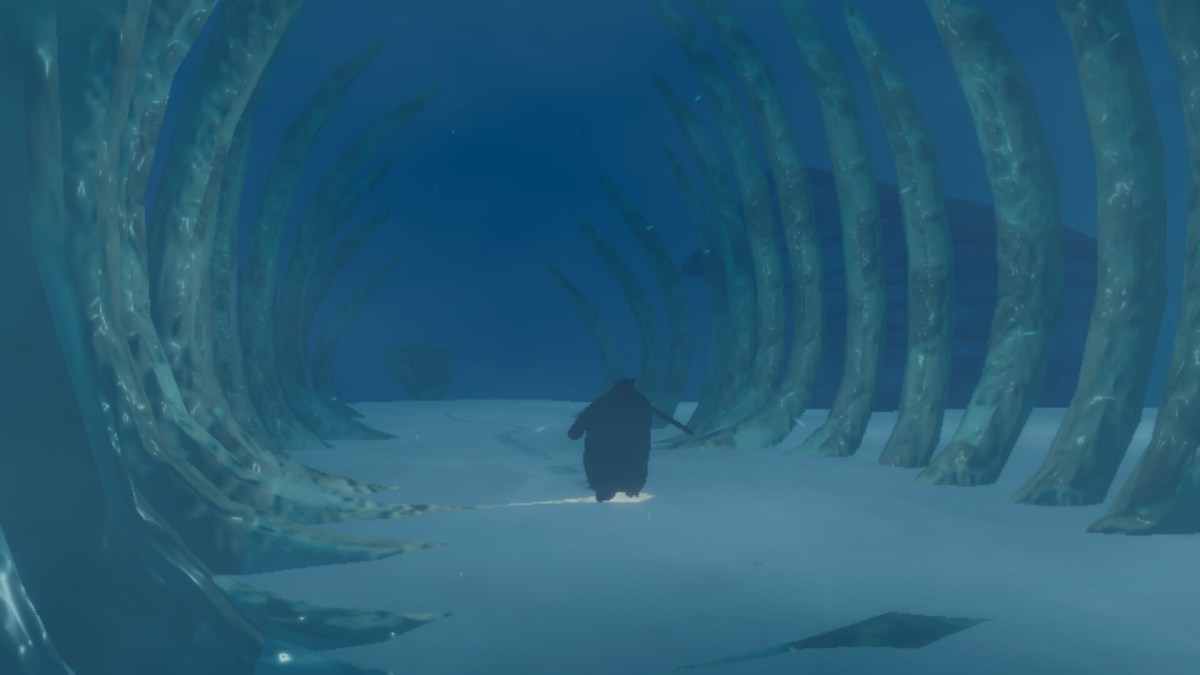
Penguin Colony opens on a bleak, icy landscape. You are part of a penguin colony, adrift in an open world where a constant blizzard clouds your vision and brings strange, haunting stories on the wind. As a small creature, you aren’t much aware of your surroundings and their implications. You know how to waddle. You know how to wander. Why there are strange lights in the sky and blood and ash on the snow escapes you.
You feel no fear, and yet fear is all around you.
This latest game from Origame Digital is a faithful adaptation of At the Mountains of Madness by HP Lovecraft, a tale that charts the doomed expedition of narrator William Dyer as he and his team discover a mountain in the heart of Antarctica that houses the secrets of ancient civilisations: beings known as the Elder Things and their slaves, the shoggoths.
As developer Tali Faulkner tells us, Penguin Colony sets out to examine this source material, as well as its deeper lore, from an Indigenous, post-colonial perspective, inspired by Faulkner’s own Māori heritage.
Tali Faulkner on Penguin Colony – quick links
The strange, discombobulating world of Penguin Colony
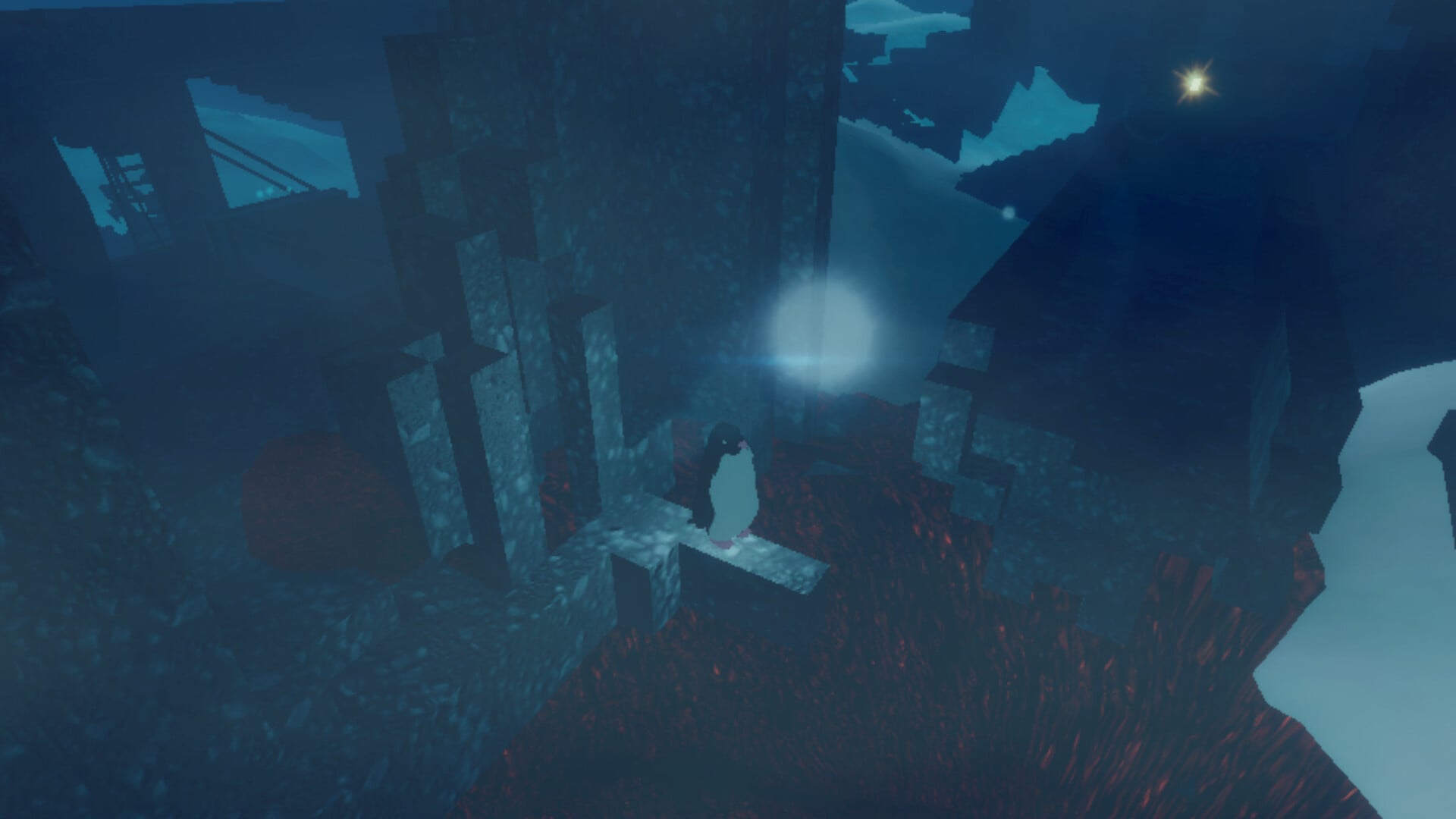
Approaching the story from the perspective of a penguin allowed the Origame Digital team to explore the implications of Lovecraft’s story from a somewhat disaffected perspective, adding a degree of objectivity in exploring the true horror of the novella and its Eldritch gods.
‘When you’re dealing with horror, there’s the instinct of a lot of designers to want to scare the player,’ Faulkner says.
‘After a while making the game, we realised it’s actually not very scary being a penguin. But then there’s also the whole thing of well, why isn’t it scary being a penguin? I think it’s because when you start to design in the direction of being a penguin, you then realise that penguins have very few things they’re afraid of.
‘It’s that idea of indifference. Being an animal really works in favour, when you’re talking about Lovecraft, and what’s called cosmic indifference in text.’
Playing the game as a penguin also gives you a sense of freedom – and ensures the horror lands. The placid, exploratory approach to game’s world creates a pervasive quietness. Moments of true visual horror are shocking – like when, after enjoying a sliding journey across the ice, you stumble across a campsite filled with skeletons hanging by ropes.
The game plays around with this sense that you’re exploring Eldritch territory that’s not made for you, a sense that’s amplified by your own small size and lack of dexterity.
As Faulkner explains, the team intentionally placed ladders and and other unusable items around its key locations, to add to that strange feeling of displacement. You don’t belong in this world, and that’s a message told by every part of the game as you hear those strange voices on the wind, recounting the diary entries of a slowly-going-mad Dyer.
‘It’s a strange headspace where you’ve basically got to stop designing like you would traditionally for these 3D adventure games, because most of the time you’re designing as if you’re a human,’ Faulkner says.
‘It was also quite liberating to start thinking about the game like that.’
Taking on Lovecraft’s At the Mountains of Madness
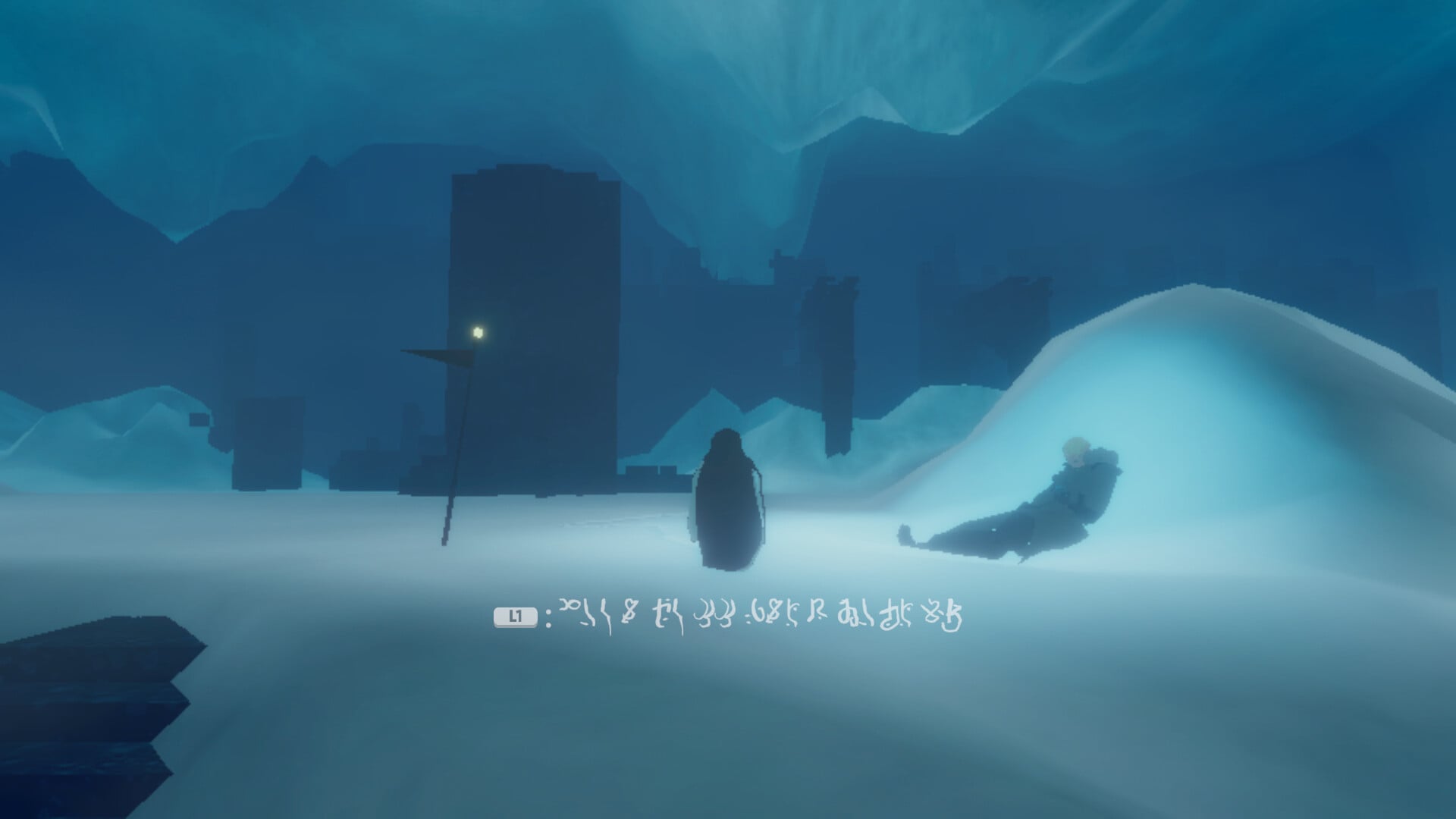
At the Mountains of Madness is a favourite tale of Faulkner’s. Like other stories by Lovecraft, including fellow inspiration The Shadow Out of Time, it focuses on vast, cosmic horrors and unknowable, ancient secrets.
It suggests a deep history of the real world that’s gone unnoticed, and a foundation of culture and behaviour that influences the contemporary human world, whether we know it or not. As Faulkner points out, the story also explores a master-slave relationship that is an entrenched and awful part of real-world human history.
Many of Lovecraft’s works have been criticised in the years since their publication for their grounding in historic ideas of racism and obsession with genealogy. While many adaptations choose to explore his works from an aesthetic or surface-level standpoint – his monster mythology has frequently been twisted and separated from the author’s intentions – Penguin Colony explores these ideas directly.
‘The horror of At The Mountains of Madness is barely present,’ Faulkner says.
‘It’s really about what does this imply? … The idea of saying, “We looked up at a mountain range, and then after glimpsing at it for long enough, we realised it wasn’t mountains, it was a city.” Apply that to your own life, and I think … to me, it’s a very metaphorical look into worldviews and ideology … having eyes that can see something for what it actually is.’
Looking past the dazzle of monsters and mythology, Faulkner was particularly interested in the nature of the shoggoth in Lovecraft’s text, and they way they’re often described as ‘perfect slaves’.
‘I’m imagining Lovecraft sitting around with a bunch of other people at the time … and this idea of them seeing that slavery is just a normal thing.’
In Penguin Colony, Faulkner wanted to interrogate why the shoggoths existed at all.
‘Well, [the shoggoth] have to actually come from somewhere. The enslavement at some point had to happen. When you connect these dots of saying there was a city with these creatures called Elder Things that lived in this city that’s now been destroyed … The thing that was propping it up was a slave society. I wanted to go back and look at that.’
Faulkner adds, ‘I think with a lot of modern adaptations of problematic source material like this, which it is problematic, I wanted to instead go back to it and say, why does this exist? But also, how can you play in the grey here and say, well, if that’s the case, if these assumptions about how this society was made are true to Lovecraft canon, what would you know?’
As Faulkner explains, lots of modern Lovecraft adaptations remove the racism, but they keep the setting the same. But the history remains integral to the setting, and they can’t be separated without losing their meaning.
‘It’s the kind of thing where that sort of historical removal is, I think, more offensive.’
Faulkner adds, ‘For example, something I wanted to do with this game was to play around with … cults and the hexing circles and voodoo circles. [In Lovecraft’s texts] they’re talking about Indigenous people, non-white people, and they’re always talking about them in a very, very negative way. What I wanted to do is play around with that and say, well okay, what if it was a ritual? … What if, just like when non-Indigenous people saw our rituals, they misinterpreted them, and that’s what they wrote in the original Lovecraft canon.’
Bringing a Māori perspective to Penguin Colony
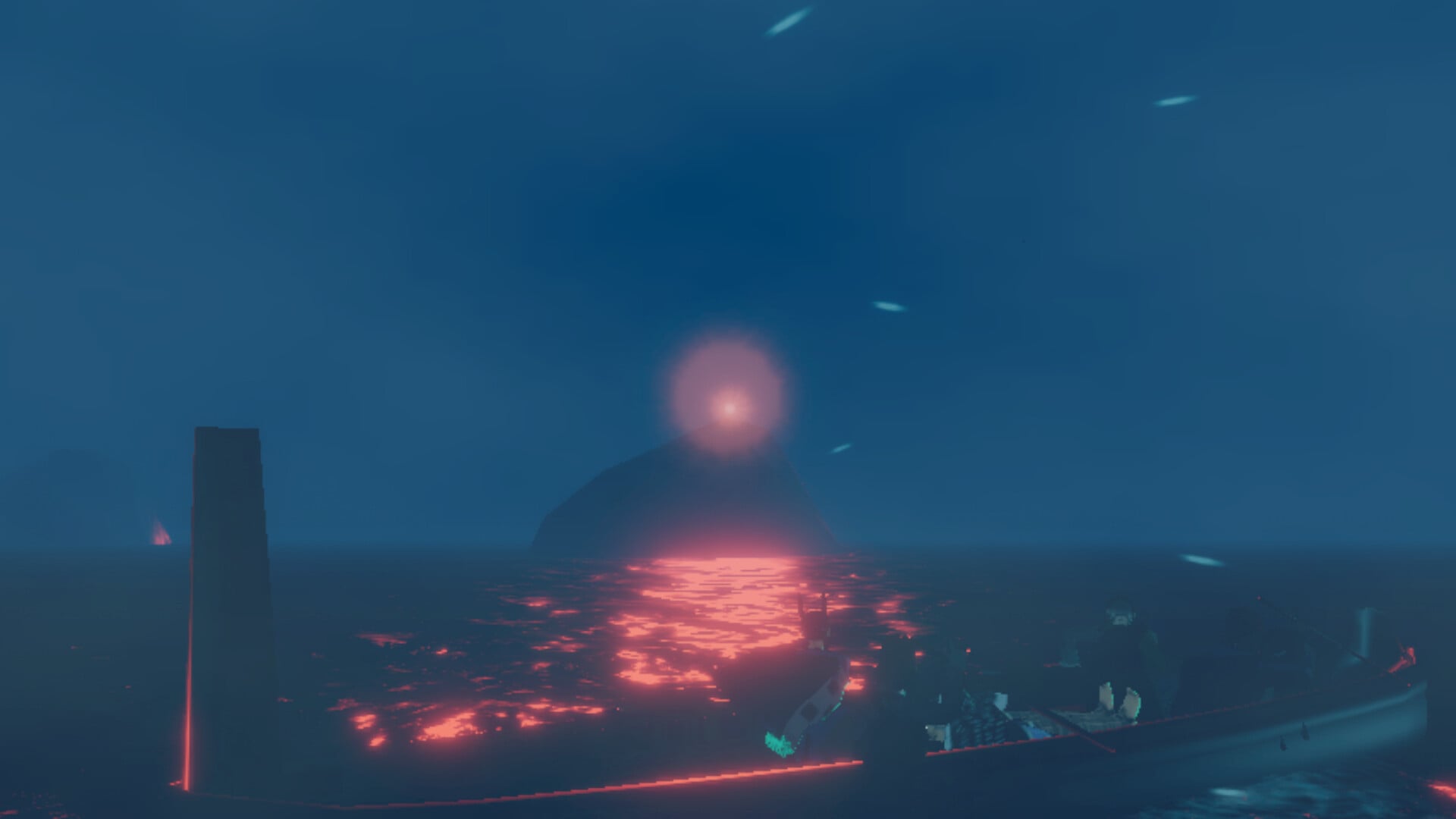
Faulkner’s version of At the Mountains of Madness not only includes white explorers – Europeans, Americans and Nazis, in this case – traipsing through a wintery wilderness they can scarcely understand. It also includes a group of Kaitiaki, Māori guardians, journeying through the snow in the attempt to seal the madness back inside.
All the while, caught between the push and pull of good and evil, the penguins roam onward, oblivious to the dangers that lie ahead.
‘As just a general rule, you can extrapolate a sort of colonial story out of almost any of [Lovecraft’s stories] because the moment you see the behaviour of the Old Ones, it mirrors colonisation to the T. They have this indifference to destroying humanity, just like colonists have to destroying Indigenous people.
‘They have this way they do it, which is either through brute force or through religious ceremony. They speak strange languages. There’s all these things where these are very semiotic indicators, and it’s the idea that, at the time this was [originally] written, all of this was normal. So why wouldn’t it be in there?
‘I think the idea is that you can play around with it not by changing it, but rather keeping it the same, just swapping who you think the heroes should be and who the villains are.’
Through this lens on history and colonialism, Penguin Colony, much like Lovecraft’s monsters, spreads its oozing tentacles beneath the surface. It’s not, as one might first assume, an exploratory game of animal freedom. It’s very much grounded in the reality of humanity and deeply entrenched history.
It’s an intentional abstraction with bloody, dark themes.
It creates an atmosphere where players can engage with its anti-colonialist narrative in the guise of a brighter, more carefree game, and one that may also emulate nostalgia for those who grew up playing games in the 2000s.
Wielding the aesthetic of the PlayStation 2 generation
‘Realism makes me sick to my stomach,’ Faulkner says.
‘This might sound a little romantic, but … PlayStation 2 and early Xbox 360 games were at their most impressionist [in their] art styles. Which is to say they couldn’t quite achieve realism yet, so they had to intentionally, artistically craft an atmosphere and vibe using the limited technology they had.’
Faulkner believes the pursuit of realism is a creative dead-end, and that intentional aesthetic choices and how they tell story are always more important than trying to create character models or environments that look true-to-life.
Penguin Colony was created with an intentional, low poly aesthetic. It pays homage to the greats of the PlayStation 2 and Xbox 360 era in its approach to character models and vast landscapes that taper off into the foggy distance, to amplify the game’s creepiness and dread, as well as the artistry inherent in creating a story within limitations.
‘The PS2 and early 360 era was very experimental with [realising] “Oh, you can tell stories with this artform. You can push the boundaries of what you can do” … We just want to play more in that space.’
Humans you come across in the overworld are blocky beings with sharply angled faces, made stranger and more disconcerting by the aesthetic choices of their construction.
Making a game that really says something
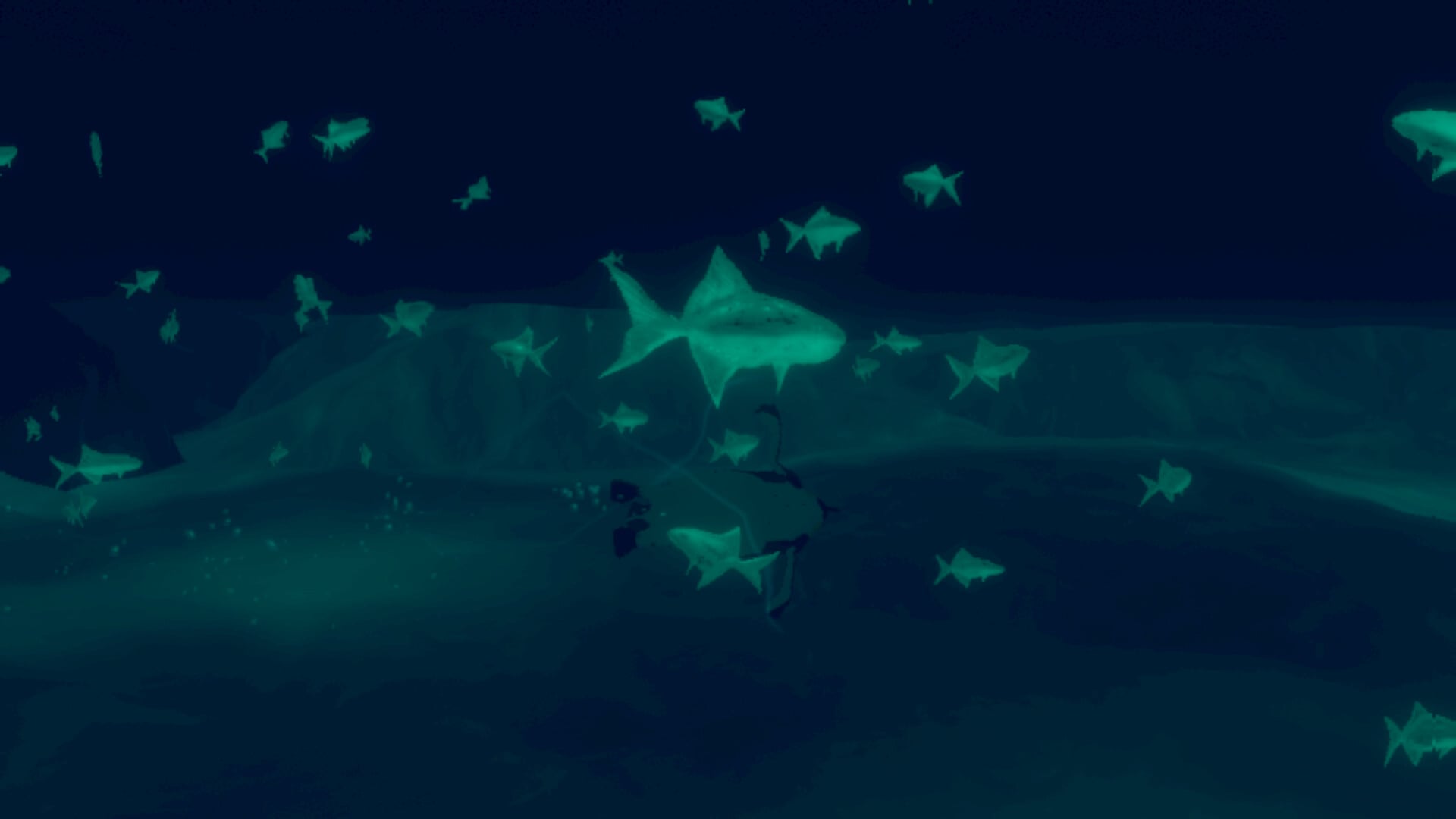
These deliberate choices, paired with the game’s layered exploration of political themes, is the realisation of a dream for Origame Digital. As Faulkner says, the studio wants to make games that are about something.
‘Can we achieve the goals of making stuff we’d want to play?’ Faulkner says. ‘A big one with studio goals is “Can we make games that are [about] these Indigenous and semi-political topics, in a way that is for people who are completely bored with games at the moment, where they don’t talk about anything?”
‘Something that’s really sad about that is the reason [these games] don’t talk about anything is they’re worried that people won’t like it. And toughen up. We’re in this change in this artform at the moment … you think games aren’t going to be the next artform that everything looks to?
‘We’ve got this opportunity right now to shape what games are, as an artform, and it’s not going to be around forever.’
As Faulkner says, he’s deeply inspired by the opportunity to contribute meaningful and impactful games, sharing his own perspectives and experiences, and asking others to engage with them – and to not only engage, but to experiment and share for themselves.
He surfaced a quote by Bertolt Brecht in our interview: ‘Art is not a mirror to hold up to society, but a hammer with which to shape it.’
Faulkner is proud of Penguin Colony‘s approach to the challenge, in its analysis of At the Mountains of Madness, and how it explores the history of Lovecraft – and not only that, but the power of literature and art as a whole to change hearts and minds.
‘Whilst we are drawing from the past, there are new things we’re creating here. New things that didn’t exist before.’