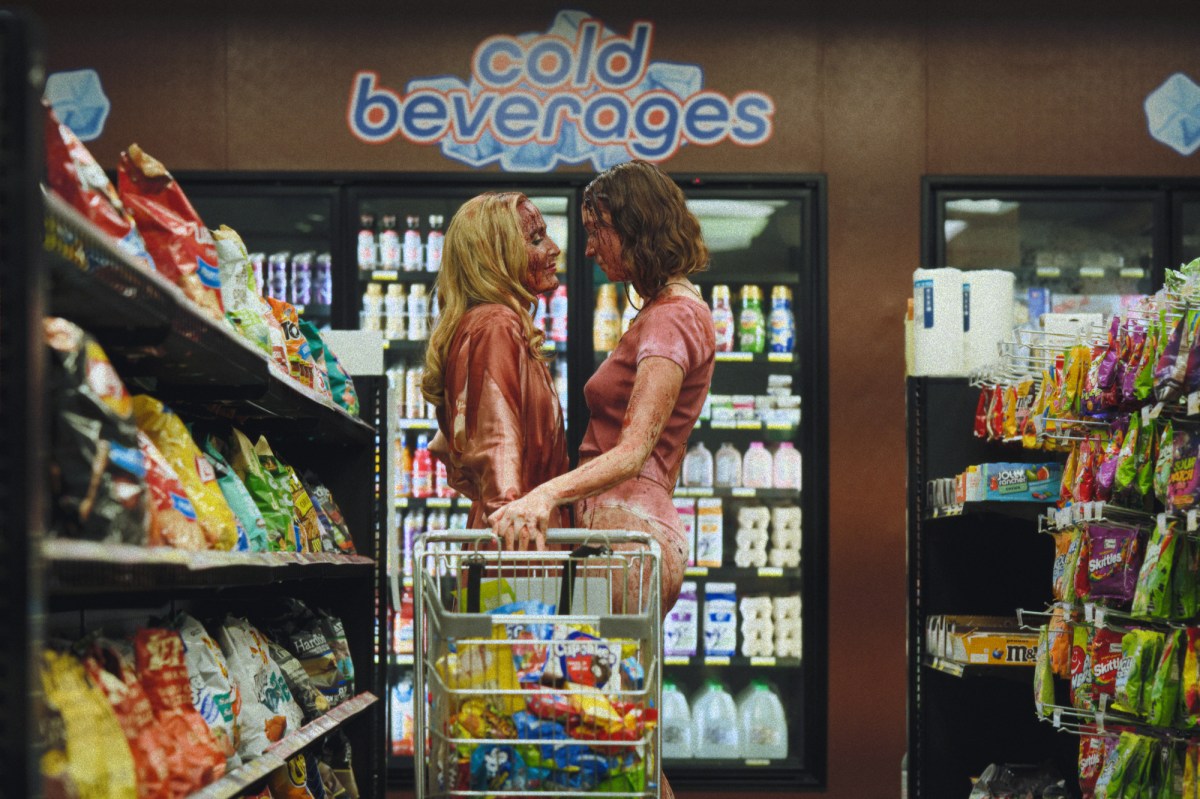
Who’s your favourite final girl? Many of the mightiest survivors of slasher movies are saluted in Teenage Sex and Death at Camp Miasma, the funny, fleshy and fluid horror deconstruction by super-cool I Saw The TV Glow filmmaker Jane Schoenbrun.
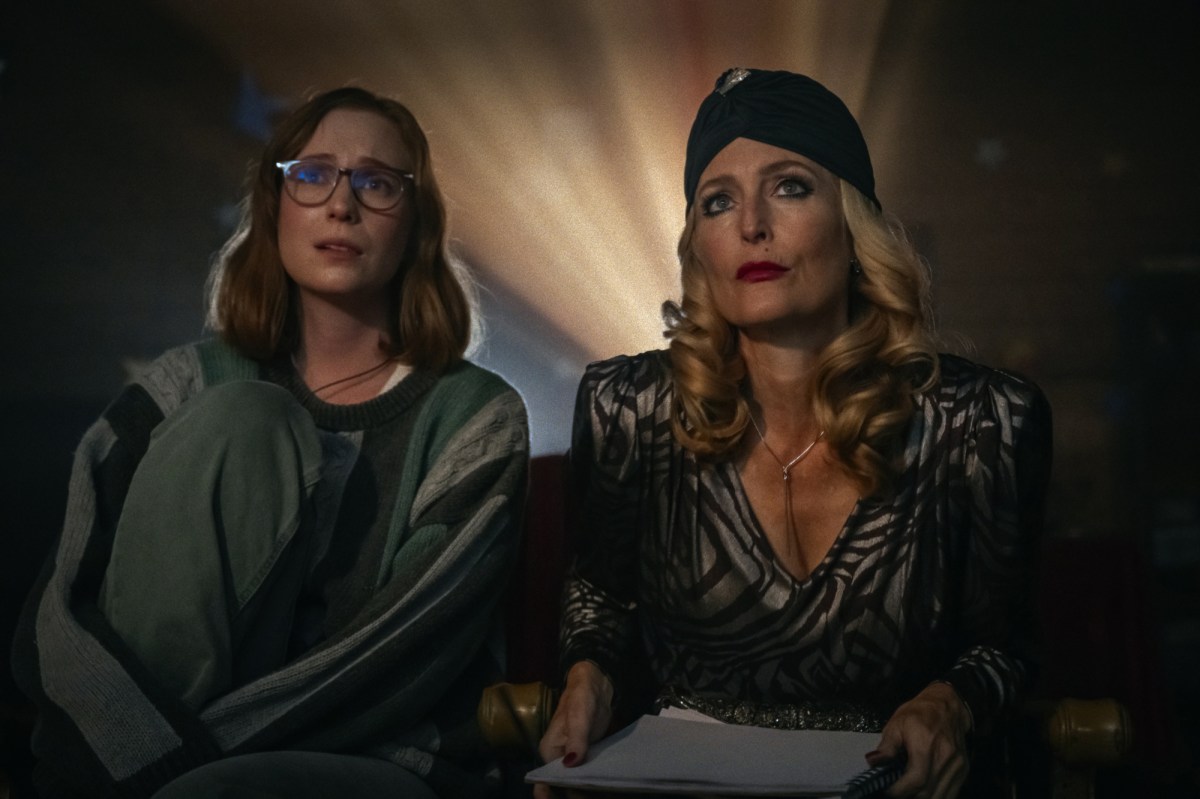
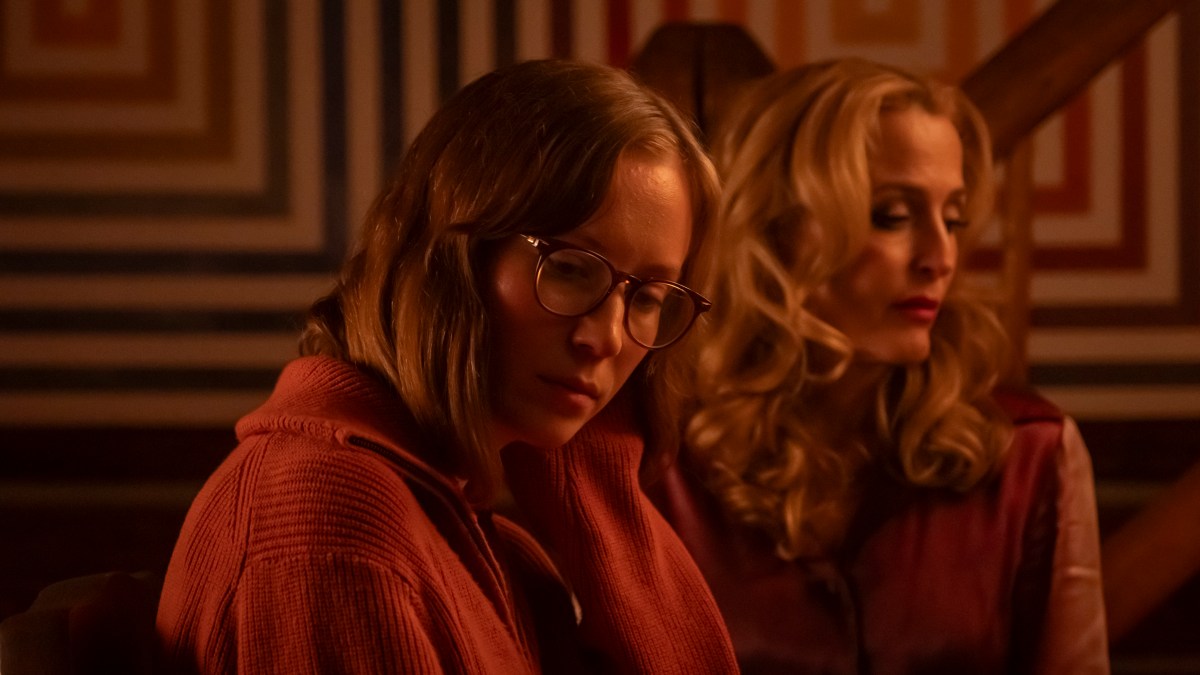
Starring The X-Files’ Gillian Anderson as reclusive new final girl Billy Presley, the fictional star jumped ship from Camp Miasma, the film-within-the-film, after its gory opening gambit, refusing to return for the ever-diminishing sequels.
Hacks lead Hannah Einbinder plays Kris, the next-generation queer filmmaker determined to tempt Billy back to the long-dead franchise, crafting an ‘elevated’ reboot around the OG star, even if all the studio wants is a basic cash grab.
Deeply indebted to the goddesses of the genre, Teenage Sex and Death at Camp Miasma roll-calls real-life alum including Halloween star Jamie Lee Curtis, Black Christmas battler Olivia Hussey, Marilyn Burns from The Texas Chain Saw Massacre and Heather Langenkamp from Wes Craven’s A Nightmare on Elm Street. It also bows down to Sleepaway Camp star Felissa Rose.
But who inspired Schoenbrun’s stars?
Anderson tells me she reckons Agent Scully was probably her first final girl, but there’s no doubting Billy belongs. ‘It does feel like I’m joining a pantheon,’ she says. ‘And I feel very proud and honoured to be a part of that.’
There’s an Australian connection to Einbinder’s horror awakening, crediting computer game adaptation Silent Hill’s star Radha Mitchell as her gateway drug. ‘It’s so awesome to become one,’ she says. ‘Especially in a way that is radical and joyous, reclaiming the image that has been projected on the final girl, imbuing her with dignity, agency and pride. I’m so stoked.’
Teenage Sex and Death at Camp Miasma – quick links
Silence is violence
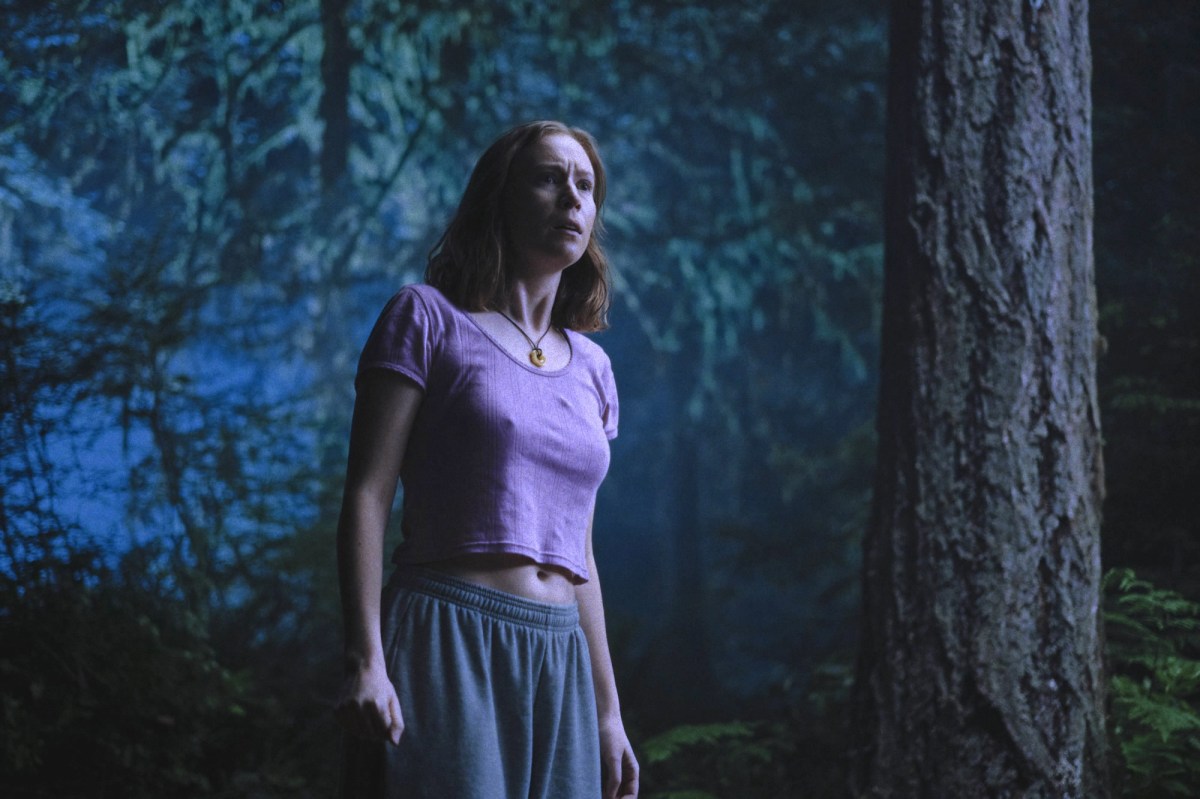
Schoenbrun’s experimental debut feature We’re All Going to the World’s Fair cast Anna Cobb as a young woman exploring a possibly supernatural space online that’s at the centre of a viral storm. The director followed it up with the even trippier I Saw the TV Glow, a Berlinale-bowing nod to Buffy the Vampire Slayer that further blurred the boundary between the real and imagined, expanding on Schoenbrun’s thrilling vision.
Theirs is a very particular style of world-building, exhilarating in its broaching of evolving identity and transness that Anderson dug. ‘It was kind of effortless,’ she says. ‘The sets were extraordinary, as were the costumes and makeup, and that really, really makes a difference for me, in the transformation.’
Anderson valued shooting the breeze with Schoenbrun on their queer reading. ‘When I was watching The Silence of the Lambs, I felt like there was an element of me being aware of the problematic trans reference,’ she says. ‘I read a couple of articles about it later, but I’m not sure whether I understood it as clearly as I did misogynistic takes.’
Schoenbrun opened Anderson’s eyes. ‘Jane enabled me to see how much of cinema has, historically, been problematic for queer communities,’ she says. ‘One gets so wrapped up in one’s own lives and worlds, that it’s only when you have an opportunity to dive into these deep, intimate, very emotional conversations with filmmakers like Jane, that one’s awareness gets expanded.’
Their collaboration was a two-way street. ‘Jane was very open to me using a southern accent,’ Anderson says. The star was nominated for an Olivier Award for her stellar turn as Blanche DuBois in the Young Vic’s revival of Tennessee Williams’ A Streetcar Named Desire, chuckling when I tell her I wrote ‘Southern fried chicken belle’ in my notes.
Einbinder similarly relished Schoenbrun’s openness to her read on Kris. ‘Those vulnerable, personal conversations I had with Jane about what the character was about to go through and what the film was attempting to discuss helped me really immerse myself in their frame of mind,’ she says.
Watch the trailer
Queer for fear
Spend five minutes not-so-deep-diving on social media and you’ll discover that the erotic energy vibing between Anderson and Einbinder has sent great swathes of the internet into a frenzy for Teenage Sex and Death at Camp Miasma. Einbinder is here for it.
‘Especially for Sapphic queer folks, we have a tendency to read it in, because of the lack of explicitly queer characters,’ she says. ‘Bring It On and Stick It, with their cheerleading gymnastics, were so dykey for me. I was picking up on that even if it wasn’t explicit.’
They stuck with her. ‘I did competitive cheer for years and at first, I was like, “Oh, I love cheerleading.” Then, in retrospect, I was like, “Also gay”.’
Scary movies have always been ripe for queer readings. ‘There’s this intersection in the fandom, this Venn diagram that’s filled with a lot of queer people who perhaps have felt cast aside as monstrous, in the context of society,’ Einbinder says. ‘It’s a space to righteously reclaim that disenfranchisement and turn it on its head.’
She notes that the ability to enter the playing field at the lower budget, less gatekept end allows queer filmmakers like Schoenbrun freedom to explore, evolve and explode the form.
‘When something’s independent, you’re more likely to maintain control, creatively, and execute the vision you’re trying to address,’ Einbinder says.
New worlds
Anderson has been a leading light of the alternative zeitgeist since The X-Files debuted in 1993. These days, she seems more available than ever, a camp highlight of any Instagram scroll. But she can understand Billy’s Norma Desmond-like desire to hide herself away from the prying world.
‘When Billy chooses to become reclusive is so different from what the life of being a celebrity today is,’ Anderson says. ‘The degree to which one is expected to interact and how much it takes from you. It’s always a choice, right? But I do have a tendency to isolate, not a little, but quite a lot. I’m a bit of a hermit, so I understand.’
Don’t panic. Anderson’s not going anywhere in a hurry. ‘If I didn’t enjoy my work so much, I might choose that for myself. But that means having to say goodbye to quite a big part of my life, and how I keep a roof over my head.’
ScreenHub: The best horror films still to come in 2026
Anderson understands the franchise machinery. ‘For studios that own historic IP, it has such high value these days, because if something already has an audience, then you don’t have to work quite so hard to build that up. It has such a currency, so I get why they do it and everybody’s after it.’
Einbinder agrees. ‘In many cases, it’s really fun and cool, and in some cases, it’s for a buck,’ she says. ‘It wouldn’t be so much of a problem if it didn’t outweigh original stories. That’s when it becomes an issue.’
Anderson concurs, hoping that, given the success of films like Obsession, Backrooms and the buzz around Teenage Sex and Death at Camp Miasma since it debuted at Cannes, that there will be more room for originality.
‘Hopefully we’re now in a place where more and more independent filmmakers are coming to the foreground who are really trying to create unique worlds to outweigh, or at least balance out, the plethora of sequels.’