Chrysaor Studios, a major film studio located in Queensland’s Gold Coast, does not have any major bookings for the rest of 2026.
In a blog post written to be open and honest, founder and CEO Christopher Amos has shared that while Chrysaor has had 76 live conversations with producers in the six months since its establishment, securing work into the future remains a major hurdle, and one worth talking about.
‘I do not think that is a failure of this studio,’ Amos says. ‘I think it is the clearest evidence I have of how hard it has become for domestic producers, especially in Queensland, to get a project financed and into a stage.’
As Amos outlines, there have been dozens of tours of the studio, with promising conversations surrounding low-budget independent features, music videos, short films, simulation travel work and other in-house projects, with plenty of ‘pencilled dates’ that have since passed.
Chrysaor Studios outlines challenges – quick links
The launch of Chrysaor Studios
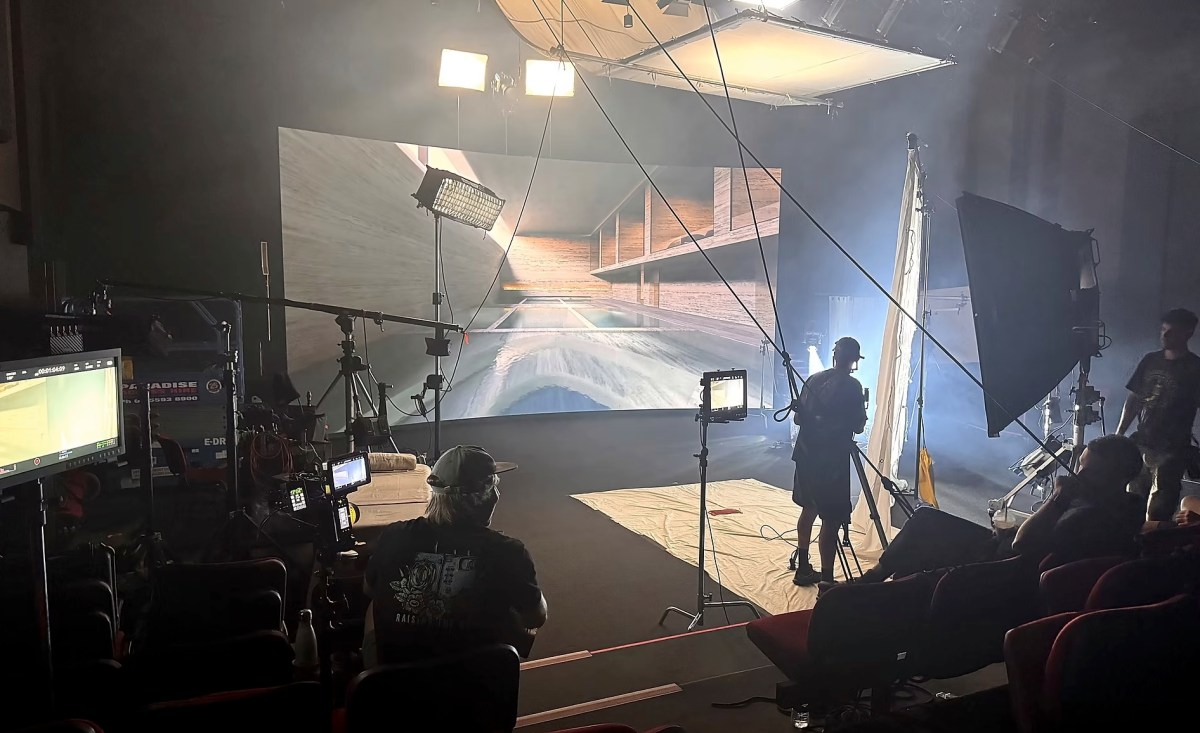
Chrysaor Studios provides stages and tools for filmmakers, and also has virtual production capability.
As Amos outlines, he developed and built the space to create something he would own that would be a genuine, useful part of the Queensland filmmaking scene.
‘I wanted to make my first low-budget independent feature using an LED volume, and I could not do it in Queensland,’ he explains. ‘I would have had to take it to another state. That made no sense to me, so I spent three years building the thing I needed.’
ScreenHub: Gold Coast screen and games sector has grown 77% since 2020-21
Amos took part in various courses and programs to ensure a robust knowledge of studio development, and with support from Creative Business Plus, Screen Rights, Invest Gold Coast and Screen Queensland’s Capital Grants Program, he was able to launch the space with the goal of serving the local filmmaking community.
Since its establishment six months ago, it has hosted nine productions and activations, including for Werner Film Productions, filming the Stan Originals series Scales, as well as The Onset Productions and WildBear Entertainment. The studio also hosted the Gold Coast Virtual Production Showcase, with over 150 people turning up to learn more about virtual production and its applications.
As Amos says, the studio has not been able to secure work through the rest of 2026. He believes it could be a sign of significant slowdown in the local Queensland screen industry, and a need for greater support for local IP and local workers.
The international challenge facing Australian screen productions
‘An independent studio is only as useful as the projects that come to it,’ Amos says. ‘Queensland’s screen economy leans heavily on work commissioned somewhere else.’
‘When that work slows, and it will, what is left is what we own.’
He posits that part of the challenge for local Queensland-based studios and screen workers is that Queensland remains very reliant on international productions to bolster its screen economy with investment.
ScreenHub: Alan Ritchson and Owen Wilson team up in Gold Coast movie Runner
‘International production built this city and it should keep coming,’ he says. ‘But incentives move. Trained crews, permanent infrastructure and intellectual property we own do not.’
Part of the challenge is in balance. As Amos says, a mix of local and international screen productions keeps people employed and creates jobs that allow everyone to contribute to the economy. He has called on organisations including Screen Queensland to consider increasing their support for local studios and producers to ensure the overall sustainability of the industry and resources like those provided by Chrysaor.
‘I have spent 30 years in the media and screen industry in Australia and the UK: short films, film criticism, documentaries, screenplays, and a few critical successes along the way. I have asked for help before, usually to get a single project funded. This is different,’ Amos says.
‘This is about building a stronger Gold Coast screen industry by compounding what we already have – the skills, the hardware, the software, the locations, the talent and the facilities this city grew by servicing international productions – and turning it into work we own.’
Marketing the strength of the Queensland screen industry
As a next step, Amos has called on Screen Queensland to extend support for studios even beyond simple financial investment, although this remains essential. As he says, he’s incredibly grateful to have been supported by the organisation, as well as many other screen industry bodies, to establish Chrysaor.
But without long-term support, including additional steps like marketing and elevation of resources – for example, a move as simple as listing Chrysaor on Screen Queensland’s Major Gold Coast Facilities list – Amos believes that long-term sustainability for his business, and others like it, is not possible.
ScreenHub: Screen industry speaks out on Screen Queensland funding reduction
In a breakdown, Amos has shared that the vast majority of the studio’s visits have come from Google searches, Facebook, email newsletters, LinkedIn, the 37°South Market at the Melbourne International Film Festival and Screen UK. Just four website sessions came from Screen Queensland’s ReelScout studio directory, and zero reportedly came from the Screen Queensland website.
‘I am not claiming a web listing would fill our diary,’ Amos says. But he argues that greater support and visibility could make a significant impact on the studio.
As Australia’s screen organisations continue to invest in the local industry, there is a growing need for better support for marketing and visibility, particularly given outlined challenges for discoverability in other parts of the industry.
Amos concludes his blog post by asking for other production companies and studios to share their honest stories with Screen Queensland, following a call out by CEO Jacqui Feeney – whether that be challenges in attaining visibility, sustainability of production work through 2026, or other hurdles.
‘I hope [this honest information] gives other studios and screen businesses permission to tell the truth about how they’re going,’ Amos tells ScreenHub.
‘Most of us only post the wins, so every small operator thinks they’re the only one with an empty diary, and that’s how good businesses close quietly. Put the real numbers side by side and the pattern is clear: it isn’t a demand problem. We’ve had 40 producer tours and 76 live conversations in six months.’
‘What’s missing is the finance that gets Australian projects to a start date, and the visibility that helps producers find the stages that already exist. You can only fix what you’re willing to name.’
‘An industry that only reports good news ends up with policy built for an industry that doesn’t exist.’