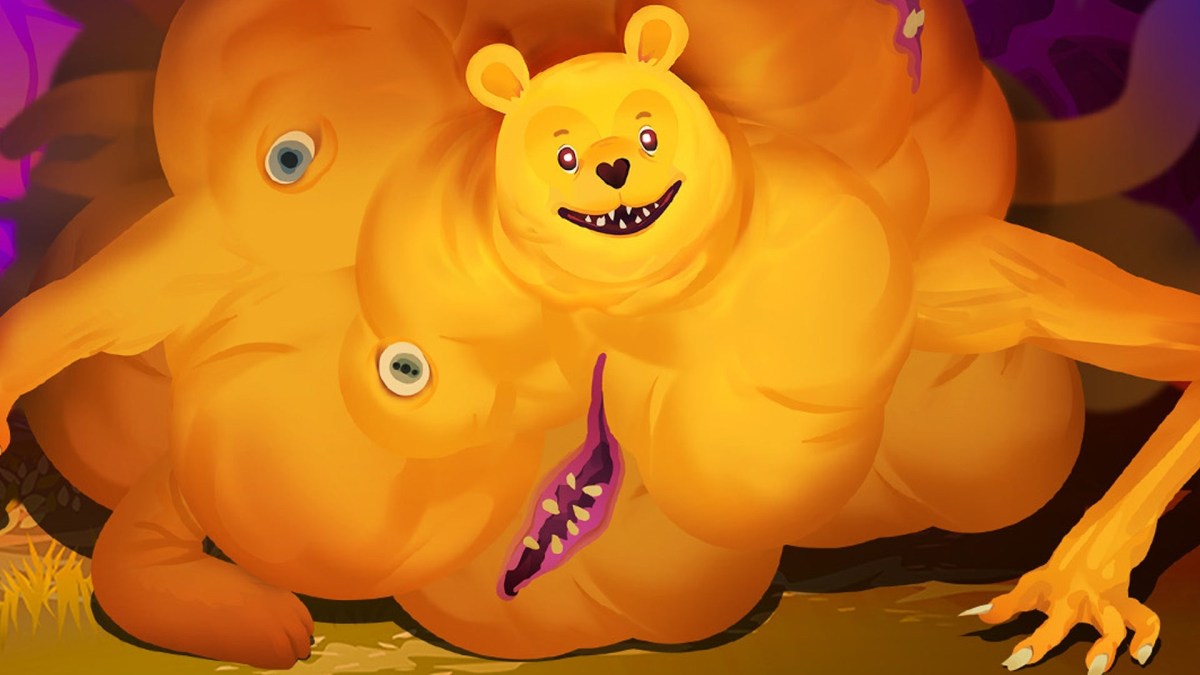
Winnie’s Hole wasn’t always a Winnie-the-Pooh adaptation. It was born of a desire to create monsters, with Australian developer Twice Different beginning work with a prototype of a game simply about growing and evolving a being.
Informed by the studio’s past success with roguelike deck-builder Ring of Pain, its next project was designed to lean into the macabre. Inspired by Ring of Pain‘s Wretched Amalgam – a blob with limbs – work began on a title that would allow players to unleash horrors, with a twist.
The development of Winnie’s Hole – quick links
The origins of Winnie’s Hole
‘We were prototyping this for probably half a year – all these different combat systems and art styles – and it got to the point where it wasn’t really gelling,’ Simon Boxer, founder of game studio Twice Different, told ScreenHub. ‘We dropped it for a while, and worked on something else.’
‘Then, we thought…what would it be like to work on something that’s in the public domain?’
Inspired by the success of titles like Hades, which adapts Greek mythology, the team decided to experiment with adapting an established character as a leaping off point, and thinking about contributing flavour and lore.
Read: Winnie’s Hole early access review: a brain-tickling monstrosity
With Winnie’s Hole beginning as an original property, featuring elements of monster building and rogue-like gameplay, its evolution was simply sped along by the novelty of having the copyright-free, original version of the Winnie the Pooh character attached.
As Boxer notes, the Winnie-the-Pooh IP was selected in appreciation of the work of author AA Milne, not as a means to deride it or to ‘ruin’ any childhood nostalgia – as some people have accused the studio of doing.
‘I like Winnie,’ Boxer said. ‘AA Milne is such a great writer. Just an amazing flow of words, really hilarious.’
Online virality and the reaction to Winnie’s Hole
The reaction to Winnie’s Hole – which was often of disgust – surprised him. Audiences reacted strongly to the game’s reveal, and shared a loud passion for the franchise and how it was perceived.
‘As we’ve continued to make it, we’re really trying to make sure people that play the game understand that Winnie is not actually intending to be this horrific abomination,’ Boxer said. ‘There’s this juxtaposition of you as the virus, where a virus is just intending to survive…and [Winnie himself]. There’s so much comedic potential between this contrast.’
There is a notable dissonance in adapting Winnie-the-Pooh in this manner, with the typically kid-friendly story being overlaid by horror. It’s not an entirely new take on the franchise, as the Poohniverse horror films have taken similar inspiration, but what works best about Winnie’s Hole is that the franchise is adapted in aesthetics and tone, in a way that serves deep, interlocking gameplay mechanics.
It’s perhaps for the best that Winnie’s Hole began as an IP-free monster-creating game, as this early experimentation allowed Twice Different to create a gameplay system that is moreish and unique, built on the lessons learned in Ring of Pain, and with an understanding of what makes roguelikes so encouraging.
Winnie-the-Pooh is simply used as a touchpoint for inspiration, with ample familiarity for players.
Twice Different could simply kick off its story, without the need for introductions or lore-building. The reality is it’s also difficult for modern games to find an audience, and the strangeness of this Winnie-the-Pooh adaptation allowed Twice Different to grasp online virality.
When the game was announced, with Winnie’s face front-and-centre, it reached a wide, global audience. The first trailer earned more than 25 million views across multiple platforms, Boxer said.
That was the point, he added, where the team decided, ‘Oh, maybe we should actually properly scope this into a full game – and it just kind of snowballed from there into this weird experiment.’
Starting with core building blocks
With attention and interest eventually secured, the ambitions of Winnie’s Hole quickly began to take shape. What started as a prototype monster builder became a roguelike adventure, with elements of strong combat and an overarching narrative, set within Winnie’s world.
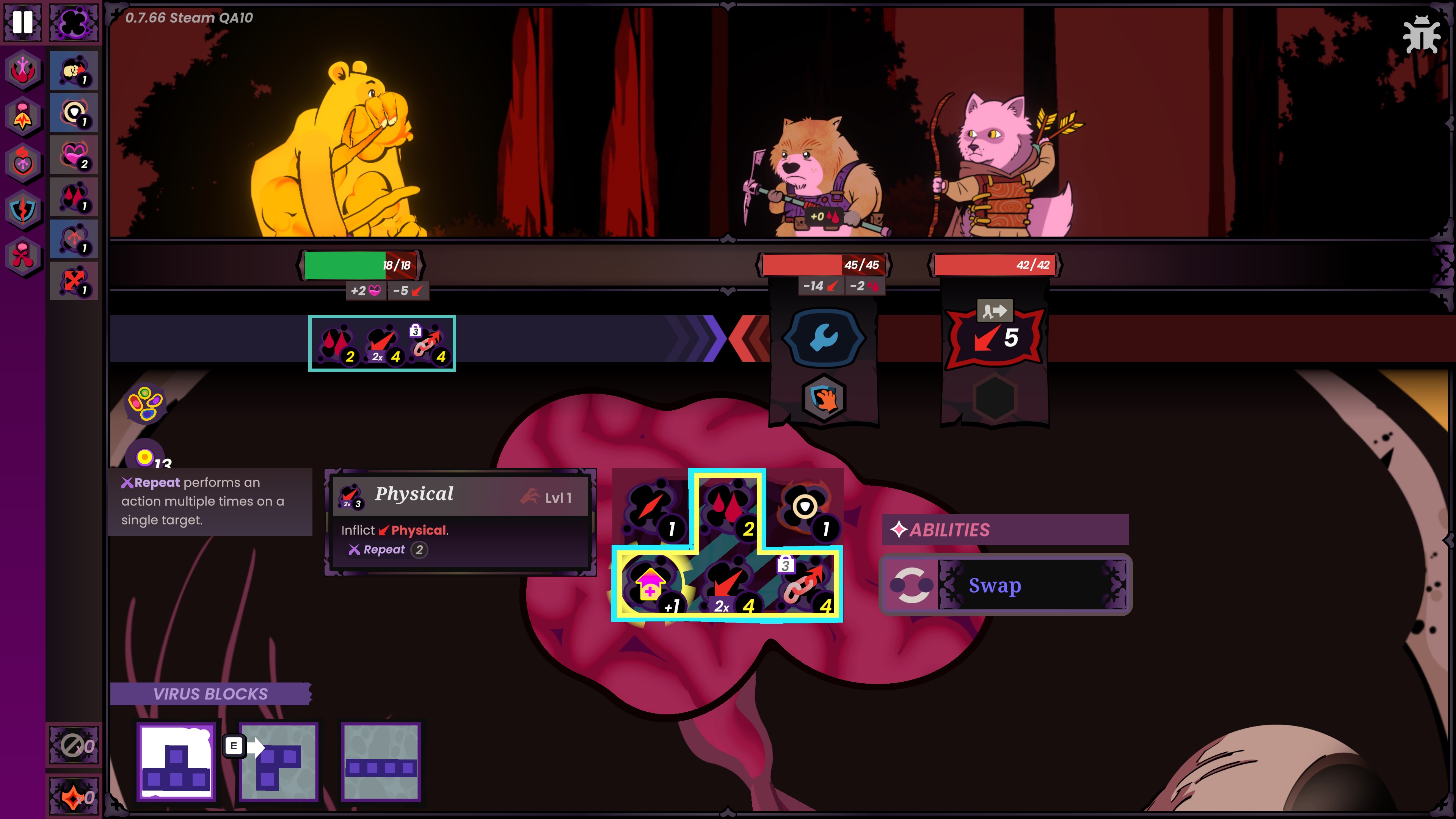
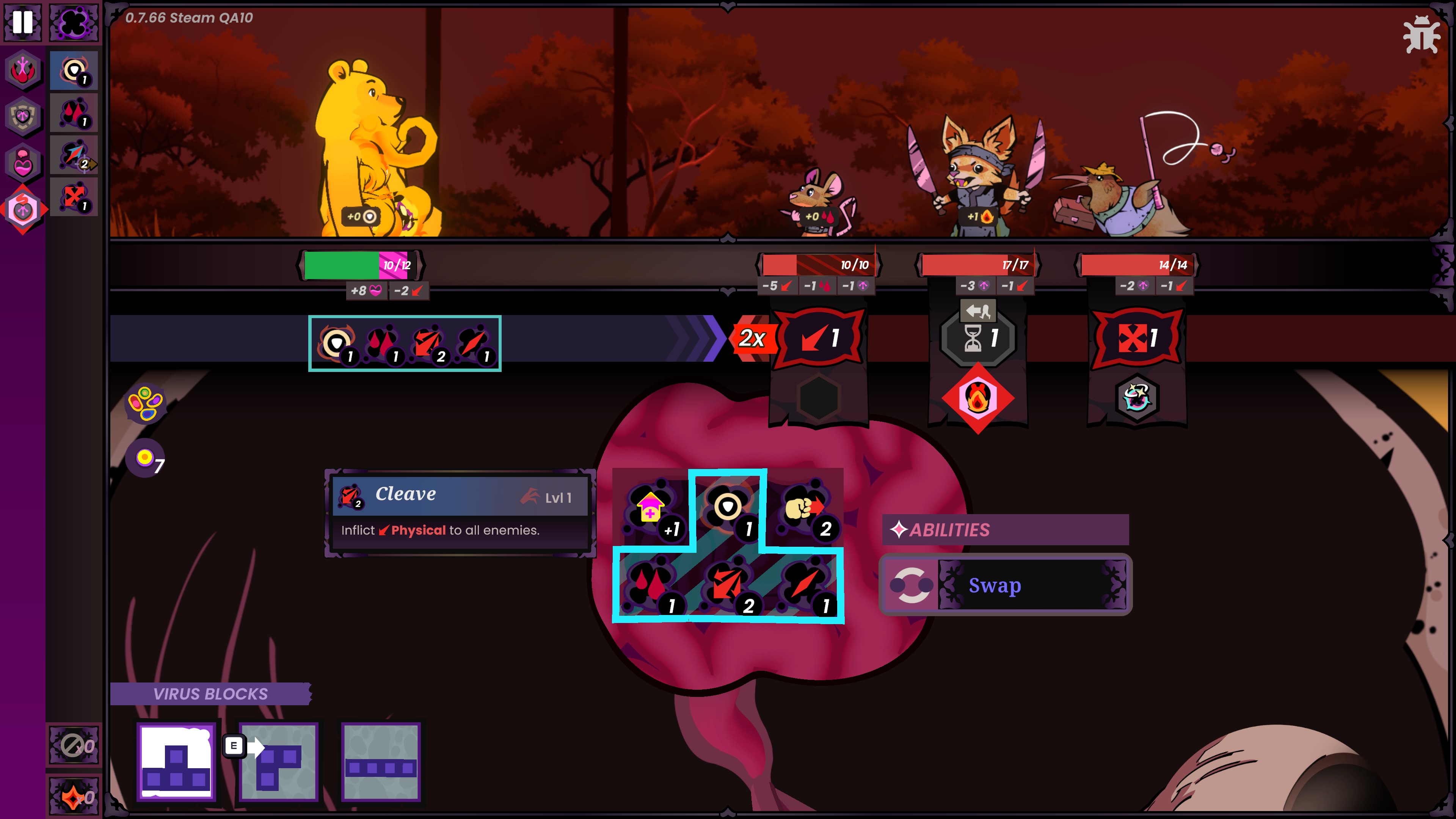
‘It was originally an auto-battler, which spawned into something that gives the player a bit more agency,’ Boxer said.
‘It’s auto-battler-ish but then you’re directing each turn…I love how accessible auto battlers are, but I also really like the strategy that you get, and the depth, from turn-based deck builders.’
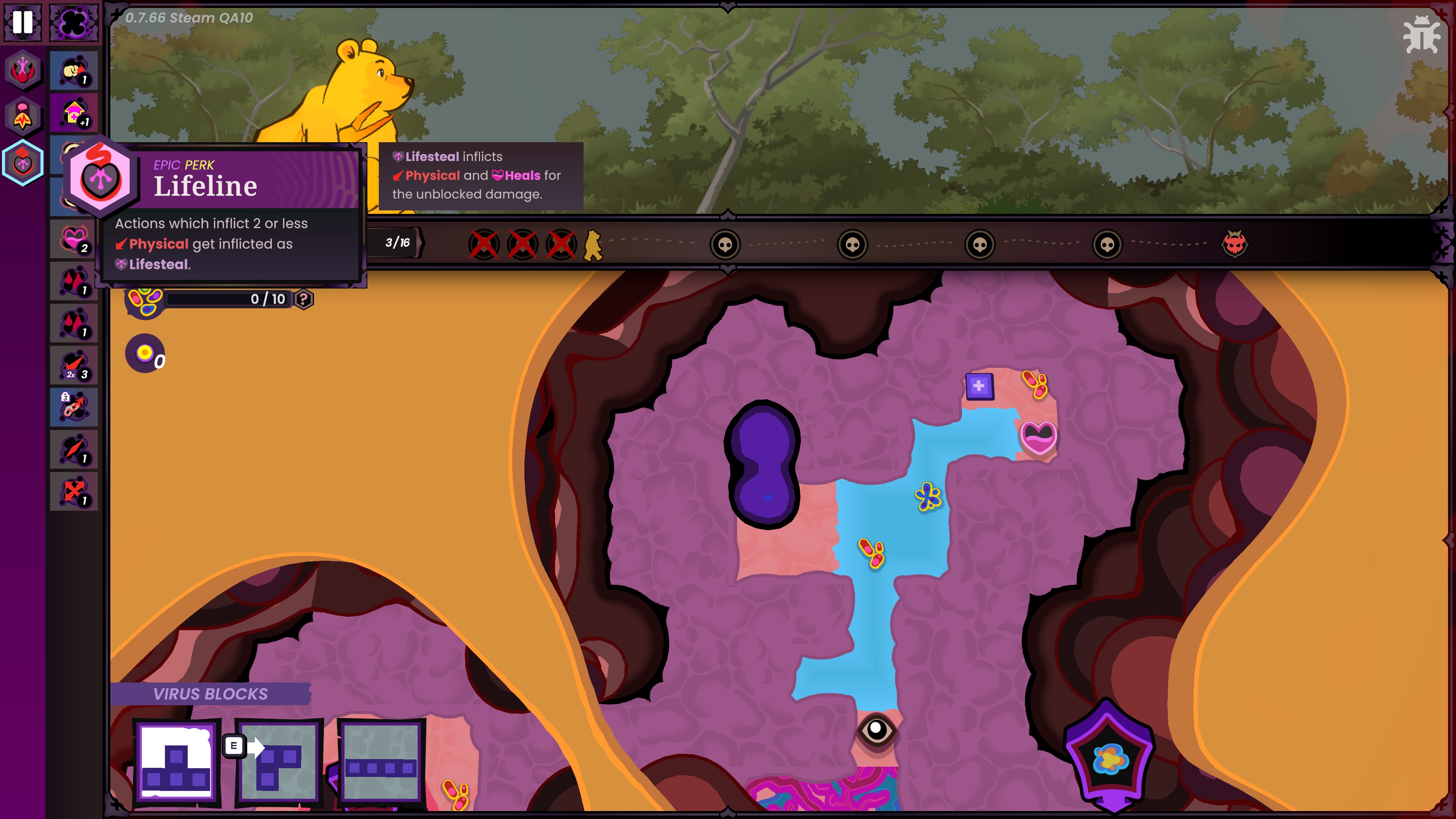
Working alongside the Twice Different team, Boxer spent about nine months prototyping and iterating on a combat system that would be both fun and rewarding as well as unique. He admits it would have been easy to build on the success of Ring of Pain, to create a sequel that would serve an existing audience. But the idea of creating something original, and entirely different, had strong appeal.
There were teething issues along the way, including the involvement of lawyers to ensure the game didn’t infringe copyright law, and iterations of characters to create a new interpretation of Winnie’s world.
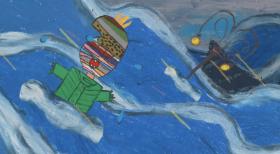
Eventually, Boxer and the Twice Different team settled on a ‘grimdark’ fairy tale style, with an edge to the humour and light touches of body horror.
‘I wanted to get a bit more Brother’s Grimm, sort of a dark edge to it,’ Boxer said. ‘Between Darkest Dungeon and a Nickelodeon cartoon vibe. And then also pave way to have these grotesque close-ups, kind of comedy cutaways. It took a bit of iteration to get just right.’
‘It was trying to find a middle ground between this more child friendly, sort of cartoony expression, and then “grittifying” it…but still hopefully appealing to people. It’s a bit more palatable than full horror.’
As players will note, there is a balanced tone in the game. As you roam, you’re controlling a terrifying, fleshy version of Winnie-the-Pooh, complete with extra limbs, extra mouths, and extra eyes – but the game couches this transformation in lighter tones. It doesn’t specifically focus on body horror, but rather the quirkiness of Winnie’s condition. It’s odd and remarkable, rather than absolutely, gut-twistingly horrific.
As Boxer told ScreenHub, this was intentional, to keep the game approachable for players of all kinds.
Winnie’s Hole is oozing towards a bright future
With Winnie’s Hole now released, and already gathering an audience of curious deck-builder fans, Twice Different is now focused on serving its community and planning for the future.
One of the biggest lessons Boxer learned through the development of Ring of Pain was the importance of interacting with community and listening to feedback. With Winnie’s Hole in early access, there are plans to listen deeply to player experiences, and to adapt and grow the game for this audience.
After wading through doubts – as late as 2025, the team considered rebranding Winnie’s Hole – Twice Different is now looking to ‘conclude this experiment’ and see it through to its wild and wonderful conclusion with the help of its playerbase.
Born from strange origins, and built on quirky foundations, Winnie’s Hole isn’t your typical roguelike. But that’s what makes it such a compelling game. It’s not only the novelty of experiencing a horrific reimagining of Winnie-the-Pooh that makes Winnie’s Hole a joy; it’s also the strong gameplay mechanics and the real sense of ingenuity that backs every turn.
Twice Different has created something very odd in this rougelike adventure, and it succeeds on that sense of oddness. In future, the studio plans to double down on this, expanding Winnie’s Hole until it matches the ambition (and the mania) of its development team.