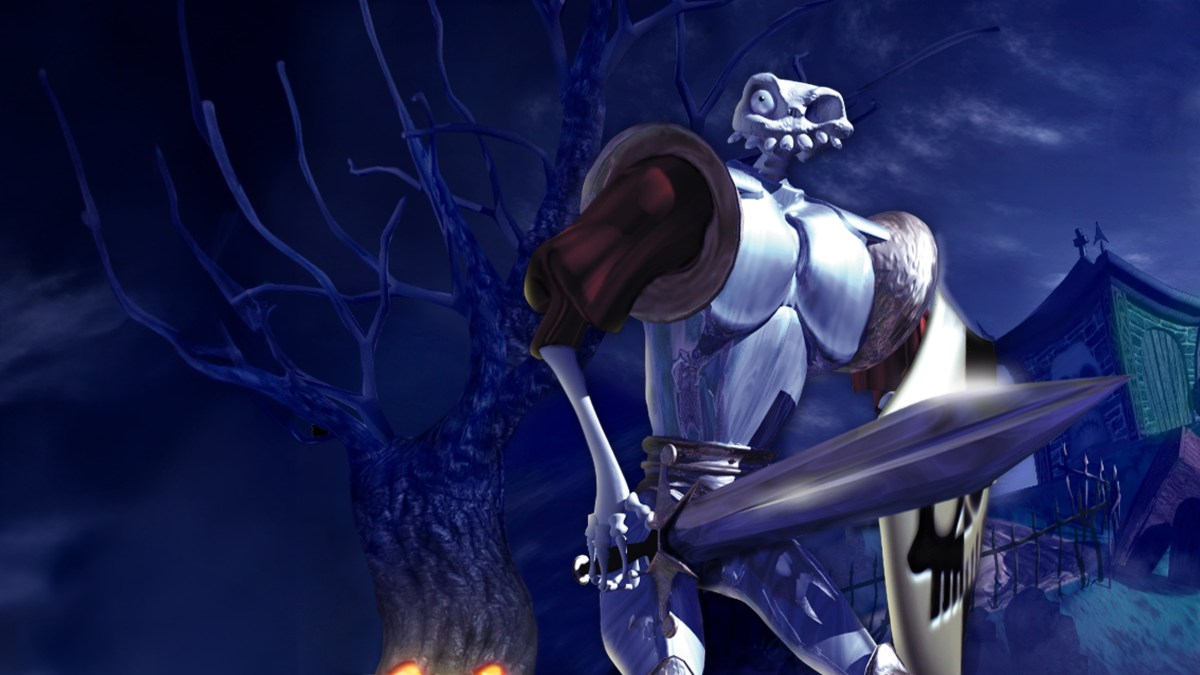
MediEvil was one of the first games I ever played on the original PlayStation. It fascinated and horrified me in equal measure, thanks to its horror-comedy styling. When I was younger and watching my siblings play the game, I developed nightmares around one particular cutscene, where the camera barrels towards the gaping, open mouth of a zombie. Later, once I got over the fear, I appreciated it more as a colourful, creatively-minded adventure platformer stuffed with novel ideas.
Replaying MediEvil over the holiday break, I was delighted to discover that while age may have impacted the game’s finer details, its brightest ideas still shine. MediEvil has stood the test of time, thanks to era-agnostic humour, Nightmare Before Christmas-inspired worlds that remain in vogue, and action that is consistently meaty and satisfying.
Why the original MediEvil is still worth playing – quick links
All things retro are new again
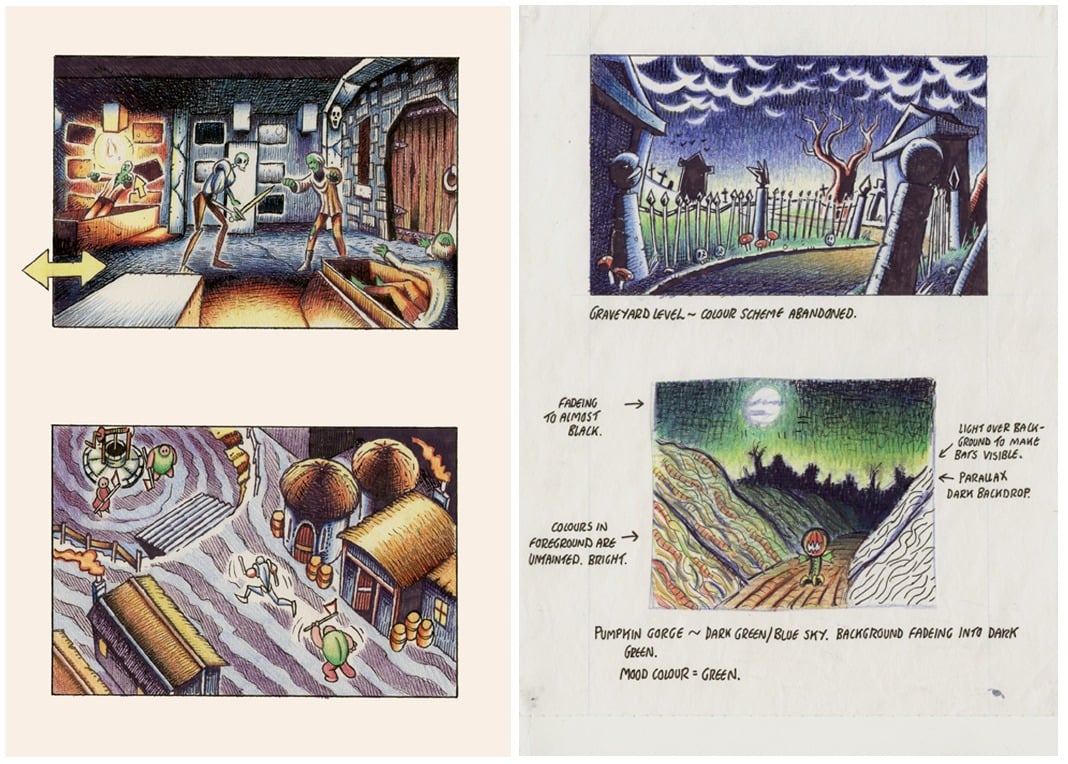
While decidedly retro, MediEvil remains in style, with a colour palette and level locations that still look good. Even reduced to a polygonal state, you can see the work of artist and designer Jason Wilson in every aspect of MediEvil, as revealed in concept artwork posted online.
In this art, you can see the lush shades intended – glowing greens and oranges, rich purples – and the high contrast between light and shade that gives MediEvil its dramatic, gothic hues. A good game begins with novel concepts, and you can see the origins of this franchise in every lushly drawn artwork.
What’s staggering is the detail – just how minutely this game’s details were planned out, from overarching level design to colour palette, and the pieces taken from The Nightmare Before Christmas.
Even the pieces that didn’t make it in (recently salvaged on YouTube) – a giant pumpkin monster with giant tentacles, and the whispered-about Jabberwock stage – brim with a real sense of novelty and fascination.
Looking at the game with a mature eye, it still stands out, even amongst more technically-accomplished games for modern consoles.
Perhaps that’s down to bias, that MediEvil released in a time with fewer games, when new releases were allowed time to breath. There’s certainly elements of nostalgia that play into this assessment. But it feels rarer, in the modern era, to encounter a game with such a strong sense of visual identity, with levels that stand out for making bold stylistic choices, and for featuring such cool, inspiring ideas.
MediEvil brims with novel, never-repeated ideas
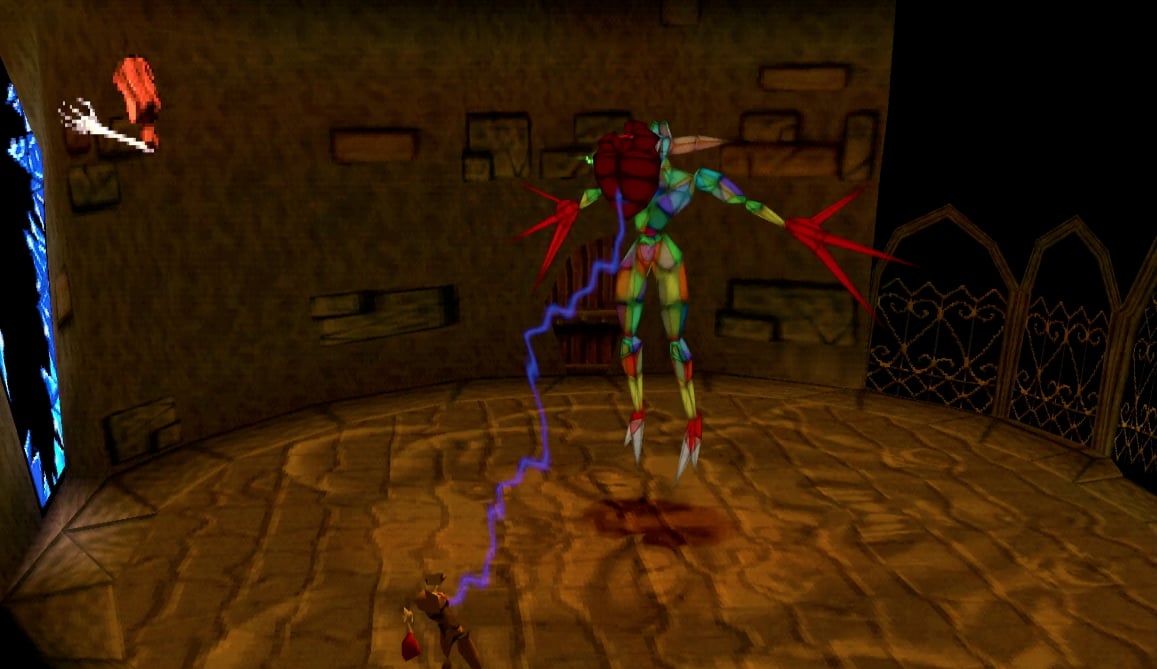
I’ve never really gotten over the brilliance of a demon made of stained glass, that extricates itself from its panel in a shatter of magic and evil. Or a magical forest where a witch brewing potions shrinks you down to ant size to collect shards of amber.
That’s not to mention facing off with a giant evil pumpkin, or shaking down rocks to squish a fire-breathing dragon, or the encroachment of shadow demons, or the breath-taking sight of wandering beneath the ocean, and seeing sea creatures frozen by magic.
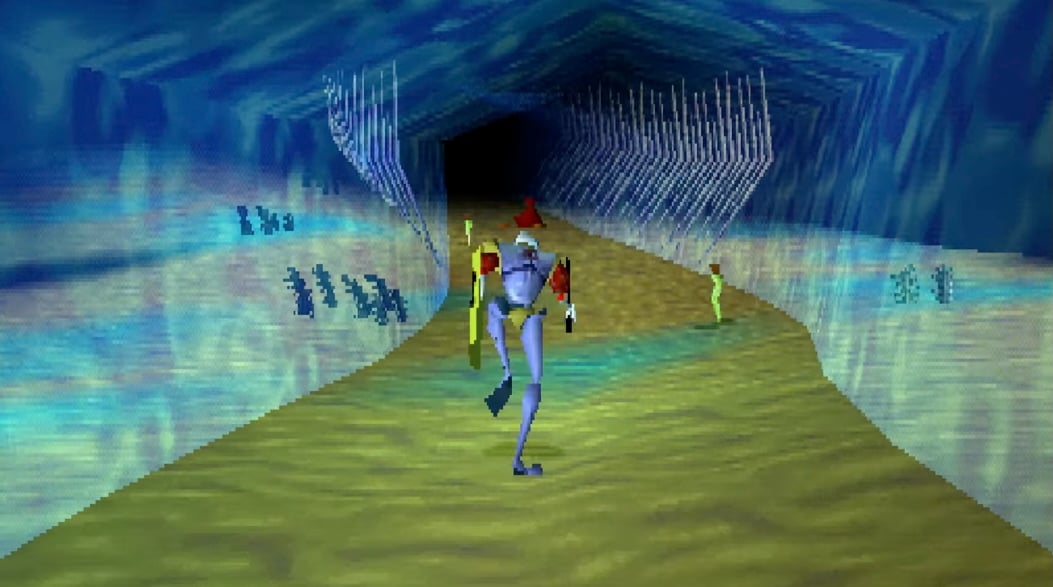
There’s so many great, cinematic moments in MediEvil that have seared themselves into my brain – and that still hold up. There’s so much drama and panache in these games, thanks to choices like a high contrast palette, and an ever-present darkness that defines each step forward. This particular facet is thanks to the limitations of the original PlayStation console, but it still lends the game a sense of terror, as the darkness presses in on all sides – or in one level, chases you at your back.
Replaying MediEvil 2 – the lesser of the two main games – I remained struck by the development’s team commitment to consistently fresh ideas. Having to face down towering dinosaur skeletons animated by evil magic, having to box with a Frankenstein’s monster of parts, and even having the protagonist Daniel Fortescue’s hand-mounted-head become its very own character.
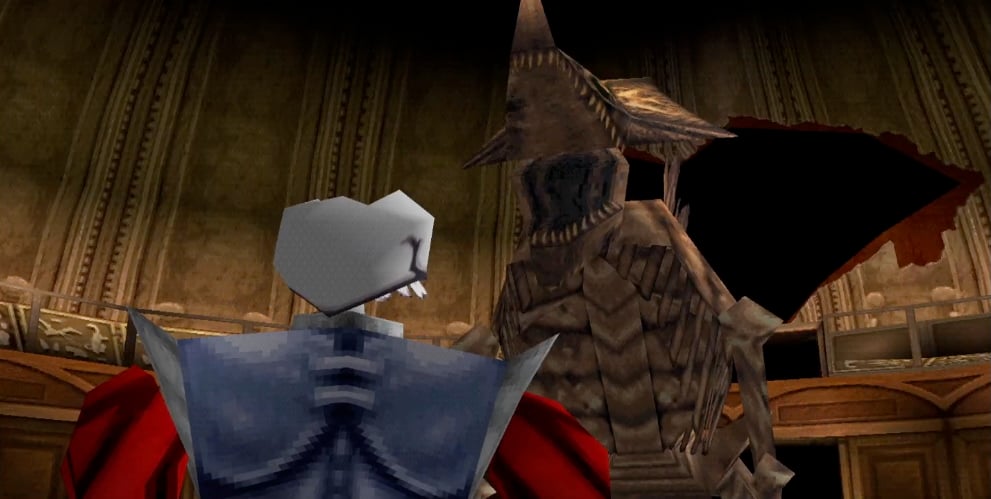
This title introduced concepts of time travel and the end of the world, expanding MediEvil‘s lore and legacy in surprising ways, all while maintaining its commitment to gothic style and flourish.
With the subsequent launch of double reboots MediEvil: Resurrection (a game best left unspoken about) and the 2019 MediEvil remaster for PlayStation 4, the legacy of the original MediEvil games has been muddied. Revisiting them recently has been a real breath of fresh air; a testimony to how brilliant and enduring the original two games are.
In a sea of games, where originality often struggles to be seen, it’s worth revisiting the original MediEvil games, to discover exactly how creative, innovative, and stylish they remain – even beyond the rose-coloured lenses of nostalgia.
Only rare game franchises have captured my heart like MediEvil. While it’s frequently skipped in discussions of great, classic games, my replay made clear that it should never – absolutely never – be forgotten.