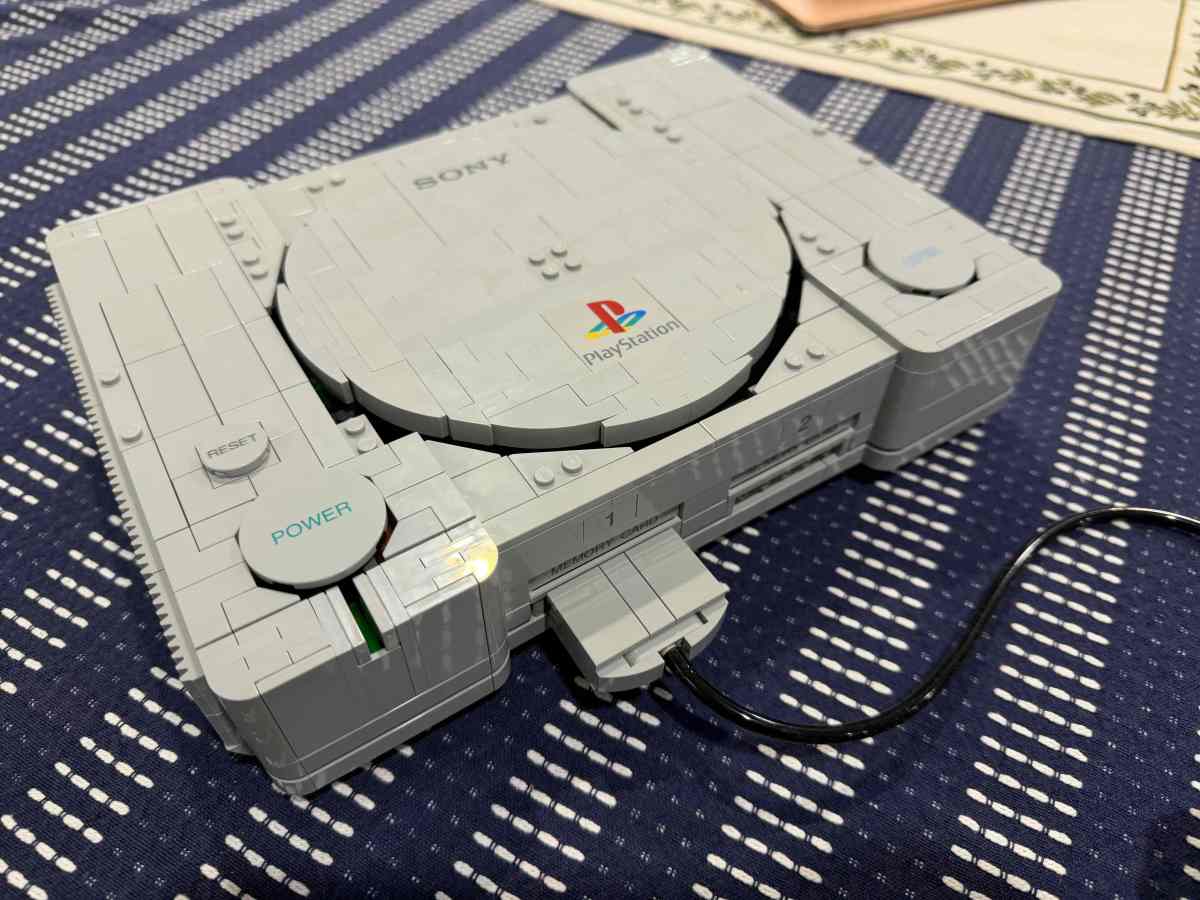
Lego’s new PlayStation console set is one of pure nostalgia, particularly for anyone who grew up playing the original device, in an era that seemed a lot less complex than that of today.
The original PlayStation was the first gaming console in my household. Technically it was a gift to my brother, but we were a household that shared – and so, the PlayStation belonged to everyone. We weren’t allowed to play on school days, of course. We couldn’t be distracted from homework and study. But on weekends, the PlayStation was a device of great freedom, allowing us into gorgeous and (at the time) groundbreaking gaming worlds, filled with surprises around every corner.
Me and my siblings would all take turns playing the console, helped out by our mother when the going got tough. She got really good at the Crash Bandicoot diving levels. I never developed an affinity.
The Lego PlayStation is a representative of the freedom and fun promised by this first console, as a stand-in and reminder of a past that seems so beautiful and carefree now, two decades on, in a world much changed.
Lego PlayStation brims with nostalgia – quick links
The beauty and freedom of gaming on PlayStation in the early 2000s
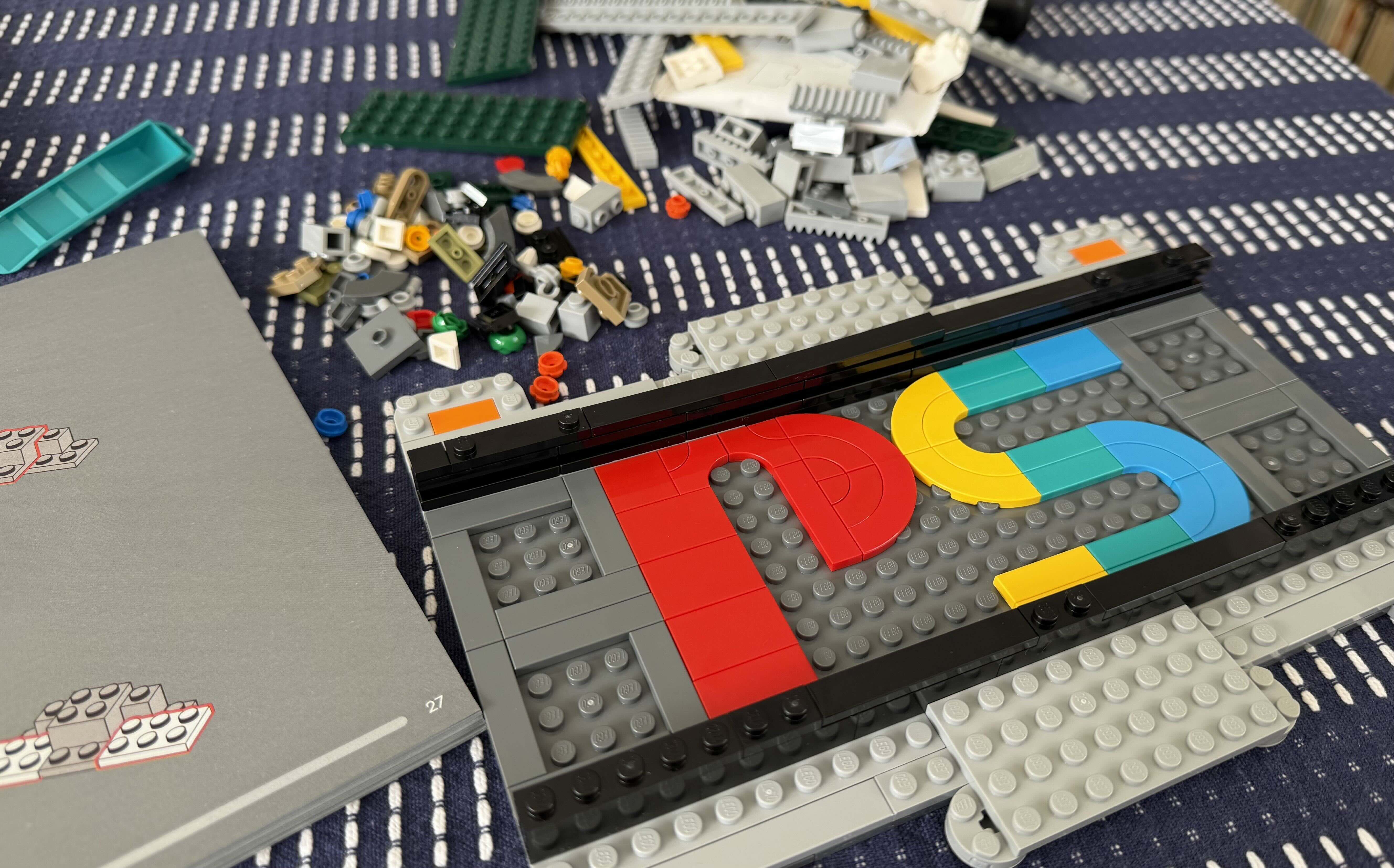
The Lego PlayStation build begins with a facsimile of the original PlayStation logo, rendered in simple form. If you’re familiar with the introductory screen of the original PlayStation, you’ll remember the reveal of this logo came with a sound effect.
It was a signal that you were in for a wonderful evening of discovery and play, or perhaps even a bit of challenge.
I have such fond memories of the original PlayStation. It inspired a love for gaming that has led me all the way here, to a near-decade-long career as an entertainment content creator with a focus on screen and games. I don’t think I’d be here without the original PlayStation. With the career I’ve had so far – and all the fun, rewarding experiences – I can only be grateful.
My first touch with the PlayStation involved a cavalcade of platforming classics: Spyro the Dragon, MediEvil, Ape Escape and Crash Bandicoot.
All were favourites, but I have a particular fondness for Spyro the Dragon and particularly Spyro 3: Year of the Dragon. All three games in this trilogy are perfect in every way. Maybe that’s the nostalgia speaking, but these games are classics for a reason. They make the most of the relatively limited horsepower of the PlayStation, inviting players into vast, colourful, creative worlds that are a pleasure to explore.
It’s easy to look back on these games now and see the blockiness of their graphics, or the uncanny, terrifying nature of some in-game enemies and levels (Jacques is a shocker, and looks genuinely horrific). But at the time, they were genuinely groundbreaking and eye-opening, and nostalgia colours between the lines, as well. It’s like Plato’s Cave. At the time, this was all we knew of gaming, and so we thought it wonderful and dazzling, and that games could never get any better.
MediEvil is another game that stuck out, and likely shaped my particular taste for gothic media. In this game, you play undead knight Daniel Fortesque, whose own mythology has disguised his status as a coward and not the gloried war hero he’s made out to be. In a journey of repentance, he must forge a new legacy, taking his rightful place as a warrior of worth.
This game features such bold and creative ideas that remain standout. As we’ve all been discovering lately, it’s not so much the creation tools that appeal when considering the value of media; what makes games and stories shine is the creativity of the ideas. As the saying goes, you can’t gild a lemon. Golden shit is still shit.
In our modern media landscape, it will be the cleverest and most authentic ideas that grab attention, and not the ones with the sleekest, shiniest presentation.
MedEvil absolutely rips, and it still brims with powerful ideas. There’s the Stained Glass Demon boss fight, which is still being riffed on today. There’s an entire level where you’re shrunk down to the size of an ant. The demon sequence in the Enchanted Earth is still enrapturing. All of that, and the game’s final stanzas remain its best, as you plough through a pirate ghost ship and meddle through time, until you come face to face with the creepy, awesome Zarok boss fight.
ScreenHub: Beyond nostalgia, MediEvil remains one of Sony’s most creative franchises
And then of course, we come to Ape Escape – another personal favourite, and well represented in the Lego PlayStation build.
Ape Escape and the Lego PlayStation
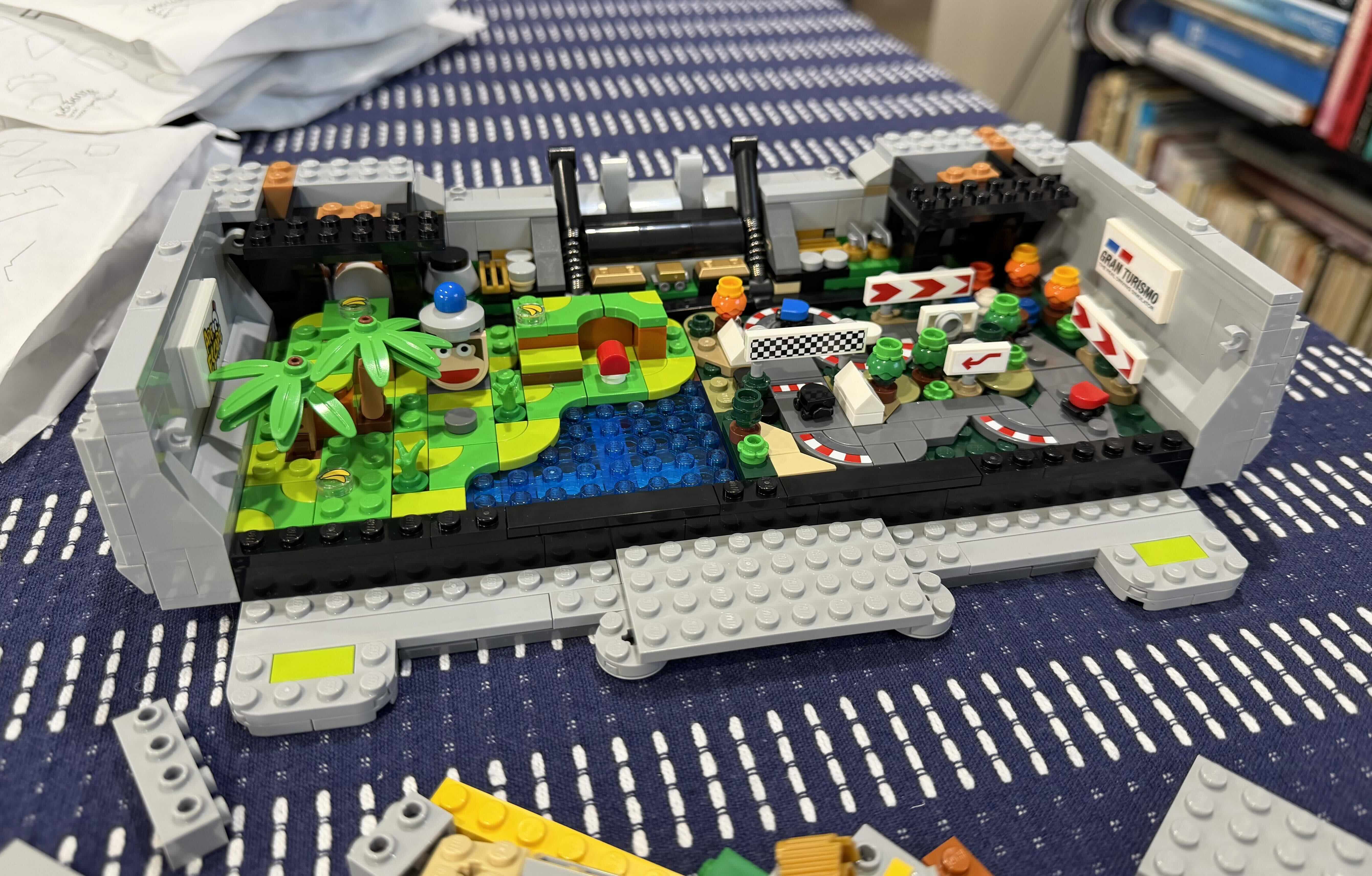
Around the halfway point of the Lego PlayStation build, you’ll start working on the secret innards of the device. This features two rolling ‘cartridges’ featuring Ape Esape and Gran Turismo. You might ask why these particular franchises were chosen. The simplest and most likely answer is they’re both franchises that PlayStation owns, which don’t come with much modern baggage.
Personally I think Gran Turismo is a so-so choice. It’s certainly got the history to earn its place on the console, but I do think there were more interesting options, MediEvil being an obvious one. But that opinion is informed by personal taste, and I know there are plenty of folks nostalgic for Gran Turismo too.
Ape Escape, I’m glad to see included in the console. In the modern era, it’s getting its fair share of the love, with plenty of recent calls for a new game in the franchise, buoyed by nostalgia and what is a very, very good suite of early, timeless games.
The original Ape Escape is simple and snappy. You play as Spike, an intrepid youth armed with an array of gadgets to deal with an invasion of mind-controlled monkeys. Run after them across various brightly-coloured, blocky stages, swing your net to grab them, and you’re in business.
The Lego PlayStation represents the opening level of Ape Escape, The Lost Land, very well. It’s got the banana trees down, as well as the textured grass and nearby river. It’s got an array of neat little features recognisable to fans of the game – a mailbox, tiny bananas and a monkey head monument. It’s not easy to represent an entire level in Lego like this, and it’s very well-crafted here.
The Gran Turismo cartridge is also well done, with stickers placed to represent a race track and tiny Lego cars doing loops along it. This could be any race track really, but the stickers add to its flavour and the nostalgia associated with the Gran Turismo series, which was on loop in my house in the early 2000s, but not by my own hands.
A reflective Lego set piece perfect for millennials
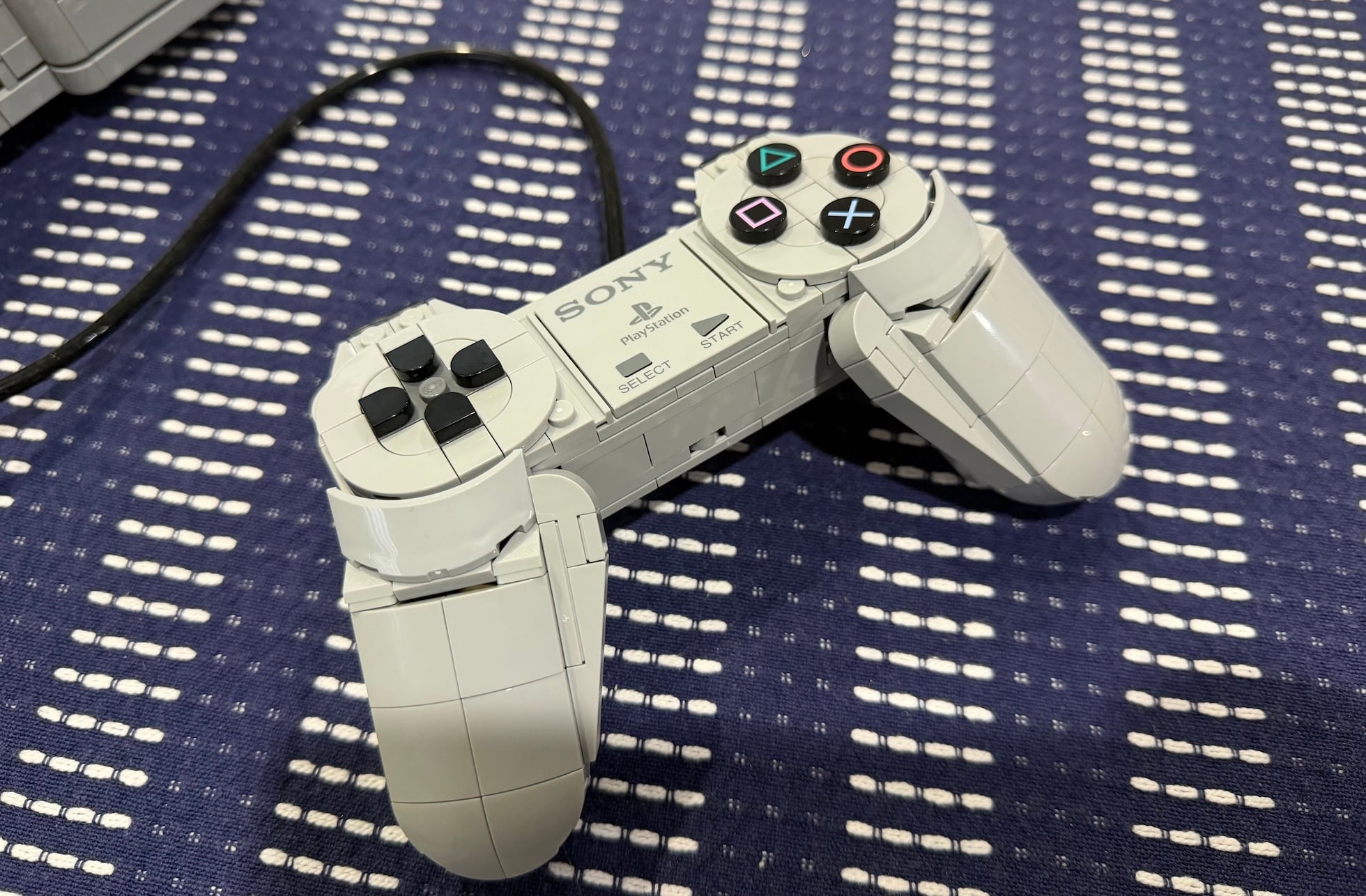
As a set piece, the Lego PlayStation really does evoke nostalgia for the early 2000s. It’s a well-designed and clever creation that features just enough functionality and neat presentation to stir up old memories. You can click both of its buttons. The left one summons a green rod that emulates the power button. The right one flips up the lid of the PlayStation, as the original console flips up.
There’s no disc inside the console unfortunately, but the presentation of the Ape Escape and Gran Turismo cartridges is a nice touch, and one that serves as more of a metaphor for what the PlayStation offered to young players in the late 1990s and early 2000s.
It was a machine that allowed for deep exploration of magical and glorious worlds. It provided an escape from the real world, with its creative, gorgeous realms and light puzzle challenges. As a young kid, it promised new worlds. The chance to play and discover, and to fully immerse myself in these virtual realms.
It was also a social promise – one of spending time with family, bonding with my siblings and my mum. Through the years, the nostalgia for this time, and the shared love for gaming it inspired, has mostly helped keep us together.
Suffice to say the PlayStation had an impact on me. It shaped who I became, and who I still am.
Maybe there’s a Sliding Doors version of me that wasn’t introduced to gaming with the original PlayStation. They would be an entirely different person, with different interests, and an entirely different career. It’s not for me to know, but it’s certainly compelling to think about.
It’s all in the magic of gaming, and what a first console can do.
The Lego PlayStation was provided to ScreenHub by PlayStation.