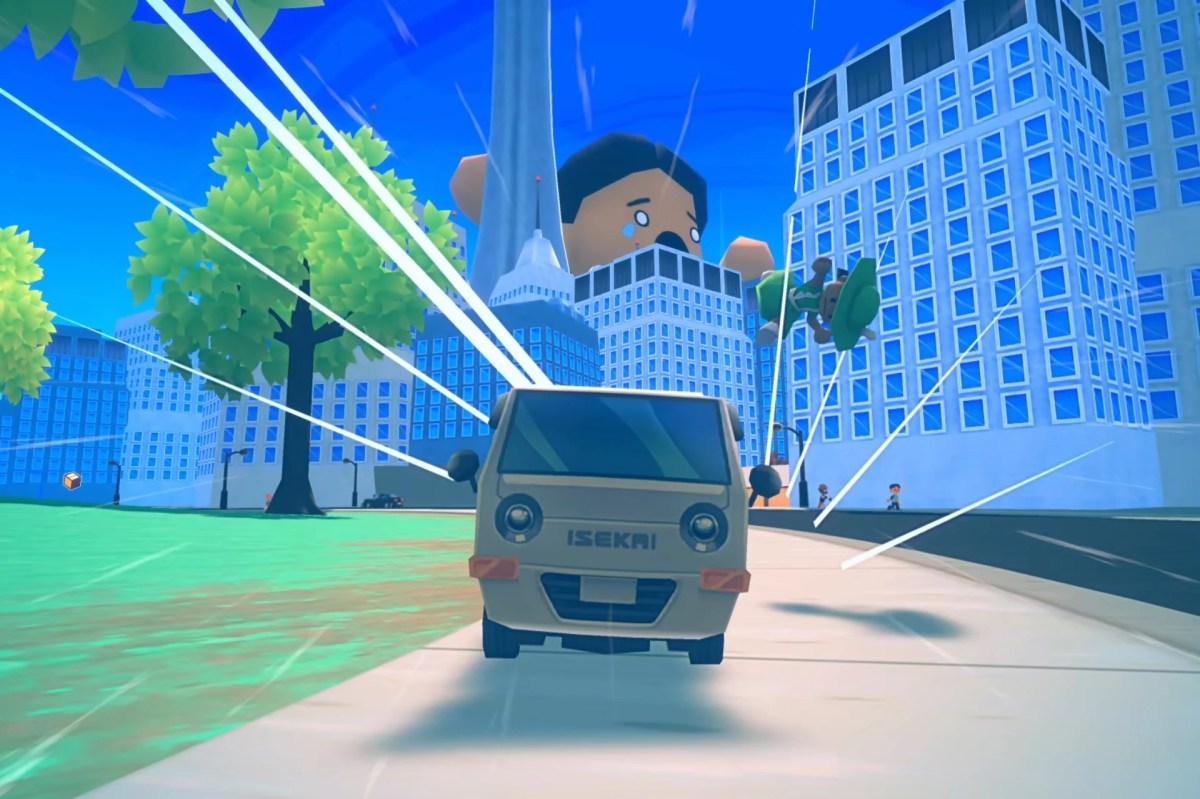
At GCAP 2026, game developer Amanda Farough, Director of Production at Causeway Studios and Executive Producer and Writer at Strange Scaffold (Truck-kun is Supporting Me from Another World?!, Teenage Mutant Ninja Turtles: Tactical Takedown), delivered a standout talk about the importance of multi-classing – taking on multiple roles guided by expertise – within the games industry.
Speaking to her own experiences, Farough described the multi-classer as being a very underrated but essential part of game studios, with multi-classers able to have a significant impact on games production while elevating everyone around them. Farough described her own journey to becoming a multi-classer, as well as encouraging others to take a similar path, with advice for how to get started.
Here’s everything we learned from Farough’s GCAP 2026 talk.
How to become a multi-classer talk roundup – quick links
What a multi-classer is, and what they can do
Throughout Farough’s career, she has taken on a range of responsibilities, guided by her interests and skills. In her talk, she described starting on the business side of technology development before moving into design, operations, production, writing, programming and even becoming an author.
While Farough described each specialist skillset as being important and valuable, she also said that becoming a multi-classer can be transformative and help to elevate individuals in the workplace.
A multi-classer, in this case, is someone who’s able to take responsibilities in multiple fields – a bit like creating a character in an RPG that could be a bard, a warrior, a magician, or another class. It’s about adding to your current skillset and ‘reframing’ what you can do.
‘Creative jobs are often cut first,’ Farough said.
To help combat this, creatives should consider adding to their skillset. Not only to reduce the risk of being made redundant – which has become a clear fear of most in 2026 – but to meaningfully elevate your work and give the ability for cross-disciplinary understanding.
‘It’s about adding different skills that can deepen our knowledge and broaden our capabilities,’ Farough said. ‘We can be expansive.’
For a business, someone who is capable of tackling multiple different tasks and understanding the complications of those tasks is an essential and much-needed part of the workforce. They can speak up for coworkers, advise on bottlenecks and enable growth simply by their expertise.
Game developers need a new way to build their careers
Per Farough, a significant challenge currently facing the games industry is a hyper-specialisation of developers that can lead to blown-out budgets and eventual needs to cost-cut. As Farough says, it wasn’t always this complicated, and there are no obvious solutions.
Still, developers must work at protecting themselves and their careers – and this includes not siloing themselves into hyper-specialist roles which may become redundant in future. As well as developers themselves working at this, Farough shared a belief that studios must also change their structures to accept this and make space for cross-disciplinary workers.
Early into her career, recruiters reportedly tried to silo her into her chosen role. Across her career, she wanted to continue proving them wrong by taking on new skills and underscoring that multi-skilled developers can be amongst the most valuable to the game development process.
How to become a multi-class game developer
Per Farough, there are many pathways to becoming a multi-class game developer, the most obvious being education and learning courses. But before developers attempt to expand their skillset and gather new expertise, Farough believes the most important thing to do is ask why.
‘Find your why,’ she said, as inspired by the writing of author Simon Sinek. Everyone’s why is different, but they are all connected by personal motivation, curiosity, belief and confidence. You must find what motivates you, what you’re good at and build your skills in those directions.
‘Everyone needs autonomy, mastery and purpose in work,’ Farough said.
The journey isn’t easy, as Farough said. You must keep your friends and family close along the way, to help support and nurture you. You must keep your networks open, and find genuine meaning and relationships within them.
‘To sustain this non-linear career we must be lifelong learners,’ Farough said.
Cross-disciplinary training is important. Small steps to something greater are important. As Farough says, it’s not necessarily about taking on more work, but taking on different work. The role of the multi-classer is to apply their skills, but also work towards empowering everyone else through their knowledge and experience.
A multi-classer is an add-on to studios who can help to mentor others, to check in and provide their expertise, to integrate with multiple other disciplines. As Farough says, the multi-classer should also be a mentor to juniors, and juniors should be an essential part of studios – particularly if they have hope of surviving a changed future.
In closing, Farough outlined that multi-classing is an essential skill and one that will define the future of the games industry.
‘Define your own path,’ Farough said.
With this encouragement, Farough directed game developers to reach for their next steps, identify their next classes, and make themselves invaluable with their knowledge and expertise.