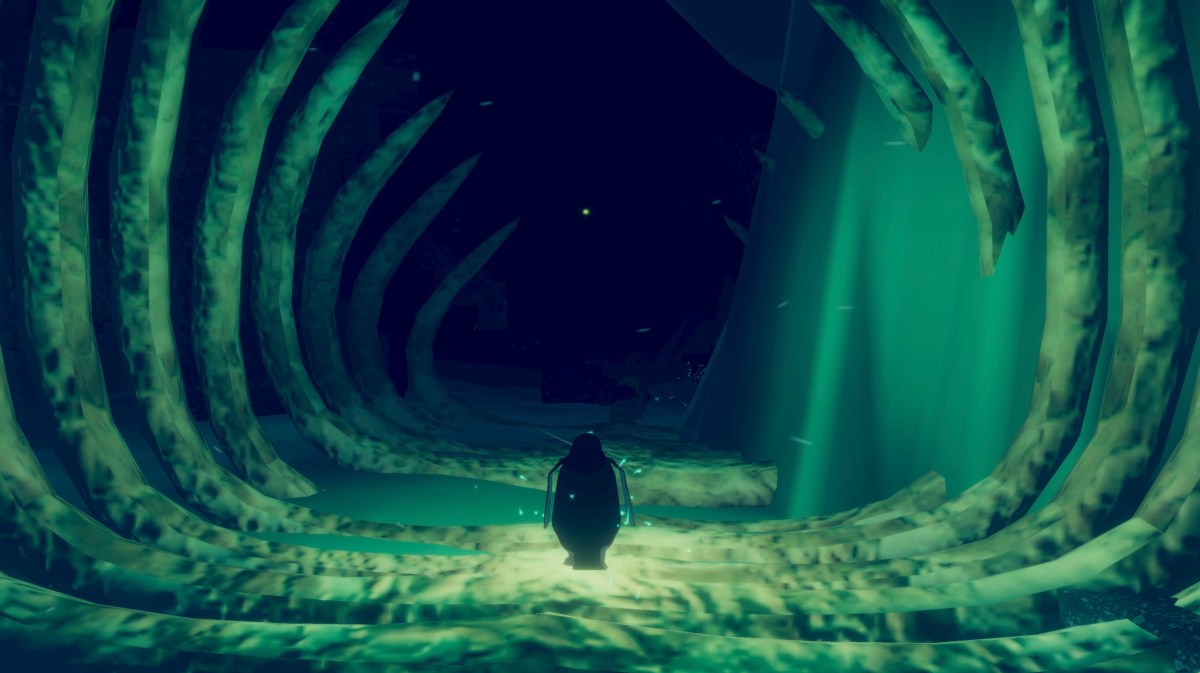
Giving Penguin Colony a review score feels arbitrary. It’s a game that defies descriptions or attempts to put it in a box – less a traditional quest and more an esoteric experience to live within, elevated by a game-like world that supports a housing narrative.
In basic terms, the game is an adaptation of HP Lovecraft’s At the Mountains of Madness, with a flavour of fellow novella The Shadow Out of Time. But rather than being a straightforward exploration of those stories, Penguin Colony offers a deep interrogation of Lovecraft’s original works, what they mean for humanity, and how they can be transformed through shifting perspectives.
As developer Tali Faulkner recently told ScreenHub, many of Lovecraft’s works can be better understood in the modern era by changing the protagonists, revealing more about the conservative, traditionalist and often racist trappings of the original stories.
Penguin Colony shifts the narrative significantly while staying true to the original work, with the perspective of the game’s many penguins, which float along the narrative, fearless and free, serving as indifferent spectators to the plight of men in this doomed tale.
Penguin Colony PC game review – quick links
Guided by voices on the wind
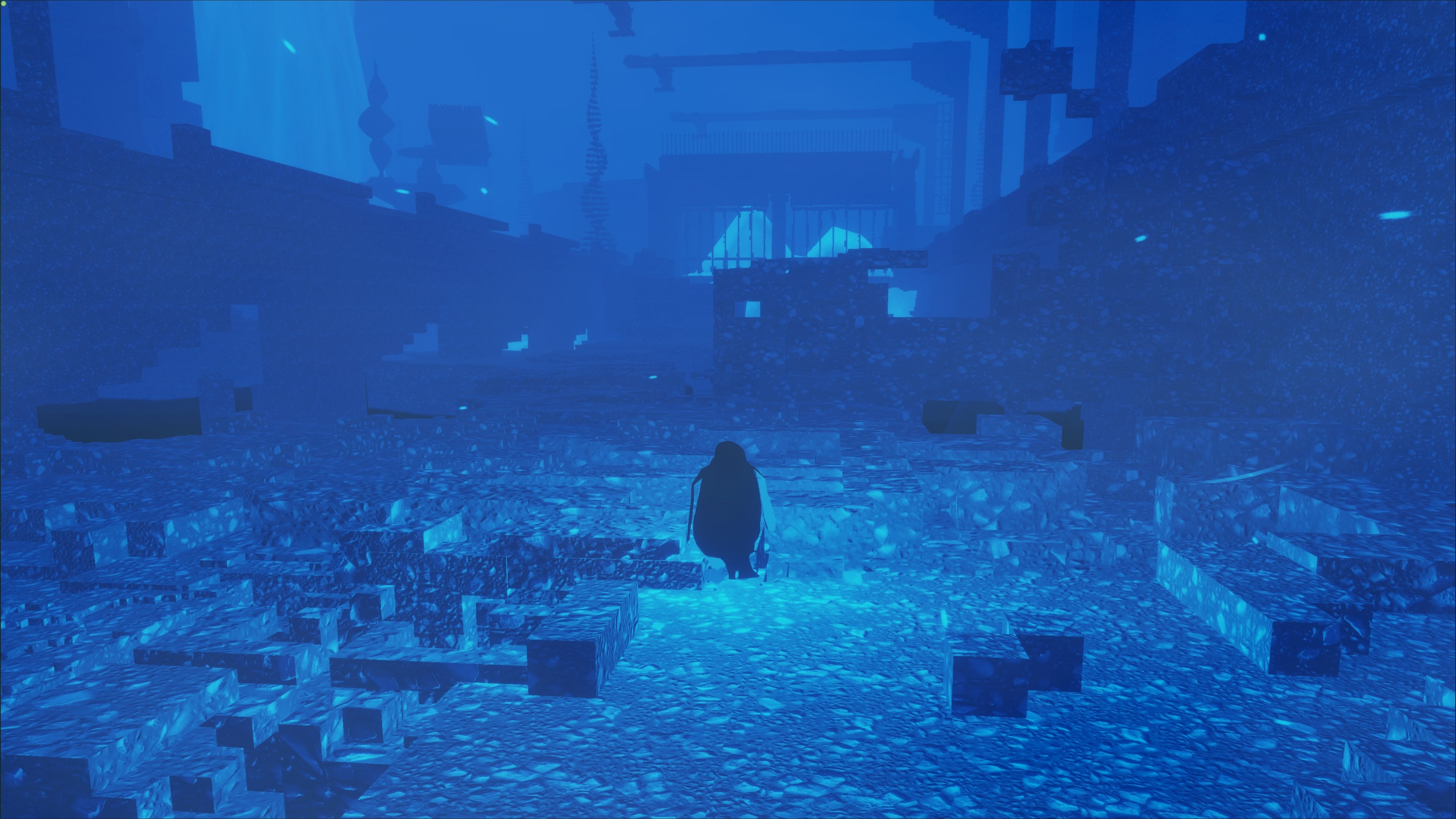
Penguins are the main protagonists here, and they follow along with familiar events, narrated overhead by novella protagonist William Dyer, a man who makes a great discovery in Antarctica only to spiral into madness at its discovery: that the world he knows is more ancient than it seems.
Waddling away in your tiny penguin body, you spend much of Penguin Colony being assailed by Dyer’s words as he reveals more about his doomed expedition and where he sees the future of humanity. You are just a tiny creature, walking through a strange and changing world.
What begins as a journey through ice and snow, with voices on the wind, eventually devolves into objective horror as the quest of humans to discover the secret ancient city of Antarctica drives them to commit horrific acts.
There’s novelty in this shifted perspective.
Rather than being frightened by the cosmic horrors presented – the shape-shifting shoggoth and their tentacles – you observe this world indifferently, expressionless. You’re a penguin. What do you have to worry about the state of the world, or what humans do?
There’s a serene juxtaposition as you travel. One moment you’re gliding across the ice, making full use of high speed penguin transit systems. Then the ice disappears, rough stones emerge, and you run headlong into a camp of skeletons, where the bodies of humans hang from the rafters of mess halls.
In your tiny penguin body you blink, and you can bark at them, but you don’t understand – and don’t care to understand – their nefarious quest to uncover Eldritch horror they have no business uncovering.
The shift helps to reveal the folly at the heart of At the Mountains of Madness. Looking objectively at the death and destruction, you can see the dangers and the evil of the human activity and quests.
In one brief, frightening encounter, you can also see the emergence of pure monsters, and how they will destroy everything, from the animal to human kingdoms. It’s a scene that aids understanding of the story’s lynchpin moment, where Dyer comes face to face with a creature beyond his comprehension, and beyond all his understanding.
Transforming the story through an Indigenous perspective
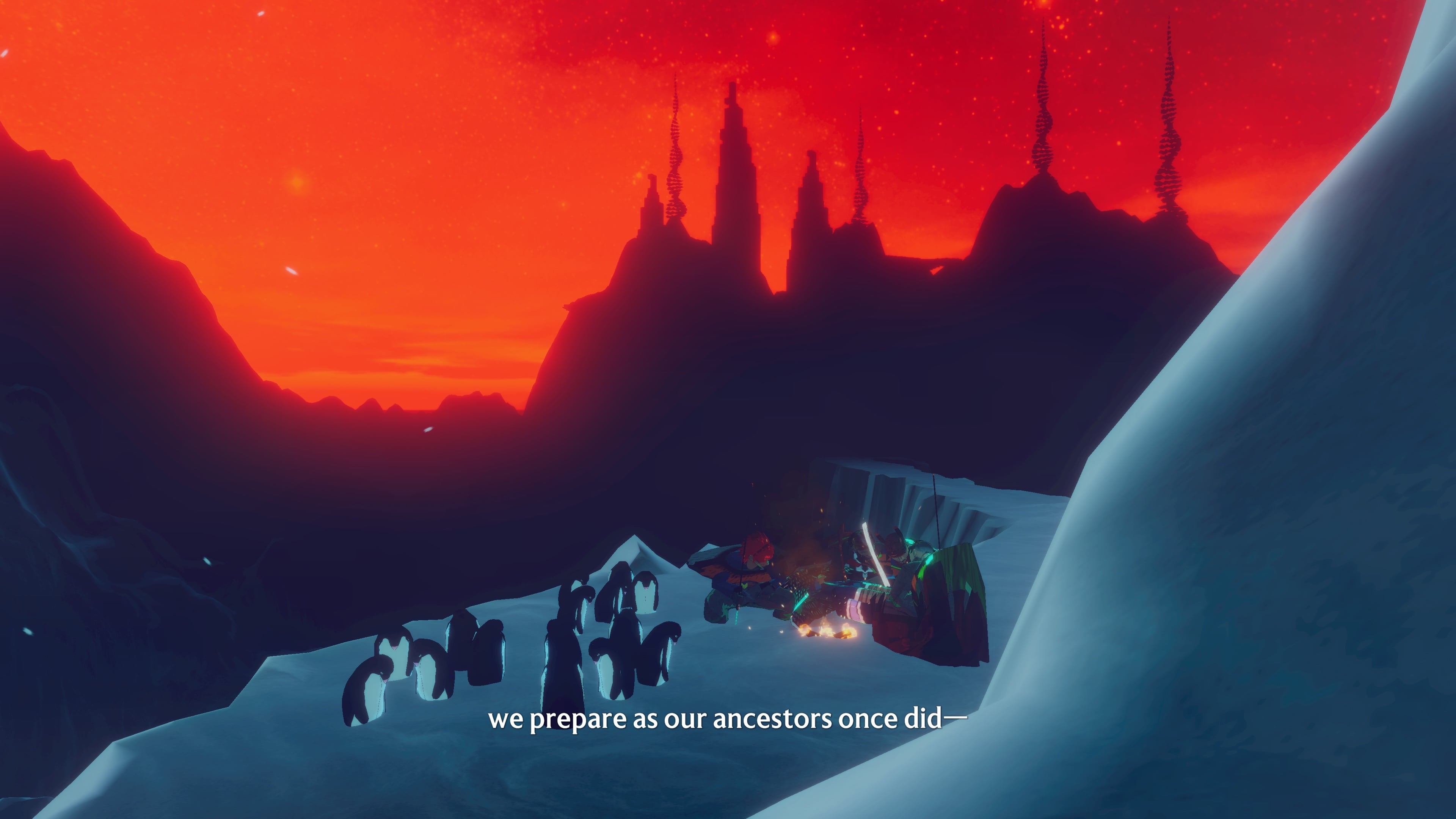
Adding to this objective exploration – a form of cosmic indifference, as Faulkner says – is the addition of new plot points, in the mirrored trek of the Kaitiaki. The Kaitiaki are Māori guardians who seek to put the cosmic horrors back in their box, to seal them away for another generation and to prevent the game’s European, American and Nazi invaders from disturbing the natural world.
The Kaitiaki are protectors and warriors, fighting against the threat of an additional colonisation, that of ancient monsters and gods taking over the Earth.
Their journey recontextualises At the Mountains of Madness as a colonialist narrative, with the Elder Things – ancient beings of great power and horror – standing in for real world colonisers, and their ‘perfect slave’ shoggoths for those impacted by their desires. The Elder Things speak in strange tongues and unleash forces that disrupt the natural world.
There’s a neat parallel drawn here, and one that slowly rises to the surface as you travel through Antarctica in your tiny penguin form and only becomes clear in the game’s resolution, as the threads gather together and you see the true face of Penguin Colony.
The journey of getting there is fascinating: simple at first, but as in the novella, the more you look at Penguin Colony, the deeper it becomes.
A PC code for Penguin Colony was provided by the publisher for the purposes of this review.
Discover more screen, games & arts news and reviews on ScreenHub and ArtsHub. Sign up for our free ArtsHub and ScreenHub newsletters.
Developer
Origame Digital
Publisher:
Fellow Traveller
Release Date:
16 October 2026