Wicked: For Good – quick links
By now, surely everyone knows that Wicked: For Good is part-two of the film adaptation of the Wicked musical, based on Gregory Maguire’s novel, which in turn takes its cue from 1900’s The Wonderful Wizard of Oz by L. Frank Baum, which inspired the 1939 film starring Judy Garland … phew … but in case a quick recap is needed:
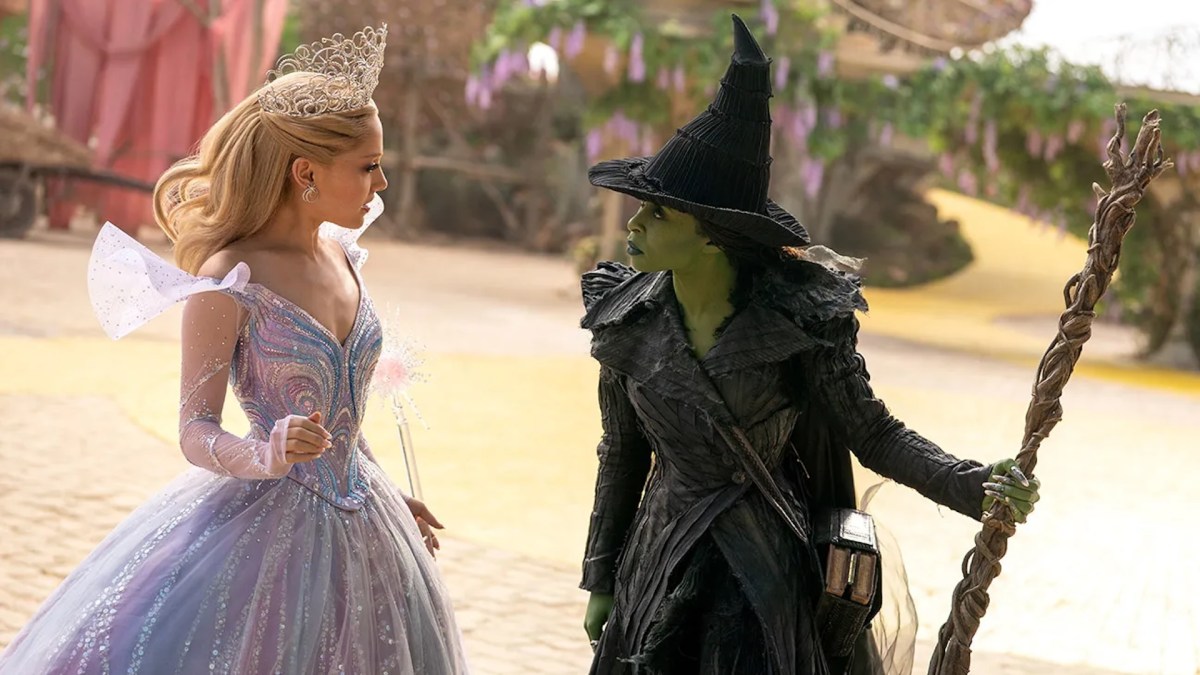
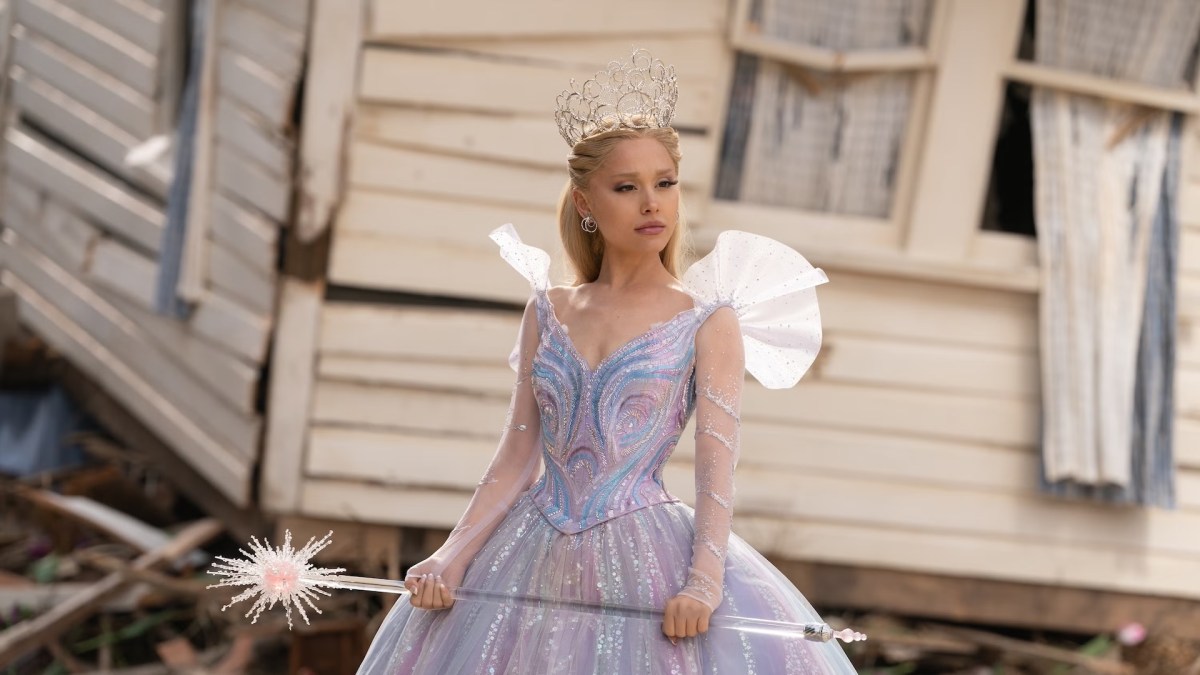
Wicked recasts the original Oz narrative to prioritise Elphaba (Cynthia Erivo) and Glinda (Ariana Grande-Butera), better known as the Wicked Witch of the West and Glinda the Good, focussing on Elphaba’s undeserved vilification and Glinda’s self-serving complicity in the Wizard’s duplicitous regime. In short: Elphaba is painted as a public enemy and Glinda does what she does best: smiles, waves, and shuts her mouth.
Darkness hides beneath the vibrant exterior of the Emerald City, where most Ozians would rather be comforted by simplistic fabrications than face complex truths. Words are contextually juxtaposed to flip their meaning, strengthening the underlying focus on the unreliability of subjective perspective. Elphaba is despised, Glinda is beloved, and the truth is reduced to whatever lie is believed.
Despite their opposing priorities, the bond between Elphaba and Glinda persists … until it’s tested by the actions of Glinda’s fiancé, Fiyero (Jonathan Bailey). In the first film, Fiyero claims to be shallow and carefree, but he has the depth to see Elphaba for who she really is.
In this second film (no spoilers), Fiyero always acts in alignment with his authentic self, even when he doesn’t. In Fiyero’s own words: ‘It’s not lying, it’s looking at things in another way.’
Wicked: For Good – deeper than it appears
Wicked: For Good disguises itself as a fun, frivolous story, but – like Fiyero – it’s deeper than it first appears.
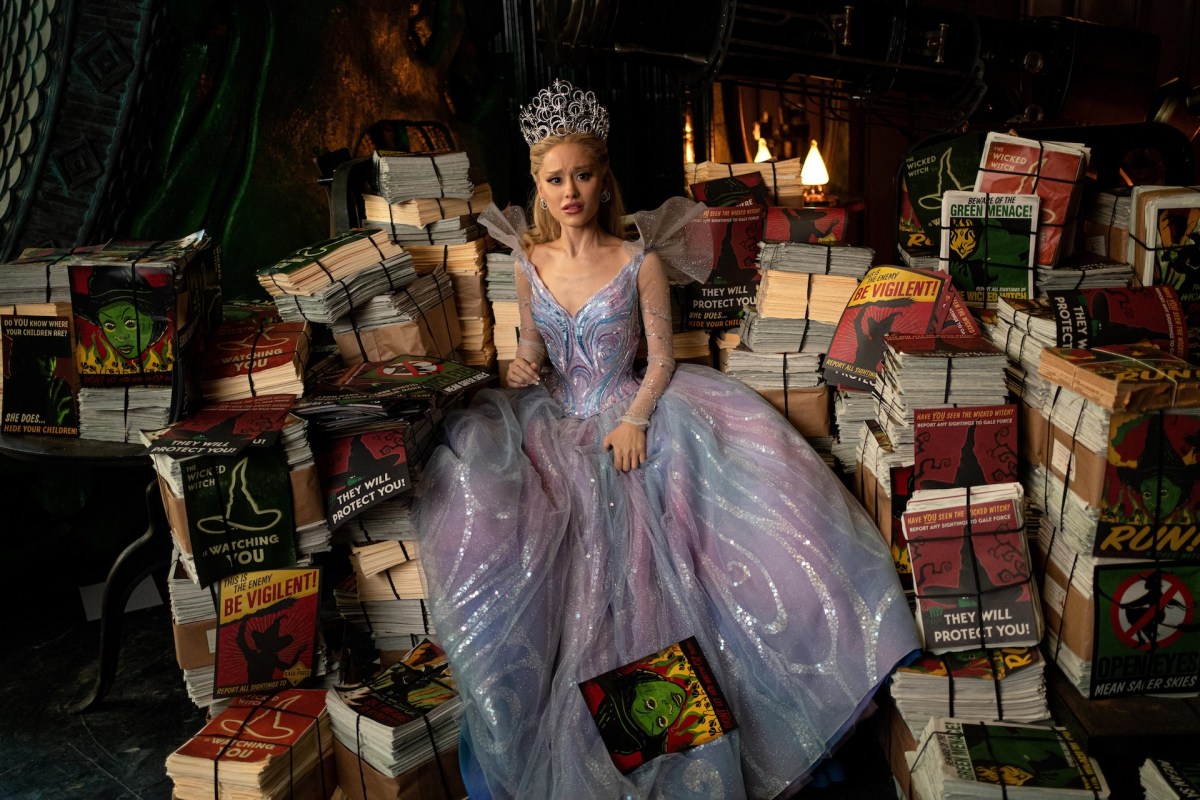
Political undertones are poetically present in the form of hate-fuelled propagandising and discrimination against the voiceless. A sky-writing incident demonstrates how truth can be twisted at the hands of those in power.
ScreenHub: Wicked review: a spell of new life for a timeless story
Madame Morrible (Michelle Yeoh) embodies the spirit of smear campaigns, falsified persecution and the incitement of public fear as a weapon of mass control. These are important elements, but the real weight of this story resides in its exploration of truth, authenticity and ambiguity – emphasised through contrast, perspective and illusion.
Wicked: For Good – appropriately quirky
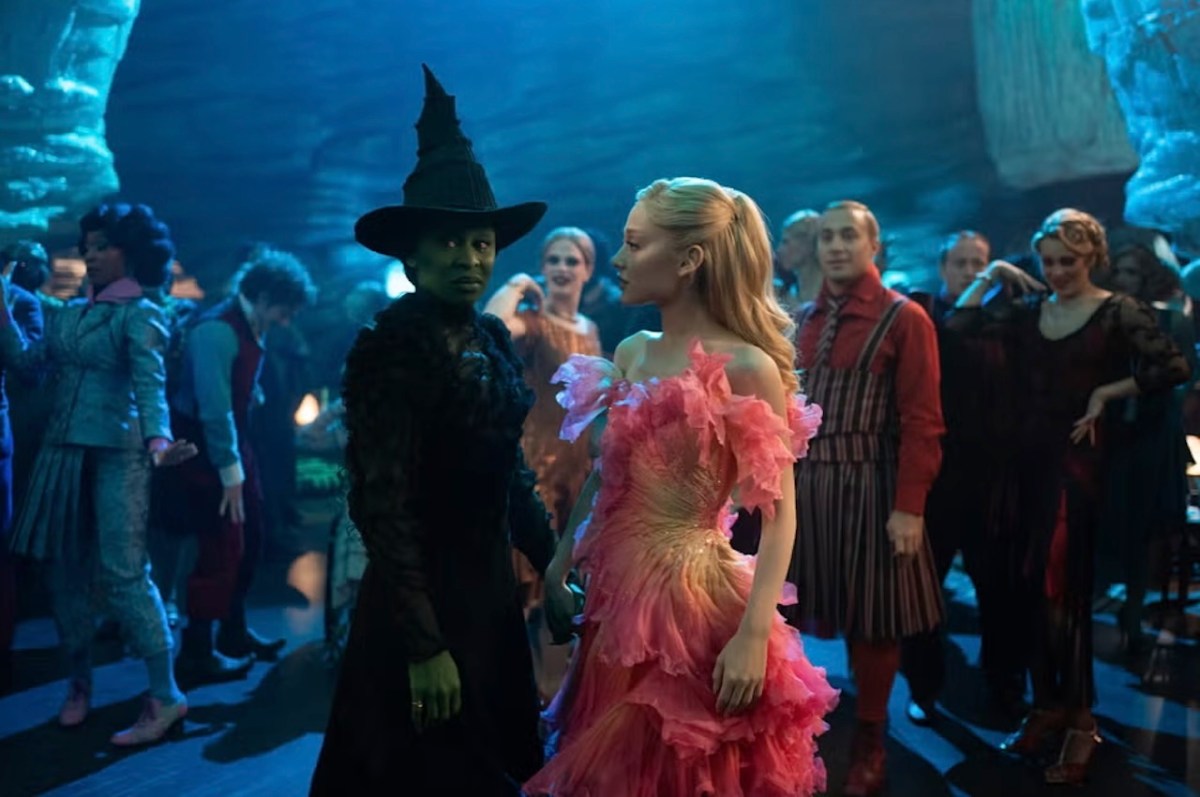
The visual depiction of Oz is appropriately quirky, with a whimsical steampunk vibe, featuring fantastical sets and looks-maxxing costumes. Carefully selected fabrics, embellishments, colour palettes, silhouettes and even fingernails contribute to the evocation of newly-imagined (but faithfully iconic) visual representations of every character and location.
Stephen Schwartz’s soundtrack is solidly satisfying, with all the tunes you’d expect, as well as a few new ones including ‘No Place Like Home’ and ‘The Girl in the Bubble’. Nothing quite rivals the intensity of ‘Defying Gravity’ – but to be fair, that’s a difficult song to surpass. ‘For Good’ is this film’s climactic equivalent, and it more than delivers, both musically and emotionally.
Wicked: For Good – elevated performances
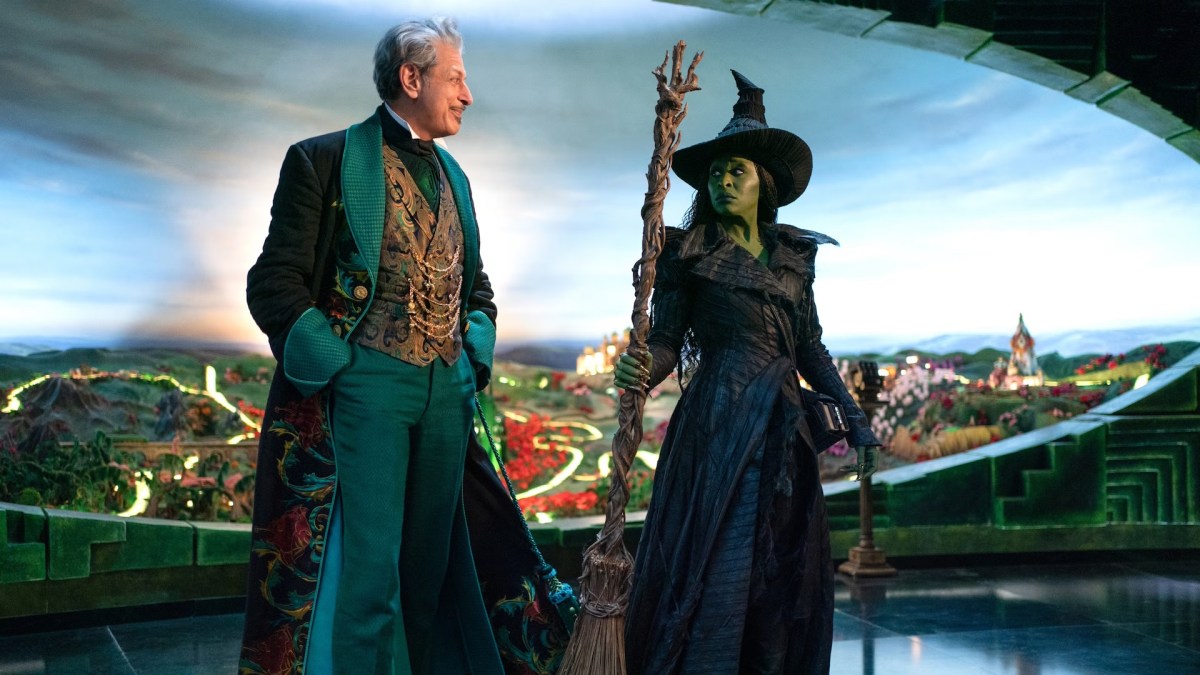
The performances elevate Schwartz’s emotive score and vice versa, contributing to a stunning film that comes as close to perfection as one can reasonably expect. Erivo and Grande-Butera own their roles, balancing heartfelt and comedic aspects with skilful artistry. Their vocal performances are breathtaking, but it’s their on-screen chemistry that solidifies them as the perfect duo.
Bailey is complexly charming and appropriately understated as Fiyero, and Marissa Bode conveys Nessarose’s growing resentment towards her sister with the right ratio of disproportion to delusion.
Jeff Goldblum exudes duplicity as the Wizard. In the first film, he introduces himself (well, his mechanical proxy) as being ‘great and terrible’, which is revealed to be a lie when he comes out from behind the curtain to reveal his true self, which also turns out to be a lie.
This cycle of false honesty is not only repeated, but magnified in Wicked: For Good. Once again, Jeff Goldblum depicts the Wizards’s slipperiness and casual charisma with understated humour and duplicity.
The Wizard’s song (‘Wonderful’) is an ode to manipulative framing, wrapped in an attractive layer of moral ambiguity. Despite overtly communicating the Wizard’s not-so-hidden agenda, the uplifting musical tone and bright visual atmosphere that accompany these lyrics momentarily fool Glinda and Elphaba (and the audience) to buy into the Wizard’s distorted perspective.
This is just one example of many techniques this film employs to control our perception of events.
Wicked: For Good – a fleeting Dorothy
Although Dorothy appears in this film, we never see her face, and she is never the focus of a scene. This is the correct choice for this film because, although Dorothy’s tale is integral to the books and musical, Wicked isn’t Dorothy’s story. It’s Elphaba’s. It’s Glinda’s. It’s the story of what happens when two opposing forces act upon one another to catalyse mutual change.
Wicked: For Good explores ambiguity, authenticity, truth and illusion on multiple levels.
An outstanding cast, unforgettable score and rich visual imagery combine with sky-high production values in this exceedingly wicked cinematic experience.
Wicked: For Good is in cinemas from 20 November 2025.
Discover more screen, games & arts news and reviews on ScreenHub and ArtsHub. Sign up for our free ArtsHub and ScreenHub newsletters.
Actors:
Cynthia Erivo, Ariana Grande, Jeff Goldblum, Michelle Yeoh
Director:
Jon M. Chu
Format: Movie
Country: USA
Release: 20 November 2025