
Fishbowl is a tough game to play. Not by difficulty or design, but by subject matter. It touches on raw nerves and recent feelings, with its semi-magical exploration of grieving and isolation rooted in the real-world devastation caused by the Covid pandemic.
Fishbowl video game review – quick links
Fishbowl charts life in a strange new world
You play as Alo, a young woman who travels to a new city for an exciting new job, only to face immediate lockdowns that separate her from her friends and family. At the same time, she’s dealing with intense grief from the loss of her grandmother.
Alone and anxious about her new role, she exists within her very own fishbowl, walking through life haunted by memories, and struggling to escape from the dark cloud that manifests over her head.
Day by day, she completes her job, while also attempting to reckon with invasive memories of her childhood and family, at a time when they feel further away than ever.
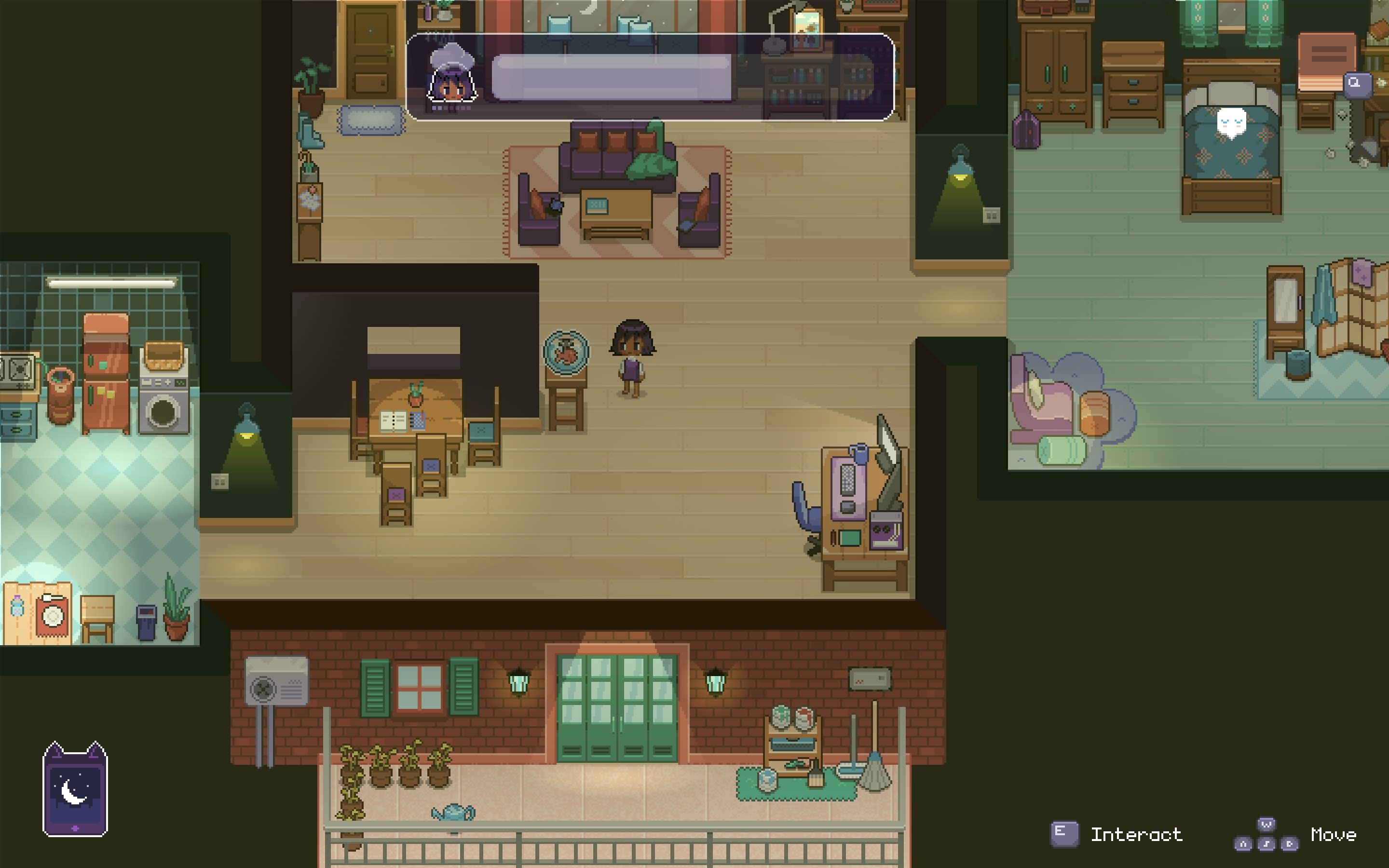
Fishbowl is clearly autobiographical in nature. Its development team has imbued the narrative with hints of reality that may spark memories for those who were in similar positions during the real-life Covid pandemic of the early 2020s.
I saw myself in Alo, and so every new development landed with a harsher blow. In 2020, I was working for a now-defunct website, collaborating closely with a team of talented writers and video makers in a city-based office. When the lockdowns were initiated, we all transitioned to work-from-home, talking over Google Meets, while living in our own personal fishbowls.
There was a particular line of dialogue in this game that flung me right back to mid-2020, when my direct editor began to share more about their knitting hobby, which was helping to keep their mind off the ongoing chaos. This is a game that will feel very familiar to anyone who engaged in the idle online small talk of the pandemic, or who remembers the ways everyone attempted to take charge of their lives, while feeling so powerless and small.
In a particular cadence and tone, we all shared advice about keeping mental health steady, while feeling the ground falling out from our feet.
Alo is in a different situation, but faces so many of the same conversations – the all-smiles, chin-up rhetoric – that it’s easy to see my own experiences reflected, and to remember just how small life felt when you couldn’t spend time with friends just suburbs away, and all your had were your hobbies, and the loose routine set by work obligations.
An artful exploration of the grieving process
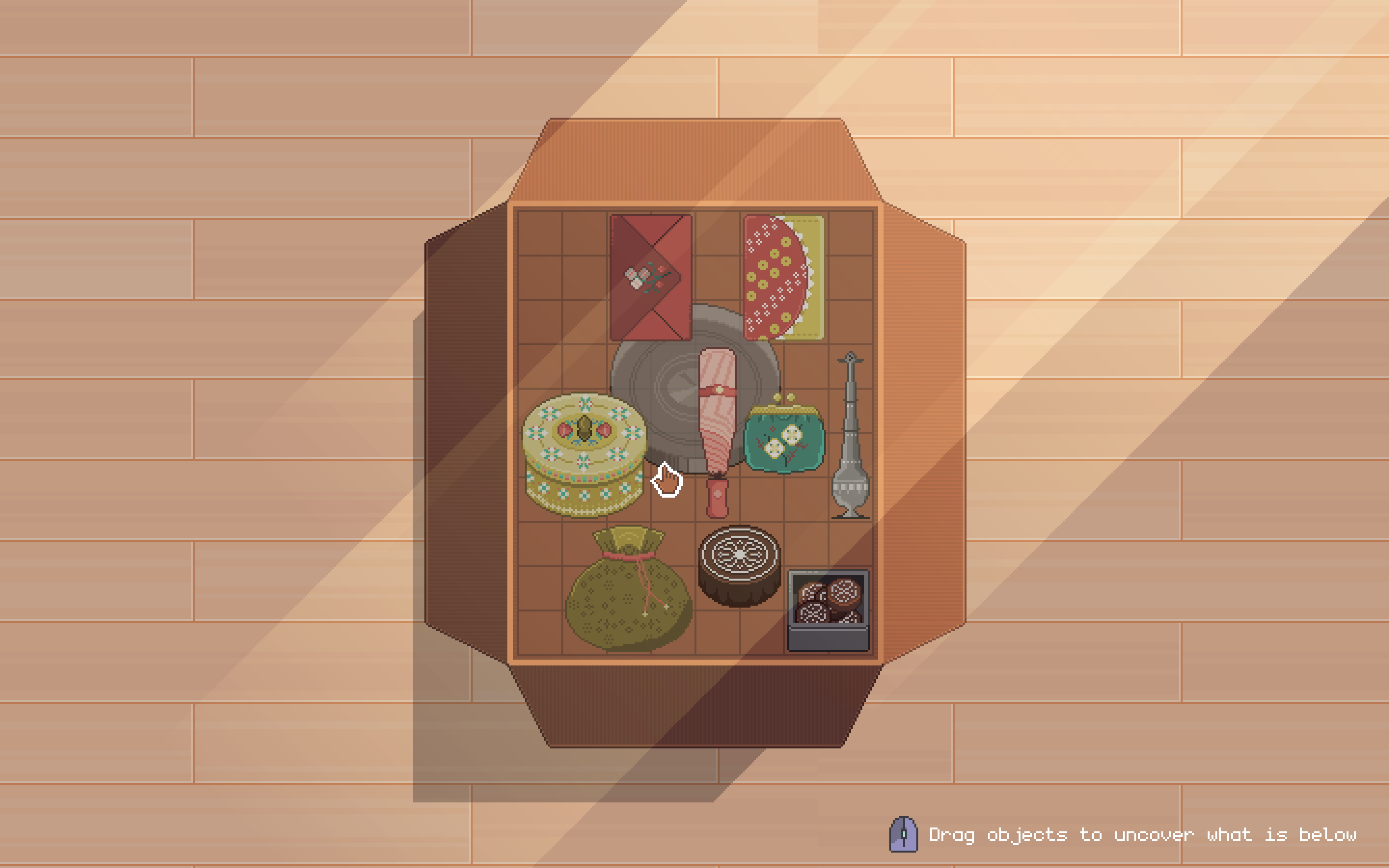
In Fishbowl, Alo is not only grieving her freedom, but also the loss of her grandmother, with whom she shared moments of adventure and learning.
In boxes, the remainder of her grandmother’s life is delivered to her doorstep. As these pile up in her kitchen and living room, Alo must slowly and intentionally sort through each item and each memory, while also keeping up with her new work responsibilities (light-touch video editing mini-games), which eventually devolve into repetition.
There is a push-and-pull in Alo’s life. She must maintain a bright, near-peppy attitude for work, to impress new colleagues and highlight why she was hired. At the same time, she’s dealing with a clear depression, struggling to stay happy and healthy, or even to treat herself to a relaxing time. In moments when she’s not working, she’s dogged by a persistent guilt and anxiety that manifests in haunting physical form, as well as in dreams.
The journey of Fishbowl is one of acceptance, as Alo reckons with her memories without letting them rule her or her development. It’s a game about the parting of childhood and adulthood, as Alo steps into her new life and her fishbowl slowly becomes a warmer, more comfortable place.
ScreenHub: All the best video games of 2026
Fishbowl is slow-moving, with intentionality
Days pass slowly in Fishbowl, by design. It’s not the sort of game that’s suited to review-style play – as in, cramming in as much gameplay as possible, in as short a time as possible. You need to take your time with this game. Like all things, grieving is a process.
Cleverly, the game translates this into a Tamagotchi-like system, where Alo’s needs must be met, and moods must be shifted, with little interactions that boost her motivation and mental energy – whether that’s having a coffee or a piece of toast, running a slow bath, or sitting down to play a game.
Some days are harder than others. Little inconveniences and the spark of bad memories can lower Alo’s mood, locking out more positive interactions, and only breeding more dour thoughts.
The negativity can make it hard to play Fishbowl at times. A relentless dourness exists, even in the background of brighter, happier gameplay segments, but it’s always impactful, revealing more about Alo and her inner life.
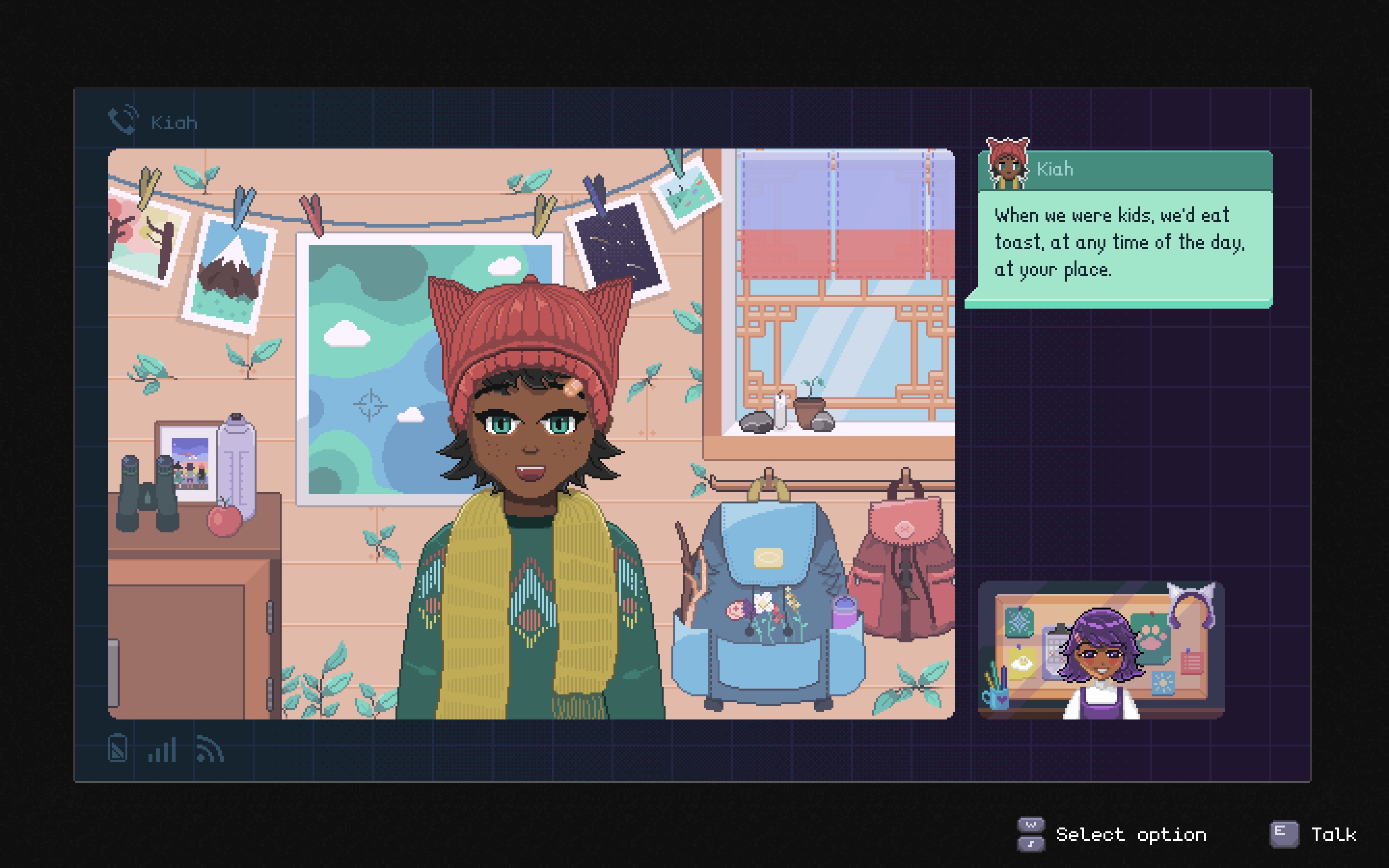
When the mood is occasionally too dour – and Alo can’t journal, can’t relax, and can’t muster the energy to look after herself – there is the occasional bright spark in the form of Paplet, a semi-magical fish from her childhood.
In fun, bouncy dialogue, Paplet helps Alo reconnect with who she used to be, away from clouds and rain. As a connection to positive memories and the goodness that life can bring, Paplet provides a source of inspiration and encouragement to play, offering a reminder that happiness can and will return, eventually. But it takes an active player, and a concerted effort.
While Fishbowl is a game about isolation and grief, it’s also about the steps needed to emerge from the darkness. Paplet presents the ladder that Alo must climb, and Fishbowl is her journey to the top – and it’s a journey to remembering to water plants, drink water, work, rest, and leave time for relaxation.
Even in our own little fishbowls – whether physical, as in Covid lockdowns, or metaphorical – we must all make the same effort to climb past grief and hopelessness, and work through our own feelings and memories. It’s the only way to be there for our friends and family, and to keep proving our worth – if only to ourselves and nobody else. Raw and realistic, this game is a beautiful tale of overcoming and becoming.
Fishbowl launches for PC and PlayStation 5 on 2 April.
A PC code for Fishbowl was provided by the publisher for the purposes of this review.
Discover more screen, games & arts news and reviews on ScreenHub and ArtsHub. Sign up for our free ArtsHub and ScreenHub newsletters.
Developer
imissmyfriends.studio
Publisher:
imissmyfriends.studio, Wholesome Games
Release Date:
02 April 2026