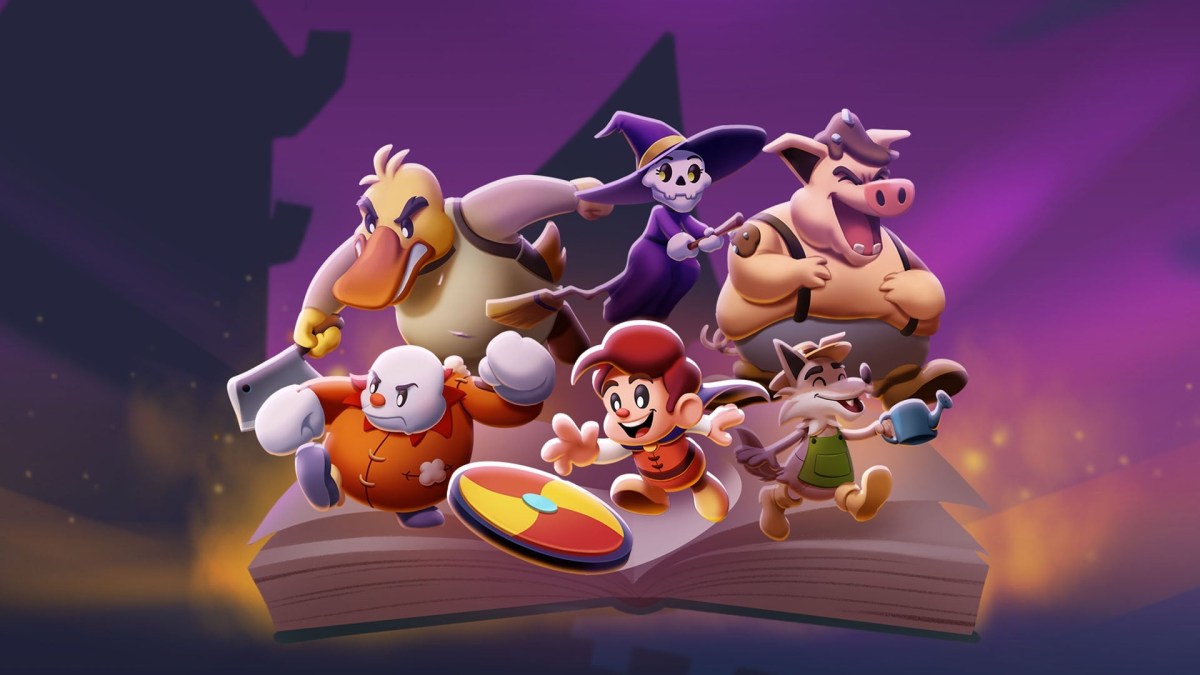
Escape from Ever After is a clear love letter to Paper Mario in design. You play as Flynt Buckler, a classic fairytale hero forced to deal with the whims of capitalism as his home storybook is gentrified by the evil Ever After Inc. Flynt is a 2D hero in a vast 3D world, who must link up with other off-sided storybook characters along the way and use his hero skills in unique ways.
In tone and approach, it’s certainly very nostalgic, borrowing elements directly from the Paper Mario games, such as turn-based combat and the colourful, magical worlds.
But with its sprawling plot about corporatisation, which feels sadly all-too-relevant to the real world, along with its fresh ideas and puzzle gameplay, Escape from Ever After is an homage that also replicates Paper Mario‘s wild imagination and originality.
Escape from Ever After review – quick links
Escape from Ever After is a clever commentary on the real world
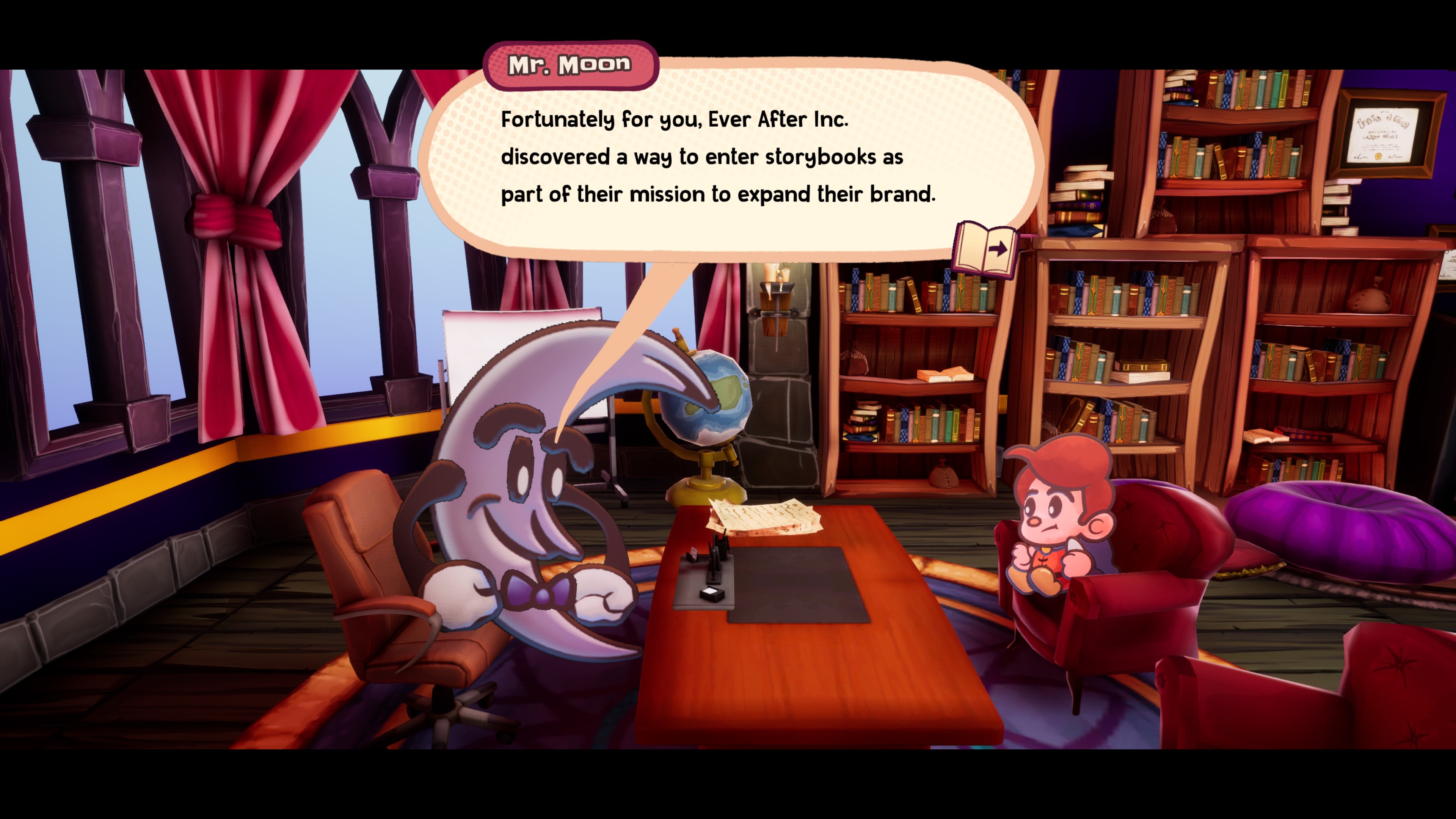
Escape from Ever After is buoyed by its central cast and how their journey is laid out. Protagonist Flynt begins his adventure with a core purpose: to venture to the castle of the evil dragon Tinder, and send him into the abyss. But when he arrives, Tinder is nowhere to be seen, and his castle has been transformed into the offices of Ever After Inc. complete with desks, computers and spaces for middle management.
It’s not enough for him to be a simple storybook hero anymore. Ever After Inc. has moved in and transformed his story for their own ends, using it as a launching point to conquer all storybook worlds and generate maximum value for the company’s shareholders.
Flynt can either join the company or be lost in the throes of time, becoming a character destined to be forgotten. So, teaming up with Tinder – who’s been significantly reduced in power and stature – he must work to overthrow the company from within, sabotaging their plans while preserving the true value of each and every storybook he’s sent to conquer.
It’s a lovely metanarrative at work here, with Flynt standing in as a representation of the magic and ever-lasting nature of stories, as opposed to their corporatisation.
Over the last few decades, we’ve seen plenty of examples of this corporatisation, as once-beloved franchises are milked to line the pockets of shareholders. It’s not enough for a major film series to sit as an example of brilliant storytelling. There must be spin-offs and sequels that nobody asked for – occasionally good, but more often of rushed quality, and ultimately, disappointing. If you’re thinking of a franchise where this applies, I’m likely thinking of another.
Time and again, we’ve seen franchises exploited until they’re lesser. Escape from Ever After alludes to this very well, with its story focused on the damage that big corporations can do to once-loved stories.
Exploring vast and disparate lands
The collection of stories in Escape from Ever After chart the public domain, with titles including Sherlock Holmes, The Three Little Pigs and even the works of HP Lovecraft featured as explorable levels.
In each, you’ll find various iconic characters to help (and to fight), with each facing the same dilemma of incoming corporate takeover. You’re tasked with finding the light in every situation, and using your hero skills to protect innocent folks from harm by goons.
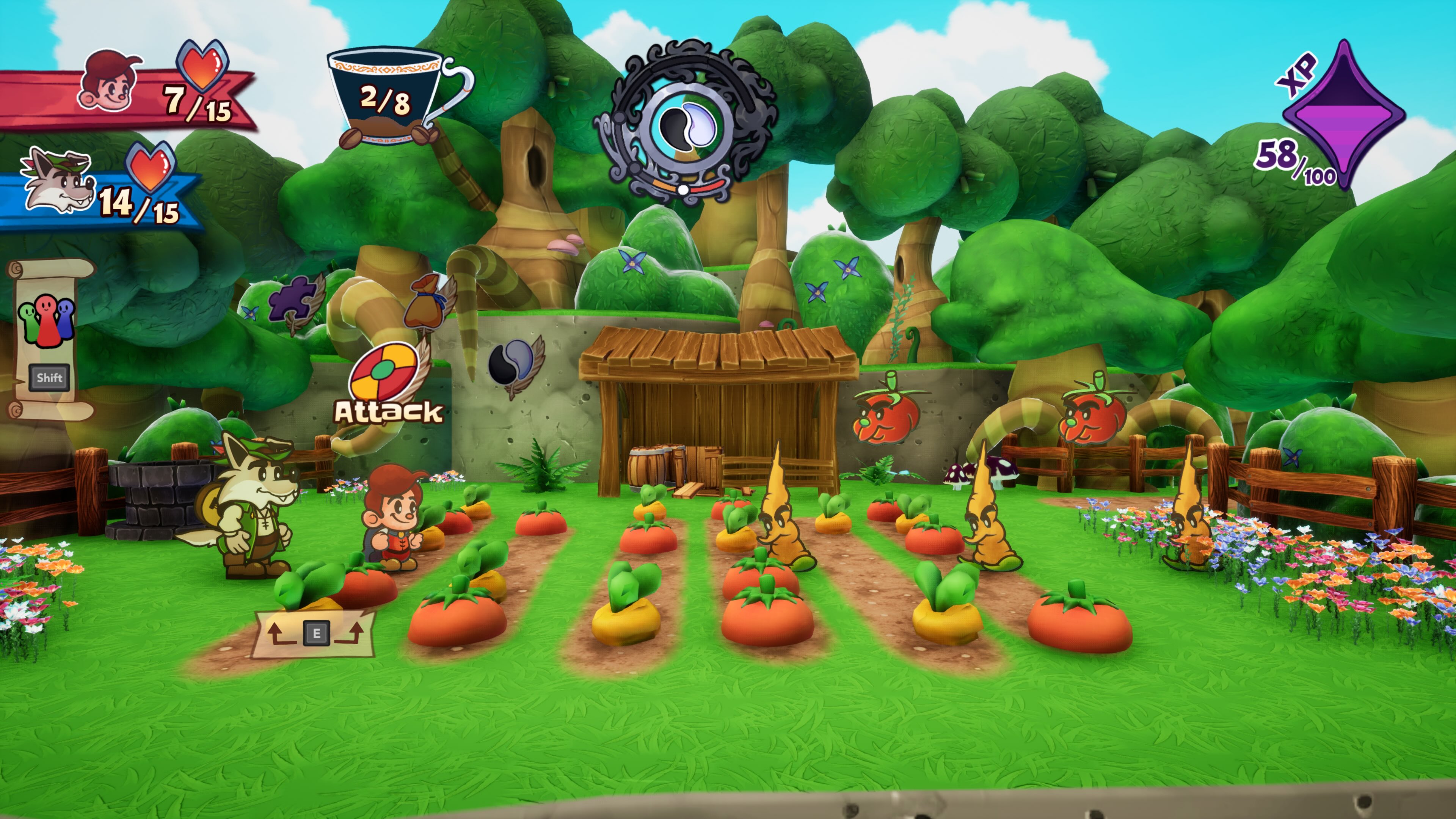
Combat, as with Paper Mario, is all about good timing. Flynt has access to a Captain America-like frisbee shield that can be thrown at multiple enemies. Hit your button at the right time and you do additional damage.
Working alongside Tinder, and then later companions like Wolfgang and Eva the Witch, you’ll whittle away enemy health, balancing all your most powerful skills in strategic fights. While simple in nature, the turn-based system works well, and if you’re familiar with Paper Mario, you’ll already have the right timing down.
Solving puzzles requires clever thinking
When you’re not spending time clashing with mushrooms, fish monsters or space aliens, you’ll find more layered challenges elsewhere. Escape from Ever After is an adventure game primarily, but it’s also a head-scratching puzzler, with plenty of neat environmental challenges to overcome as you tackle your epic quest.
Some of the puzzles are slightly too obtuse, with multiple frustrating steps to solve before you can make your way forward. I got particularly stuck on a musical segment in the Enchanted Forest, where guesswork was required to figure out which logs led to which parts of the stage, and how exactly to advance.
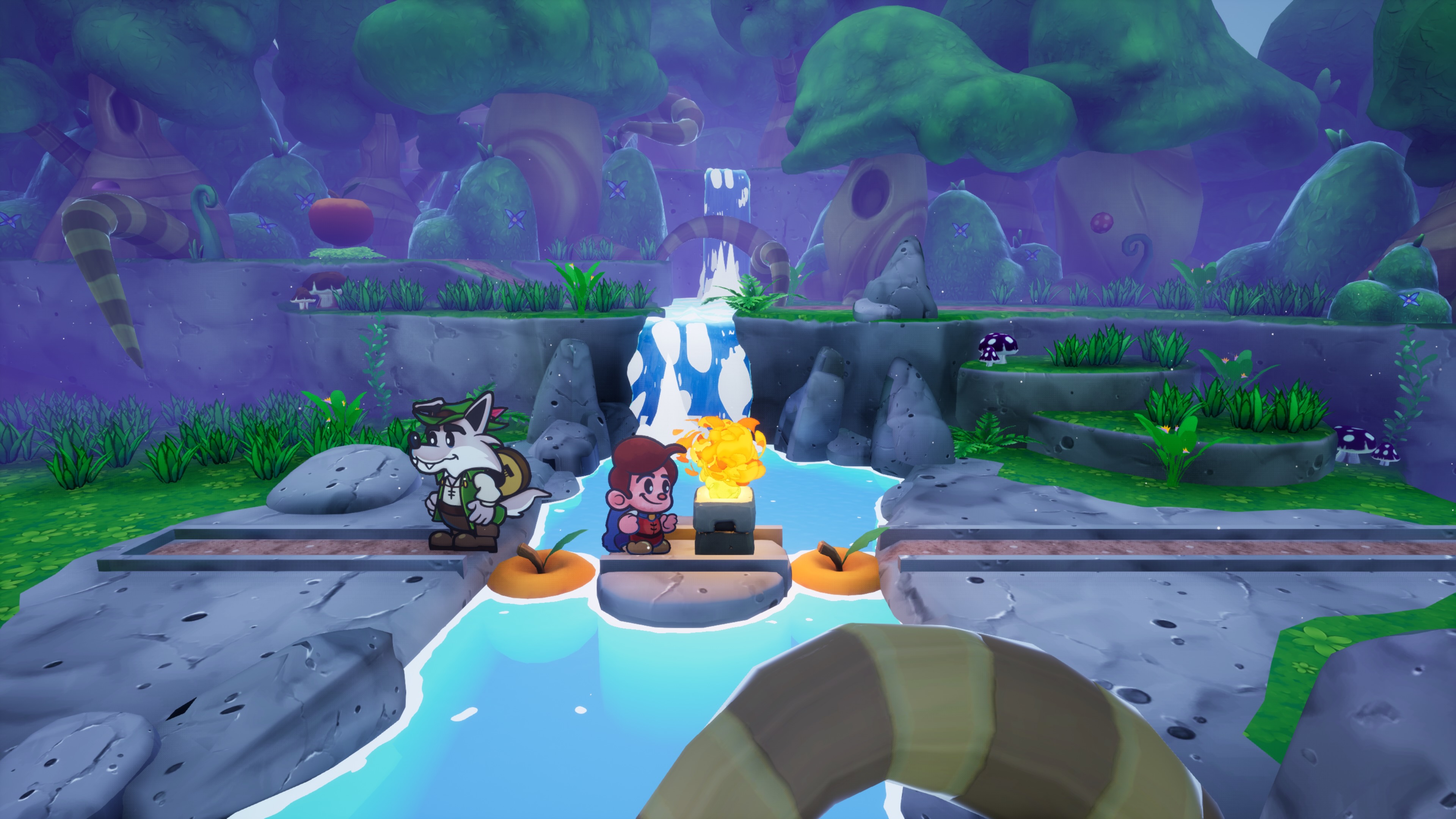
But for the most part, Escape from Ever After has a nice balance in all of its puzzles, with each featuring a clear and sound logic to follow. There are classics in here, with block placement puzzles through to complex transformational challenges. There are also plenty of new head-scratchers to keep your mental muscles moving, like a downriver challenge where you must guide apples into the correct positions using logic and speed.
It’s a novel mix, and helps to keep Escape from Ever After consistently fresh, even as it treads familiar ground in some of its later worlds. As surprising as it is to say, fighting Cthulhu in a video game isn’t exactly original but Escape from Ever After manages to make it feel as much, thanks to its clever puzzling, and how its combat evolves.
Novel commentary and neat mechanics combine for a brilliant adventure
All of these moving parts make Escape from Ever After feel like a wholly original, bright-eyed fantasy adventure. It brims with cool ideas that retain an important message and relevance.
While there are many layers here – it’s a Paper Mario homage, it’s an original fantasy adventure and it adapts beloved IP – each idea is given time to evolve. There’s a delicate balance required, and developers Sleepy Castle Studio and Wing-It! Creative have managed it very well indeed.
A PC code for Escape from Ever After was provided by the publisher for the purposes of this review.
Discover more screen, games & arts news and reviews on ScreenHub and ArtsHub. Sign up for our free ArtsHub and ScreenHub newsletters.
Developer
Sleepy Castle Studio, Wing-It! Creative
Publisher:
HypeTrain Digital
Release Date:
23 January 2026