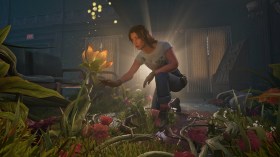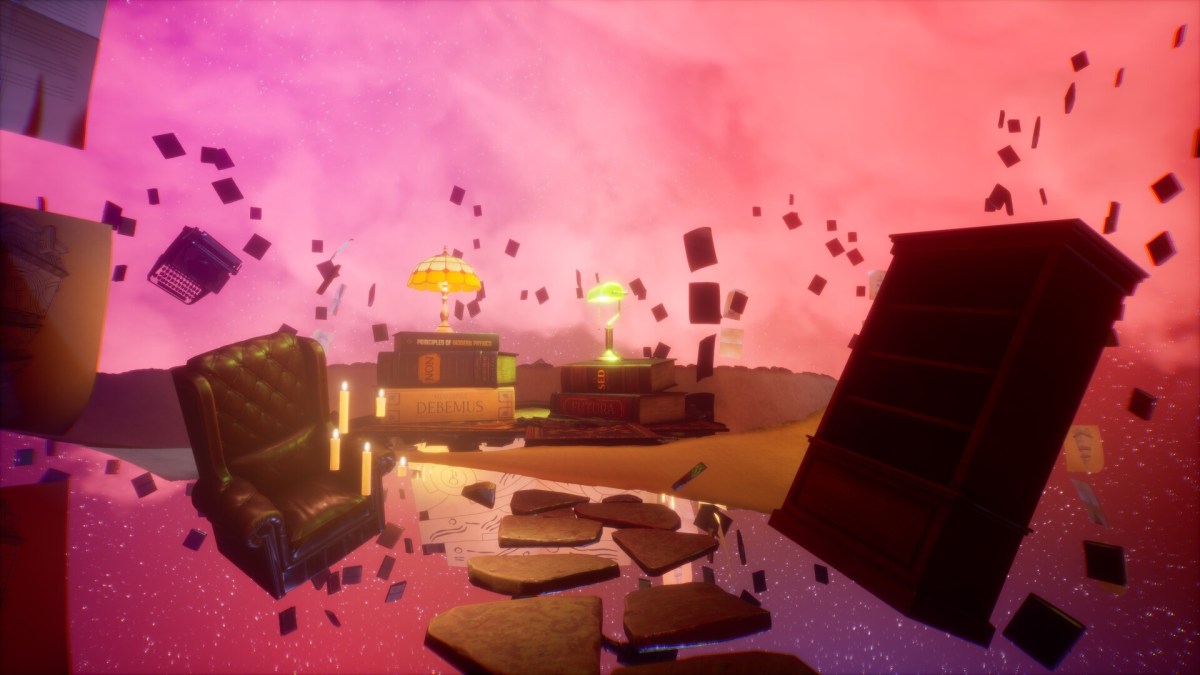
There’s a small moment right near the start of Call of the Elder Gods that I really like. Evangeline, one of the game’s two protagonists, is exploring the home of Dr Richard Everhart, the game’s other playable character. Richard was a key character in the previous game in this series, Call of the Sea, but Evangeline is new, and is about to be dragged deep into the series’ lore.
She needs to go outside and search Richard’s garden, but when you open the back door, the rain’s coming down hard – and it’s at this point that the game tells you how to run. After all, wouldn’t it make sense for Evangeline to sprint from cover to cover when it’s raining?
It’s a tiny moment of narrative and mechanical consistency, but it speaks to the care and attention that has gone into making Call of the Elder Gods. For a game that is mostly about walking through rooms, inspecting different objects and then using any information you’ve gained to solve puzzles, it’s an important layer of polish that helped draw me into Call of the Elder Gods during the game’s opening hours.
But I would not say that Call of the Elder Gods is consistent in this regard.
Call of the Elder Gods review – quick links
An overcomplicated plot
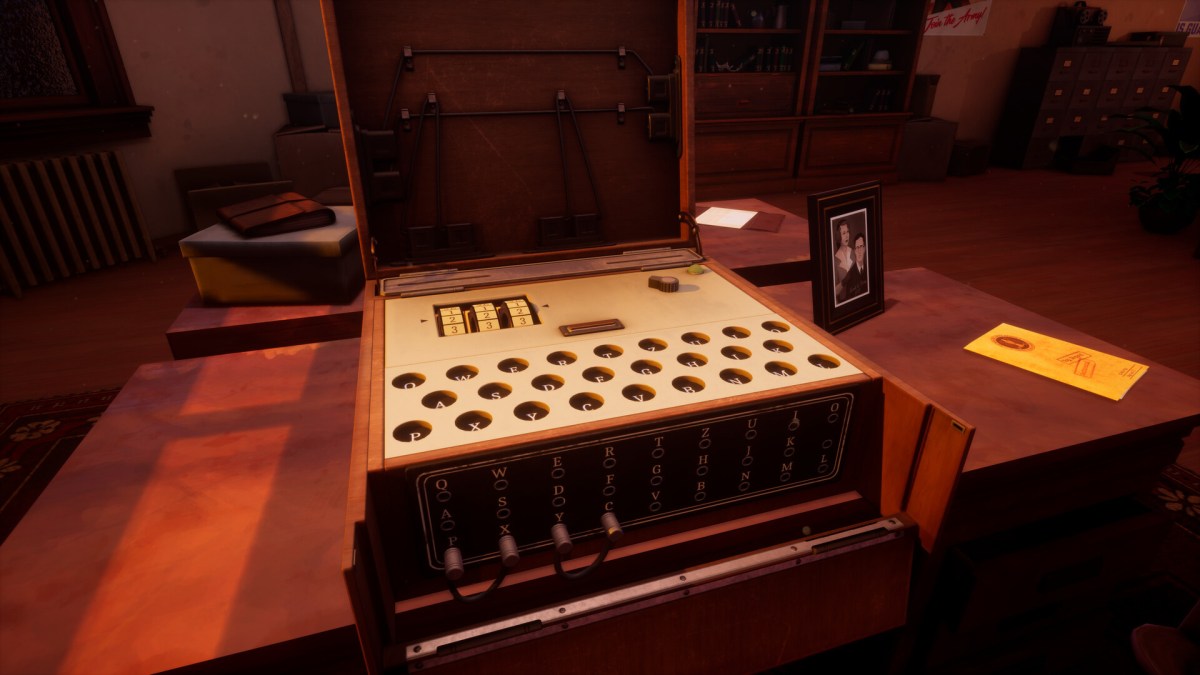
By the end of Call of the Elder Gods, I had lost some of the threads of what, exactly, the game was about, what was motivating the two characters, why I was visiting the locations the game took me to, and how all the different pieces I’d been presented fit together.
Compared to the relatively straightforward narrative of Call of the Sea, this sequel overcomplicates things in its back half. Between needing to be designed around both of that first game’s two different endings and expanding on a lore that felt relatively complete the first time round, this sequel doesn’t quite have the same emotional impact.
But it does the most important part of the experience – wandering through different environments, solving puzzles – well.
Challenging puzzles
Whereas Call of the Sea was all set on a single island, Elder Gods is a globetrotting adventure, jumping between different locations and scenarios over the five-odd hours it takes to complete. This allows for more variety in tone.
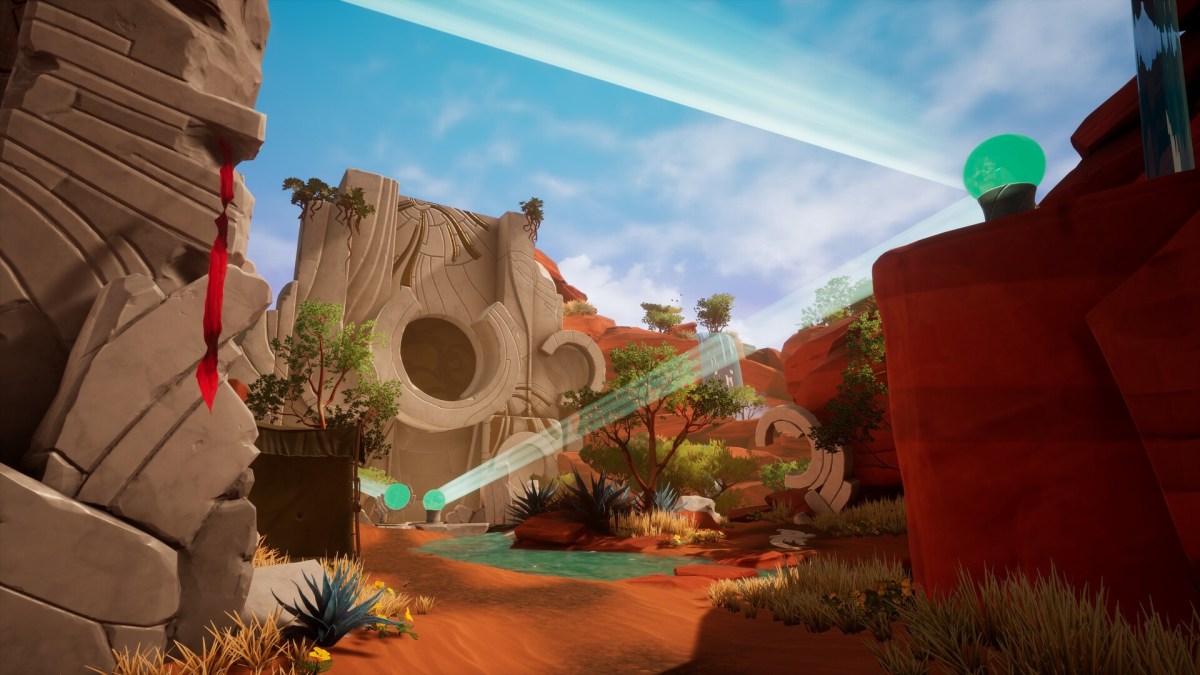
In one section, you decrypt Nazi messages using a codebreaker in an abandoned facility. Other puzzles task you with interpreting the instructions of a secret society in their meeting hall, and figuring out the mechanics of an ancient race’s mysterious device based on instructive diagrams they left behind.
The game jumps between the mundane and the fantastical in a way that can be quite effective, although by the end of the experience there’s so much information to juggle to keep the story straight.
By the third act it’s hard for anything to register as a major revelation, or for any new environment to really feel special within the context of the story.
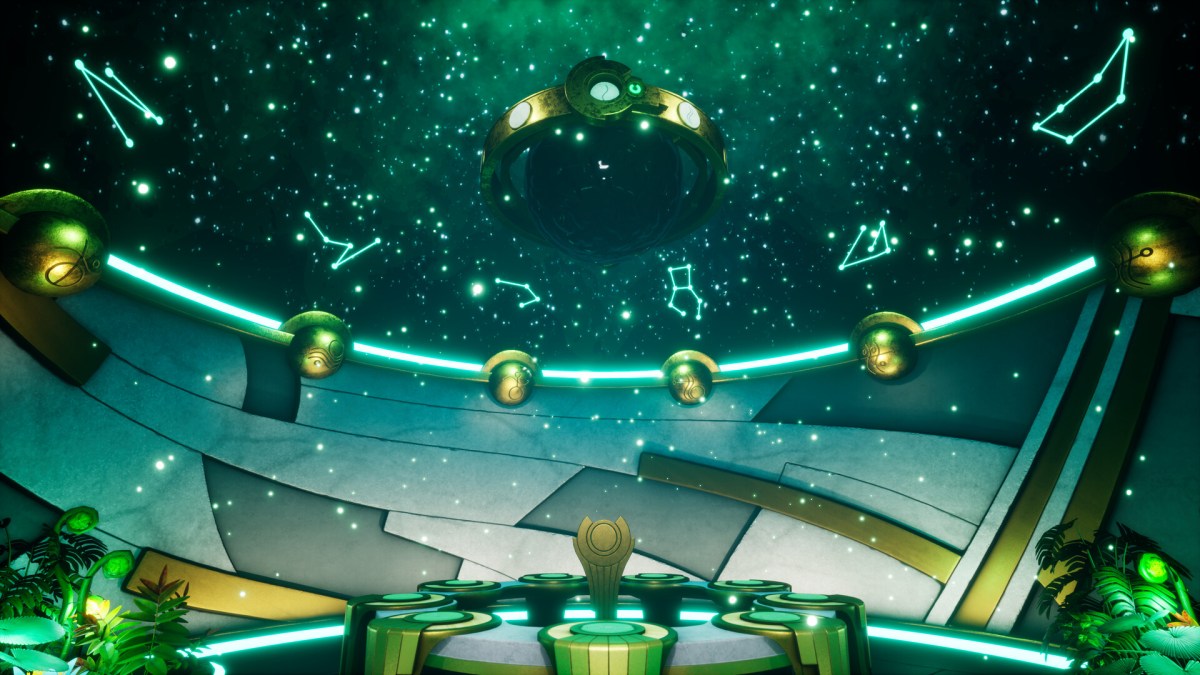
Call of the Elder Gods is very much a direct sequel to Call of the Sea, one that effectively wraps up a story that, honestly, already felt pretty finished at the end of the original game. But there are some nice moments for fans of the original. It’s clear that the development team really cares about their characters – especially Norah, the first game’s hero, who serves as the narrator here (the great Cissy Jones returns as her voice actor).
There is a part of me that wishes that this was an entirely new story set within the same universe. Perhaps then, the central conflict that failed to grab me could have been better drawn.
Watch the trailer
Uneven puzzle difficulty
The puzzle system will feel familiar to anyone who played Call of the Sea. It’s a combination of straightforward logic puzzles and a few more fiendish challenges that require interpretation and extrapolation based on a whole heap of gathered evidence.
As you explore, both characters amass information within a notebook that you can access at any time; usually, most of what you need to move through the game will be accumulated in there if you’ve been thorough.
One thing that I appreciated was the addition of a hint system in the pause menu – one that will, if you prompt it enough, simply give you the puzzle solutions. I made use of this system a few times, and can admit there were some puzzles I felt I was not particularly close to solving when I saw the solutions.
It’s possible that being able to offer this option made the team feel more comfortable overcomplicating some of the puzzles, although this isn’t a consistent experience – the game flips between quite easy and rather difficult throughout.
There’s nothing here that is completely illogical, though, or that someone with a good puzzle-solving instinct could not work through, although the uneven difficulty might frustrate. One of the hardest puzzles in the game happens quite near the beginning.
I played the game on Switch 2, and it’s a solid port with only minor compromises. There were a few instances of noticeably low-res textures over surfaces, and I found that the legibility of in-game text was much better suited to handheld mode than it was when I was playing on my television. There were no major performance problems, although some environments felt a bit bland compared to the first game’s stormy island.
Ultimately, between the two, I prefer Call of the Sea. It’s a more cohesive game with a stronger story. But Call of the Elder Gods is a worthwhile follow-up, one that offers similarly challenging puzzles with satisfying solutions. If you enjoyed the first game, this call’s worth heeding, too.
Discover more screen, games & arts news and reviews on ScreenHub and ArtsHub. Sign up for our free ArtsHub and ScreenHub newsletters.
Developer
Out of the Blue Games
Publisher:
Kwalee
Release Date:
13 May 2026