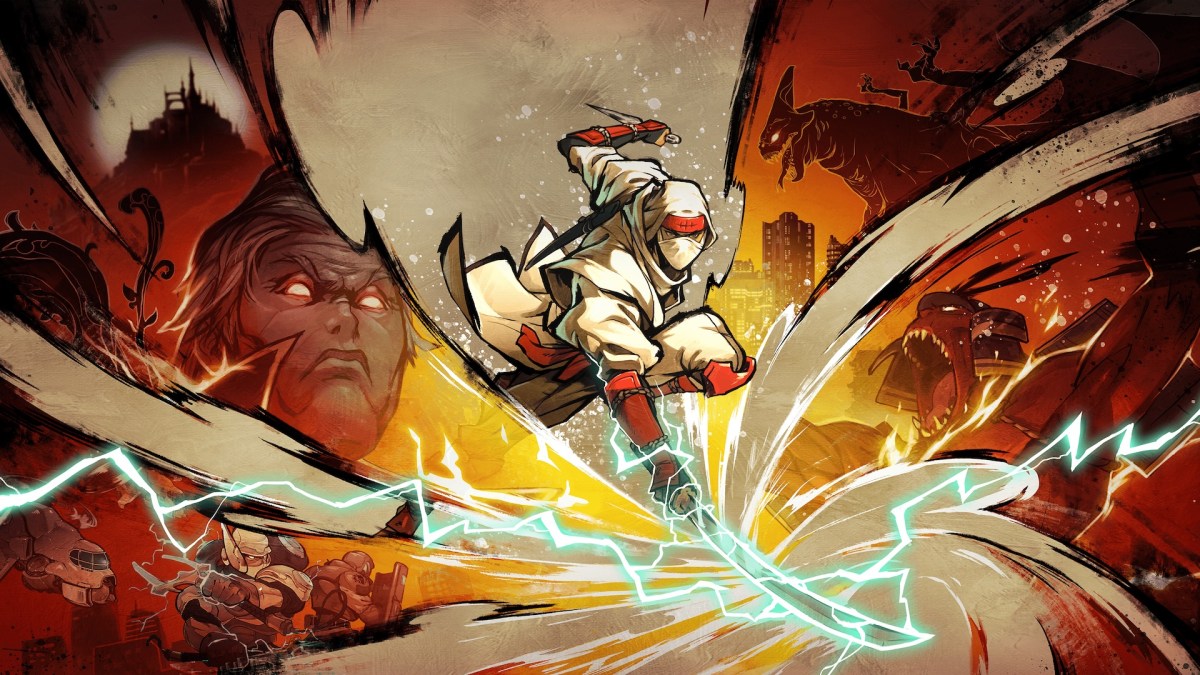
Shinobi: Art of Vengeance – quick links
There’s a boss fight in the new Shinobi game that I have not been able to get out of my head.
It’s not that the boss had a particularly innovative gimmick, or because I found a creative way to defeat it, or even that it was particularly difficult (it was a challenge, but I wrapped it up on my sixth attempt or so). The reason this fight has stuck in my head is simple: it just felt so good.
I captured a video of my successful run at this boss, but I don’t need to watch it to revisit. The pattern wasn’t complicated: I used my heavy attack twice in a row, knowing that the first would pull them into the air and the second would slam them back down.
As they bounced off the ground, I dashed forward and thrust Joe Musashi’s knee into them to drive them higher, following up with a quick light attack combo, then another heavy double. I threw a quick kunai to rip off another slither of health, and as they teleported across the screen I anticipated their move, dashing over to start another combo.
By the end of the fight, they’re able to split themselves in four, and the last 15-odd seconds of the footage are a delicate ballet of dodging, weaving and slashing as their attack patterns grow more intense.
Shinobi: game movement
When you get into this sweet spot with Shinobi – when your movements are all dictated by logic, when you see the outcomes of your attacks before you launch them, when you can judge the time and space necessary to pull off a devastating combo, it’s bloody wonderful.
But even when things aren’t going so well (e.g. when an enemy projectile catches you off guard and you suddenly find yourself struggling to coordinate your attacks against an enemy force) Shinobi: Art of Vengeance still feels amazing. It’s a truly fantastic 2D action game.
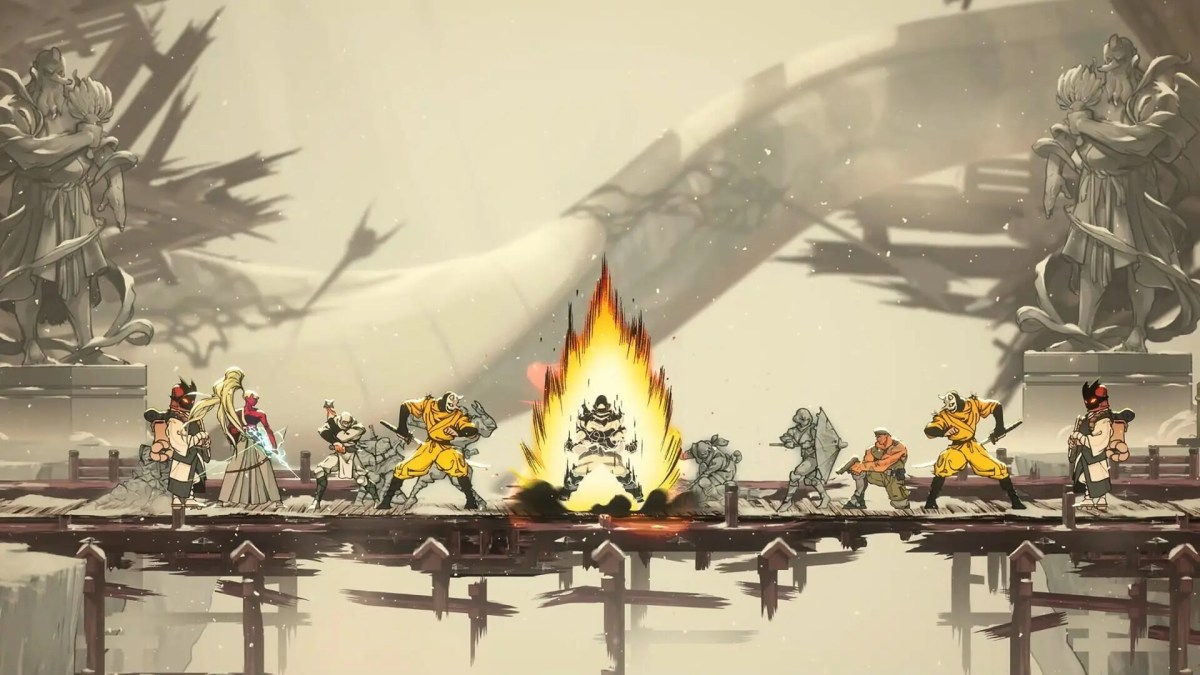
Shinobi: Art of Vengeance brings back series protagonist Joe Musashi and tells a straightforward story – there’s a bad guy, Ruse, who has amassed a huge army, and it’s up to you and the handful of companions you build up along the way to take him out.
That means travelling between each of Ruse’s strongholds and killing your way through a whole lot of enemies with your trusty sword, a handful of throwing kunai, and your magical ninpo attacks. Musashi is incredibly agile, able to double-jump, dash, and run up walls, and levels tend to mix platforming challenges in with their combat.
Shinobi: visuals
Shinobi: Art of Vengeance is visually striking, as is always the case with developer Lizardcube’s work (Streets of Rage 4 is the clearest comparison point). Enemy animations are easy to read and understand – the more you get used to the various baddies Shinobi throws at you, the more you’ll start to think a move ahead, knowing when to back off, when to rush forward, and when they’re gearing up for a particularly rough attack.
Nearly every move in Musashi’s arsenal is more than a way to deal damage – they can also be used to change or hold your position relative to your opponents. A light attack combo in the air will hold you in place, letting you continue to deal damage while avoiding any ‘the floor is lava’ attacks an enemy might be using; a strong attack at the end of a fast combo will slam an enemy downwards, and then a single strong attack from the air will slam you downwards too, letting you close the gap on the enemy quickly.
Kunai might interrupt an enemy attack before it launches, and using strong and kunai attacks together may put an enemy in a state where you can spring halfway across the screen and kill them in one blow, replenishing your health and kunai in the process.
Shinobi: combat
The combat in Shinobi isn’t complicated, and although you build up your attacks and abilities over time most of it comes back to different combinations of strong and weak attacks. This means that becoming good at Shinobi does not require the sort of steely determination or endless reserve of patience you might need for other action games.
When you get in the zone and find yourself ripping through enemies with ease, Shinobi is sublime. This is the kind of game where if you start thinking ‘things are going really well here’, it might be over for you: confidence is rewarded, cockiness is punished, and an aggressive but measured playstyle will get you far.
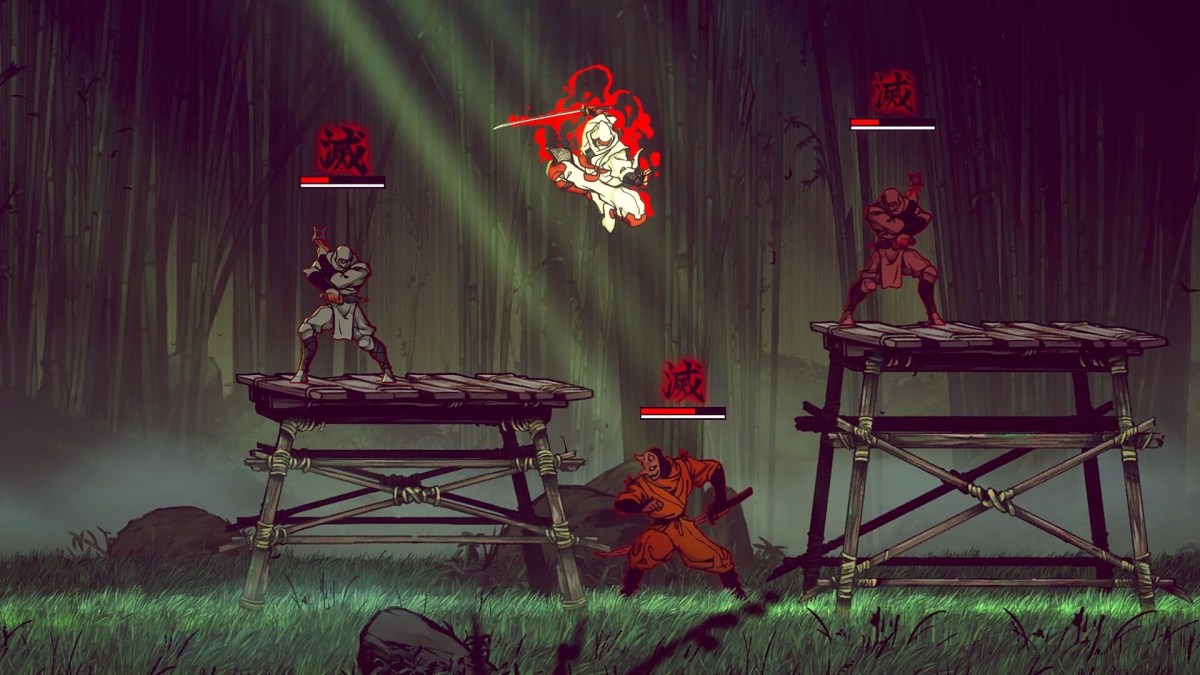
As enjoyable as basic traversal can be, I found myself absolutely itching for a fight whenever I wasn’t in one. The boss fight I talked about at the start of this review wasn’t the only one I recorded to revisit: watching a fight back after I’ve finished it isn’t something I typically do with games, but Shinobi just looks so good in motion, and I loved seeing all the near-misses and well-executed combos.
I loved seeing when I used one of my magic ninpo attacks at the perfect time, ripping through enemies with a wall of flame, a huge spinning sawblade, or a counter attack.
Shinobi: boss fights
The boss fights are particularly good, taking all of your skills and patience and pushing them considerably harder. They aren’t necessarily hugely innovative (they’re all about learning patterns and knowing when to attack and when to back off) but my word is this combat system well tuned to boss fights.
It is so satisfying when you manage to land a huge combo, or perfectly weave between their moves and launch them into the air with a heavy attack.There are no fights here so brutally hard that I felt like I might give up, and it wasn’t uncommon to lose to a boss multiple times, only to then pull off a near-flawless victory on them once I had a sense of their patterns and rhythms.
Shinobi: negatives
If I wanted to nitpick, there’s a lot of repetition in the game’s fights, and not many encounters outside of the bosses that have a ‘gimmick’. If I had a dollar for every time I did the standard ‘two strong attack’ combo and then dashed into an enemy to follow up, I could retire tomorrow.
But this never bothered me while I was playing – the feedback on the animation and sound design are both so satisfying that it felt good every time.
There were elements in the level designs I found, occasionally, harder to stomach. There are numerous sections where you need to use your jumps and dashes to clear areas where the walls are covered in spikes, and I found the hitboxes in these areas difficult – sometimes when I hit the edge and got transported back it felt a little unfair, but at least the checkpointing is generous.
There is one level design late in the game that gave me a lot of grief: a factory with a more open design than most of the levels, which demands deep exploration and an extremely good memory for where you have and haven’t been.
While each mission has a map to consult, I found that it wasn’t always as useful as it could be; if you’re revisiting a level to hunt down hidden items (of which there are many), you may find yourself needing to replay the whole level, even though the game lets you warp between different save points.
But these are minor issues for a game that I otherwise could not put down. Shinobi: Art of Vengeance is the first new Shinobi game since 2011’s so-so 3DS outing, and it makes a firm argument for the series’ continued relevance.
It’s so satisfying to move through this world, and to lay waste to Ruse’s army with your incredible moveset, that I can’t help but hope this is just the beginning of Joe Musashi’s comeback.
Shinobi: Art of Vengeance is released on 29 August 2025 and available for Windows, Nintendo Switch, PlayStation 4, PlayStation 5, Xbox One and Xbox Series X and Series S.
Discover more screen, games & arts news and reviews on ScreenHub and ArtsHub. Sign up for our free ArtsHub and ScreenHub newsletters.
Developer
Lizardcube, Sega
Publisher:
Sega
Release Date:
29 August 2025