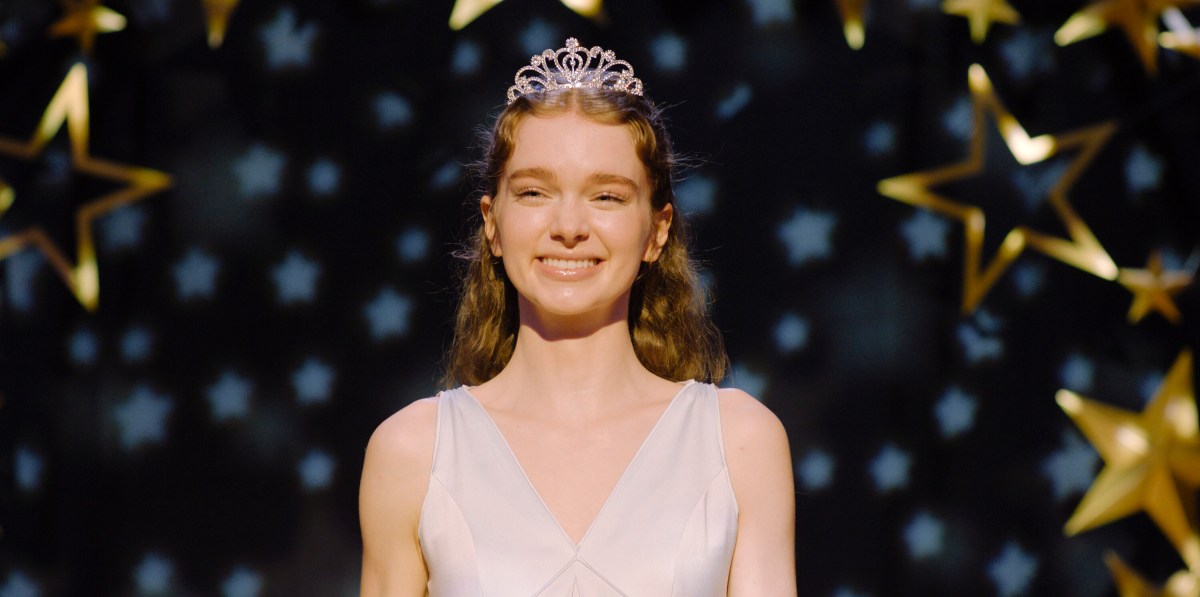
Spoilers ahead: To fully address Flanagan’s catastrophic missteps, this opinion piece addresses key changes to the plot. If you prefer to avoid all spoilers, please watch the show first.
Who is Carrie? It’s worth going back to Stephen King’s remarkable 1974 debut novel when considering just how badly Midnight Mass creator Mike Flanagan has misread the tragic high school prom queen gifted (or cursed) with telekinetic powers – the ability to manipulate physical objects with her mind.
So iconic was Sissy Spacek’s interpretation, in Brian De Palma’s never-bettered 1976 film, that her image, her fury, is burned, like her school, into our collective consciousness. The wide-eyed stare into the abyss, drenched in pig’s blood.
And yet Carrietta White, to give her full name, almost never made it out of King’s wastepaper basket. The then-broke author sketched a few pages, trying to make a quick buck by selling a short story to Cavalier magazine. Unsure of the kernel, he abandoned the idea. But his wife, fellow writer Tabitha, fished it out, wisely discerning that King was onto something. The rest is history.
As iconic as Spacek’s take is, there’s one aspect of King’s character that De Palma, and all adaptations, have refused to embrace: her looks.
Prime Video’s Carrie series – quick links
Body shaming
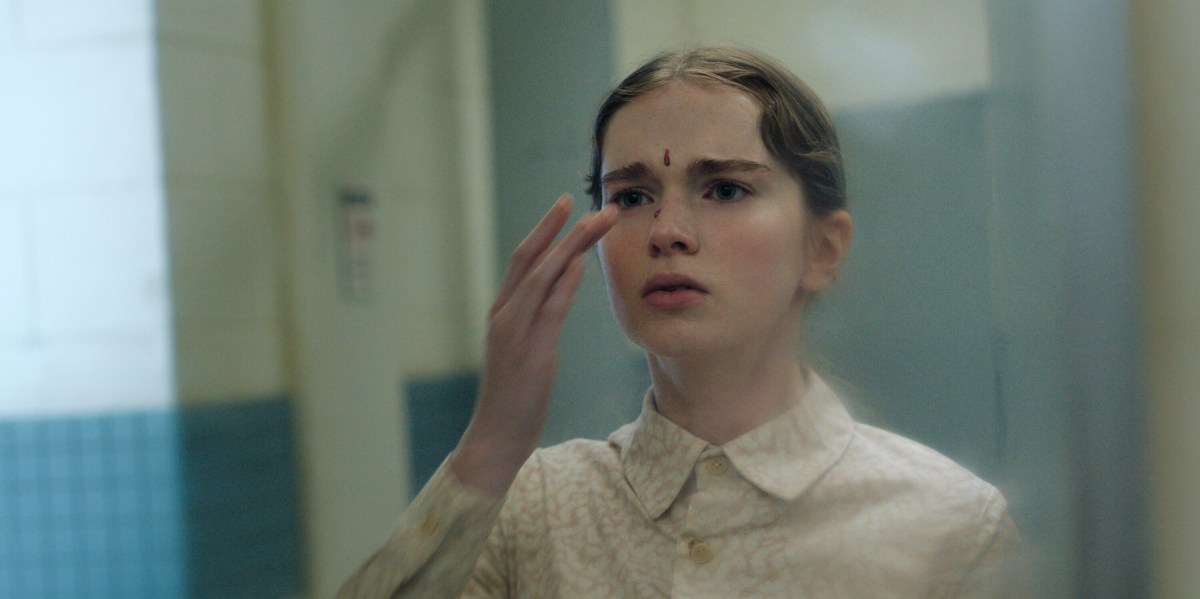
As anyone who has ever survived the wilds of high school knows, not fitting into the exceedingly narrow band of what’s deemed ‘normal’ is hazardous.
While most Carrie adaptations foreground her sheltered nature – a symptom of the psychological and physical abuse by her evangelical mother Margaret, who has raised her with no understanding of her own body – all have resiled from how King saw her.
Here she is, as described in the instigating ‘plug it up’ shower scene when Carrie, terrified she’s bleeding to death while experiencing her delayed first period, is savagely bullied by her classmates, including the unrepentant Chris Hargensen and the soon-regretful Sue Snell:
Carrie stood among them stolidly, a frog among swans. She was a chunky girl with pimples on her neck and back and buttocks, her wet hair completely without colour.
It’s one thing that De Palma opted for a unique-looking actor, in Spacek, but one who’s clearly thin and spotless in 1976. That Flanagan, with all his creative muscle in the year 2026, does so again with Summer H Howell is far more troublesome, further perpetuating patriarchal demands that lock out anyone who does not fit into the rigid cage of the so-called body beautiful.
Who is Margaret?
A cataclysm of missteps follows in rapid succession. Here’s how King describes Carrie’s mother Margaret, a widower who gave birth to Carrie after sexual assault by her now-dead husband Ralph, having believed she was swollen with cancer:
Due to the Whites’ near-fanatical fundamentalist religious beliefs, Mrs White had no friends to see her through her period of bereavement. And when her labour began seven months later, she was alone.
In dark days for the US, with neo-Nazis and money-hungry evangelical ‘Christianity’ coalescing around a nakedly corrupt president, clawing back hard-won progressive rights and collapsing the separation of church and state, it is reprehensible that Flanagan all but shaves off Margaret’s god-fearing fervour.
Flanagan’s insidious decision to play down Margaret’s religiosity reads as a craven attempt to keep MAGA-minded viewers on side. It’s a wonder he didn’t cast infamy-attracting Sydney Sweeney as Carrie.
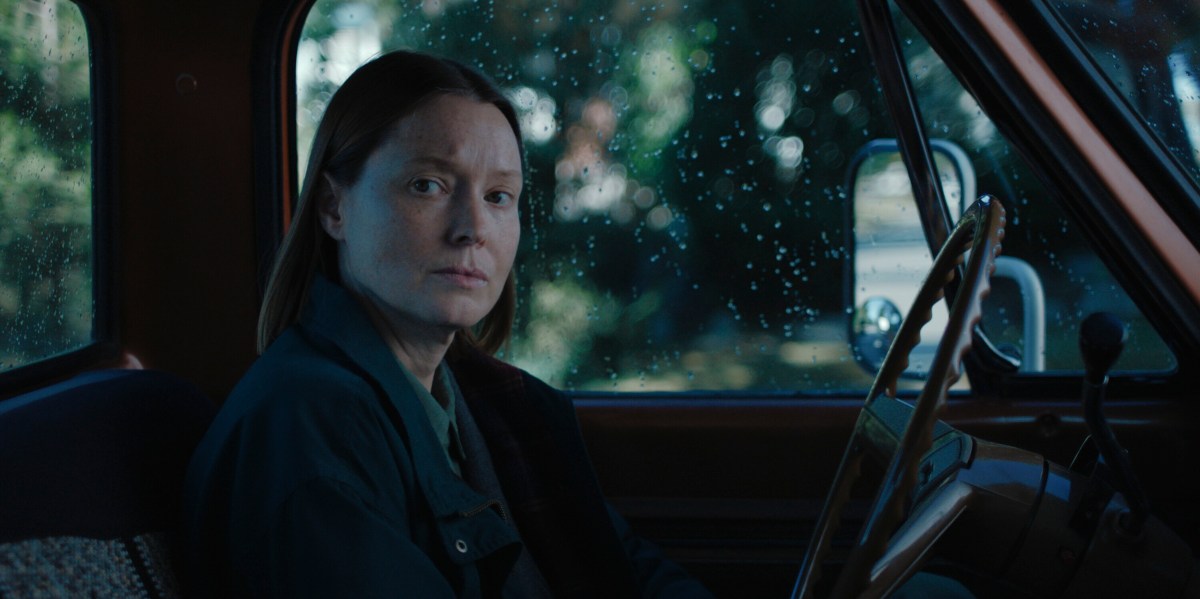
As depicted, wanly, by Samantha Sloyan, any reference to Margaret’s religiosity is egregiously diluted. Her prayer closet – marvellously depicted in De Palma’s 1976 film with the arrow-filled Saint Sebastian statue – is also minimised. Why are we even here if Flanagan is unwilling to work with Carrie’s core tenets?
Indeed, King has Carrie’s kind neighbour Stella (played by Naïka Toussaint in Flanagan’s series) wonder, in one of the novel’s many intriguing interludes, if Margaret’s fanatical cruelty caused the sweet and curious Carrie to comfort eat.
Instead, Margaret is redrawn as a shut-in who has adopted the cooker beliefs of her late husband (Tahmoh Penikett).
While Howell’s is the better performance by a long way, neither she nor Sloyan are ever able to convey even a fraction of the friction achieved by all previous actors – most notably Piper Laurie with Spacek in De Palma’s film, though Julianne Moore doesn’t get the credit she’s due for her depiction of Margaret in Kimberley Pierce’s 2013 film.
Watch the trailer
Shaky foundations
The extra info from cop reports, inquiries, student survival stories and books about telekinesis that so enrich King’s novel, which some adaptations have tried to reintroduce, post-De Palma, are flattened in this new series to thudding narratorial prologues for each episode, sloshing blobs of bumbling exposition.
Flanagan further weakens King’s solid foundations by having Carrie home-schooled until her father’s death, which has been shifted later in the timeline. A seemingly small tweak, it kneecaps Carrie’s momentum. The novel stresses that she has been bullied relentlessly for years, with that wound festering deep inside:
Carrie had been going to school with some of them since the first grade, and this had been building since that time, building slowly and immutably, in accordance with all the laws that govern human nature, building with all the steadiness of a chain reaction approaching critical mass.
Flanagan bizarrely tries to retro-engineer this chain reaction, diminishing Carrie’s pent-up anger in favour of the weak sauce idea that the entire school is scrap-happy. Copying Pierce’s smart adoption of social media bullying (one of the few aspects the 2013 film gets right) by pushing ‘plug it up’ viral, he pitches queen bee Chris and Carrie as a choose-your-side crowd-divider for our binary times.
It fizzles because Flanagan’s Chris is so overtly odious that it’s hard to believe anyone other than real bad bastards would follow her. She makes expelled bully Billy (Arthur Conti) look drippy, and even her bestie Tina (Josie Totah) baulks.
As the series sluggishly progresses – there just isn’t enough material here to justify eight episodes, even with Flanagan’s increasingly alarming insertions – this school-wide fracas leads to the excruciating plot device of having Margaret embrace social media as a parents’ rights activist, Instagram-ready influencer ring light and all.
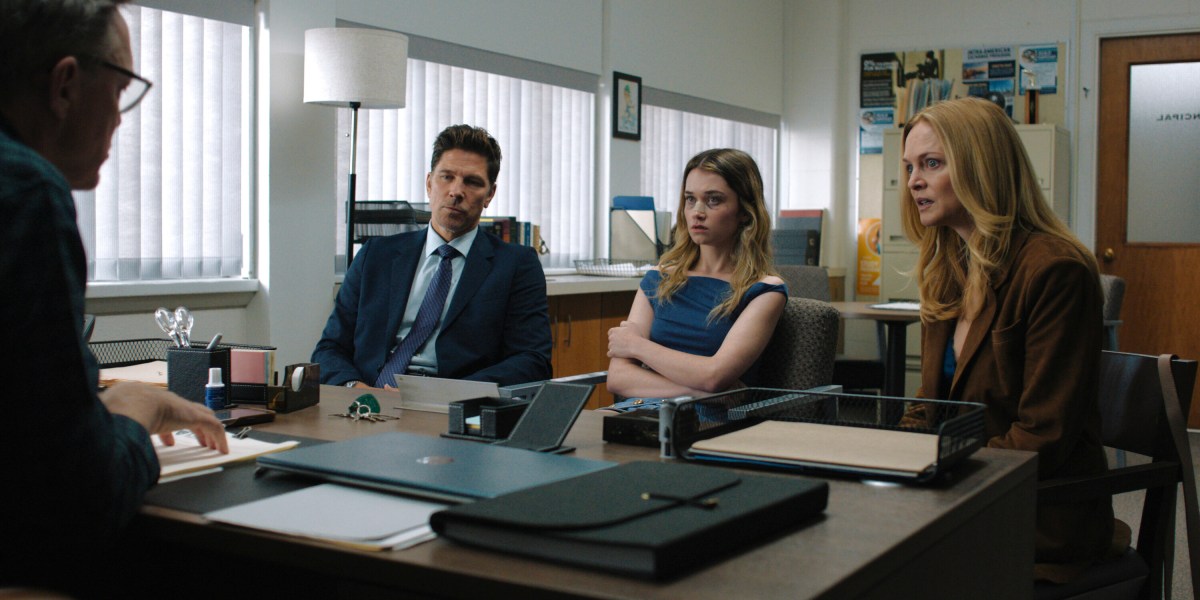
When Margaret, always best-played within the claustrophobic surrounds of the house, expands her court to encompass the school, she rattles Scream alum Matthew Lillard’s headmaster and Amber Midthunder’s PE teacher Miss Desjardin, both doing their best with bad material. Also pitting Margaret against Chris’ parents, Heather Graham is thoroughly wasted as her peacemaking mum, while Flanagan favours fleshing out Chris’ boorish and frankly boring lawyer father (Michael Trucco).
Who asked for so much of him? Or for truly awful scenes of Margaret cleaning toilets in a grim supermarket gig played for cheap laughs by Flanagan? We certainly didn’t need the truly gobsmacking insertion of a paedophilia plotline that Flanagan drops and rolls from, spending close-to-zero time with the victim.
Stories evolve, sexism does not
I wish I could say that last point was the worst thing that Flanagan does here, as heinous as it is, but I’d be lying. And I’m leaving out a litany of smaller insults.
It’s worth noting that I am not against adaptations taking big swings, or against remakes more broadly. Horror is stacked with successful examples, including The Thing, The Fly and The Invasion of the Body Snatchers. De Palma made significant changes to King’s Carrie. But they all stayed true to the spirit of their stories.
Alas, despite previously tackling King works including Doctor Sleep and Gerald’s Game, to varying degrees of success, Flanagan has no clue what he’s doing here. While he shares directorial credits with Axelle Carolyn, Hiromi Kamata, Kyra Sedgwick and his partner Kate Siegel, they get one episode each to his four. Flanagan is the only credited writer.
No woman has ever written for an adaptation of Carrie. Why, in the year 2026, is a middle-aged guy writing torturous teen dialogue for a story centred on young women? It’s giving peak Steve Buscemi ‘How Do You Do, Fellow Kids?’ in 30 Rock .
Flanagan’s greatest crime comes in the final episode, and there’s no getting around it, so look away now if you aren’t up to date and come back when you’re done.
Puppet mistress (spoiler warning)
While actor Thalia Dudek is no better or worse than the largely forgettable ensemble assembled here, none of whom come close to De Palma’s picks, it’s no fault of hers that her invented-for-the-show character Emaline is symbolic of what’s gone horribly wrong here.
An emo like Allison in The Breakfast Club, she’s already uncomfortably close to Carrie’s outsider role. Dubious blocking decisions by Flanagan and cinematographers Michael Fimognari, Michael Wale and Maria Rusche, in an already relentlessly ugly, Netflix-lit looking show, clumsily flag that she’s not quite there. Not mentally, but physically.
Emaline is an extension of episode one’s car crash of tweaks that take the subtle threads from King’s novel, about telekinetic children elsewhere, and goes all in. Flanagan straight up introduces an entire X-Men’s worth of them, Xavier’s School for the Gifted-style, including an also squandered Delainey Hayles (Interview with the Vampire).
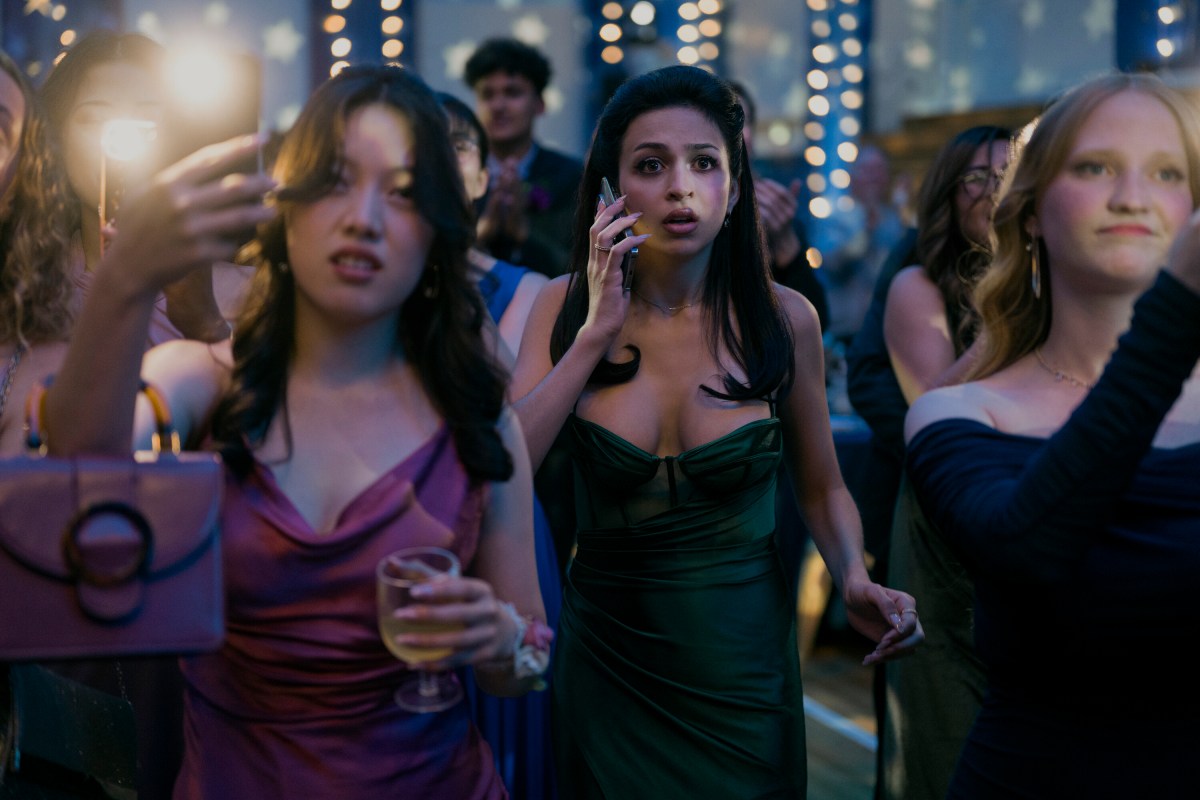
Sue Snell references these ‘others’ being at the prom in the documentary-like interview that opens the show, so we know, straight-up, that Carrie isn’t the only empowered person to bring the house down, further diminishing her centrality.
When we finally get to the conflagration that will leave her good-hearted prom date Tommy (Joel Oulette) dead, and those with pig’s blood-on-their-hands, Chris and Billy, on the run, the true atrocity of Emaline is revealed.
I’m almost too furious to type this – again, look away now if you want no spoilers – but Carrie only accidentally kills one person.
Everything that happens afterwards is taken from her. Emaline’s true nature is revealed as she says, ‘Let me take the wheel, ok?’
Theft of agency
Emaline kills everyone in the gym hall that’s also stalked both by the ‘others’, and a mother who’s more unhinged than Margaret, who is stalking the others in turn. Yes, this scene is a mess of unnecessary over-population, further sidelining Carrie.
Emaline unleashes the rampage on the town, which somehow manages to be both smaller in scale than David Carson’s hokey 2002 telemovie and has the audacity to invoke De Palma directly, via a cinema hoarding.
Emaline confronts Chris and Billy.
That Flanagan even robs Maragret’s fate from Carrie is arguably his most perverted failure. Having her survive the showdown with her daughter and the total collapse of their home, literally and figuratively, by suddenly flexing her own latent telekinetic ability would be bad enough if it led anywhere. A reckoning, perhaps, with the source of this strength: the angels or the devils?
But remember, this denuded Maragaret is not that person. Instead, she faces a book-appropriate death, but at the hands of another tormentor who we’ve barely seen. The scene, over in a heartbeat, shows just how far we’ve drifted from the titular character.
Carrie isn’t here anymore.
The gentle soul, mercilessly bullied, who just wanted to break free of her smothering mother and enjoy one goddam night of fun, the person of power bent so far out of shape by one awful incident that there’s no way back, is now a passenger in her own goddamn story.
Carrie, who Tabitha saw so clearly, rescuing her from that wastepaper basket over 50 years ago, is entirely stripped of agency. Reduced to an unwitting puppet, her fury is stolen.
By the time Flanagan had signalled that he’s after a second season of this abomination, I was incandescent. Carrie, and Howell, deserved so much better. Burn it all down.