The Sydney Opera House is getting scary for Halloween, with its newly-announced Hellhouse film festival spotlighting an array of international horror gems to round out October.
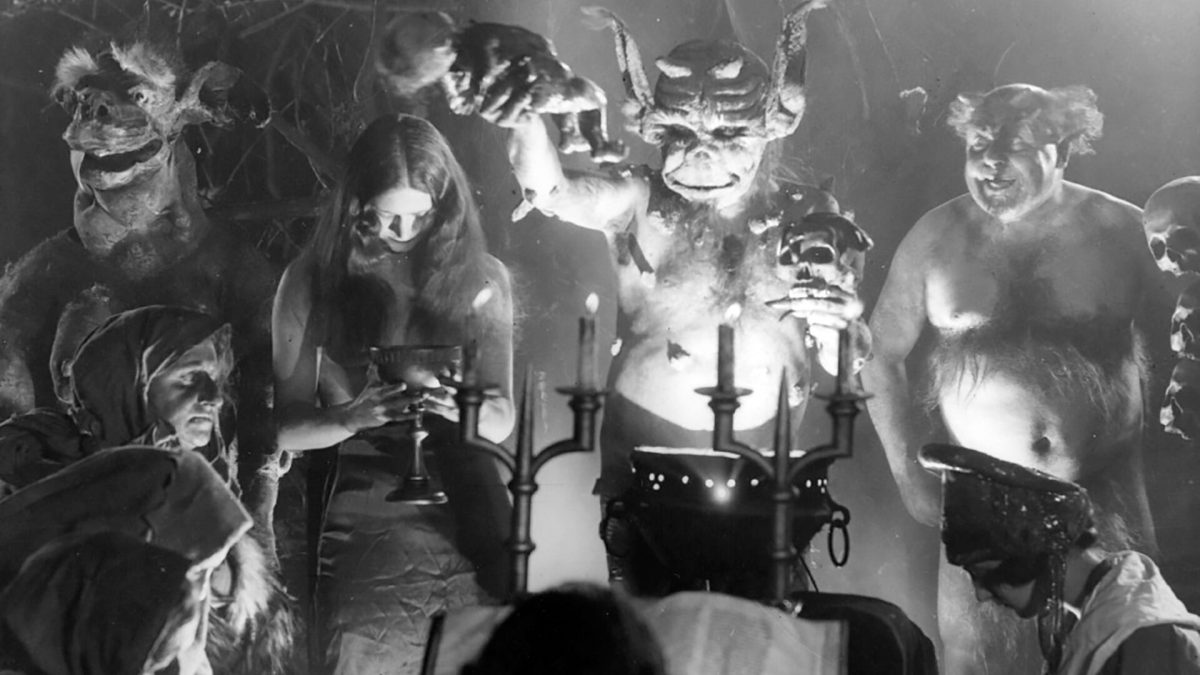
The headliner is a 31 October screening of The Babadook, accompanied by a special in-person introduction from director Jennifer Kent, but perhaps the most intriguing inclusion is a rare screening of 1920s horror essay film Häxan, which explores the real-world history of witchcraft through melodrama.
This screening will be accompanied by a new live score developed by composer Madeleine Cocolas, which has been designed to elevate the film’s in-depth exploration of the struggles of women, and the impact of mass witch hunts.
Hellhouse film festival interview – quick links
The surprising relevancy of Häxan in the modern era
‘I had no idea what I was getting myself in for [when I was first asked to score Häxan],’ Cocolas says.
In her capacity as a composer, researcher and producer, she was initially commissioned to rescore the film for the Queensland Art Gallery & Gallery of Modern Art in Brisbane, as part of an exhibition around fairy tales.
‘There was a lot about princesses and fairies, and [the team] wanted to give the witches a bit of a voice.’
While Cocolas says she didn’t have much of an affinity for horror – although this is now changing – the beauty of Häxan really stuck with her, and it’s why she was glad to share her score as part of the Sydney Opera House’s Hellhouse event.
‘Tonally, the film is really varied. So it took me a few watches to understand what’s going on here. How can I piece this together? The whole thing is sort of like a seven-part documentary. There’s bits that are really affecting.’
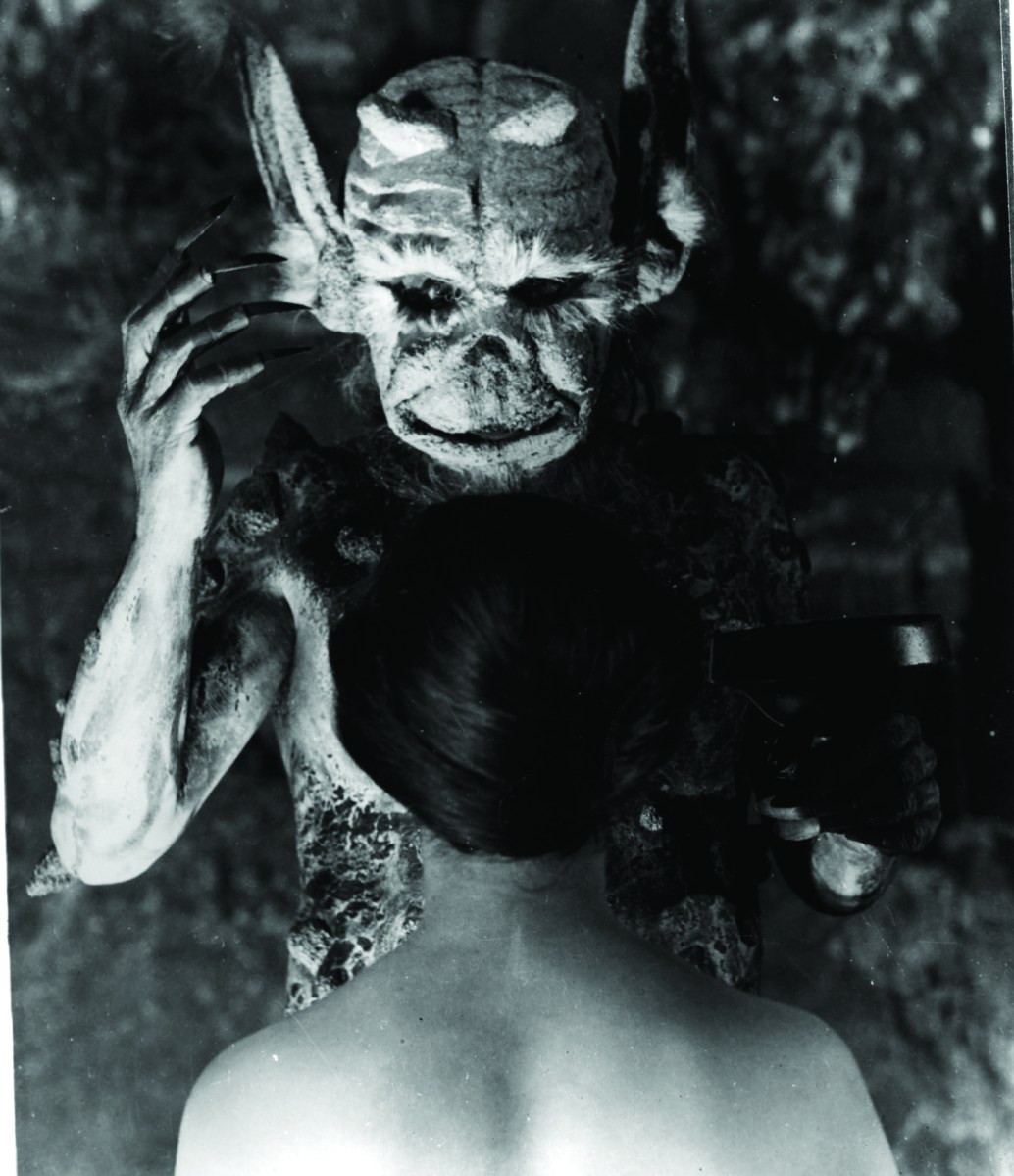
She adds, ‘What I think is amazing about this film is it really doesn’t shy away from tapping into the emotional aspect. It shows people who are being repressed, people who are being persecuted. But it delves deeper and shows on a really personal level … For 1922, this is pretty incredible.’
As Cocolas says, it’s a striking film and one that has important lessons to share from its era, as well as our own. While we’d all like to believe we’ve made significant progress dealing with social issues and addressing the struggles of women, Häxan reveals some of the same conversations we’re having today were also taking place a hundred years ago.
‘The thing that really has affected my relationship with this film is that it was made in 1922. You watch the film, and it could be made now,’ Cocolas says.
‘It’s so upsetting that the themes in the film are still relevant. In 2026, maybe even more relevant … I feel like this film was always a feminist film.’
Cocolas’ live score was developed with this in mind, layering in music that responds to the struggles shown in the film while also buoying its lighter, funnier and more melodramatic moments.
‘I approached it with no preconception. I watched it, and [the score] was my response to the film.
‘I would hope that people come to this film and they just see the depth to it. You can come and you can probably enjoy it on a reasonably superficial level … but back then it was absolutely pushing boundaries of what you could screen. I hope that people come and they really connect to the film, maybe even on an emotional level.’
‘It’s not just a horror film. It really can be read as a plight of women.’
Horror like Häxan is a gateway to understanding
As Stuart Buchanan, Head of Screen at the Sydney Opera House and the curator of Hellhouse says, the inclusion of Häxan, The Babadook and other impactful works in this festival selection is all about delivering horror tales that brim with meaning, and encourage personal transformation.
The horror genre is not defined by its scares, or even its monsters. The best films have something to say, delivering messages about the state of the world or exploring complex conceptions like trauma, grief and guilt.
ScreenHub: What vampire films reveal about our world
‘We have a generation of filmmakers who are coming off an appreciation of horror that’s quite different to how it might’ve been in the preceding decades,’ Buchanan says.
‘It’s always been an important part of cinema history – but it’s a bit like science fiction in some respects, whereby … it’s sort of seen as being lesser than. You can count the number of Oscars won by genre films not quite on one hand.’
‘It feels like that’s changing. It’s now more critically appreciated.’
As Cocolas and Buchanan see it, the horror genre has grown in popularity since its early origins, with a greater understanding that it offers fertile ground to explore real-world concepts, perhaps in ways that are abstracted or made easier to understand through their fantasy.
‘I’ve had to get over my personal fear and realise [that] behind the fear and the terror, they’ve got some brilliant themes,’ Cocolas says.
‘You look at these horror films … they have a message to say, and it’s an interesting message.’
Per Cocolas, it’s all about subversion. Horror films are typically able to ‘get away’ with more through their fantasy or hyper-real lenses. Concepts that are difficult to explore can be made more approachable in surreal or subverted form.
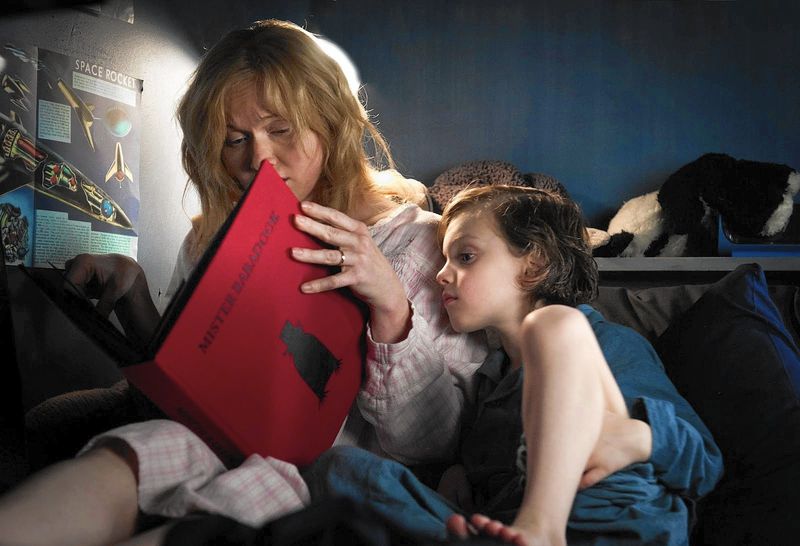
In Häxan, the film’s dramatisation is able to disguise its deeper exploration of women’s issues, allowing for multiple interpretations of its subject matter. The Babadook is a very creepy film that manages to explore feelings of parental guilt and grief, in the guise of a monster.
Australians make great horror films
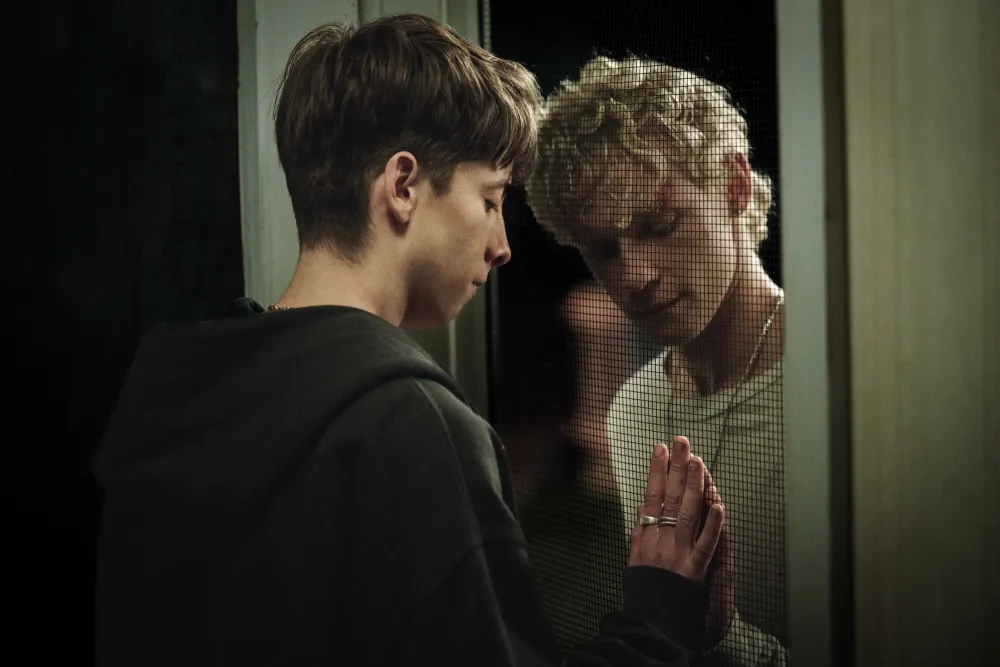
As Buchanan says, The Babadook is a great example of Australian genre storytelling on screen, and an important part of Australia’s cinematic legacy – which is why it has a place in Hellhouse.
‘It’s terrifying, but it’s only M-rated,’ Buchanan notes. ‘It was probably more accessible to a broader cohort of people … I think it has a resonance too.’
In recent years, Australia has gathered a reputation as a horror powerhouse, with so many unique, subversive horror stories releasing around the world, including Talk to Me and the recently-released Leviticus and Penny Lane is Dead (not to mention earlier internationally-successful Australian horrors like Wolf Creek and Picnic at Hanging Rock ).
ScreenHub: Australia is ready to leap on cinema’s low-budget genre boom
‘We’re generally, as a culture, quite contrarian … We’re able to go places that perhaps other countries maybe will go to, but aren’t maybe as widely known or widely seen,’ Buchanan says.
‘Because our scene is a little smaller, it can bizarrely surface a little more.’
Buchanan described recently attending the Sydney Underground Film Festival and discovering a ‘bunch’ of Australian films that charted the ‘great, weird and bizarre’ of genre – films made for lower budget, but with the freedom and creativity that may afford. Without the need to hit significant targets and free of creative restraints, many of Australia’s filmmakers are able to get wonderful and creative in their work.
‘We’ve managed to plow our own scene, and horror is a good example of that.’
WithThe Babadook on show alongside the live score performance of Häxan and screenings of Angel’s Egg, Little Shop of Horrors, Pan’s Labyrinth and more, Hellhouse presents a chance to experience the full scope of the horror genre, as developed within Australia and internationally.
Across the week of screenings, Buchanan and Cocolas hope to frighten, delight and educate audiences, with the spread showcasing exactly what the horror genre can be, and how it can change both hearts and minds.