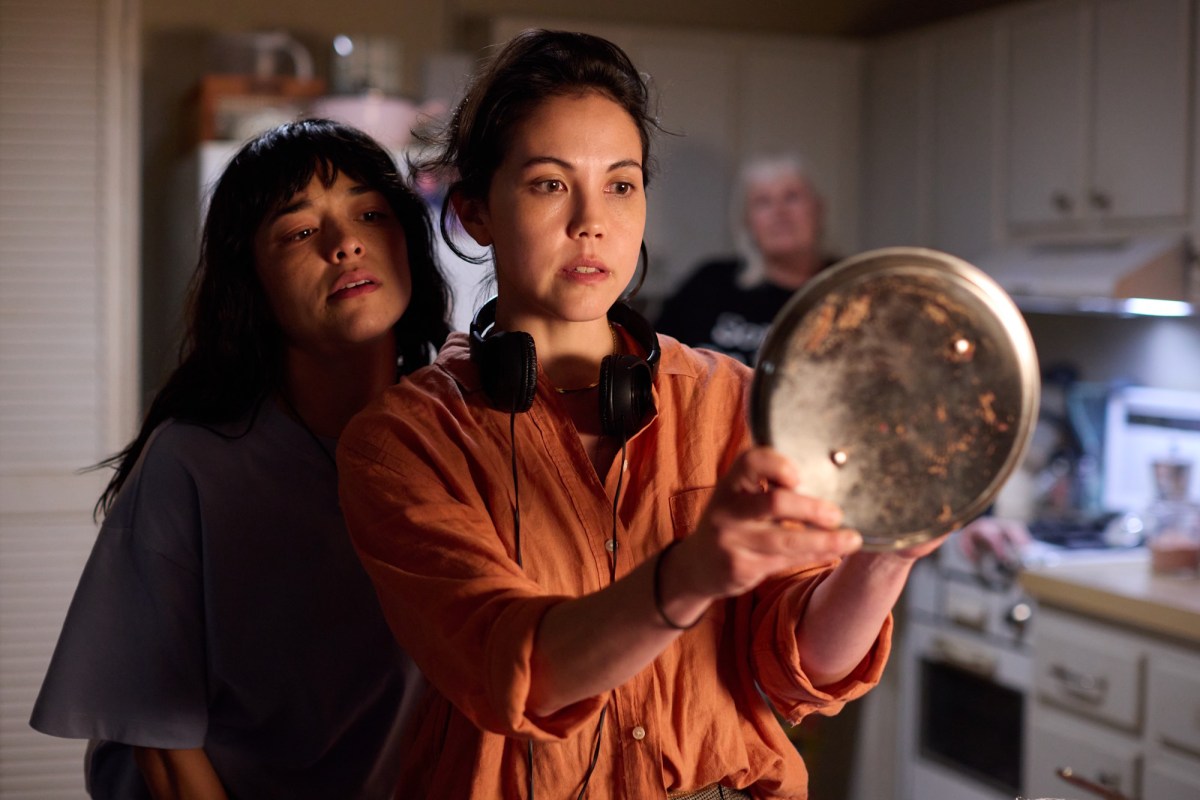
Family experience. A knack for psychological horror. Society’s perpetual fixation with body size, as recently amplified by the rapid rise and widespread acceptance of GLP-1 agonist drugs for weight loss. Add in Buddhist folklore’s concept of the hungry ghost, and you have excellent new Australian body horror film Saccharine, the Melbourne-shot third feature from writer and director Natalie Erika James.
As she initially did with her 2020 debut Relic, James links the personal with the universal in her latest film – this time following medical student Hana, played by The Sex Lives of College Girls and Grey’s Anatomy star Midori Francis, who is so hell-bent on shedding kilograms that she’s willing to eat human ashes to do so.
As James’ 2024 Rosemary’s Baby prequel Apartment 7A also demonstrated, horror can be the perfect way to explore the Faustian bargains that people are prepared to make to chase their dreams or conquer their perceived failings.
‘Horror allows you to take an idea and push it to such extremes, and to be really bold with that,’ she tells ScreenHub. ‘You can externalise these very internal notions or ideas or fears, in a way, and give them physical form.’
Natalie Erika James interview – quick links
Biting sharply into diet culture
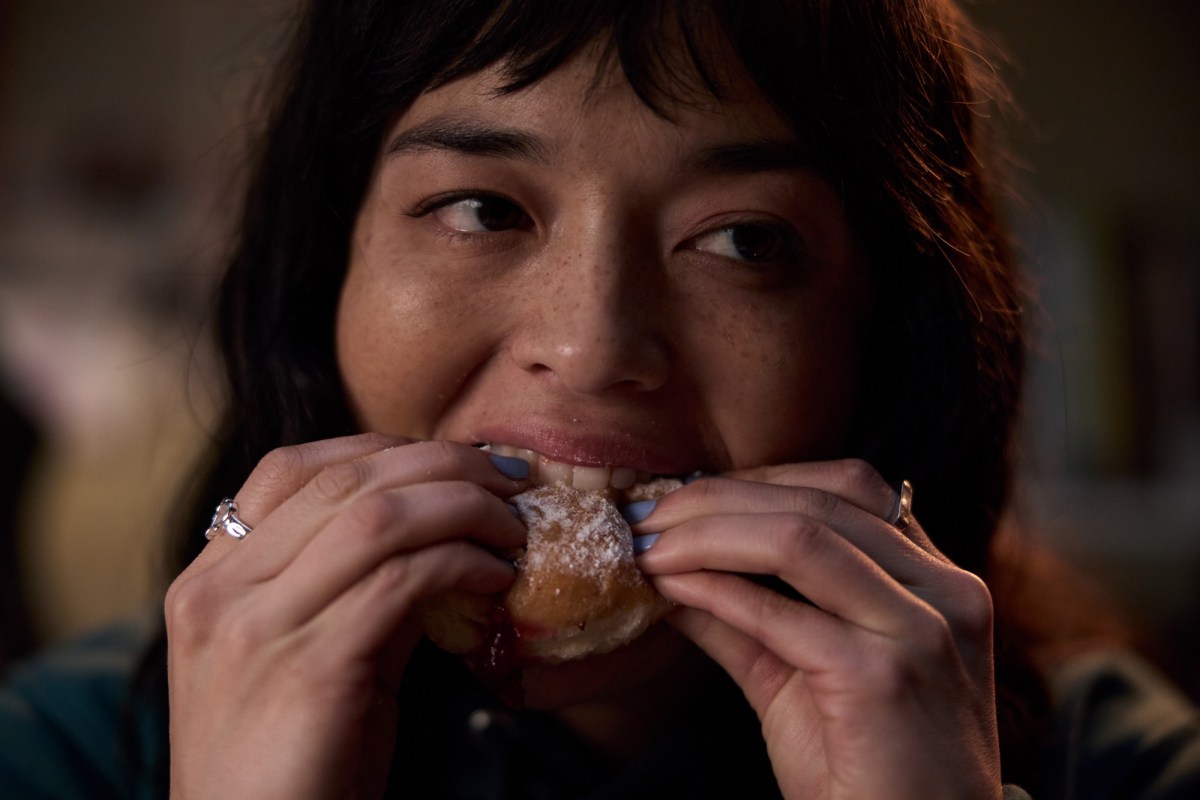
When Saccharine begins, James immediately establishes the food noise, the social-media fuelled self-doubt and the battle with appearance that has become Hana’s daily reality.
In a savvily edited frenzy, Hana is seen binge-eating doughnuts, discarding them in disgust, charting her progress on the scales, sweating it out at the gym and, inspired by a crush on trainer-slash-influencer Alanya (Madeleine Madden, The Wheel of Time), contemplating signing up for a 12-week fitness challenge.
Hana is primed, then, to jump at the chance to try an experimental weight-loss drug that has transformed an old friend. When they randomly cross paths at a bar, Melissa (Annie Shapero, House of the Dragon) gives Hana a free sample, with a warning that its quick results come at a steep price.
And the results are fast – virtually instant, even. The cost is undoubtedly hefty, too, and not just financially. Hana uses her lab skills to reverse-engineer the seemingly miraculous medication, but still sticks with the pill even after discovering that reducing her own body requires consuming someone else’s – and that her actions have ghostly consequences.
It’s a sad truth that a tale like Saccharine’s, which bites sharply into body-image standards and diet culture, will always be relevant. There’s no missing the fact that it is especially timely in the Ozempic era, though. That’s purely coincidental, James says, given that she began writing the film in 2019 while in post-production on Relic.
‘With all of the GLP-1s coming into the market, and the conversation around this glamorisation of extreme thinness that’s coming back into our culture, it has been, just timing-wise, really interesting,’ James says.
‘Really though, nothing much has changed from when we were teenagers. It’s just the tech is different and the language is a little different.’
That Saccharine tackles a subject that’s so front and centre in mainstream consciousness right now does add to the sense of pressure, however.
‘A little bit, but I think the worst thing would be for people to have a very surface reading of the film,’ says James, ‘because of course it’s such a complex issue, and there are no clear ways in which someone should live or what medical decisions they should make.’
A career sweet spot
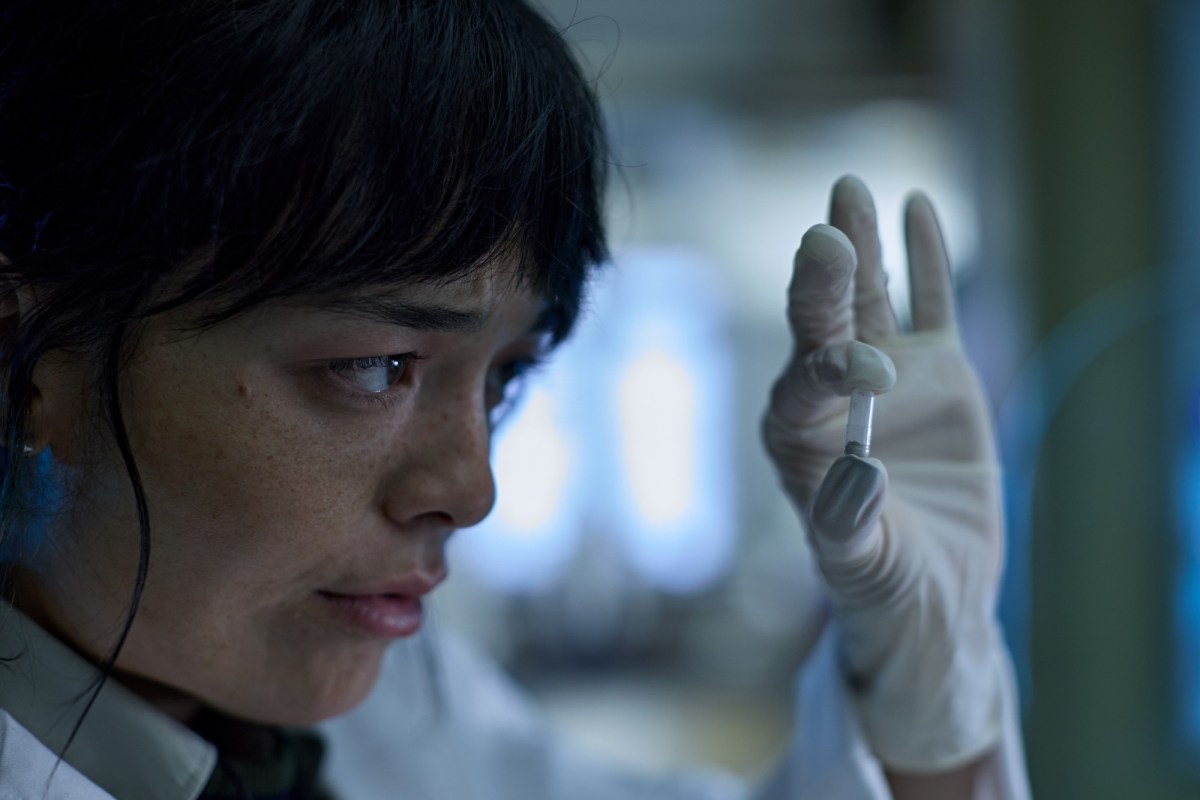
‘For me, I think this film is so much more about what’s happening internally for a person, and what those pressures can do to the way someone relates to themselves,’ James adds.
Saccharine’s intense, unrelenting focus on Hana’s inner journey – one that, ‘in this horror world, translates to what’s external,’ as the filmmaker reflects – won’t come as a surprise to fans of James’ first two movies.
In the also Australian-made Relic, James turned a rural family home into a nightmarish manifestation of society’s fears of ageing and dementia (into an eerie and sprawling domestic maze, too, that’s every bit as unsettling as 2026 horror sensation Backrooms).
In her leap to the US, and also her debut dalliance with existing intellectual property, James recreated the disquieting world of the Bramford building. Apartment 7A lets loose the complex’s pregnancy-obsessed and Satan-worshipping terrors upon dancer Terry Gionoffrio, a minor character in Rosemary’s Baby now played by Weapons’ Julia Garner.
With all three features, James examines the ways that women’s bodies can be defined and judged – getting older, fertility, injury, body shape – and bakes the sensation of being on the receiving end of that attention into not just the story but the style of her films.
‘I think I’m someone who really starts with theme and maybe imagery,’ she says of the thread binding Relic, Apartment 7A and Saccharine. ‘And for me, filmmaking is a way to ask the big questions in life.’
’It’s exciting to start a project and have something that you’re weighing up or going through, and not really knowing the answer to the question, and then discovering that through the writing process and through making the film.’
That said, as a throughline across her filmography, interrogating the impact of societal expectations around women’s bodies has developed organically.
‘I definitely make films about the things that have a big importance to me – and, of course, as a woman that tends to be about exploring the female experience,’ says James.
ScreenHub: Saccharine review – freaky, fun body horror for the Ozempic era
Serving up emotional and personal truths
‘A film is almost a snapshot of the issues that you’re grappling with at a certain time in your life,’ James continues.
On Relic, she was ‘coming out of a grieving process with my own grandmother’. With Saccharine, food and weight ‘was just something I had at the back of my mind,’ she says.
‘I think it’s a subject that, because it has affected my life and my family’s life so deeply, it’s always been something that I’ve really cared about and wanted to talk about.’
James believes, as horror aficionados will agree with, that the genre ‘is best when it stems from emotional truth’. Her commitment to that principle flavours every facet of Saccharine – right down to its voracious spectre, which springs from the cadaver whose bones Hana steals from the university anatomy lab to incinerate and devour.
‘What felt emotionally truthful to me about having an eating disorder was the sense that, even though it was in my control in a way, there was almost something external to me that was taking over or driving some of those decisions,’ James says. ‘And that felt like a dark passenger or a sinister presence to me at the time.’
‘Horror was the right fit for that, and to build this sense of this hungry ghost. And with the hungry ghost having this insatiable thirst or hunger, it felt like the perfect metaphor for dealing with that sort of addiction.’
Asked whether it can be cathartic or challenging to use complicated elements of her own life, then further unpack that personal material within the heightened confines of horror, James notes that for most artists and filmmakers, it’s about ‘trying to transmute your pain into something meaningful, and hopefully something that can resonate with audiences’.
‘But at the same time, there’s also a difficulty to doing that, because you’re forcing yourself to relive certain things on-screen,’ she says.
‘With Saccharine in particular, because so much of it is this idea that shame thrives in secrecy as well, I think part of it, in even presenting it on-screen, my intention was to try to thrust the audience into the subjective experience of someone going through an eating disorder.
‘And through talking about that experience and putting it on-screen, as uncomfortable as it is to look at or talk about, hopefully it makes other people see a part of themselves in that experience and to feel less alone in that.’
Building a body-horror feast
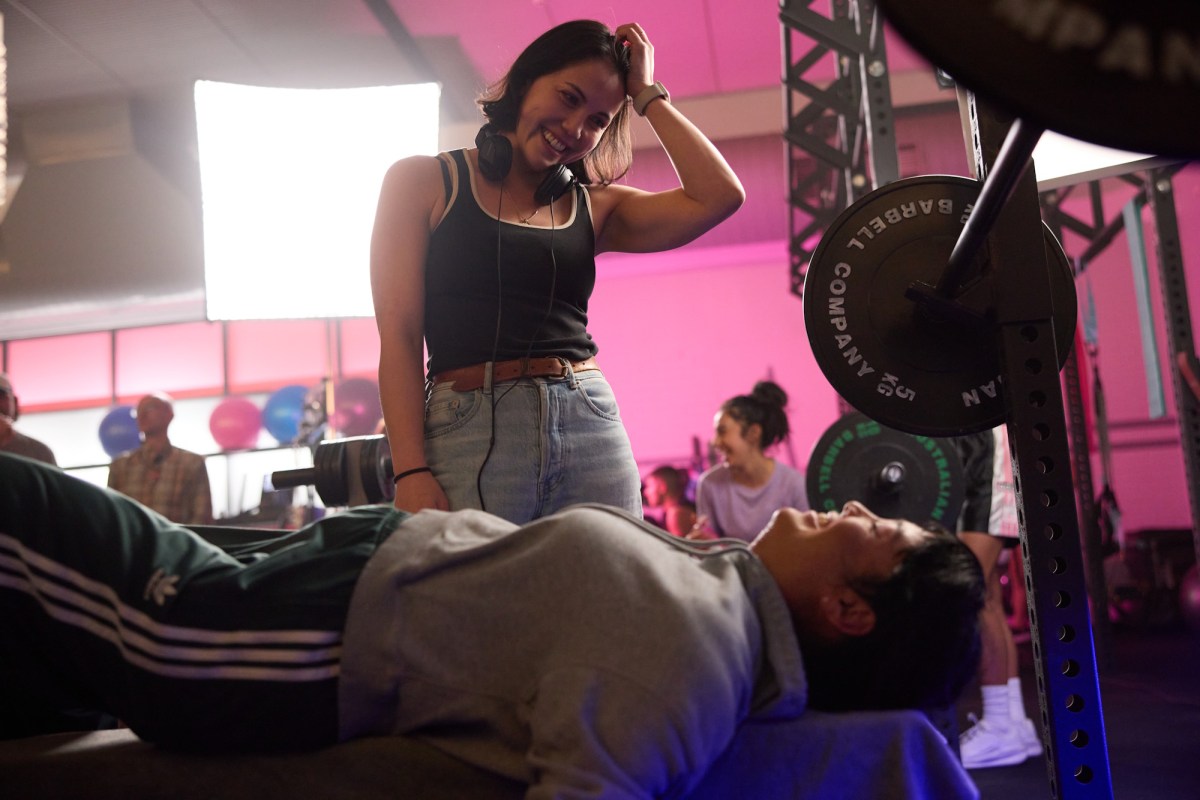
In piecing together Saccharine’s narrative, James also layers in gym culture, the use of bodies within medical settings, online crazes, the perspectives and compulsions that we can inherit from our parents, and more. Courtesy of Hana and Alanya’s relationship, it’s a romance as well.
‘I think I’m always really excited by films that try to straddle a few different … genres or sub-genres. When you can try to marry them together, I think that’s just always really exciting,’ James says.
‘And creatively, that, I think, is when some of the best ideas come – when you’re meeting in that liminal space between ideas or genres.’
‘So it was a lot to wrangle. And there is a kind of excess to it, that mirrors this almost dopamine-chasing feeling that we tried to build into the film,’ she says, pointing to the ‘freewheeling highs’ of montages that capture ‘the experience of having a crush, or having a binge, and the mania that comes with that’.
James knows that one of the keys to body horror, and to audiences feeling like they’ve slipped into the protagonist’s shoes, is its visceral nature. With that goal in mind, emphasising texture – be it glossy, sweaty, fleshy or gory – is vital for Saccharine’s sights and sounds. Kudos also go to returning Relic cinematographer Charlie Sarroff, sound designer Robert Mackenzie and editor Sean Lahiff, alongside Shayda production designer Josephine Wagstaff and Midwinter Break composer Hannah Peel.
This is a movie of mirroring many times over, in fact, deliciously so. Indeed, that it makes literal the idea that Hana is being haunted by what she sees in the mirror, and also that what she’s spying in those reflections is a blatant distortion, couldn’t be more crucial.
’That was probably one of the early visuals that I built the film on – this idea that due to her body dysmorphia, there’s this sense that she’s projecting an image onto this spirit,’ explains James.
‘And while the ghost grows, for me at least, the monstrosity or the menace in the film isn’t size or the fact that she’s growing; it’s Hana’s shame, and what she’s projecting onto the ghost, and this self-loathing or self-destructiveness that she’s trying to work through.’
Ravenous for more
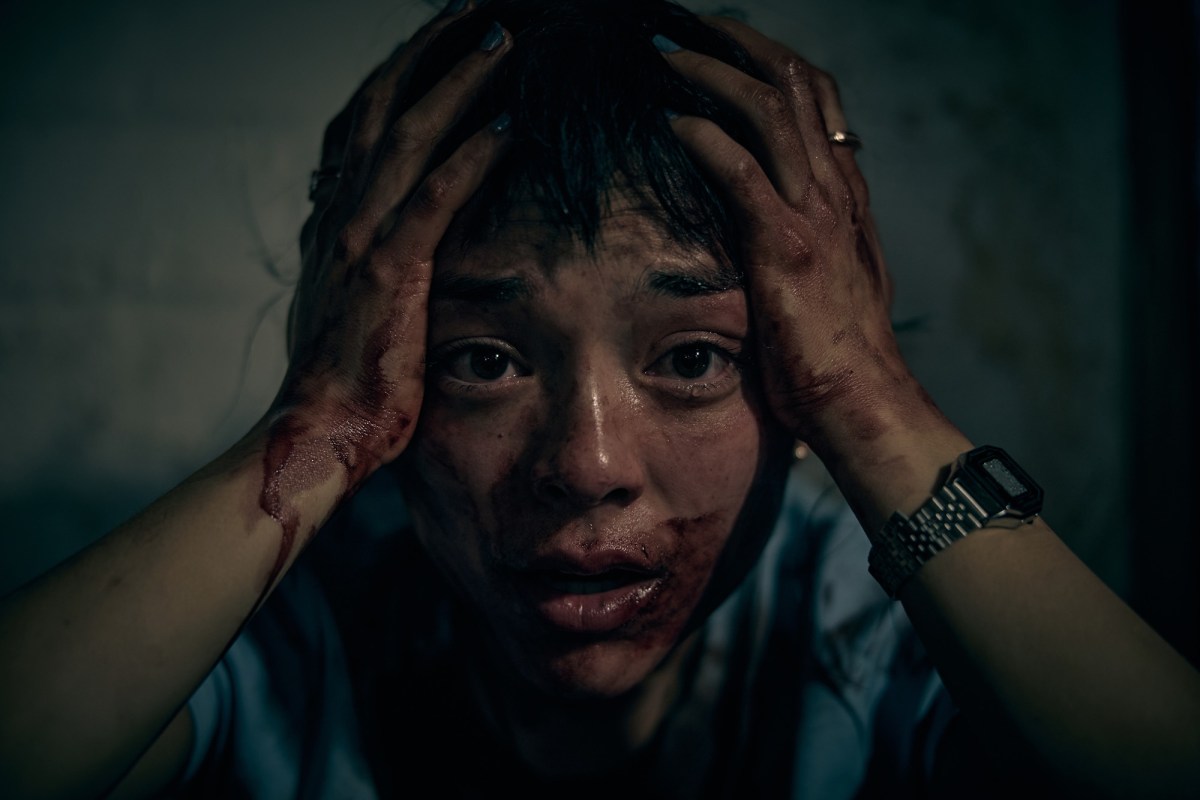
When Relic bowed at Sundance six years ago, then made its way to viewers elsewhere – heading straight to streaming in Australia, in the Covid pandemic’s early days – it left everyone ravenous for more from James, including more original, personal stories from a rising voice in horror.
Also premiering at Sundance, but earning an Aussie cinema release from 9 July before joining Stan’s catalogue at a later date, Saccharine swiftly sparks the same urge.
In-between, the underappreciated Apartment 7A also amply showcased James’ talents, but in the IP space – allowing her to experience ‘joy in playing in someone else’s sandbox,’ as she says, while underlining the importance of ‘making sure everyone’s making the same film’.
For James, Carving a successful niche for herself in horror has sprung as organically as the pull to explore how society critiques women’s bodies.
‘You work very intuitively, and you make work that matters to you. And then in retrospect, you have conversations like these, where people are like “did you notice the link between this and this?”,’ says James.
‘And that’s really nice, that it’s all coming from the same brain – but it’s not so conscious. It’s more in the moment and in the project, what excites me.’
Still, her career and the movies that she’s been bringing to screens remain a dream come true for James, albeit one that has eventuated gradually, in a tough industry and while requiring so much of herself.
‘Filmmaking is always very tricky, and there’s a lot of highs and a lot of lows in any creative industry and endeavour, but I just feel immense privilege,’ she says.
‘I think it’s amazing to be able to make films, in themselves. And I feel incredibly lucky – this is something I’ve been wanting to do since I was 13 years old.’
What would that teenage girl think of James’ achievements so far, and of Relic, Apartment 7A and Saccharine? ‘She would be over the moon, I think,’ James says.