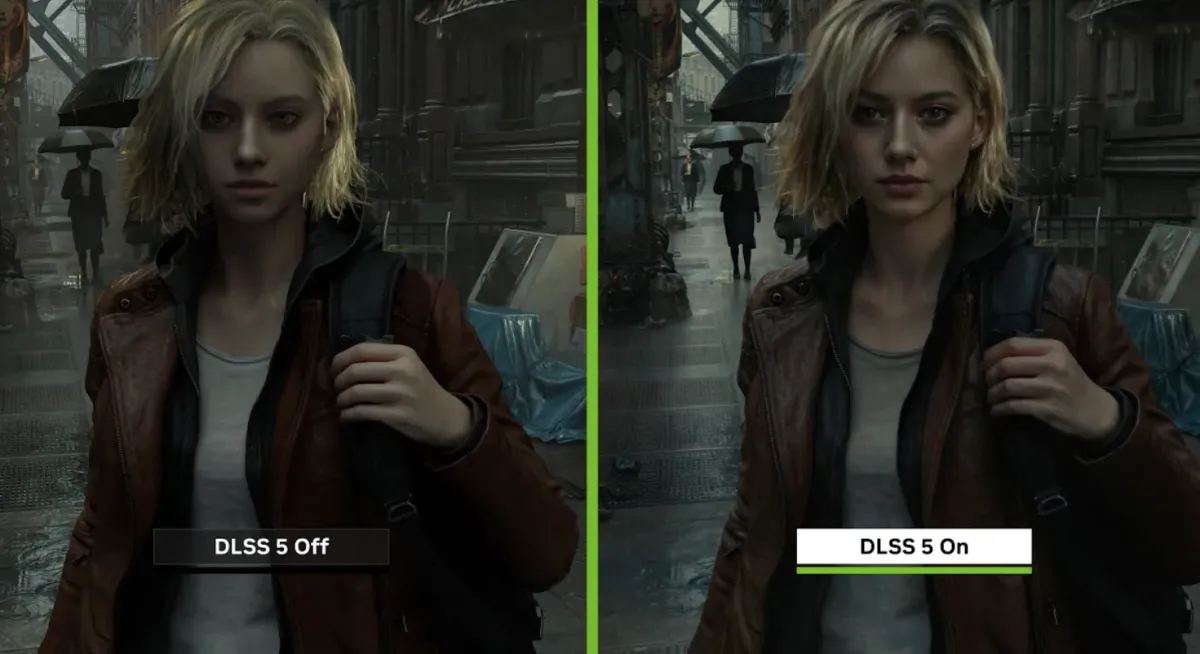
Nvidia has been the name on everyone’s lips this week, following the reveal of its new Deep Learning Super Sampling (DLSS) 5 rendering system, which uses generative AI to ‘improve’ the graphics of video games.
While the system was revealed with great aplomb during Nvidia’s GTC 2026 conference, the resulting feedback isn’t quite what the company desired, as DLSS 5 has quickly become the subject of great ridicule, with audiences labelling it a ‘yassify’ filter and criticising how it changes the artistic vision of games.
Nvidia’s DLSS 5 system – quick links
The intention behind Nvidia’s DLSS 5 rendering system
The intended purpose of Nvidia’s DLSS 5 rendering system is to improve detail in video games, using an AI-powered filter.
Here’s the breakdown from Nvidia itself: ‘DLSS 5 introduces a real-time neural rendering model that infuses pixels with photoreal lighting and materials. Bridging the divide between rendering and reality, DLSS 5 empowers game developers to deliver a new level of photoreal computer graphics previously only achieved in Hollywood visual effects.’
Essentially, the system runs video game visuals through a rendering model that fills in details using generative AI to create perceived ‘realism’.
Putting aside concerns about the enormous power needed to run this system, DLSS 5’s aim to better render graphics, and create more beautiful video game worlds, is admirable.
With practical implementation, what it actually appears to do is ‘yassify‘ and ‘sexify’ characters, disregarding the original artistic intent of games.
Nvidia’s DLSS 5 filter ‘yassifies’ character models

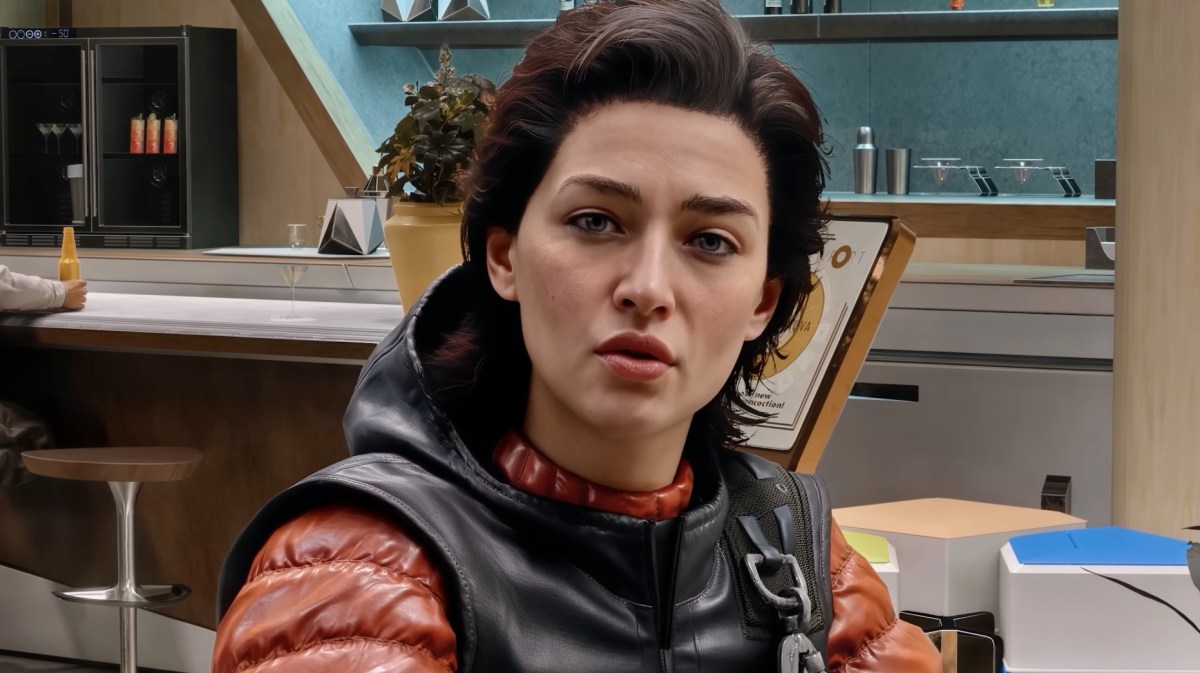
As shown off in examples, DLSS 5 rendering does not specifically ‘improve’ character models and textures, but rather seems to place a filter over them, with generative AI used to fill in gaps in realism.
It leans into the ‘idealist’ version of modern beauty, giving both male and female character models bigger, fuller lips, as well as smoother skin, sharper jawlines and the complete works with makeup.
It’s particularly egregious on female character models, as the generative AI puffs up lips and layers on makeup – deep eye shadow, lip liner, eyebrow pencil and contouring.
In some cases, the DLSS 5 filter even gives characters entirely different faces. Grace Ashcroft of Resident Evil Requiem is transformed from a pale and sunken-eyed FBI analyst to a big-lipped supermodel. The DLSS 5 rendering system also reduces the shadows around her face and in her world, lessening the intentionally dour, smoky tone of the original game.
It’s perhaps unsurprising, but continually disappointing, that generative AI continues to be used to put down women – to alter women’s faces to impossible beauty standards, to change their clothes, and to undress them. GenAI, in theory, promises the ability to create anything, and yet when this technology is used in the mainstream, it always comes back to objectification.
Beyond that, many critics have also voiced concerns about how changing any details, including character appearances, fundamentally alters the artistic intention of games.
As mentioned, Resident Evil Requiem is designed as a dark, moody adventure with intentionally muddy atmosphere. DLSS 5 rendering adds in new lighting that seems to reduce the intended scares.
This rendering also changes the vividness of colours and adds in details that weren’t previously rendered, changing the work of designers and artists. While Nvidia has outlined that developers will still have the ability to tweak the rendering and how it changes games, exact details of how this DLSS 5 technology will be implemented is yet to be detailed.
At this stage, it does appear Nvidia will stick with their planned implementation, as CEO Jesen Huang has stated critics of the technology just don’t understand it.
In response to a question from Tom’s Hardware during GTC 2026, Huang reportedly said, ‘Well, first of all, [critics are] completely wrong. The reason for that is because, as I have explained very carefully, DLSS 5 fuses controllability of the of geometry and textures and everything about the game with generative AI.’
And of course, that explains everything.
Nvidia is currently planning to launch DLSS 5, with support from game studios, later in 2026.